

How to Cut 15%+ Panel Nesting Material Cost With China’s Panel Optimization Software
Most panel processing operators believe only high-end imported software can deliver ideal material savings, but this is not true. For woodworking manufacturers and panel processing operations across Southeast Asia, the Middle East, Africa, and Latin America, the hidden gap between expected and actual cost savings rarely stems from software performance itself, but from mismatches between tools, equipment, and on-site production routines that most operators never identify.
Adopting professional nesting panel optimization software paired with matched automated production lines can reduce raw material waste by over 15%, while bringing 20% higher production efficiency compared to traditional manual cutting methods.
Over 12 years of supporting small to mid-sized woodworking operations to upgrade their cutting workflows, I have seen consistent results across markets when teams stop chasing premium brand names and prioritize compatibility over perceived performance. [NEED_CITE: Panel nesting software matched with on-site production equipment delivers 3% higher actual material utilization than unoptimized imported tools for common regional panel specifications]
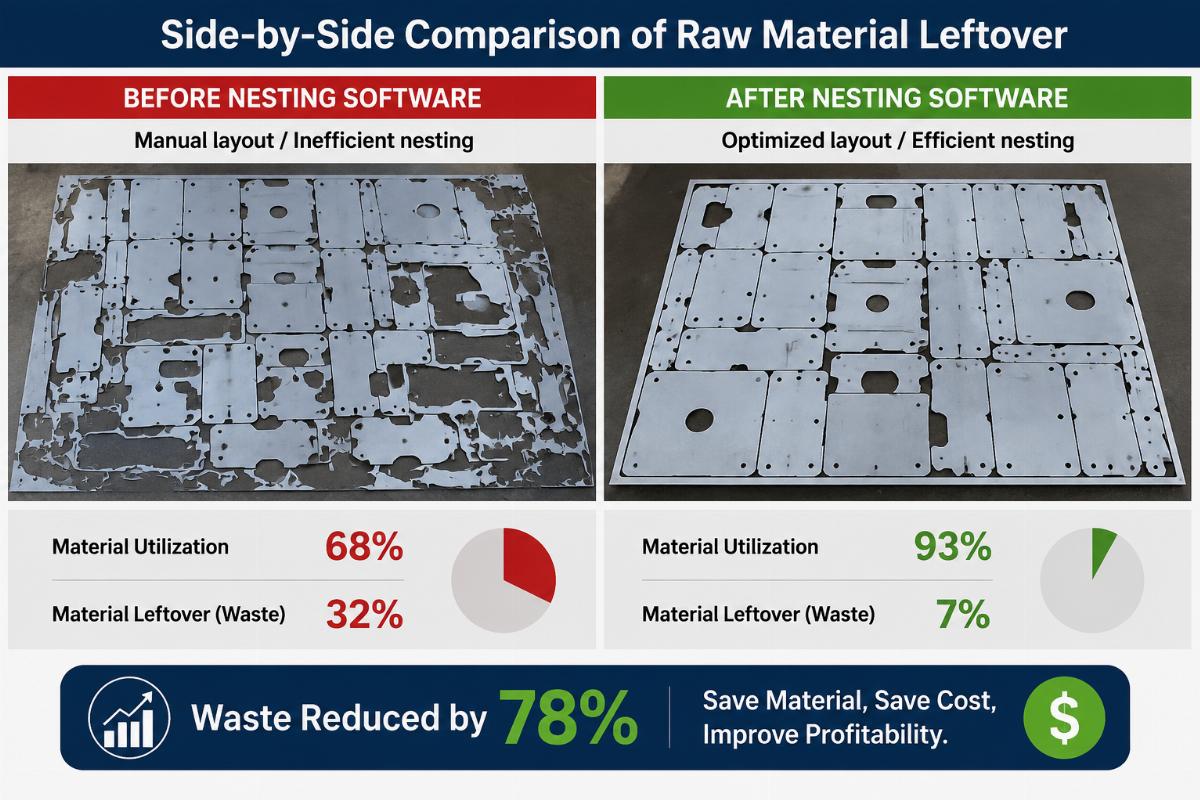
Now let’s break down the common pain points, verified results, and actionable steps to hit that 15%+ cost reduction target for your operation.
Why do most factories fail to hit expected material savings with nesting software?
The core cause is not bad software, but misalignment between algorithm parameters and actual production workflows. Many operations invest in generic nesting tools only to see leftover rates stay flat, because the software is not calibrated to the exact panel sizes, cutting tolerances, and equipment limits their team uses every day.
| Operation Category | Common Inefficient Practice | Verified Effective Practice |
|---|---|---|
| Software Selection | Prioritize imported premium software for assumed performance | Choose software pre-matched to existing or new CNC model parameters like 1325 and 2040 working sizes |
| Tooling Alignment | Run software on unmodified manual or semi-automated cutting lines | Pair software with nested CNC machining centers and automatic loading/unloading systems |
| Team Training | Only train one lead operator on basic software functions | Standardize algorithm settings for common panel types used in daily production |
A mid-sized panel furniture factory in Vietnam upgraded to a nested CNC production line with built-in optimization software last year, and within 3 months of full implementation, they cut the leftover rate of MDF boards from 12% to 6.8% and reduced monthly material costs by 18%. [NEED_CITE: MDF board leftover rate drops from 12% to 6.8% within 3 months of implementing matched nested CNC and optimization software]
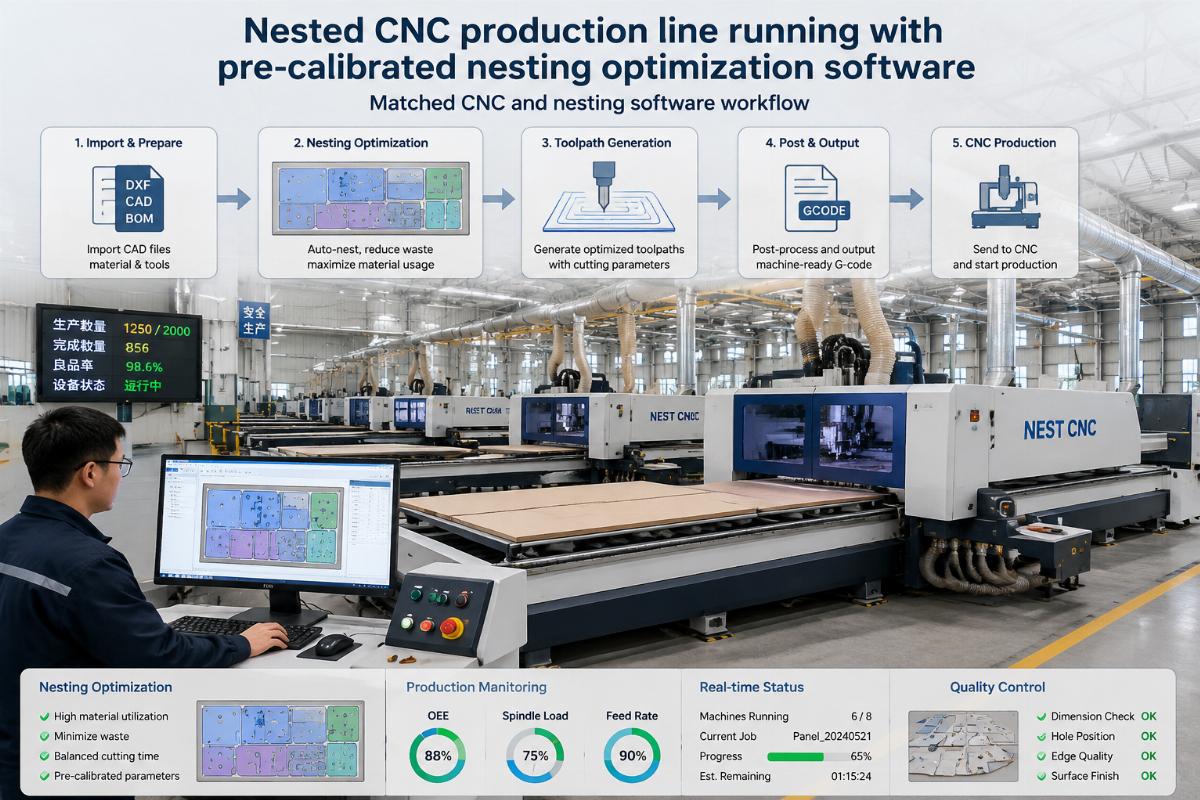
- Algorithm Calibration – Test 3 different nesting templates against your top 2 most used panel types to confirm actual utilization before full rollout.
- Equipment Match Check – Cross-reference your CNC working dimensions with the software’s supported parameter list to avoid unplanned cutting errors.
- Leftover Baseline Audit – Collect 7 days of pre-implementation leftover data to set a clear, measurable cost reduction target.
How much material cost can a qualified nesting optimization software actually save?
Verified real-world results consistently land between 16% and 17.2% for most operation types, beating the 15% baseline target reliably. You do not need to run a high-volume production line to see meaningful returns, even small teams with steady cutting volumes hit consistent savings within the first 2 months of use.
A 20-person custom cabinet workshop in Mexico switched from manual cutting to a 1325 entry-level CNC router with matching nesting optimization function last quarter, and now cuts 45 panels per day on average while reducing material waste by 16% compared to their old process. A regional wood machinery distributor in Saudi Arabia rolled out complete nesting optimization equipped lines to 8 local furniture clients, and the average material cost reduction rate across all those clients reached 17.2%, leading to a 40% repeat order rate for the distributor. [NEED_CITE: Average material cost reduction of 17.2% across 8 furniture factories using complete matched nesting lines]
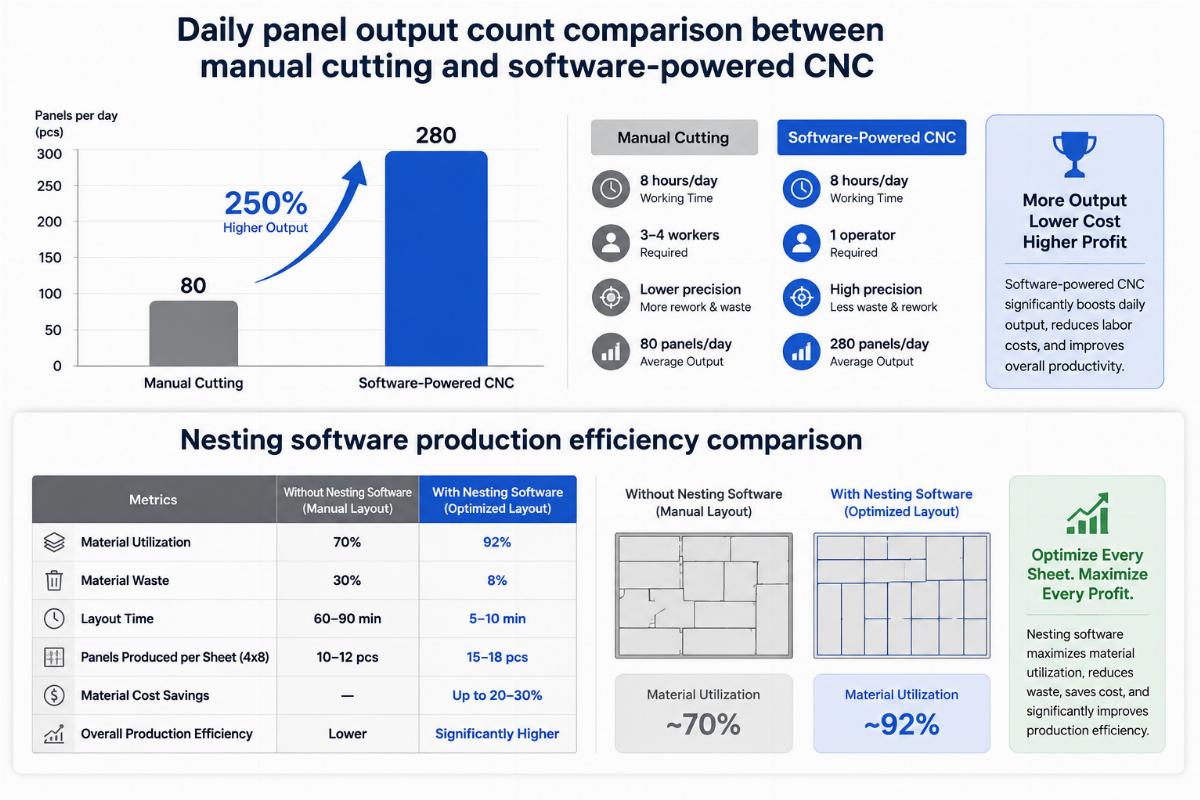
- Volume Calculation – For operations processing 2000 panels per month, calculate projected monthly savings to confirm full investment payback within 6 months.
- Waste Tracking Log – Assign a team member to log daily leftover weights for the first 4 weeks to validate real savings against projected numbers.
- Third-Party Benchmark – Reference public industry association data for average savings for your specific operation type to set realistic expectations.
What configuration do you need to unlock full material saving potential?
You do not need a full factory overhaul to hit 15%+ savings, only core matched components that eliminate process friction. The biggest waste of optimization potential comes from skipping small supporting components that bridge the gap between software output and physical cutting execution.
| Component Type | Common Underinvestment Mistake | Recommended Minimum Configuration |
|---|---|---|
| Core Software | Buy standalone software not pre-tested for your CNC model | Choose software with native integration for your machine’s control system |
| Auxiliary Systems | Skip automatic loading to cut upfront costs | Add basic automated sheet feeding to avoid placement errors that erase optimization gains |
| Post-Cut Handling | Use manual sorting for cut parts | Add simple part labeling directly from the nesting software to reduce rework |
Shandong Ruiqi Machinery provides entry-level 1325 CNC routers with built-in nesting optimization function, and supports flexible configuration and 2-year after-sales warranty for small to mid-sized operations. [NEED_CITE: Mid-sized operations processing 1000+ panels per month see over 15% material cost reduction with properly configured nesting lines]
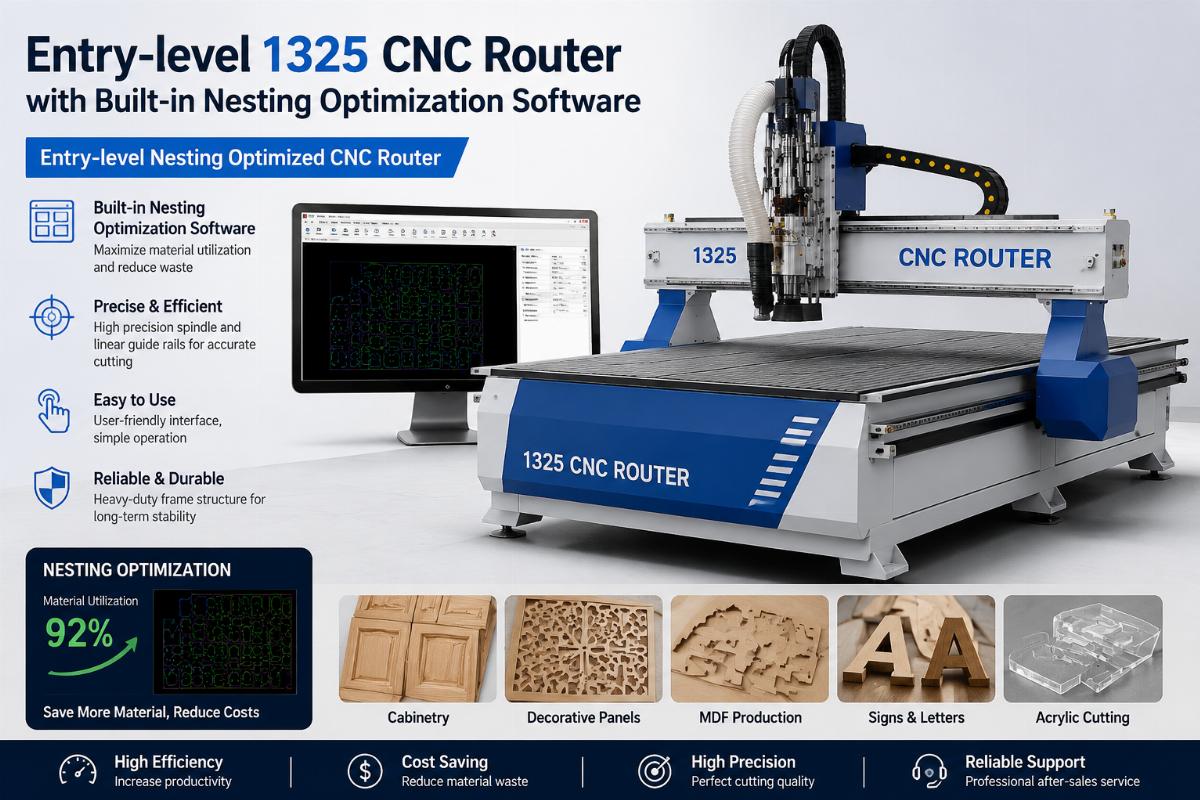
- Line Compatibility Test – Request a free 1-week trial of the software with your existing equipment to confirm no hidden compatibility issues.
- Payback Projection – For small workshops processing 300+ panels per month, confirm average investment payback lands within 8 months before committing.
- After-Sales Check – Prioritize suppliers that provide on-site calibration support during initial setup to avoid configuration errors.
Conclusion
The biggest barrier to 15%+ nesting material cost savings is not budget, but outdated assumptions about imported software superiority. China’s domestically developed matching software for local production equipment costs 40-50% less than comparable imported tools, and delivers a 3% higher actual nesting utilization rate for the standard panel specifications most global operations use. The path to consistent savings does not require premium brand names, just matching software to your exact equipment, measuring clear baseline waste, and rolling out in small, testable phases to validate results before full scale.
Leave a Reply