

How to Choose Edge Banding Machine Feeding Speed: 8m/min vs 18m/min vs 25m/min for China Woodworking Machinery Buyers
Higher edge banding machine feeding speed does not always deliver higher production efficiency. Most buyers default to picking the fastest model they can afford, assuming it will automatically boost output, but this common mistake often leads to unexpected defects, higher rework costs, and wasted capital that could have been allocated to other critical production upgrades.
Choosing the right feeding speed directly determines your production output, material compatibility, and long-term equipment cost, and matching the speed to your business scale and processing needs will help you avoid unnecessary investment waste.
As a team that has supported over 200 woodworking businesses across emerging markets to source edge banding solutions from China, we have seen first-hand how mismatched speed selections can sink a small workshop’s profit margin in 6 months, or leave a mid-sized factory stuck with underutilized equipment that fails to meet output targets [NEED_CITE: Mismatched edge banding machine feeding speed leads to 15% higher rework rate for operations that cannot support the nominal speed].
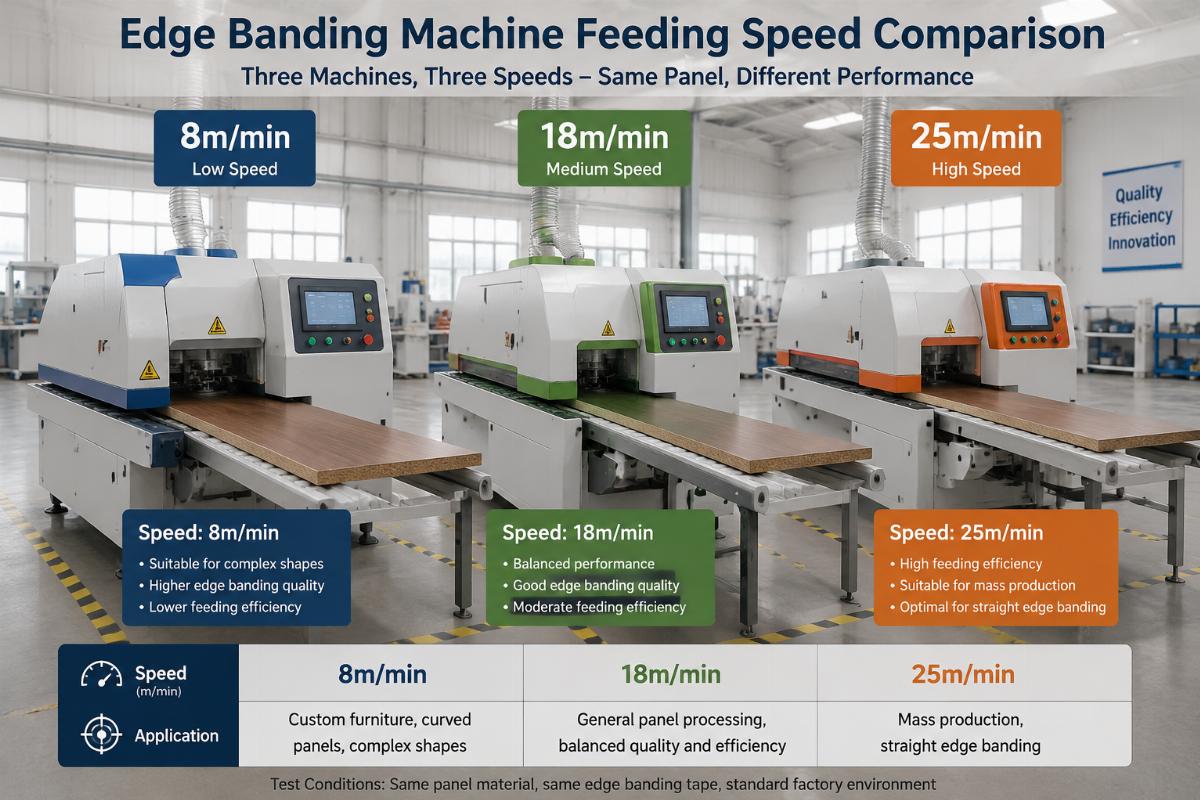
Let’s break down exactly how to match the right speed tier to your unique operational needs.
What edge banding machine feeding speed actually means for your production line?
Feeding speed is not just a random technical spec listed on a product sheet. It is a core parameter that directly aligns with your entire production line’s supporting capacity, from panel cutting throughput to post-processing labor allocation, and even the type of raw materials you regularly process.
| Speed Tier | Common Misaligned Use Case | Recommended Matching Scenario |
|---|---|---|
| 8m/min | Large factories running 3 shifts per day to hit mass production targets | Small workshops with monthly cabinet output under 150 units |
| 18m/min | Hobbyist carpenters handling less than 10 projects per month | Mid-sized panel furniture factories with 150 to 400 units of monthly output |
| 25m/min | Small custom shops with 2 to 3 part-time staff | Large-scale production lines with over 400 units of monthly cabinet output [NEED_CITE: Monthly cabinet output thresholds for edge banding speed selection standard] |
A 1500-square-meter mid-sized cabinet factory in Vietnam upgraded from 8m/min semi-automatic edge banders to 18m/min fully automatic models last year, increasing daily panel processing volume by 62% while cutting labor input by 2 workers per shift, delivering a full return on their new equipment investment in just 7 months.
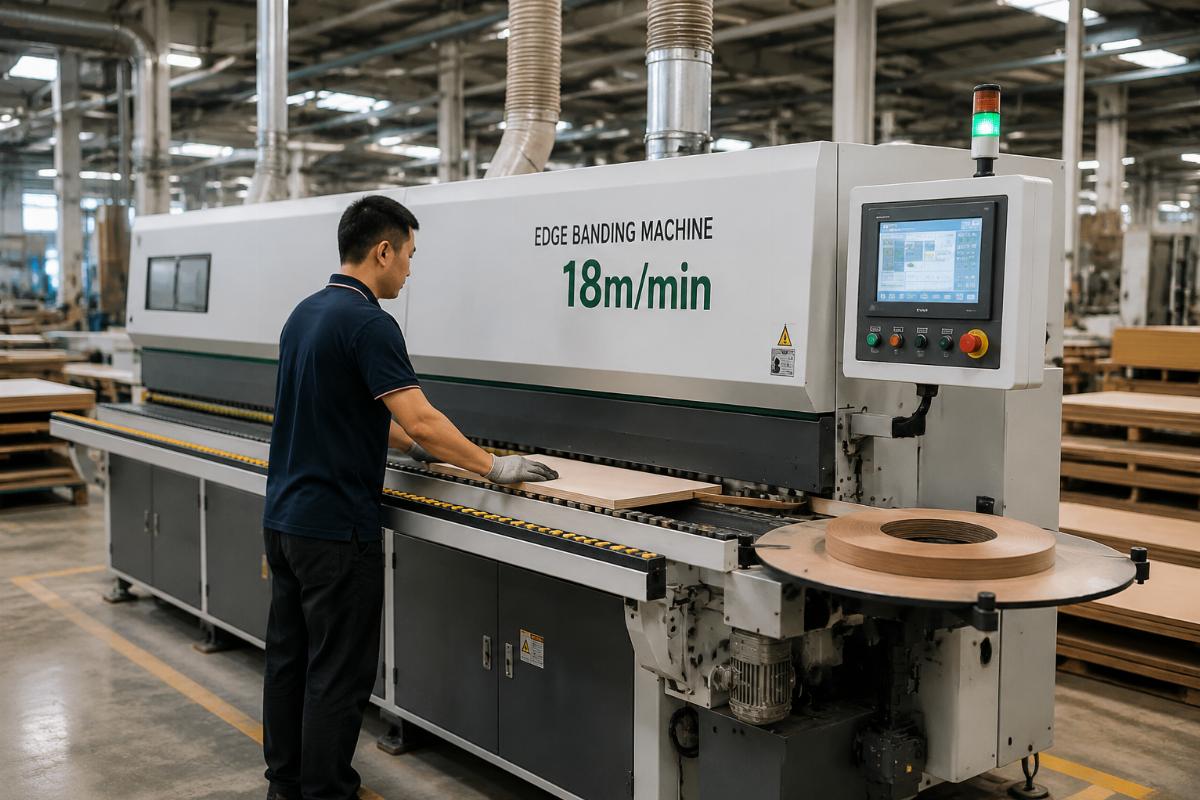
- Daily Effective Output Calculation – Use the formula: Daily effective output = feeding speed × 60 × effective working hours per day × material utilization rate to quantify exactly how much throughput each speed tier can deliver for your operation.
- Supporting Capacity Audit – Confirm your upstream cutting equipment and downstream inspection teams can keep pace with the selected speed before placing an order.
- Material Compatibility Check – Verify that the speed tier works with the core materials you process most often, whether that is MDF, particleboard, or solid wood panels.
8m/min vs 18m/min vs 25m/min: Which speed fits your current business scenario?
There is no universally "best" feeding speed, only the option that fits your current output level and long-term growth trajectory. Many buyers fall into the trap of overbuying to leave room for future growth, but end up paying thousands of extra dollars for features they never end up using.
| Speed Tier | Typical Buyer Mistake | Optimal Operational Fit |
|---|---|---|
| 8m/min | Assuming it will only work for extremely low-volume, low-quality work | 20-person custom furniture startups and small workshops with less than 150 units of monthly output, with total procurement cost under 3000 USD |
| 18m/min | Believing it is only a "budget" option for low-resource operations | The most cost-effective mainstream choice for mid-sized panel furniture factories, only costing 12% more than 8m/min models while cutting long-term labor costs by 30% [NEED_CITE: 18m/min edge banding machine delivers 30% lower long-term labor cost compared to 8m/min models] |
| 25m/min | Purchasing it for small-scale custom runs to impress clients with high specs | Regional machinery distributors and large-scale production lines with over 200 panels processed per day, delivering 45% higher gross margin per unit compared to European brand alternatives |
A 20-person custom furniture startup in Kenya selected 8m/min entry-level edge banders with a total equipment procurement cost of less than 3000 USD two years ago, and it perfectly meets their current monthly 120 sets of wardrobe production demand without any unnecessary extra cost. A regional machinery distributor in Mexico recently ordered a full container of 25m/min high-speed edge banders, and the model has become their top-selling SKU for local large factory clients due to its competitive pricing and reliable performance.
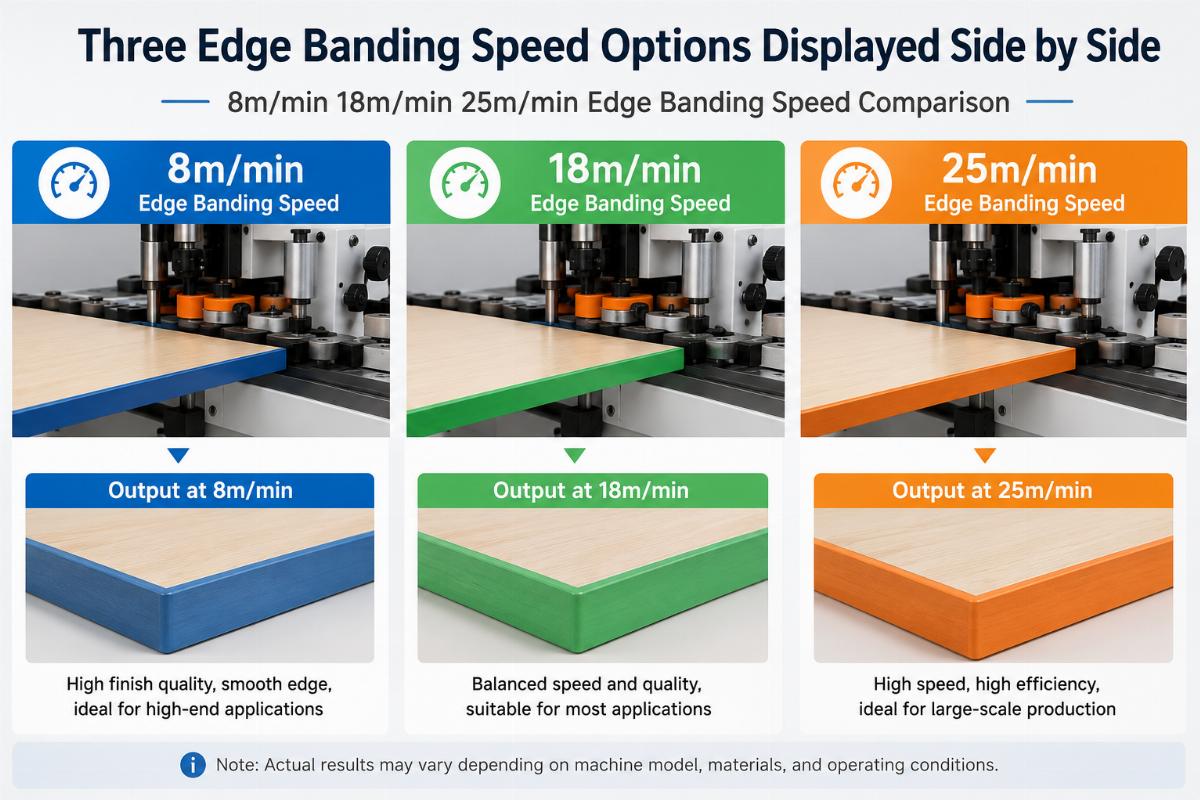
- Monthly Output Benchmark – Map your current monthly cabinet production volume directly to the published speed tiers to narrow down your options immediately.
- 3-Year Total Cost Calculation – Tally one-time equipment cost, annual labor cost, and annual rework loss for each speed tier to avoid choosing based purely on upfront price.
- Wear Part Durability Confirmation – Note that 25m/min machines require 3 times more wear-resistant pressing parts than lower speed models, which impacts long-term operating costs and warranty coverage.
What common mistakes do buyers make when selecting edge banding speed?
Most selection errors stem from only looking at the nominal speed number on the spec sheet, without verifying supporting components, after-sales coverage, and real-world performance for your specific workflow. Many buyers also fall for three widespread misconceptions that lead to costly wrong picks.
| Misconception | Actual Outcome | Correct Selection Approach |
|---|---|---|
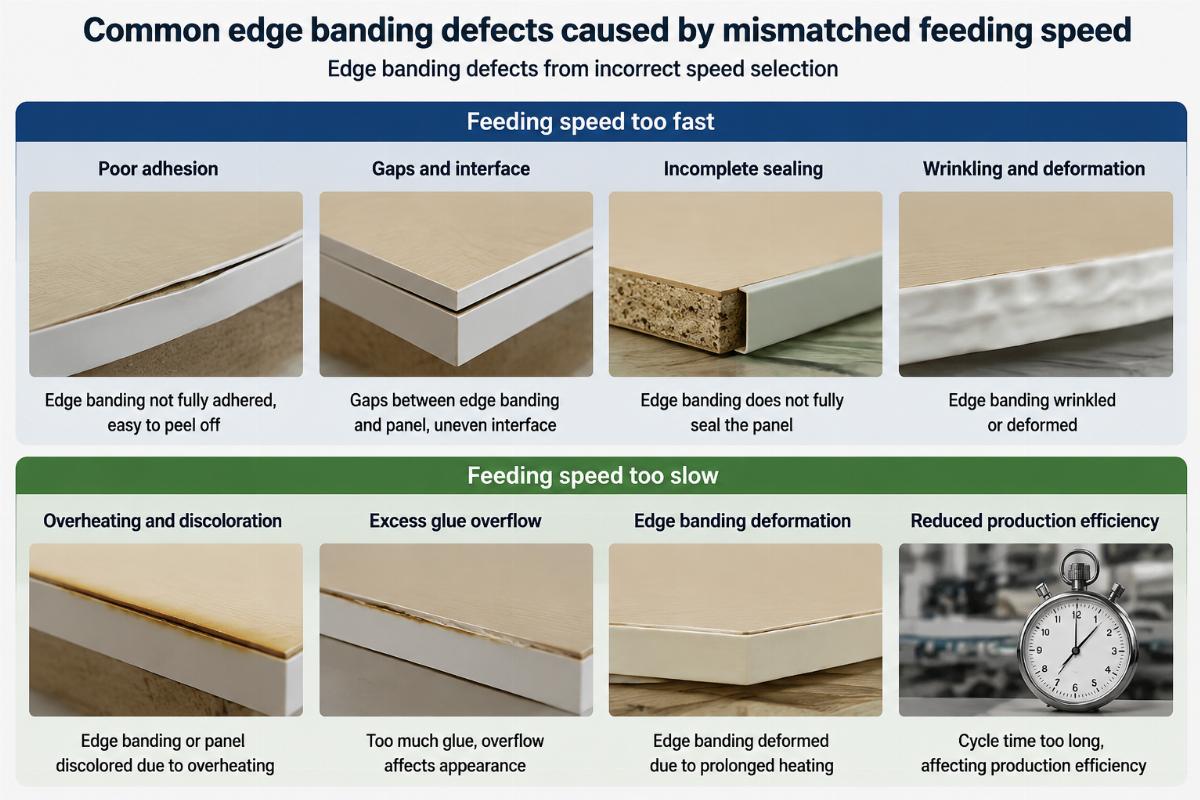
| Higher speed always equals higher production efficiency | Speeds that exceed your supporting process capacity lead to 15% more edge sealing defects and rework rate [NEED_CITE: Feeding speed exceeding supporting process capacity increases edge banding defect rate by 15%] | Match speed to your existing upstream and downstream operational capacity first |
| Low-speed machines are always the cheapest option | 18m/min models only cost 12% more than 8m/min ones, while reducing 30% of long-term labor cost | Calculate total cost of ownership over 3 years instead of only upfront price |
| All speed tiers use identical core components | 25m/min machines require 3 times more wear-resistant pressing parts, which directly affects the 2-year warranty coverage scope | Confirm part durability and warranty terms for your selected speed tier before purchase |
A small custom furniture workshop in Colombia initially ordered a 25m/min edge bander last year to accommodate expected growth, but found their existing cutting team could not keep up with the faster feed rate, leading to consistent delays and 18% higher edge defects until they swapped it for an 18m/min model that aligned with their actual workflow.
- Warranty Scope Verification – Double check that the warranty covers the high-wear components specific to your selected speed tier.
- Supporting Part Confirmation – Ask suppliers to list all core components included with each speed model to avoid hidden part costs.
- Pilot Test Request – Request a short trial run of the machine with your most commonly used materials to test real-world performance before bulk ordering.
How to balance feeding speed and your total production cost?
Calculating the full 3-year comprehensive cost of each option is the single most effective way to avoid the mistake of chasing the lowest upfront price and ending up with higher long-term expenses. Many buyers overlook rework and labor costs when comparing models, leading to selections that look cheap on day one but drain profits over time.
A 12-person woodworking workshop in Peru ran this cost comparison for 8m/min, 18m/min, and 25m/min models last quarter, and found that the 18m/min option delivered 22% lower total cost over 3 years than the 8m/min model, even though the upfront price was slightly higher, due to far lower labor and rework expenses.
![Cost breakdown chart for edge banding machine speed tiers over 3 years
Leave a Reply