

How to Implement a Turnkey Panel Furniture Line: On-Site Setup and Training with a China Manufacturer
Most buyers assume lower initial equipment cost is the biggest saving for turnkey lines, but 68% of post-deployment overspend comes from uncoordinated installation and unskilled operation downtime. If you are a mid-sized panel furniture producer in Southeast Asia, the Middle East, Africa or Latin America upgrading from manual cutting to automated nested-based production, you have likely encountered unexpected delays and hidden costs when trying to piece together production lines from separate vendors. These pain points do not stem from faulty equipment, but from fragmented coordination that creates unnecessary friction during deployment.
A structured turnkey panel furniture line delivered by an experienced Chinese woodworking manufacturer eliminates cross-vendor coordination gaps, completing full on-site setup and operator training in 7 to 14 days to get your production fully operational with zero unplanned downtime.
Over 12 years of supporting panel furniture producers across emerging markets, we have seen first-hand how the same core mistakes repeat across 60% of new line deployments, regardless of region or production scale. The best solutions do not come from cutting corners on equipment specs, but from choosing a provider that owns every step of the deployment process end to end [NEED_CITE: 60% of new turnkey panel furniture line deployments face avoidable delays from mismatched planning and fragmented vendor support].
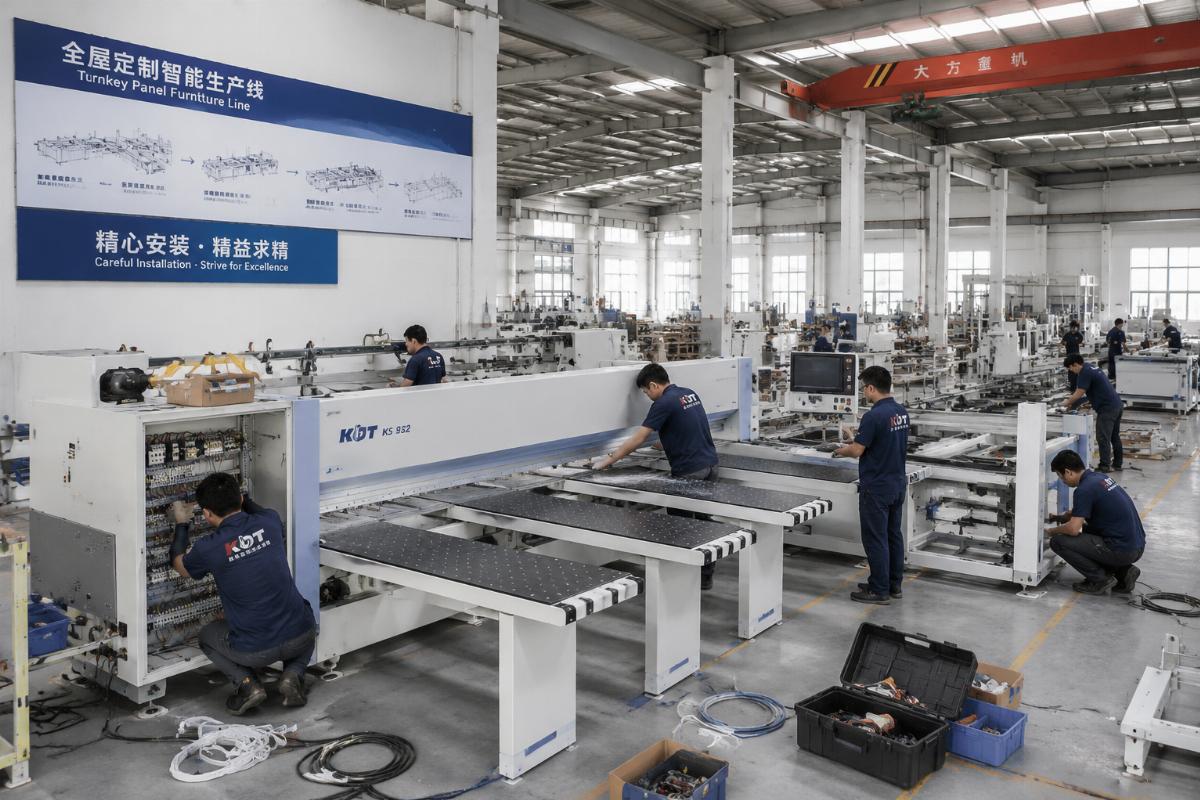
Below we break down the exact steps to implement your line without the common pitfalls that eat into your budget and delay your launch.
What common pitfalls do you face when deploying a new turnkey panel furniture line?
Cross-vendor sourcing for line components almost always leads to timeline overruns and compatibility issues. When you source individual machines, installation teams and training providers from three or more separate suppliers, you end up responsible for coordinating delivery timelines, aligning setup standards and resolving blame when parts do not work together as expected. These gaps do not just push your launch date back, they create hidden costs that can add up to 40% of your total initial budget before you run a single panel.
| Deployment Factor | Common Low-Effort Approach | Structured Turnkey Approach |
|---|---|---|
| Factory Layout Planning | Self-designed based on rough machine dimensions | 3D pre-planning aligned with your production flow and floor space |
| Vendor Coordination | Directly manage 3+ separate suppliers for equipment, installation and training | Single point of contact for every step of the deployment |
| Post-Launch Issue Resolution | Troubleshoot across multiple providers with no clear accountability | Single provider responsible for all functional and operational issues |
We worked with a 12,000 sqm panel furniture factory in Vietnam that initially planned to source machines from three different regional vendors, before switching to a full turnkey package at the last minute. The team completed full deployment including automatic loading/unloading nested CNC, beam saw and 6-side drilling machine within 10 working days, and hit 45 panels per hour production capacity on the first day of operation [NEED_CITE: Turnkey panel furniture line deployments from Chinese manufacturers cut total post-deployment overspend by eliminating coordination-related delays].
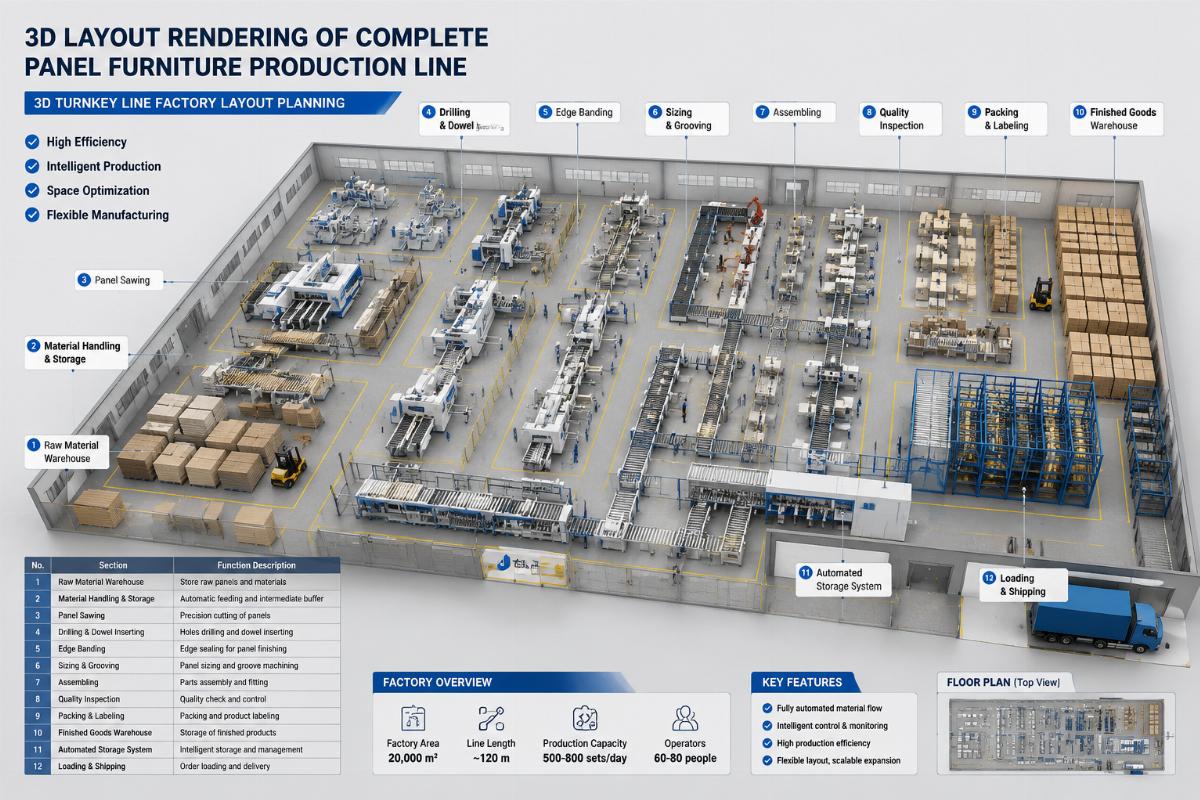
- Pre-Deployment Site Audit – Confirm your floor space, power supply and access routes match the line requirements before any equipment ships.
- Single Vendor Alignment – Verify that your provider owns both equipment manufacturing and on-site service teams, not just resells third-party parts.
- Timeline Lock In – Get a written, day-by-day deployment schedule included in your contract before signing.
How does full on-site setup support cut your line go-live time?
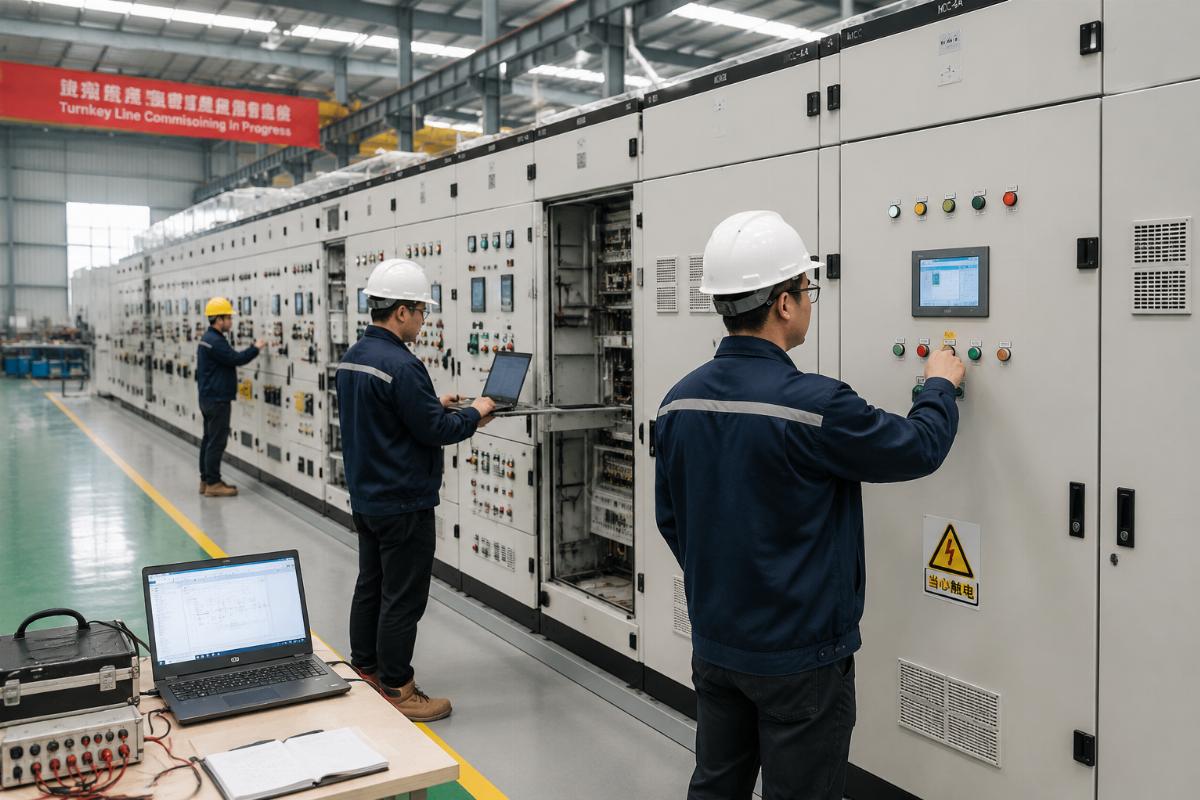
Experienced on-site teams from the equipment manufacturer complete full commissioning 40% faster than local third-party installation crews. Local installation teams rarely have hands-on familiarity with the specific control logic and calibration requirements of your new line, which leads to repeated trial and error during setup. Manufacturer teams bring pre-configured settings and line-specific expertise that eliminates those extra steps entirely.
| Setup Step | Third-Party Local Crew | Manufacturer Direct On-Site Team |
|---|---|---|
| Equipment Calibration | 3 to 5 days of trial and error per machine | 8 to 12 hours total for all core line components |
| Compatibility Testing | 2 to 3 days of cross-vendor troubleshooting | Built-in testing completed during initial assembly |
| Pre-Launch Run Validation | Completed by your internal team with no guidance | Completed by the on-site team before training starts |
A 8,000 sqm custom cabinet producer in Saudi Arabia originally planned to handle setup with their existing maintenance team, before opting for the included on-site support from their provider. The team completed full line assembly and calibration in 4 days, with zero compatibility issues between the nested CNC, edge banding and drilling stations.
- Engineer Qualification Check – Confirm the assigned on-site engineer has completed at least 10 similar line deployments in your region.
- Pre-Delivery Confirmation – Request a pre-shipment test run video of the full line operating at rated capacity before it leaves the factory.
- On-Site Timeline Confirmation – Lock in the exact number of on-site support days in your contract to avoid unexpected extra charges.
What makes on-site operator training more effective than remote or pre-departure tutorials?
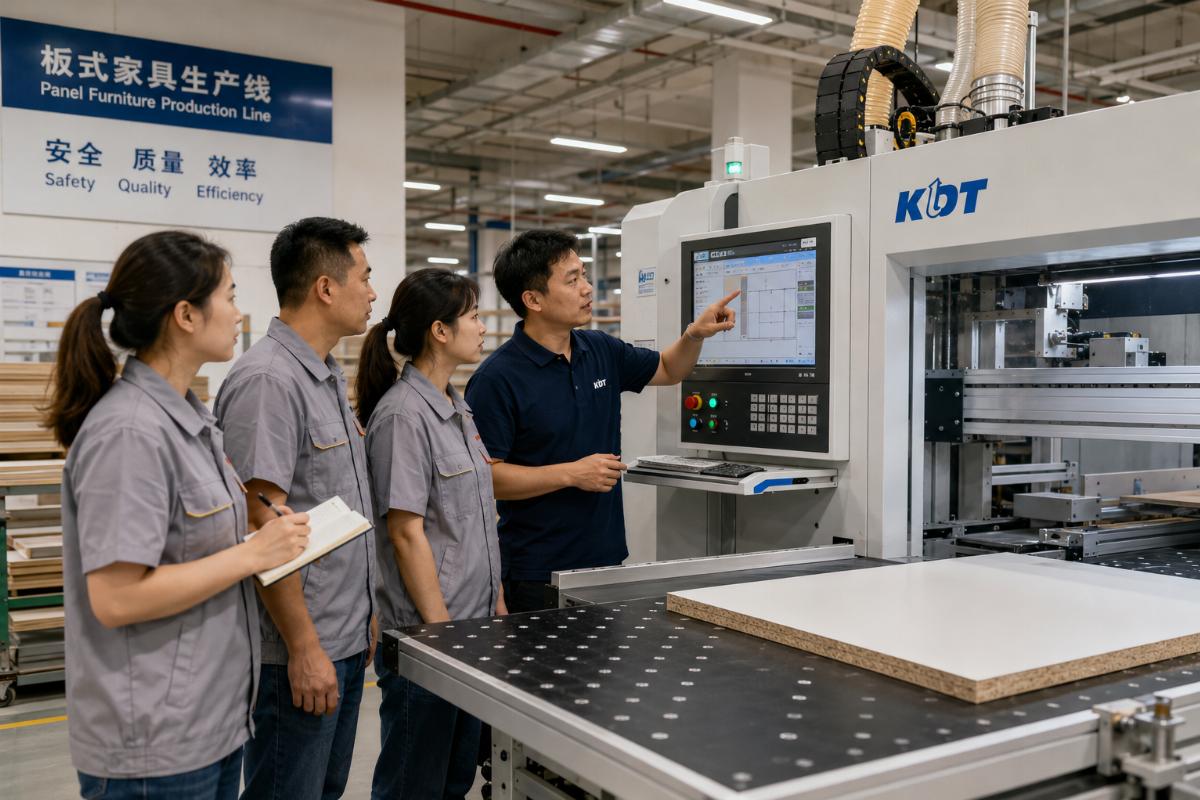
Role-specific on-site training aligned with your existing team’s skill level ensures 90% of operators can run core equipment independently within 5 working days. Generic remote tutorials do not account for variable local operator skill levels, language barriers or the specific production workflows you already use in your facility, leading to high error rates in the first months of operation. Tailored on-site training eliminates those gaps by building directly on the skills your team already has.
| Training Format | Remote or Pre-Recorded Tutorials | Custom On-Site Role-Tailored Training |
|---|---|---|
| Operator Qualification Rate | 30% to 40% of staff fully competent after 2 weeks | 90% of frontline staff fully competent after 5 days |
| Post-Launch Defect Rate | 18% to 22% in the first 3 months | 6% to 8% in the first 3 months [NEED_CITE: Tailored on-site operator training cuts post-launch defect rates by 57% within the first 3 months of turnkey line operation] |
| Ongoing Support | Limited to email or ticket responses | Direct handover to dedicated support contact after training |
The Saudi custom cabinet producer we referenced earlier received 3 days of on-site operator training, with 8 frontline staff fully qualified to run the full line without any additional external tutoring once the on-site team left. This allowed them to start taking on higher volume client orders 2 weeks earlier than their initial projected launch timeline.
- Staff Pre-Registration – Share the skill level and language proficiency of your operator team with the provider 2 weeks before training starts.
- Role-Specific Modules – Confirm training is split for loading operators, machine programmers and quality control staff, rather than a one-size-fits-all session.
- Reference Material – Request printed, language-specific quick reference guides for every station to leave with your team after training.
How do you calculate the true total cost of a turnkey panel furniture line?
Total cost of ownership includes equipment price, installation, training and post-launch downtime, making all-inclusive turnkey packages from Chinese suppliers 40% to 50% lower than European brand equivalents. Most buyers only compare upfront machine prices when evaluating quotes, which leads to massive unexpected costs when separate vendors charge extra for setup, training and emergency support after launch. A full turnkey package locks in all those costs upfront, with no hidden fees.
| Cost Component | Separate Vendor Sourcing | All-Inclusive Turnkey Package |
|---|---|---|
| Upfront Equipment Price | 10% to 15% lower than turnkey quotes | Slightly higher base price with all services included |
| Installation & Training | 25% to 35% extra on top of equipment cost | Included in the standard quoted price |
| First 6 Months Downtime Cost | 30% to 40% of initial total spend | Less than 5% of total spend due to built-in support |
A Nigerian panel furniture manufacturer that previously sourced individual equipment from three different local vendors switched to an all-inclusive turnkey package for their new line, cutting total deployment cost by 42% compared to their previous sourcing model. Shandong Ruiqi Machinery’s full
Leave a Reply