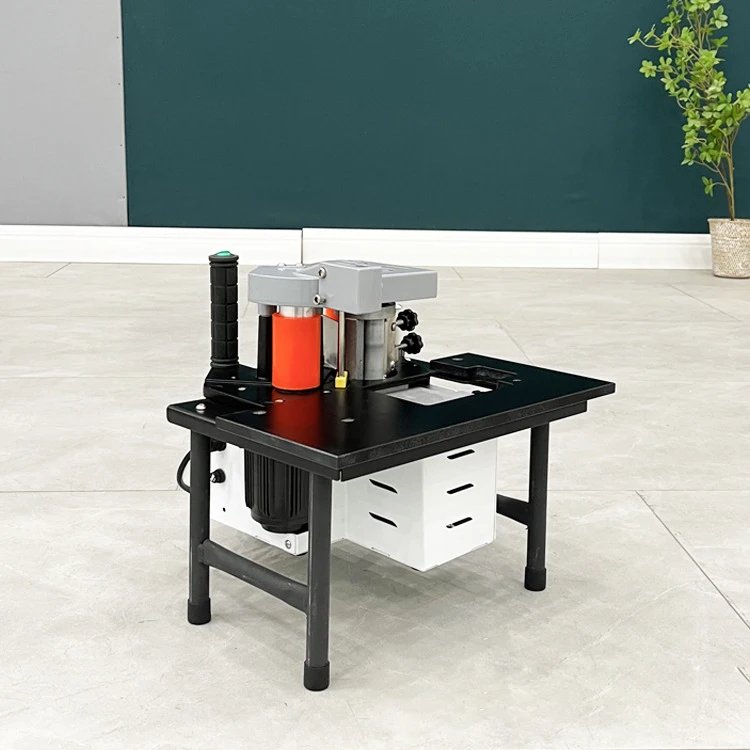
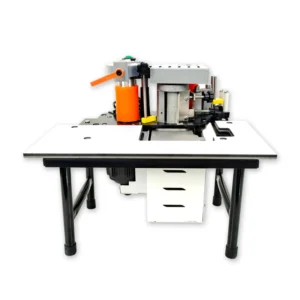
Fast-Dispatch Readiness — Voltage and plug configuration confirmed before the crate closes, so your Portable Edge Banding Machine arrives ready to run on day one.
Technical Specifications
| Parameter |
Value |
| Product Type |
Portable Edge Banding Machine |
| Shape of Edge-banding Plates |
Curved, straight, and irregular profiles |
| Edge Thickness Range |
0.3–3 mm |
| Edge Sealing Speed |
0–6 m/min |
| Edge Sealing Height |
7–60 mm |
| Gluing Method |
Double-sided gluing |
| Glue Pot Volume |
1000 ml |
| Machine Weight |
14 kg |
| Voltage & Frequency |
Configurable to local supply — confirm before dispatch |
| Key Features |
Compact benchtop footprint, double-sided glue application, curved and straight edge compatibility |
Application Suitability
| Application |
Material or Output |
| Custom cabinet door edge finishing |
MDF and plywood panels with PVC or ABS edge banding |
| On-site fitment adjustment |
Melamine-faced particleboard with 0.4–2 mm banding |
| Small workshop curved panel processing |
Solid wood and veneer banding on radiused edges |
| Joinery startup initial production runs |
Standard thickness chipboard with PVC edging |
Why Voltage Confirmation Must Precede Your Order
A portable edge bander that arrives with the wrong voltage is a 14 kg paperweight sitting on your bench.
I once shipped a portable unit to a small joinery shop without double-checking their local supply. The operator plugged it in, tripped the workshop breaker, and spent two days rewiring before the glue pot even warmed up. That delay cost them a custom kitchen deadline [NEED_CITE: voltage and frequency standards by export market]. With a Portable Edge Banding Machine in stock, the advantage of fast dispatch disappears if the electrical configuration is wrong. Confirm your local voltage, frequency, and plug type before the order is packed — it takes two minutes and prevents weeks of downtime.

Immediate Availability for Workshop Transitions
Moving from hand-trimmed edges to powered banding is a milestone for any small joinery operation. This Portable Edge Banding Machine in stock is configured for workshops that need capability today, not after a production run lead time. The 14 kg weight means it sits on a standard workbench without requiring floor anchoring or dedicated space allocation. When your first automated edge needs to ship this week, inventory readiness matters more than catalog depth.
Compact Footprint Without Sacrificing Edge Range
The 7–60 mm sealing height covers the panel thicknesses most small furniture makers handle daily, from thin shelf stock to thick countertop substrates. Curved, straight, and irregular profiles all run through the same unit, so you are not buying separate machines for different edge geometries [NEED_CITE: CE machinery directive requirements for small woodworking equipment]. For a workshop still defining its product mix, that flexibility keeps capital focused on one capable machine rather than several limited ones.
What the Gluing Method Means for Your Edge Quality
Double-sided gluing applies adhesive to both the panel edge and the banding material simultaneously. This matters when you work with porous substrates like particleboard, where single-sided application often leaves dry spots along the glue line. The 1000 ml glue pot holds enough adhesive for sustained runs without constant refilling, and the 0.3–3 mm edge thickness range accommodates everything from thin veneer strips to thick PVC protection bands. The 0–6 m/min feed speed gives operators enough control to manage curved profiles without rushing past the glue's open time window [NEED_CITE: hot melt adhesive open time versus feed speed on portable banders].
The Cost of Skipping the Material Test Run
I learned this the hard way early in my career. A custom cabinet maker ordered based on a successful test with standard PVC, then ran real production with solid wood veneer banding. The glue temperature could not hold the veneer's absorption rate, and the first batch of panels came back with peeling edges. Every material combination — substrate, banding type, adhesive formulation — behaves differently under heat and pressure. Ordering a Portable Edge Banding Machine in stock without requesting a test run on your actual materials is a gamble you do not need to take [NEED_CITE: edge banding adhesion failure rates on untreated veneer versus PVC substrates].
Why Source This Machine Through Our Stock Channel
Our inventory system flags electrical configuration at the order stage, not after packing. Every Portable Edge Banding Machine in stock undergoes a pre-dispatch functional test on actual panel stock, with the test record included in your shipment. The operation manual ships in your operator's language, confirmed during the order process. Voltage and plug type are verified against your country's supply standard before the crate is sealed. We hold stock specifically to serve workshops that cannot wait for a production cycle — and we protect that speed advantage by getting the configuration right the first time.
Documentation & Verification
- Factory test record on your specified panel thickness and edge profile before dispatch
- Operation manual translated to your operator's working language confirmed at order
- Electrical schematic matching your confirmed voltage and frequency supply standard
- Spare parts list with glue pot consumable compatibility for your local market
- Packing photographs showing machine condition and accessory completeness before crate closure
Installation, Commissioning & Support
- Benchtop placement requires a stable surface rated for the 14 kg operating weight plus panel load
- Dedicated circuit matching confirmed voltage and plug type to prevent breaker trips during glue heat-up
- First power-on includes glue pot warm-up cycle verification before feeding your first test panel
- Feed speed dial-in starting at low range for curved profiles, increasing as operator confidence builds
- Glue pot cleaning procedure using compatible solvent after each session to prevent adhesive carbonization
What We Need to Configure Your Order
To match the right Portable Edge Banding Machine in stock to your workshop, tell us the panel materials and edge banding types you process most often. Share your local voltage, frequency, and plug standard so we confirm electrical compatibility before packing. If you are replacing a manual process, describe your current daily panel volume so we can advise whether this unit covers your throughput or if a higher-tier model suits your trajectory.
Frequently Asked Questions
Q: Is this portable edge bander currently in stock and what is the dispatch lead time?
A: Yes, units are held in ready-to-ship inventory. Dispatch typically follows within a short window after voltage confirmation and pre-shipment testing on your specified panel material. We do not release a unit until the functional test record is complete and the electrical configuration matches your local supply standard.
Q: How do I confirm the correct voltage and plug type for my country?
A: During the order process, you provide your local voltage, frequency, and plug standard. We configure the machine accordingly and include a matching electrical schematic in your documentation package. This step happens before packing, not after arrival.
Q: What is included in the shipment besides the machine itself?
A: Each shipment includes the operation manual in your confirmed language, a spare parts list with consumable specifications, glue pot accessories, and a pre-shipment test record. Packing photographs document the machine and all accessories before the crate is sealed.
Q: Can this machine handle the panel thickness and edge profile I work with daily?
A: The 7–60 mm sealing height and 0.3–3 mm edge thickness range cover most standard cabinet and furniture panel specifications. Curved, straight, and irregular profiles all process on the same unit. Share your specific panel and banding combination so we can verify during the pre-shipment test.