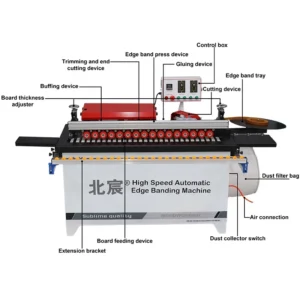
Wood Based Panels Machinery
Compact Automatic Edge Banding Machine for MDF Panel
DW802 Automatic Edge Banding Machine, 220V/380V, 0.3–3mm Edge Thickness — compact footprint at 130 ×...
View Details
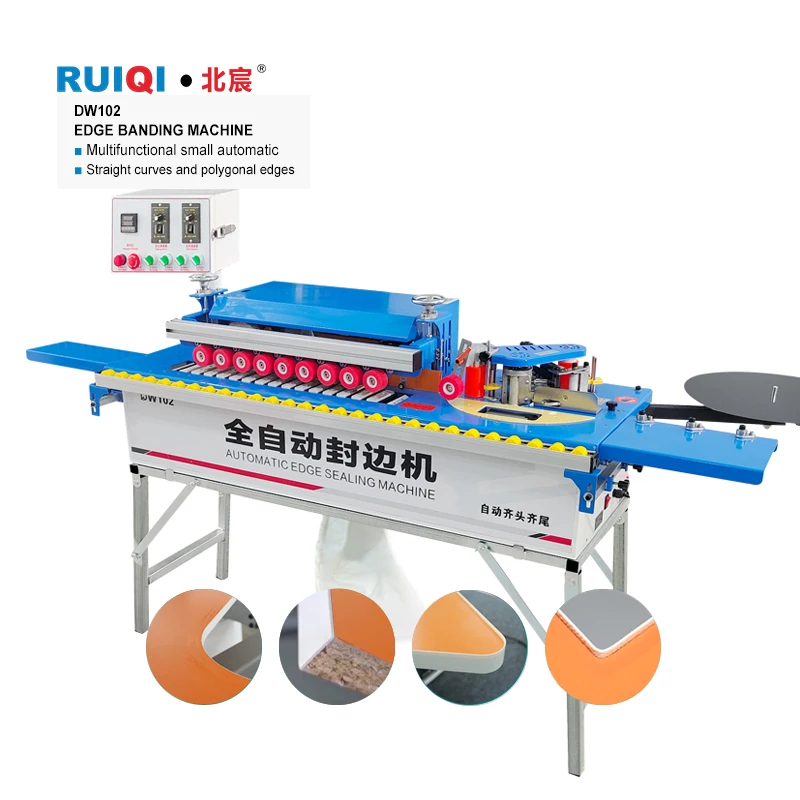
<p><strong>DW102 Automatic Edge Banding Machine</strong>, 3800W total power, 0.3–3mm edge thickness range — compact unit built for joinery workshops moving from manual to semi-automated edge processing.</p> <ul> <li>Handles both curved and straight profiles with automatic head/tail cutting and dual trimming stations</li> <li>Glue pot 1000ml capacity suits intermittent batch runs; 128×47×69cm footprint fits tight shop floors</li> <li>Voltage and control language customized before dispatch so the machine runs on day one</li> </ul> <p>Backed by four-stage QC with pre-shipment verification, and engineer-led configuration support to keep your line compatible as volume grows.</p>
Compact Footprint Ready to Ship — the DW102 Automatic Edge Banding Machine arrives configured for small workshop power and space constraints, with voltage confirmed before dispatch to prevent dead-on-arrival equipment.
| Parameter | Value |
|---|---|
| Model | DW102 |
| Product Type | Automatic Edge Banding Machine |
| Total Power | 3800W |
| Voltage Options | 220V / 380V / Customization |
| Edge Banding Thickness | 0.3–3MM |
| Edge Banding Height | 0–50MM |
| Minimum Sheet Length | 25CM |
| Minimum Sheet Width | 5CM |
| Glue Pot Capacity | 1000ml |
| Trimming Power | 650W × 2 |
| Vacuum Power | 1200W |
| Polishing Power | 180W × 2 |
| Edge Feed Power | 20W |
| Transmission Power | 60W |
| Air Source Pressure | 0.5–0.8 MPa |
| Product Dimensions | 128 × 47 × 69 CM |
| Product Weight | 75 KG |
| Control Panel Language | Chinese, English (Spanish and others available) |
| Plug Options | EU, USA, AU, UK |
| Key Features | Curved and straight edge banding, edge trimming, polishing, automatic head and tail cutting, vacuum hold-down |
| Application | Material or Output |
|---|---|
| Custom cabinet door edging | MDF and plywood panels up to 50MM height |
| Small-batch shelving production | Particleboard with PVC or veneer edge banding 0.3–3MM |
| Joinery workshop furniture finishing | Blockboard and solid wood panels |
| Polymer door edge finishing | Polymer substrates and medium density fiberboard |
| Curved edge components | Plywood and MDF profiles requiring shaped banding |
A machine wired for the wrong frequency is a silent, expensive cabinet on your shop floor.
I learned this in a Dubai joinery shop where a 380V/50Hz edge bander was shipped to a site running 220V/60Hz. The owner spent three weeks sourcing a transformer while production deadlines passed and workers stood idle. That single oversight cost more in downtime than the transformer itself. When you source an Automatic Edge Banding Machine in stock, the speed advantage disappears the moment the unit cannot power on. [NEED_CITE: voltage and frequency standards by export market]
The DW102 ships in multiple voltage configurations, but the right one only gets selected if you provide a photo or spec sheet of your breaker panel before the order is finalized. Guessing based on country defaults leads to exactly the kind of commissioning failure I witnessed firsthand.
The 128 × 47 × 69 CM footprint occupies less floor space than most sliding table saws, which matters when a joinery startup is fitting edge banding capability into an existing bench room. The 75 KG weight means two people can reposition it without a forklift or overhead crane, letting you adjust your shop layout as workflow patterns emerge. For workshops renting industrial space, keeping equipment portable reduces relocation risk.
The DW102 handles both curved and straight edge banding with automatic head and tail cutting, so a small furniture maker producing rounded shelf fronts and rectangular cabinet sides uses one machine for both geometries. Switching between curved and straight work does not require swapping out feed modules or retooling the banding path. This flexibility keeps a two-person shop from needing to justify a second, dedicated curved bander. [NEED_CITE: CE machinery directive requirements for industrial equipment]
The 0.3–3MM edge banding thickness range covers the PVC strips used for moisture-resistant cabinet edging and the thin veneer rolls common in visible furniture surfaces. Staying within this range prevents the trimming station from stalling on oversized stock or failing to grip undersized material. The 1000ml glue pot capacity suits intermittent production — running two or three batches a day without overheating adhesive, which degrades bond strength on panel edges. The dual 650W trimming motors cut flush on both top and bottom simultaneously, reducing the post-trim sanding a woodworker would otherwise do by hand. Air pressure at 0.5–0.8 MPa drives the pneumatic clamping and cutting cylinders; shops with undersized compressors will see inconsistent head-and-tail cuts, so verifying compressor output before installation prevents that fault pattern.
Buying a single machine without confirming how it integrates with your existing feed tables and dust extraction leads to bottlenecks that only appear after the unit is bolted to the floor. A 1200W vacuum motor requires dedicated ducting; tying it into an undersized central system drops suction below what holds the banding against the panel during trimming. Operators reading a control panel in an unfamiliar language will leave settings at factory defaults, producing inconsistent edge quality that gets blamed on the machine rather than misconfiguration. [NEED_CITE: edge banding adhesion failures linked to incorrect setup parameters]
In-house manufacturing with patented cutting mechanisms means tolerance claims on the DW102 come from the facility that actually grinds the components, not a trading company relaying specifications. Voltage, plug type, and control panel language are confirmed as standard configuration steps, not aftermarket modifications requested through a third party. The four-stage quality check covers incoming material through pre-shipment verification, so the unit you receive has been powered on and tested before crating. Single-unit orders are accepted, which matters when a workshop is adding its first edge bander rather than equipping an entire line. Engineer-led configuration recommendations arrive within 24 hours of your inquiry, preventing the weeks-long back-and-forth that delays small shop upgrades.
Send a photo of your workshop breaker panel showing voltage and phase information so the correct electrical configuration gets built in. Specify which edge banding materials you run most often — PVC, ABS, or veneer — along with typical panel thickness and the smallest piece dimensions you process. If you are connecting the DW102 to existing dust extraction, provide the duct diameter and fan rating so compatibility can be checked before the machine ships.
Q: What voltage options are available for immediate dispatch on the DW102? A: The DW102 is configurable for 220V or 380V supply, with additional custom voltage available on request. EU, USA, AU, and UK plug types are standard options. Before any unit ships, we require confirmation of your local voltage and frequency — ideally with a photo of your breaker panel — to ensure the machine arrives ready to run without an external transformer.
Q: Can the control panel language be set before the machine ships? A: Yes. The DW102 control panel ships in Chinese or English as standard, with Spanish and other languages available upon request. Specifying your operator's primary language during the order process ensures the panel is configured before crating, avoiding the commissioning delays that happen when operators cannot read menu prompts.
Q: How does this model support workshop growth as production volume increases? A: The DW102 fits within a broader product family, so when your volume outgrows entry-level throughput, you can move to higher-capacity models from the same manufacturer without retraining operators on an entirely different control system. Upgrade paths are discussed at the inquiry stage so you understand where this unit sits relative to your future line layout.
Q: Which edge banding materials perform best within the 0.3–3MM thickness range? A: PVC edge banding in the 0.4–2MM range is the most common application, providing moisture resistance for cabinet and kitchen work. Thin wood veneer rolls starting at 0.3MM work well for visible furniture surfaces. ABS and melamine-backed strips also fall within this range. Confirming your primary material at the inquiry stage allows glue pot temperature and feed speed to be preset.
Standard specifications are listed below. Custom configurations are available -- contact us for tailored solutions.
| Parameter | Value |
|---|---|
| Product Name | DW102 Automatic Edge Banding Machine for Plywood | Compact |
| Category | Wood Based Panels Machinery, Woodworking Machinery |
| Certification | CE, ISO9001 |
| Voltage | 220V/380V (Customizable) |
| Warranty | 1 Year |
| After-Sales | Remote technical support, spare parts supply |
| OEM/ODM | Available -- logo, color, voltage, language |
| Delivery | Standard export packaging, worldwide shipping |
| MOQ | 1 Unit |
| Lead Time | 15-30 days (subject to order) |
* Specifications may vary by model. Contact our team for exact technical data sheets.
Fill in your details and we'll respond within 24 hours with pricing, specifications and customization options.
DW802 Automatic Edge Banding Machine, 220V/380V, 0.3–3mm Edge Thickness — compact footprint at 130 ×...
View Details
WF-2000 Automatic Edge Banding Machine, 220V, 6.17 kW, 18–25mm Panel Range — compact unit with...
View Details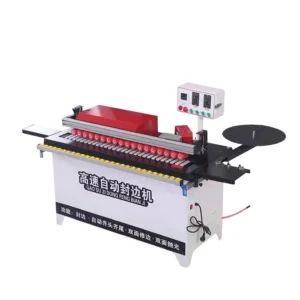
Products Disply The high-speed automatic edge banding machine has the function of automatic end cutting....
View Details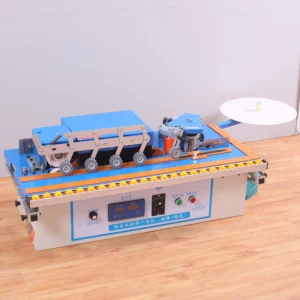
ZDSF120 Automatic Edge Banding Machine, 220V, Double-Sided Gluing, 10-60mm Panel Thickness — compact footprint designed...
View Details