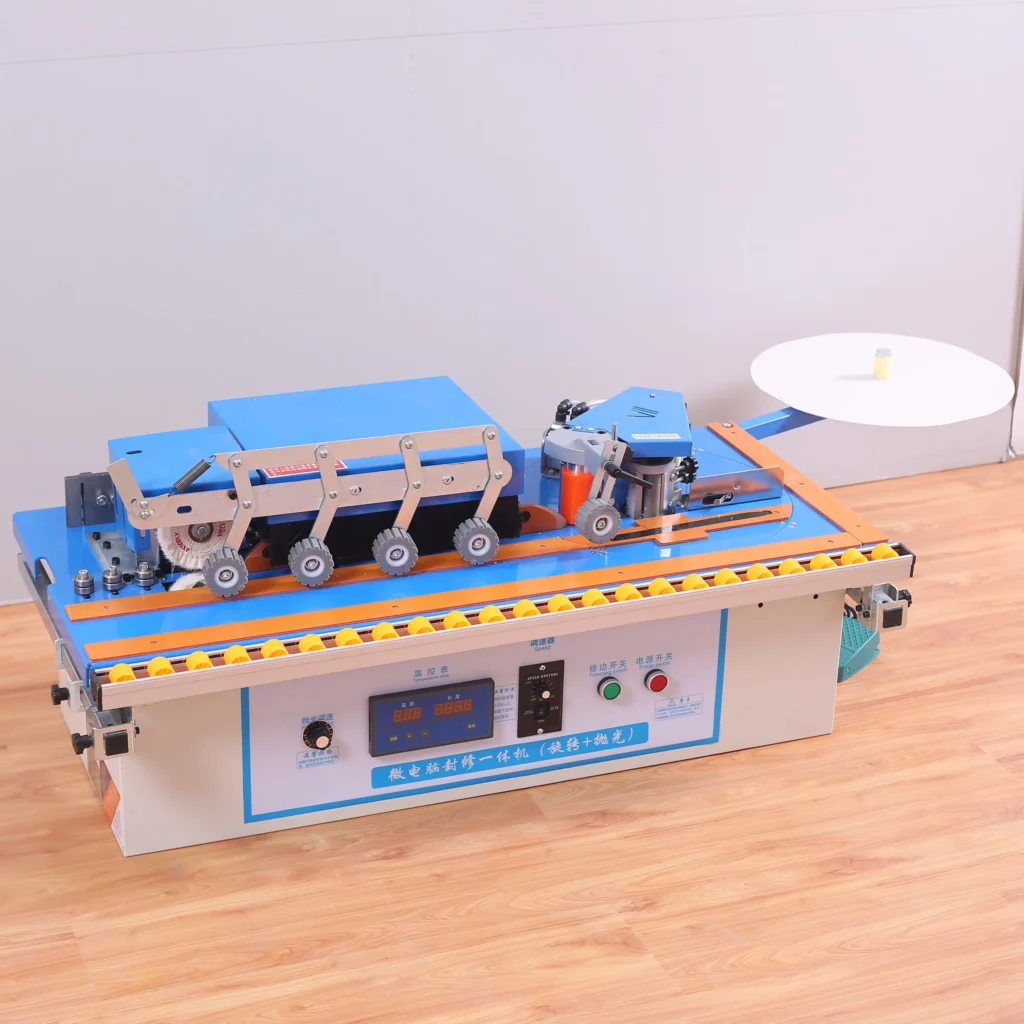
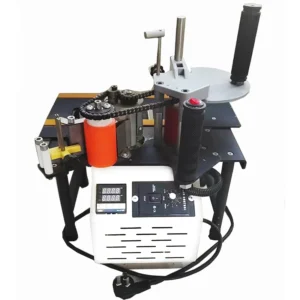
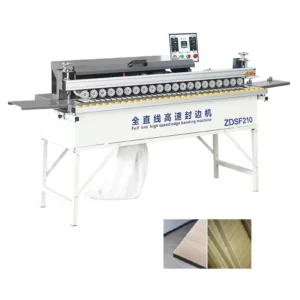
Compact Footprint, Fast Dispatch — the ZDSF120 automatic edge banding machine arrives configured for 220V single-phase supply, cutting weeks off the typical procurement-to-production timeline for small workshops.
Technical Specifications
| Parameter |
Value |
| Model |
ZDSF120 |
| Product Type |
Automatic Edge Banding Machine |
| Voltage |
220V |
| Rated Power |
2.8 kW |
| Glue Pot Capacity |
1000 ml |
| Heating Time |
5–8 min |
| Panel Thickness Range |
10–60 mm |
| Edge Banding Thickness Range |
0.5–3 mm |
| Overall Dimensions |
105 × 50 × 45 cm |
| Net Weight |
52 kg |
| Gluing Method |
Double-sided gluing |
| Trimming |
Automatic trimming and polishing |
| End Cutting |
Pneumatic flush head cutting |
| Operation Mode |
Straight and bend dual use |
Application Suitability
| Application |
Material or Output |
| Cabinet door edge finishing |
MDF and particleboard with 0.5–3 mm PVC banding |
| Small-batch custom shelving |
Plywood panels from 10 to 60 mm thick |
| Joinery startup production |
Short-run furniture components with straight and curved profiles |
| Workshop transition from manual banding |
Semi-automated PVC edge application on board stock |
Why Voltage Confirmation Must Precede the Purchase Order
Matching the machine's electrical rating to your workshop's actual supply prevents a two-week production blackout before it starts.
I learned this the hard way in a Southeast Asian cabinet factory. A high-speed PVC edge bander was ordered without verifying the site voltage — the 440V motor met a 380V grid, the control board burned out on first start, and the line sat dead for a fortnight waiting for a replacement board shipped from China [NEED_CITE: voltage and frequency standards by export market]. Since that incident, I ask every buyer for a photo of their electrical panel nameplate before any automatic edge banding machine in stock is reserved for shipment. The ZDSF120 is configured for 220V, which suits single-phase workshop circuits in many regions, but confirming frequency and phase compatibility remains essential. A five-minute check at inquiry stage avoids weeks of lost production and expensive component replacements.

Dispatch Speed Without Configuration Surprises
Small workshops rarely have the floor space or downtime to accommodate a machine that arrives needing electrical modifications. The ZDSF120 ships as a 220V unit with double-sided gluing and pneumatic trimming already integrated, so the only utility connection required is a standard single-phase circuit matching the rated 2.8 kW draw. When you search for an automatic edge banding machine in stock, lead time matters — this model's compact 105 × 50 × 45 cm footprint means it can be crated and dispatched faster than larger multi-station banders, and it fits through standard workshop doors without rigging equipment.
What Compact Really Means on the Shop Floor
At 52 kg, the ZDSF120 sits on a bench or low stand rather than demanding a dedicated foundation or floor anchors. The 1000 ml glue pot reaches working temperature in 5 to 8 minutes, which suits the stop-start rhythm of a small joinery operation where the machine may run a few dozen panels in the morning and sit idle until the afternoon. Straight and bend dual-use capability means a single operator can edge-band curved cabinet components without switching to a separate manual station [NEED_CITE: operational differences between straight-only and dual-mode edge banders]. For a startup producing custom furniture in short runs, this flexibility removes a bottleneck that would otherwise require two machines or two operators.
Reading the Specs That Actually Matter
The 10–60 mm panel thickness range covers standard MDF, particleboard, and plywood boards used in cabinet and shelving production — but boards approaching the upper limit will sit tight against the feed mechanism, so verify that your thickest stock feeds smoothly during a pre-shipment test. Double-sided gluing applies adhesive to both the panel edge and the banding strip simultaneously, which improves bond consistency on porous substrates like particleboard compared to single-sided systems. The 0.5–3 mm edge banding thickness range accommodates thin PVC for visible furniture faces as well as thicker strips for high-wear worktop edges. Pneumatic flush head cutting trims the banding ends cleanly at the panel boundary, eliminating the ragged overhang that manual snips leave on short workpieces. Automatic trimming and polishing downstream produces a finished edge ready for assembly without a separate bench operation.
The Hidden Cost of Skipping Pre-Dispatch Verification
Ordering a compact edge bander online without requesting a factory test record is a gamble. Panels that feed cleanly at the supplier's facility may behave differently in a humid workshop or with a different brand of PVC banding. Buyers who skip the voltage check have arrived to find motors running backwards or control boards overheating within the first hour [NEED_CITE: common electrical faults in imported woodworking machinery]. When the operation manual arrives only in a language the operator cannot read, commissioning stalls until a translation is sourced — and production schedules slip. These are not theoretical risks; they are the most frequent complaints I encounter from workshops that bought machinery on specification sheets alone.
Why Procurement Through This Channel Reduces Risk
Engineer-led configuration review ensures the ZDSF120 is matched to your actual panel sizes, banding materials, and daily volume before an order is confirmed. Four-stage quality control — incoming material, in-process assembly, finished product, and pre-shipment verification — means the unit you receive has been run on test panels before crating. Voltage, control panel language, and documentation can be confirmed at the quotation stage rather than discovered as problems at delivery. Full OEM and private-label capability is available if you are a distributor adding this model to a regional catalogue. Factory test records and packing photographs are provided before dispatch, so you see exactly what is shipping.
Documentation & Verification
- CE declaration of conformity covering the ZDSF120 electrical and mechanical safety requirements
- Factory test record run on your specified panel thickness and PVC banding material
- Electrical schematic with confirmed 220V wiring diagram and circuit breaker specification
- Operation and maintenance manual in the operator's working language
- Packing photographs showing crate condition and machine securing before dispatch
Installation, Commissioning & Support
- Place the ZDSF120 on a level bench capable of supporting 52 kg with 105 cm clearance length
- Connect to a dedicated 220V single-phase circuit rated for at least 2.8 kW continuous draw
- Allow 5–8 minutes for the 1000 ml glue pot to reach operating temperature before first panel feed
- Calibrate pneumatic end cutting pressure to match your PVC banding thickness during initial setup
- Lubricate the feed chain and inspect trimming cutters after every 40 operating hours
- Keep spare glue rollers and trimming blades from the included parts kit within reach of the operator
Before You Request a Quote
To move quickly from inquiry to dispatch, provide the panel materials and thicknesses you run most often, the PVC or veneer banding brands and thicknesses in your current inventory, and a photo of your workshop electrical panel nameplate showing voltage and frequency. If your production includes curved components, note the minimum bend radius so we can confirm feed compatibility during the pre-shipment test.
Frequently Asked Questions
Q: What panel thickness and edge banding range does the ZDSF120 handle, and is it sufficient for a small cabinet shop?
A: The machine covers panel thickness from 10 to 60 mm and edge banding from 0.5 to 3 mm. This range suits standard MDF and particleboard cabinet components with PVC banding. If you regularly run boards thicker than 60 mm or use solid wood lipping over 3 mm, a larger model would be more appropriate — let us review your product mix before you order.
Q: Is 220V the only voltage available, or can this unit be configured for my local electrical supply?
A: The ZDSF120 is stocked at 220V for fast dispatch. If your workshop operates on a different voltage or requires three-phase supply, a configured-to-order version is available with a slightly longer lead time. Always send a photo of your electrical panel nameplate so we confirm compatibility before shipment.
Q: How fast can the ZDSF120 be dispatched, and what shipping options exist for a single unit?
A: Stocked units are typically crated and handed to the freight forwarder within a short window after order confirmation. For a single 52 kg unit, both sea freight LCL and air freight are viable depending on your timeline and budget. We provide packing photographs and tracking documentation before the crate leaves the factory.
Q: Does the ZDSF120 handle curved panels, or is it limited to straight edges only?
A: The machine operates in both straight and bend dual-use mode, so curved cabinet components can be edge-banded on the same unit used for straight shelving panels. Feed speed and banding tension must be adjusted for curved work — the operation manual covers the setting changes required for each profile type.
Q: What spare parts are included, and how do I order replacements after installation?
A: Each ZDSF120 ships with a spare parts kit covering high-wear items such as glue rollers and trimming blades. The included parts list identifies each component by part number for reordering. Replacement parts can be requested through the same channel used for your original order, with dispatch typically within a short turnaround window.