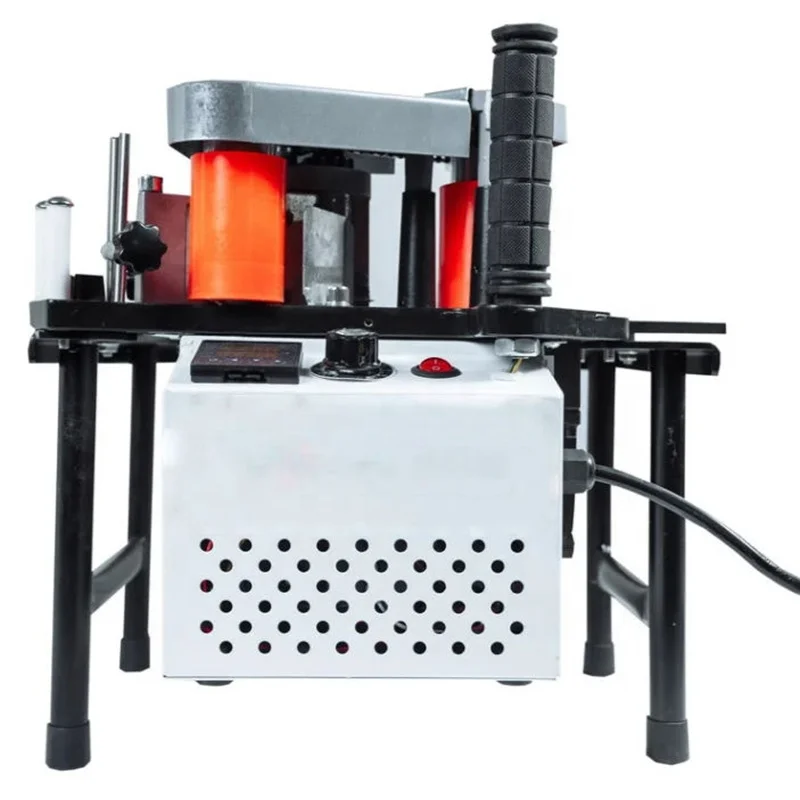
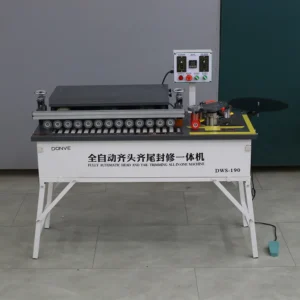
Fast Dispatch Ready — a 14 kg portable edge bander configured for your local voltage before it leaves the factory, so the first plug-in on site is the last surprise you face.
Technical Specifications
| Parameter |
Value |
| Product Type |
Portable Edge Banding Machine |
| Shape of Edge-banding Plates |
Curved, straight, and special-shaped sheet |
| Edge Thickness |
0.3–3 mm |
| Edge Sealing Speed |
0–6 m/min |
| Edge Sealing Height |
7–60 mm |
| Gluing Method |
Double-sided gluing |
| Glue Pot Volume |
1000 ml |
| Machine Weight |
14 kg |
| Assembly State |
Portable, hand-held operation |
| Plug Options |
EU / AU / UK / USA / CN plug available |
| Logo Customization |
Supported |
| Warranty |
1 year |
Application Suitability
| Application |
Material or Output |
| Small workshop cabinet edge finishing |
MDF, plywood, and particleboard panels |
| On-site curved profile banding |
Solid wood and veneer edge banding |
| Startup joinery shop mixed-profile jobs |
PVC edge banding on shaped workpieces |
| Low-volume custom furniture production |
Melamine and laminate edge materials |
Why the Voltage Question Should Come Before the Price on a Portable Edge Bander
A portable edge banding machine that arrives with the wrong voltage is nothing more than a 14 kg paperweight until an electrician rewires the workshop.
I once watched a Middle East customer spend two weeks rerouting shop wiring because a small edge bander was shipped without confirming the local 220V/60Hz supply against the factory-default 380V configuration. The machine was technically perfect; the plug simply did not match the panel. That single oversight stalled commissioning, cost the buyer extra contractor fees, and eroded trust before the first panel was edged. For a small workshop running a single Portable Edge Banding Machine in stock, there is no backup line to absorb the downtime. Voltage confirmation is the most overlooked line item on a quotation, yet it is the one that determines whether the machine runs on day one [NEED_CITE: voltage and frequency standards by export market].
Footprint and Power Draw That Fit a One-Person Shop
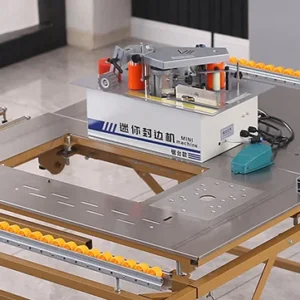
A 14 kg hand-held unit sits on a standard workbench and draws power from a single dedicated outlet. There is no three-phase supply requirement, no floor anchoring, and no compressed air line to plumb in before the first shift. For a joinery workshop moving from manual edge trimming to machine-assisted banding, this is the smallest viable step that still delivers consistent double-sided gluing across the full 7–60 mm edge height range.
One Machine for Curved, Straight, and Shaped Profiles
Separate jigs for each profile type consume bench space and setup time a small shop cannot spare. This portable edge bander handles curved panels, straight cabinet sides, and special-shaped workpieces in a single pass. The 0–6 m/min feed speed is adjustable, which matters when an operator is still building confidence feeding a curved radius by hand [NEED_CITE: edge banding technique for curved profiles on portable units].
Reading the Spec Sheet Against Real Workshop Conditions
The 0.3–3 mm edge thickness range covers standard PVC and veneer banding stock used in most custom cabinet work. Edge sealing height of 7–60 mm means the machine handles everything from thin drawer fronts to 60 mm solid-wood table tops without swapping tooling. The 1000 ml glue pot holds enough adhesive for a full small-batch run before a refill is needed, which keeps a solo operator focused on the workpiece rather than the glue level. Double-sided gluing applies adhesive to both the panel edge and the banding strip simultaneously, producing a bond line comparable to what a stationary machine delivers at this thickness range.

The Cost of Skipping Specification Confirmation
Ordering a portable bander on price alone, without verifying the plug type and control panel language, leads to a machine that sits unopened while the buyer sources adapters and translated manuals. I have seen small shops lose an entire production week because the feed speed dial was marked in a script the operator could not read. The unit was correct for the job; the interface was not. Every specification line on the quotation deserves the same attention as the price line [NEED_CITE: CE machinery directive requirements for industrial equipment].
What You Get Beyond the Machine Itself
Voltage and plug type are confirmed against your local supply standard before the machine leaves the assembly bench, not after it arrives. A factory test record with sample edge banding photographs on your specified panel material ships with the unit so you can verify bond quality on day one. The operation manual is prepared in your agreed language, and a spare parts list accompanies the machine so consumable planning starts before the first shift runs out of banding stock. In-house manufacturing with a four-stage QC process covers incoming material, in-process assembly, finished product, and pre-shipment verification. Engineer-led configuration means the quotation you receive within 24 hours reflects your actual workshop conditions, not a generic catalog entry.
Documentation & Verification
- CE declaration of conformity matching the portable edge bander classification
- Factory test record on your specified panel thickness and edge material before dispatch
- Electrical schematic confirming the voltage and plug type shipped with your unit
- Operation and maintenance manual in the language your operator reads
- Spare parts list with consumable part numbers for immediate reorder planning
Installation, Commissioning & Support
- Place the 14 kg unit on a stable workbench with a single dedicated outlet matching the confirmed voltage
- Verify the plug type against local supply before the first power-on to avoid circuit trips
- Run a test piece on scrap board to set the 0–6 m/min feed speed and glue temperature for your banding material
- Adjust the double-sided glue flow using the 1000 ml pot sight glass to match 0.3–3 mm edge thickness
- Review the supplied spare parts list to stock replacement glue rollers and trimming blades for the first quarter
What to Include in Your First Inquiry
Send your local voltage and frequency, the plug type used in your market, and the primary panel material and thickness you run. If your shop handles curved or special-shaped workpieces, include a sketch or photograph of the profile so the engineer can confirm the edge sealing height fits within the 7–60 mm range. Specify the control panel language your operator needs and whether you require a factory test on your own sample material before dispatch.
Frequently Asked Questions
Q: What panel thickness and edge height can this portable bander actually handle?
A: The machine seals edges from 7 to 60 mm in height and accepts banding stock from 0.3 to 3 mm thick. This covers most MDF, plywood, and particleboard panels used in custom cabinet and furniture work. Always confirm your specific panel thickness against these limits before ordering.
Q: Which plug and voltage will ship with my order?
A: EU, AU, UK, USA, and CN plug types are available. Voltage and frequency are confirmed against your local supply standard before dispatch. State your market and electrical standard in the inquiry so the correct configuration is locked in on the quotation.
Q: How long from order to dispatch?
A: Stocked units are prepared for fast dispatch once voltage and plug confirmation is complete. Built-to-order configurations with custom logo or specific language panels follow a typical multi-week lead time. Your quotation will state the exact dispatch date.
Q: What glue type and banding material are compatible?
A: The 1000 ml glue pot works with standard hot-melt EVA adhesive. Compatible banding materials include PVC, veneer, and melamine strips within the 0.3–3 mm thickness range. Contact the supplier for guidance on specialty adhesives for high-temperature workshop environments.
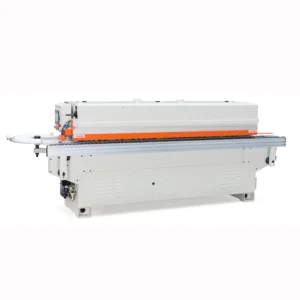
Q: When my volume grows, what is the upgrade path?
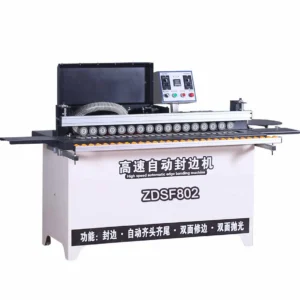
A: This portable unit serves as the entry point. As daily panel count increases, the next step is a compact automatic edge bander with pre-milling and trimming stations from the same product family, keeping the supplier relationship and spare parts supply consistent.