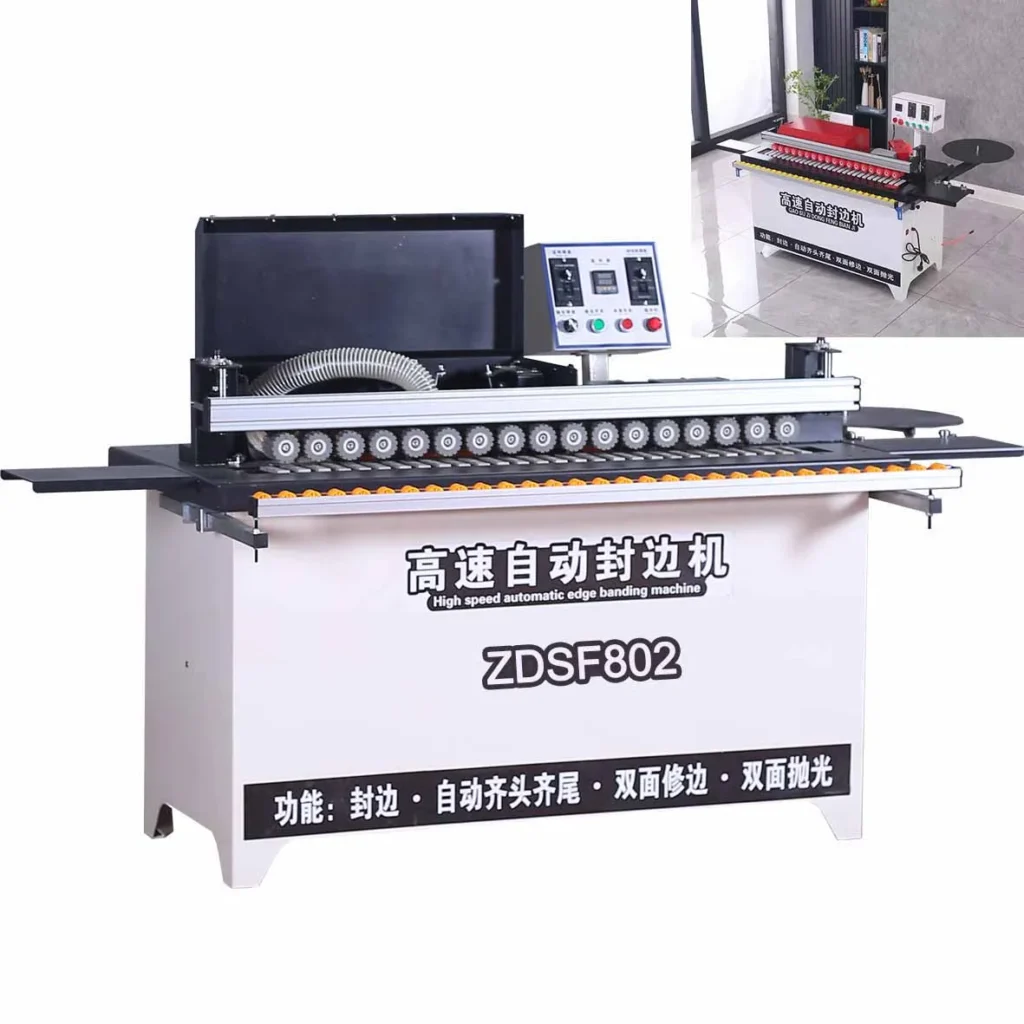
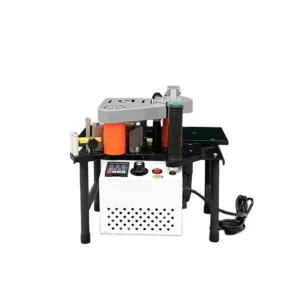
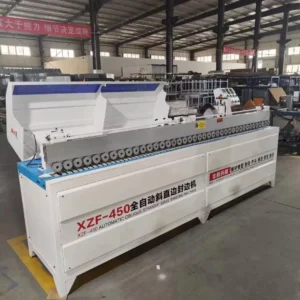
Fast Dispatch from Stock — Model 802 automatic edge bander ships ready to run with a confirmed 220V single-phase configuration, cutting typical multi-week lead times down to immediate dispatch for workshops that cannot wait.
Technical Specifications
| Parameter |
Value |
| Model |
802 |
| Product Type |
Automatic Edge Banding Machine |
| Edge Type |
Straight line |
| Rated Voltage |
220V (single-phase — confirm frequency for target market) |
| Rated Power |
4 kW |
| Heating Power |
1000 W |
| Trimming Power |
800 W × 2 |
| Polishing Power |
180 W × 2 |
| Suction Power |
1200 W |
| Feed Speed |
0–10 m/min |
| Conveyor Belt Speed |
0–10 m/min |
| Strip Thickness Range |
0.5–2.5 mm |
| Sheet Thickness Range |
10–50 mm |
| Glue Pot Capacity |
4000 ml |
| Rated Air Pressure |
0.4–0.6 MPa |
| Glue Pot Temperature Display |
Digital with independent switch |
| Pressure Beam |
One-piece, double rows of pressure wheels |
| Conveyor Belt Material |
Silicone |
| Belt Breaking Method |
Pneumatically controlled |
| Support Table |
Extendable fluent strips for large panels |
| Overall Dimensions (L×W×H) |
130 × 65 × 75 cm |
| Machine Weight |
150 kg |
Application Suitability
| Application |
Material or Output |
| Small custom cabinet production |
MDF and particleboard with PVC straight edge banding |
| Joinery workshop short-run panels |
Plywood with veneer edge banding up to 2.5 mm |
| Startup furniture shop scaling from manual |
Solid wood panels requiring end cutting and trimming in one pass |
| Solo-operator edge finishing |
Melamine-faced boards with pre-milled or standard PVC strips |
Why the Voltage Question Should Come Before Anything Else
An edge bander that cannot plug into your workshop's existing supply is dead weight on the floor.
I have seen it more than once in Latin America: a workshop owner wires up a new machine only to discover the motor demands three-phase 380V while the building only has single-phase 220V. The Automatic Edge Bander in stock here ships configured for 220V single-phase, which covers the majority of small joinery shops across Mexico, Colombia, and Central America. Before any order is packed, a voltage and frequency confirmation letter matches the unit to your local grid [NEED_CITE: voltage and frequency standards by export market]. That step alone prevents the kind of silent stall where a machine sits under a tarp for weeks waiting for a phase converter that was never budgeted for.

Ready Stock Means You Start Producing This Month
Workshops moving off hand-held edge banding rarely have the luxury of waiting through a full production cycle. The Model 802 is held in stock specifically for buyers who need an Automatic Edge Bander in stock dispatched within days, not months. The 130 × 65 × 75 cm footprint fits through a standard workshop door, and the 150 kg weight means two people on a pallet jack can position it without a forklift. Plug in, connect your compressed air line at 0.4–0.6 MPa, and the glue pot reaches working temperature within ten minutes.
Built for the Solo Operator Who Cannot Afford a Second Pair of Hands
In a small cabinet shop, the person feeding the panel is also the person trimming, stacking, and loading the next board. The extendable fluent strips on the support table let one operator guide large-format panels without the edge dipping before the feed rollers engage. The pneumatically controlled belt breaking delivers a consistent end cut each cycle, removing the guesswork from panel positioning. The silicone conveyor belt and double-row pressure wheels keep the panel surface scratch-free — important when you are running pre-finished melamine boards where every mark means a rejected piece.
What the Numbers on the Spec Sheet Actually Mean in Your Workshop
The 10–50 mm sheet thickness range covers the vast majority of cabinet and shelving stock — from thin 10 mm MDF backs to 50 mm solid-wood worktops. Pairing that with a 0.5–2.5 mm strip thickness range means you can run thin PVC for carcase edges and thicker veneer for visible door fronts on the same machine without tooling changes. The 4000 ml glue pot capacity is worth noting: smaller pots require mid-batch refills that cool the adhesive and introduce inconsistency. A 4-litre pot keeps thermal mass stable through a full run of cabinet sides [NEED_CITE: adhesive thermal stability in small-volume edge banding]. The two 800 W trimming motors handle head-and-tail trimming in sequence, while the 180 W polishing motors smooth the residual edge — together they replicate the finish of a multi-station line in a single compact pass. Feed speed tops out at 10 m/min, which suits short-batch custom work where panel dimensions change every few pieces.
The Hidden Cost of Buying the Wrong Entry-Level Machine
A machine undersized for your actual workload does not just slow you down — it introduces rework. Panels with visible glue lines get pulled from the assembly bench and sent back, doubling handling time. Edge banding that peels after a week in a humid showroom destroys customer trust far beyond the cost of the wasted strip material. I watched a Chilean cabinet maker lose an entire kitchen order because the adhesive temperature curve was set for melamine paper while the operator was feeding PVC, a mismatch that went unnoticed until the doors were hung [NEED_CITE: adhesive selection by edge banding material]. The Model 802's digital glue pot temperature display with independent switch lets you verify and lock the heat setting before the first panel enters, eliminating that class of error.
Why Procurement Teams Source This Model Here
The in-house manufacturing process covers precision-ground components with multi-stage inspection, so the feed rollers and pressure wheels on your unit match the tolerance verified on the test bench. Every unit receives a four-stage QC sequence — incoming material, in-process, finished product, and pre-shipment verification — before it leaves the factory floor. Voltage, control panel language, and specification details are configurable as standard, meaning your operator reads the interface in Spanish, Portuguese, or English from day one. An engineer-led configuration review happens before the formal quotation, so the machine you receive is matched to your panel materials and daily volume rather than a generic catalog entry. Factory visits are welcomed if you want to see the assembly bay and run your own sample panels before committing.
Documentation & Verification
- CE declaration of conformity covering the Model 802 electrical and mechanical safety scope
- Factory test record showing glue pot heating cycle and trimming finish on your specified panel thickness
- Electrical schematic with confirmed voltage and frequency for your local grid
- Operation and maintenance manual printed in your operator's working language
- Pre-shipment photographs of your specific unit packed and labeled for export
- Spare parts list with reorder codes for trimming blades, polishing wheels, and conveyor belt sections
Installation, Commissioning & Support
- Requires a dedicated 220V single-phase circuit rated for at least 4 kW continuous draw
- Compressed air supply at 0.4–0.6 MPa with a moisture trap fitted before the machine inlet
- Assembly required on arrival; the 150 kg frame bolts to a level floor without special foundations
- Extendable fluent strips must be aligned to your typical panel width before first production run
- Glue pot first heat-up takes 5–10 minutes; set temperature according to strip material before feeding
- Digital temperature display and independent switch allow daily verification without opening the control cabinet
What to Share Before Requesting a Quote
Send your primary panel material and thickness range, the edge banding type and strip width you run most often, and your local voltage and frequency so the configuration can be locked before the order is placed. If you operate in a humid or dusty environment, mention that so the dust collector integration and glue pot insulation are reviewed against your conditions. Operators who need the control panel in a specific language should note that upfront — it changes the interface board fitted at the factory.
Frequently Asked Questions
Q: Does this model ship from stock, or is there a production lead time?
A: The Model 802 is held as an Automatic Edge Bander in stock for fast dispatch. Once your voltage and frequency are confirmed and the order is placed, the unit moves through pre-shipment testing and packing. This typically shortens delivery to a matter of days rather than the weeks required for a built-to-order configuration.
Q: Is 220V single-phase sufficient, or do I need a phase converter?
A: The Model 802 is designed for 220V single-phase operation, so no phase converter is required for workshops with that supply. If your local grid runs at a non-standard frequency, confirm that before shipment so the motor and heating elements are matched. A dedicated circuit rated above 4 kW is recommended.
Q: What panel thickness and edge banding materials does it handle out of the box?
A: Sheet thickness from 10 to 50 mm and strip thickness from 0.5 to 2.5 mm are covered. The machine handles PVC and veneer straight edge banding on MDF, particleboard, plywood, and solid wood panels. Glue pot temperature should be adjusted via the digital display to match the specific adhesive and strip material in use.
Q: What is included for setup, and do I need to assemble it myself?
A: The machine ships requiring assembly. An operation and maintenance manual in your chosen language is included, covering bolt-torque sequence, belt alignment, and first-run glue pot calibration. Pre-shipment test records and packing photographs are provided so you can verify completeness before starting installation.
Q: What spare parts ship with the machine, and how do I reorder consumables?
A: A spare parts list with reorder codes is included in the documentation pack. Initial consumables such as trimming blades and polishing wheels are specified per your edge banding material. Reorders can be placed through the same supplier channel using the codes on the list, ensuring compatibility with your specific unit.