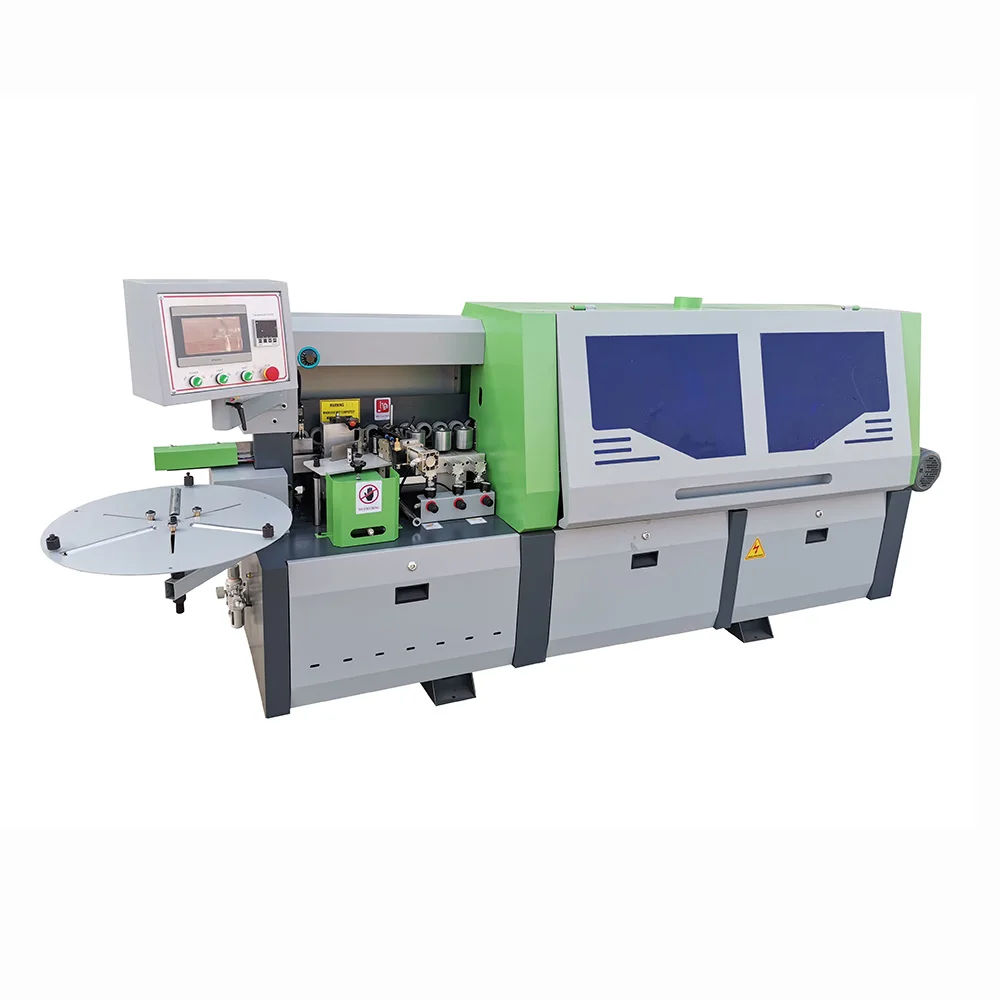
Voltage-Confirmed Dispatch — every ZDS280D unit ships only after matching your site's three-phase supply and control language, preventing the three-week transformer delay I once watched a Vietnamese cabinet shop endure.
Technical Specifications
| Parameter |
Value |
| Model |
ZDS280D |
| Product Type |
Automatic Edge Bander Machine |
| Main Functions |
Gluing, End Trimming, Fine Trimming, Scraping, Buffing |
| Conveyor Belt Speed (Feed Speed) |
16 m/min |
| Panel Thickness Range |
10–60 mm |
| Edge Thickness Range |
0.4–3 mm |
| Min. Panel Width |
60 mm |
| Min. Panel Length |
150 mm |
| Working Pressure |
0.6 MPa |
| Rated Power |
7.5 kW |
| Voltage & Frequency |
380V-3HP (frequency 50/60 Hz to be confirmed per destination) |
| Machine Body |
14 mm national standard high-strength steel plate, frame-type fuselage with high-temperature quenching |
| Conveyor Guide Rail |
HT260 material |
| Conveying Motor |
Customized Taiwan brand with thermal protection |
| Pneumatic System |
German Festo or Taiwan AirTAC cylinders and safety valve |
| Electrical Components |
Delixi/Chint air switches and contactors, Japanese Omron travel switches |
| Net Weight |
700 kg |
| Overall Dimensions (L×W×H) |
3100 × 700 × 1400 mm |
| Warranty |
1 year |
| Delivery Time |
25–30 days (basis not stated in source — confirm order volume dependency) |
Application Suitability
| Application |
Material or Output |
| Custom cabinet door and carcass edge finishing |
MDF and particleboard with PVC or melamine edge tape |
| Small-batch plywood furniture production |
Plywood panels with 0.4–3 mm PVC or veneer banding |
| Joinery startup transitioning from manual banding |
Standard panel substrates up to 60 mm thickness |
| Overflow or backup edge banding for larger shops |
Mixed board runs requiring quick changeover |
Why the Voltage Question Must Precede Every Stock Order
Confirming your workshop's supply phase and frequency before dispatch is the single most effective step to avoid a dead-on-arrival machine.
Early in my career I specified a 380V three-phase edge bander for a Vietnamese startup without verifying their site had only 220V single-phase power. The shop waited three weeks for a step-up transformer before the machine could run. That Automatic Edge Bander Machine in stock looked perfect on paper but sat idle while the owner missed delivery deadlines. [NEED_CITE: voltage and frequency standards by export market]
An Automatic Edge Bander Machine in stock can ship within days, yet arriving with the wrong electrical configuration turns a fast delivery into an expensive delay. The ZDS280D draws 7.5 kW across three phases, meaning a single-phase workshop cannot simply adapt it with a plug change.

Ready-Stock Means Verified Before It Leaves
When you order this Automatic Edge Bander Machine in stock, the configuration conversation happens before the crate is nailed shut, not after it clears customs. Voltage, frequency, and control panel language are confirmed against your site conditions so the machine powers up the day it is uncrated. A small workshop cannot afford weeks of downtime while an electrician sources a transformer or rewires a control cabinet.
A Footprint That Fits Where Space Is Tight
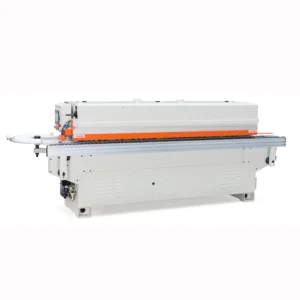
At 3.1 metres long and 700 mm wide, the ZDS280D slots into a narrow bay beside an existing panel saw or sliding table. The 14 mm steel plate frame with quenching treatment keeps vibration low even when the machine runs beside lighter benches. Small joinery shops typically have limited floor area, and a 3.1-metre footprint leaves room for material staging and offcut storage without crowding the operator. [NEED_CITE: typical small workshop floor layout constraints]
Reading the Specs That Actually Affect Your Panels
The 10–60 mm panel thickness range covers most furniture-grade MDF, particleboard, and plywood used in cabinet and shelving work. Running boards outside that window risks incomplete glue transfer on thin stock or conveyor jamming on thick panels. The 16 m/min feed speed is calibrated for five stations — gluing, end trimming, fine trimming, scraping, and buffing — so each cutter head has adequate contact time at that rate. Pushing feed speed higher on a five-station machine of this class typically shows up as chatter marks on the trimmed edge.
The HT260 conveyor guide rail provides a flat, wear-resistant running surface that keeps panels square through the trimming zone; a softer rail would allow lateral drift over months of use, degrading edge squareness. Pneumatic cylinders from Festo or AirTAC deliver consistent pressure on the pressing rollers, which directly controls glue-line uniformity across varying edge thicknesses from 0.4 to 3 mm.
What Happens When the Wrong Machine Arrives
A control panel printed in a language your operator cannot read stalls commissioning for days while a translator is found. Panels fed into an edge bander with mismatched feed height arrive at the trimming station misaligned, producing visible steps on the finished edge. Entry-level machines sold into production volumes they were never designed for accumulate wear on the conveyor bearings long before the scheduled maintenance window, leading to unscheduled stoppages. [NEED_CITE: common causes of edge bander downtime in small workshops]
Why Procurement Through This Channel Works
In-house manufacturing with patented cutting mechanisms means the ZDS280D's trimming stations are built and tested under one roof, not assembled from outsourced sub-contracts. Voltage and language customization is treated as standard procedure rather than a special request, so your 415V 60 Hz supply in the Philippines or 380V 50 Hz in Indonesia is confirmed before the machine enters final assembly. Four-stage quality control with pre-shipment verification catches tolerance drift on the trimming heads before the machine is crated. Engineer-led configuration recommendation ensures that a 7.5 kW machine is not recommended for a workshop with only single-phase supply. Factory visits are welcomed if you want to see the quenching line and guide rail grinding process before committing.
Documentation & Verification
- CE declaration of conformity matched to ZDS280D configuration
- ISO 9001 certificate covering edge bander manufacturing scope
- Machine specification sheet confirming your voltage and frequency
- Electrical schematic with confirmed three-phase wiring diagram
- Factory test record on your panel thickness range before dispatch
- Operation and maintenance manual in the language you specify
Installation, Commissioning & Support
- Level concrete floor required to support 700 kg across 3.1 m frame length
- Dedicated 380V three-phase circuit with 7.5 kW capacity and correct frequency
- KD packing available; reassembly guidance provided with alignment checkpoints
- First-run parameter setting for 10–60 mm panel thickness and 0.4–3 mm edge tape
- Operator training on control panel in agreed language at commissioning
- Spare parts list with part numbers for trimming blades and scraping tools
Before You Request a Quote
Share your workshop's confirmed supply voltage and phase, the panel materials and edge tape types you run most often, and your available floor length for the machine bay. If you are replacing a manual process, let us know your current daily panel count so the ZDS280D's 16 m/min feed rate can be mapped against your throughput requirement. Mention whether you need the control interface in a specific language or if your existing dust extraction system needs a port diameter confirmation.
Frequently Asked Questions
Q: Is this model in stock and what is the actual dispatch lead time?
A: The ZDS280D is listed as a ready-stock configuration. Standard dispatch is quoted at 25–30 days, though exact timing depends on the current inventory position and whether voltage or language customization is required before shipment. Confirm your destination and electrical requirements to receive a firm shipping date.
Q: Can the voltage be configured to my local supply?
A: Yes. The ZDS280D supports voltage customization from 110V to 440V. Your site's phase, voltage, and frequency must be confirmed before the machine enters final assembly so that motors, contactors, and the control transformer are matched to your grid. This prevents the transformer delay that stalls many unverified orders.
Q: What is the minimum panel size this machine can handle?
A: The ZDS280D accepts panels as narrow as 60 mm and as short as 150 mm, with thickness from 10 to 60 mm. These limits ensure the conveyor rollers and pressing zone maintain adequate contact for stable edge application and clean trimming across the full five-station sequence.
Q: How do I get replacement blades and scraping tools?
A: A spare parts list with part numbers is included at delivery. Trimming blades and scraping tools are consumable items, and reorders can be placed directly using the part numbers provided. Keeping a small on-site inventory of these wear parts minimizes unplanned downtime during busy production periods.
Q: Is door-to-door shipping available and what does installation involve?
A: Door-to-door shipping can be arranged based on your destination port and final address. Installation involves positioning the 700 kg machine on a level floor, connecting the confirmed three-phase supply, attaching dust extraction, and running test panels through all five stations to verify edge quality before production begins.