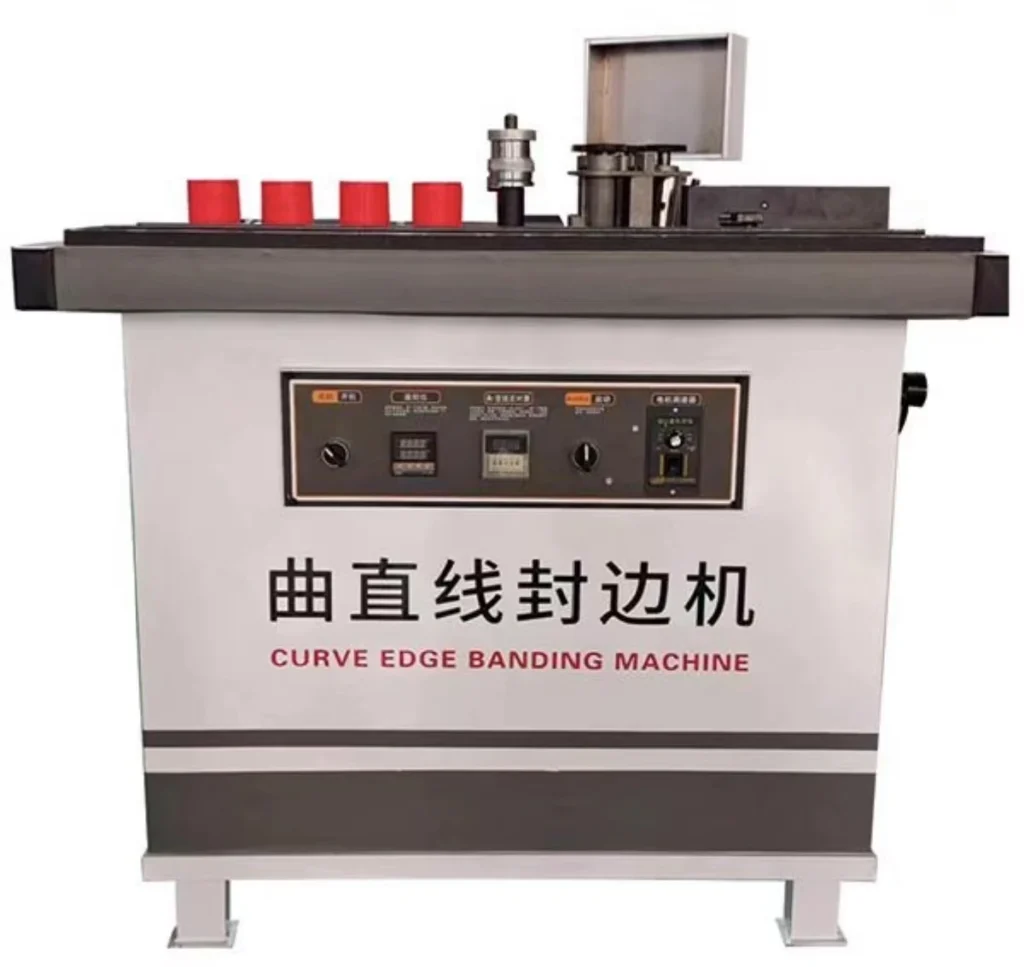
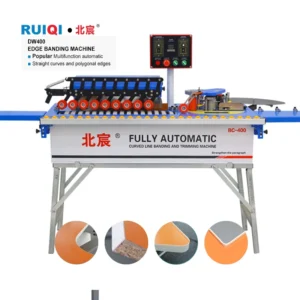
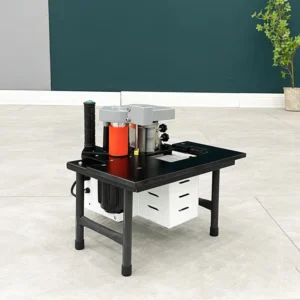
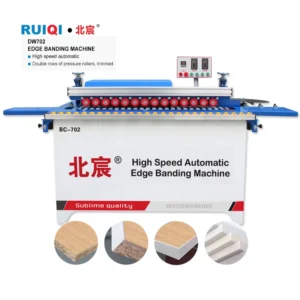
Compact Footprint, Full Function — the ZDS702 double-sided glue edge banding machine is engineered for joinery startups scaling from hand-trimming to mechanised output without overcommitting floor space or capital.
Technical Specifications
| Parameter |
Value |
| Model |
ZDS702 |
| Product Type |
Double-Sided Glue Edge Banding Machine |
| Rated Voltage |
220V |
| Rated Power |
1.4 kW |
| Trimming Height |
10–50 mm |
| Rated Air Pressure |
0.6–0.8 MPa |
| Glue Capacity |
2000 ml |
| Overall Size |
100 × 75 × 95 cm (source value — verify against manufacturer catalog) |
| Machine Weight |
120 kg |
| Key Features |
Automatic breaking belt, Curved & Straight dual-purpose, Double sides gluing, Time memory function |
| Applicable Edge Banding Materials |
PVC, Wood Veneer, Melamine, Plastic |
Application Suitability
| Application |
Material or Output |
| Furniture panel edge banding |
MDF, particleboard, plywood with PVC or melamine edging |
| Wooden door component finishing |
Solid wood and composite panels with wood veneer banding |
| Small-batch cabinet production |
Curved and straight profiles on custom-shaped substrates |
| Workshop transition from manual to mechanised |
Low-volume runs requiring quick changeover between panel types |
Why Voltage Confirmation Must Happen Before the Order
Matching your workshop supply to the machine input is the single most overlooked step in small equipment procurement.
I have seen workshops take delivery of compact edge banders only to discover the local supply cannot sustain the required amperage under load. The ZDS702 is rated at 220V single-phase, which works in most light-industrial and commercial settings, but voltage stability under continuous draw is a different matter from nominal availability. Workshops sharing a single circuit with dust extractors and compressors may experience drops that affect glue pot temperature consistency [NEED_CITE: voltage and frequency standards by export market]. A Double-Sided Glue Edge Banding Machine for small workshop environments must be evaluated against your actual electrical infrastructure, not just the label on the wall.

Single-Phase Entry Point for Growing Workshops
The step from hand-trimming to a mechanised edge bander is the most consequential investment a joinery startup makes. The ZDS702 double-sided glue edge banding machine is designed as that first step: 220V single-phase input means you can run it in a standard commercial unit without installing three-phase infrastructure. The 1.4 kW rated power keeps total draw manageable even in workshops operating multiple small machines simultaneously.
Dual-Purpose Curved and Straight Capability
Most entry-level banders force a choice between straight-run efficiency and curved-profile versatility. This unit handles both in a single setup, which matters when a small cabinet maker is producing a run of flat drawer fronts on Monday and shaped door panels on Wednesday. The curved and straight dual-purpose gluing head eliminates the need for a second machine or an awkward manual workaround on shaped components [NEED_CITE: CE machinery directive requirements for edge banding equipment].
Reading the Specs Against Real Production Needs
The 10–50 mm trimming height range defines what panel thicknesses the machine can process, and this directly determines whether your typical substrate falls within its working envelope. Most standard cabinet components run between 16 and 25 mm, but decorative panels and solid-wood door stiles can push toward the upper limit. The 2000 ml glue capacity is sufficient for sustained short-run production but will require monitoring during full-day sessions on high-absorption substrates like raw MDF, which draws more adhesive than sealed particleboard. The automatic breaking belt feature reduces edge banding waste at the end of each cycle, while the time memory function stores settings so operators do not recalibrate between recurring job types [NEED_CITE: woodworking machinery safety and operational standards].
The Real Cost of Skipping Configuration Checks
Ordering a compact bander without confirming substrate compatibility leads to glue starvation on absorbent materials or excess squeeze-out on sealed surfaces. Workshops that buy on footprint and price alone often discover the machine cannot hold consistent adhesion on the specific MDF density they use daily. When edge banding lifts on delivery to the customer, the reputational damage far exceeds the time it would have taken to run a sample test before purchase [NEED_CITE: common edge banding failure modes in small workshop environments]. Mismatched air pressure supply also causes intermittent belt-breaking failures that operators attribute to material quality rather than pneumatic inconsistency.
Why This Supplier Configuration Works for Entry-Level Buyers
The ZDS702 sits within a broader product family that extends from this entry-level unit through to full-function pre-milling edge banders, so a workshop can scale production volume without switching supplier or relearning controls. Voltage confirmation is handled before production begins, not after the crate arrives. Every unit goes through four-stage quality control covering incoming components, in-process assembly, finished product verification, and pre-shipment testing under load. The engineering team provides configuration recommendations based on your actual substrate and edge banding material rather than shipping a default setup. Operation and maintenance manuals are supplied in the language your operators read, which eliminates the commissioning delays that plague imported machinery [NEED_CITE: industrial equipment documentation requirements for international trade].
Documentation & Verification
- Machine specification sheet confirming ZDS702 rated voltage, power, and trimming height range
- Electrical schematic with 220V wiring diagram for your local electrician
- Factory test record on your specified panel thickness and edge banding material
- Operation and maintenance manual in your operator's agreed language
- CE declaration of conformity for market entry and compliance verification
- Spare parts list with consumable glue and belt specifications
Installation, Commissioning & Support
- Requires a dedicated 220V circuit rated for the 1.4 kW draw with appropriate breaker protection
- Compact 100 × 75 × 95 cm footprint fits standard workshop bays without foundation modification
- Air supply must sustain 0.6–0.8 MPa continuously to prevent belt-breaking cycle faults
- Machine arrives partially assembled; gluing head and feed table require field alignment
- First-run calibration includes glue flow rate adjustment for your specific substrate porosity
- Operator training covers curved-to-straight changeover and time memory function programming
Preparing Your Inquiry
To receive an accurate configuration recommendation for the ZDS702 double-sided glue edge banding machine, provide your typical panel material and thickness range, the edge banding type you intend to run, your workshop's confirmed voltage and available circuit capacity, and whether your production includes curved profiles. This allows the engineering team to verify compatibility and suggest any auxiliary equipment needed before an order is placed.
Frequently Asked Questions
Q: Is 220V single-phase sufficient for continuous daily production on this edge bander?
A: The ZDS702 is rated for 220V single-phase at 1.4 kW, which suits light to moderate daily use typical of joinery startups and small cabinet shops. For full-shift, high-volume production, the engineering team will assess whether your throughput requirement exceeds what single-phase input can sustain and recommend the appropriate next-tier model if needed.
Q: How does the 10–50 mm trimming height range affect my material choices?
A: This range covers most standard cabinet panels at 16–25 mm and extends to thicker decorative boards and solid-wood components. If your typical substrate falls near the upper boundary, sample testing confirms the trimming mechanism handles it cleanly without edge tear-out on your specific material.
Q: What is involved in switching between curved and straight edge banding?
A: The dual-purpose gluing head on this Double-Sided Glue Edge Banding Machine for small workshop use allows changeover without swapping tooling. Operators adjust the feed guide and select the stored profile setting via the time memory function, reducing setup time between jobs and minimising material waste during transition.
Q: What consumables should I stock before the machine arrives?
A: You will need edge banding tape in your standard widths and materials, compatible hot-melt adhesive for the 2000 ml glue pot, and pneumatic fittings rated for 0.6–0.8 MPa. The spare parts list provided before shipment identifies wear items specific to this model so you can order replacements proactively.
Q: How does this machine fit into a future production line expansion?
A: The ZDS702 is the entry point in a product family that scales through to full-function pre-milling models. When your volume grows, the next-tier machines use compatible control logic and edge banding materials, so operator skills and supply relationships transfer directly without retraining or renegotiating with a different supplier.