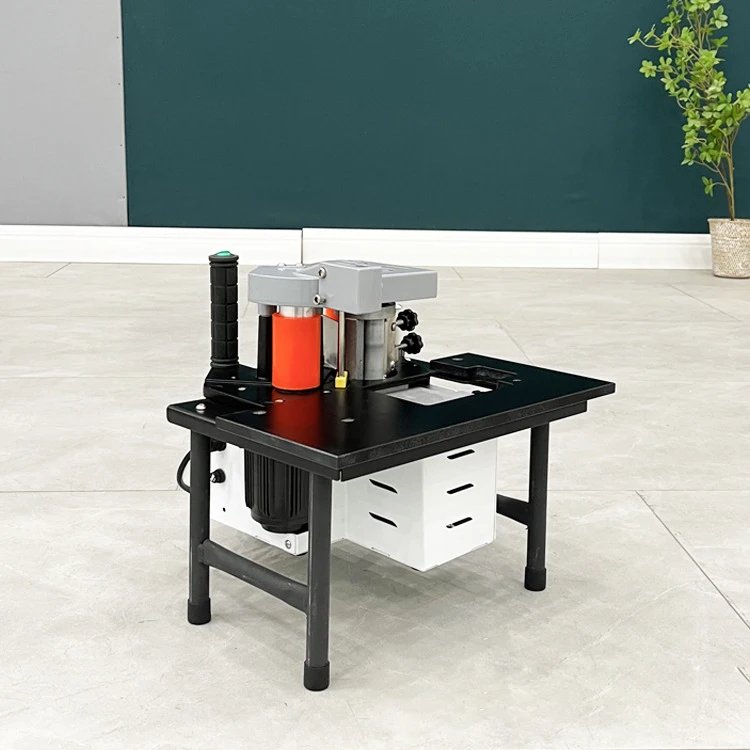
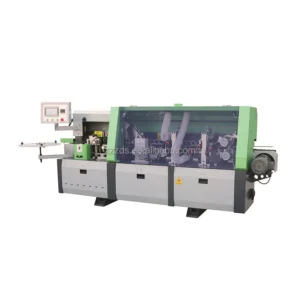
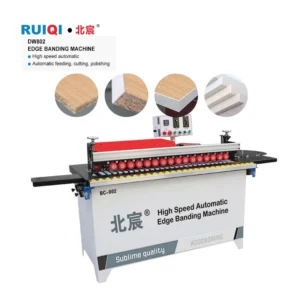
Compact Footprint, Fast Dispatch — Portable Edge Bander ships from stock with double-sided gluing and multiple plug options, ready for small workshops that cannot wait weeks for delivery.
Technical Specifications
| Parameter |
Value |
| Product Type |
Portable Edge Banding Machine |
| Edge Banding Plate Shapes |
Curved, straight, and irregular profiles |
| Edge Thickness Range |
0.3–3 mm |
| Edge Sealing Speed |
0–6 m/min (basis not stated in source — confirm with supplier) |
| Edge Sealing Height |
7–60 mm |
| Gluing Method |
Double-sided gluing |
| Glue Pot Volume |
1000 ml |
| Machine Weight |
14 kg |
| Assembly State |
Portable, hand-held operation |
| Plug Options |
EU / AU / UK / USA / CN |
| Logo Customization |
Available |
Application Suitability
| Application |
Material or Output |
| Custom furniture edge sealing |
MDF and plywood panels with PVC edge banding |
| Curved cabinet component finishing |
Particleboard with melamine or veneer banding |
| On-site joinery adjustments |
Solid wood panels requiring field edge treatment |
| Small-batch production runs |
Mixed substrates below full-line throughput thresholds |
Why the Voltage Question Must Come Before You Click "Order"
Confirm your local voltage and plug type before any portable edge banding machine leaves the warehouse — a mismatch here means a burnt motor and weeks of downtime.
I worked the assembly floor for years before moving into technical sales. One of the earliest lessons came from a small workshop customer who received a 220V portable bander at a 110V job site. The motor burned out within minutes of first power-on. That customer waited two weeks for a replacement stator and transformer kit, while every curved panel in the queue sat unfinished. [NEED_CITE: voltage and frequency standards by export market]
Every order we process now lists the destination voltage and plug configuration on the first line of the contract. The portable edge banding machine in stock today ships with EU, AU, UK, USA, or CN plugs as standard options, but only if you specify which one matches your workshop before dispatch.

Dispatch Speed Without the Guesswork
When a joinery startup or a custom cabinet maker needs a secondary bander for curved and irregular panels, waiting four to six weeks for a made-to-order unit is not practical. This portable edge banding machine ships from ready inventory, reducing the gap between purchase order and first sealed edge. Stock units carry pre-tested glue pots and calibrated feed mechanisms, so commissioning on arrival is limited to plug-in, warm-up, and test pass.
What Small Workshops Actually Need From a Bander
A 14 kg hand-held unit is not competing with a full-size automatic line. Its role is specific: handle the curved, shaped, and irregular panels that a stationary machine cannot feed, or serve as the primary edge sealing solution for a workshop producing custom furniture in low volumes. The double-sided gluing system applies adhesive to both the panel edge and the banding material simultaneously, which matters when you are wrapping a radius where single-sided glue tends to starve at the outer curve. [NEED_CITE: edge banding adhesion requirements on curved substrates]
Reading the Specs That Matter for Curved Work
The 0.3–3 mm edge thickness range covers the PVC, melamine, and veneer materials most common in custom cabinet and furniture work. Thinner veneer banding requires lower feed pressure and careful temperature control to avoid blistering, while 3 mm PVC needs sufficient glue volume and trimming capacity to produce a clean finish. The 7–60 mm sealing height range accommodates standard panel thicknesses from thin shelving stock up to thick worktop substrates. The 1000 ml glue pot volume is sized for intermittent use — enough for a batch of curved components without the thermal degradation that occurs when a large glue pot sits at temperature for hours with no material flowing through.
The Hidden Cost of Skipping the Configuration Check
A portable bander bought on impulse without verifying edge banding material compatibility often ends up producing visible glue lines on certain substrates. Operators blame the machine, but the root cause is usually a mismatch between glue temperature settings and the banding material in use. In a small workshop with no technical support contact, that mismatch becomes a permanent frustration. [NEED_CITE: common causes of visible glue lines in edge banding]
Another frequent issue: a single machine purchased piecemeal, then found incompatible with the workshop's existing feed height or throughput expectations. The portable unit fills a gap — it does not replace a production line. Buyers who understand this distinction avoid disappointment.
Why Source This Unit From a Manufacturer, Not a Reseller
Every portable edge banding machine we dispatch carries a pre-shipment test record specific to your panel thickness range and edge material. The four-stage QC process — incoming material, in-process assembly, finished product, and pre-shipment verification — applies to this 14 kg unit with the same rigor as a full-size automatic line. Voltage confirmation is documented before the crate closes. Operation manuals ship in your agreed language, not a generic translation. Spare parts lists include consumable items like glue pot assemblies, feed rollers, and trimming blades so you can order a maintenance kit alongside the machine.
Documentation & Verification
- Factory test record run on your specified panel thickness and edge material
- Voltage and plug configuration confirmed in writing before dispatch
- Operation and maintenance manual provided in your agreed language
- Spare parts list with consumable SKUs for glue pot and trimming components
- Packing photographs supplied showing crate condition and accessory placement
Installation, Commissioning & Support
- No floor space commitment required — 14 kg unit mounts to any stable bench or workstation
- Verify local supply matches confirmed voltage before first power-on
- Glue pot warm-up and test pass on scrap material before production use
- Manual in your language covers daily cleaning of glue residue from feed path
- Consumable spare parts list included for proactive reordering
What We Need to Quote Your Order Accurately
To configure and dispatch your portable edge banding machine correctly, share your primary panel materials and the edge banding types you run most often. Specify your workshop voltage and frequency, along with the plug standard in use. If you are transitioning from manual edge trimming, note your current daily volume so we can confirm whether this portable unit matches your throughput or whether a bench-top automatic model is the better starting point.
Frequently Asked Questions
Q: Which plug and voltage options ship from stock for this portable edge banding machine?
A: Stock units are available with EU, AU, UK, USA, and CN plug configurations. Voltage must be confirmed at order placement to match your local supply. A mismatch between ordered voltage and site supply is the most common cause of motor failure on portable units, so we document the specification before dispatch.
Q: What is the dispatch lead time for a single-unit order?
A: Ready-stock portable edge banding machines ship within a short lead time once voltage and plug type are confirmed. Pre-shipment testing, packing photography, and documentation preparation add a brief window before the carrier collects. Single-unit orders follow the same QC sequence as larger shipments.
Q: Can this portable bander handle my specific panel material and edge banding type?
A: The 0.3–3 mm edge thickness range and 7–60 mm sealing height cover PVC, melamine, and veneer banding on MDF, plywood, particleboard, and solid wood panels. Share your specific material combination so we can run a pre-shipment test on matching stock and include the result with your order.
Q: What spare parts and consumables should I order together with the machine?
A: We recommend ordering a starter consumable kit that includes replacement trimming blades, feed roller components, and a spare glue pot seal. The spare parts list ships with every unit and identifies the SKUs most likely to need replacement during normal workshop use.
Q: How do I know when to move from this portable unit to a full-size automatic edge bander?
A: When your daily volume outpaces what a hand-fed, 0–6 m/min portable unit can deliver, or when straight-edge panels dominate your workload, it is time to evaluate an automatic model. We can provide a configuration proposal for a full-size bander matched to your current throughput and panel mix.