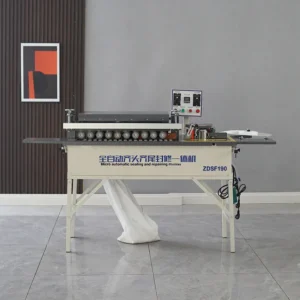
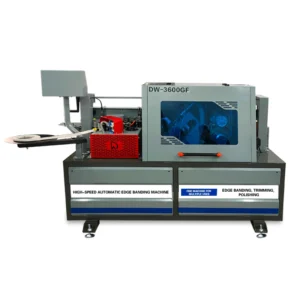
Voltage-Ready Configuration — every F802 ships with confirmed frequency and phase settings matched to your workshop's local supply before dispatch.
Technical Specifications
| Parameter |
Value |
| Model |
F802 |
| Product Type |
Automatic Edge Banding Machine |
| Function Sequence |
Automatic plate feeding, end cutting, upper and lower polishing, head and tail trimming |
| Edge Type |
Straight line |
| Rated Voltage |
220V (basis not stated in source — confirm frequency and phase) |
| Rated Power |
4 kW |
| Rated Air Pressure |
0.4–0.6 MPa |
| Strip Thickness Range |
0.5–2.5 mm |
| Sheet Thickness Range |
10–50 mm |
| Feed Speed |
0–10 m/min |
| Conveyor Belt Speed |
0–10 m/min |
| Glue Pot Capacity |
4000 ml |
| Heating Power |
1000 W (heat-up time 5–10 min) |
| Trimming Power |
800 W × 2 |
| Polishing Power |
180 W × 2 |
| Suction Power |
1200 W |
| Overall Dimensions (L×W×H) |
130 × 65 × 75 cm |
| Machine Weight |
150 kg (source value — verify against manufacturer catalog) |
| Glue Pot Temperature Display |
Digital display on control panel |
| Pressure Beam |
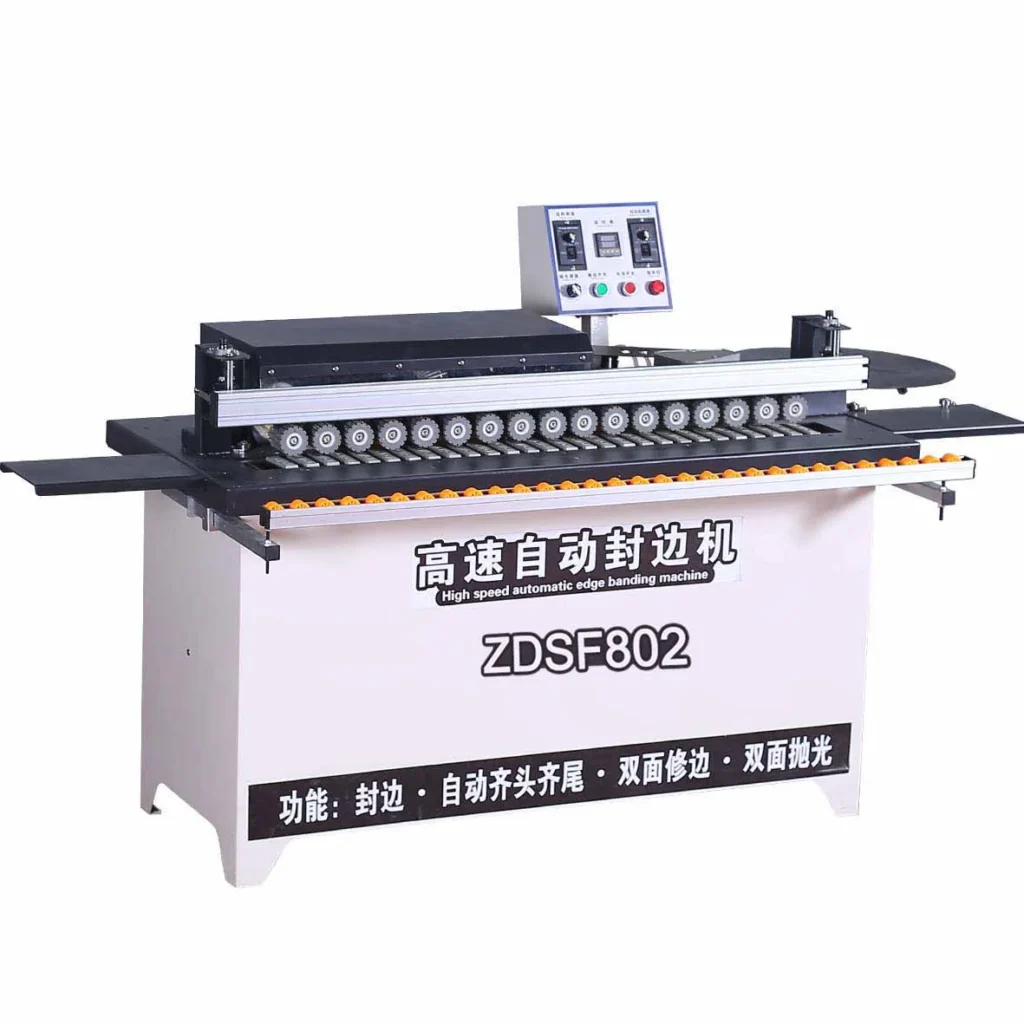
One-piece pressure beam, double rows of pressure wheels |
| Conveyor Belt Material |
Silicone |
| Belt Breaking Method |
Pneumatically controlled |
| Extendable Support |
Fluent strips for large plate support |
| Dust Collection |
Integrated dust collector included |
Application Suitability
| Application |
Material or Output |
| PVC and MDF cabinet edge banding |
MDF panels with 0.5–2.5 mm PVC strips |
| Small workshop straight-line sealing |
Particleboard and plywood with PVC or veneer edge banding |
| Custom furniture production |
MDF, particleboard, plywood substrates up to 50 mm thick |
| Entry-level automated edge finishing |
Startup cabinet shops running moderate daily volumes |
The Voltage Question Nobody Asks Before Ordering
An Automatic Edge Banding Machine for small workshop use that arrives with the wrong voltage or frequency is nothing more than a heavy crate sitting on your floor.
I once watched a cabinet maker in the Pearl River Delta region receive a machine that powered on but tripped the breaker every time the trimming motors engaged. The local supply was 220V single-phase, but the machine had been configured for a three-phase industrial grid. The electrician spent two days rewiring before we even got to test the glue pot. That kind of delay does not show up in any product brochure. [NEED_CITE: voltage and frequency standards by export market]
The F802 is rated at 220V, but frequency and phase must be confirmed against your actual workshop supply before production begins. Voltage customization from 110V to 440V is available, and this conversation should happen at the quotation stage — not when the crate arrives at your loading dock.

Compact Footprint That Actually Fits a Startup Floor Plan
The F802 measures 130 × 65 × 75 cm, which means it can sit against a wall in a workshop that also houses a sliding table saw and a drilling station. For joinery shops moving from hand-held edge trimming to an Automatic Edge Banding Machine for small workshop production, floor space is usually the first constraint. This machine does not require a dedicated cell or a rearranged production flow — it plugs into an existing layout.
Digital Controls for Operators Who Need Clarity, Not Menus
The control panel features a digital glue pot temperature display and straightforward feed speed adjustment. There is no nested menu system to navigate during a production run. When an operator is feeding panels one after another, the interface needs to show temperature and speed at a glance. Language options for the control panel should be confirmed before ordering so the person pressing the buttons can actually read what the screen says.
How the Specifications Translate to Daily Output
The 10–50 mm sheet thickness range covers standard MDF and particleboard used in cabinet carcasses and shelving, while the 0.5–2.5 mm strip thickness range handles most PVC edge banding on the market. The 0–10 m/min feed speed is suitable for workshops producing dozens of panels per session rather than hundreds — pushing beyond that tempo is where entry-level machines show wear on trimming motors and conveyor belts. The 4000 ml glue pot capacity means fewer refill interruptions during a continuous run, and the 1000 W heating element brings the pot to working temperature within 5 to 10 minutes. [NEED_CITE: edge banding glue temperature requirements for PVC and veneer materials]
The one-piece pressure beam with double rows of pressure wheels keeps panels flat against the silicone conveyor belt, which prevents the scratching and slippage that cheaper belt materials cause on finished melamine surfaces. The pneumatically controlled belt breaking mechanism cuts the edge strip cleanly at the panel end, reducing the manual trimming that operators would otherwise do with a utility knife between every single board.
What Happens When the Machine Does Not Match the Workload
Buyers sometimes push entry-level edge banders into continuous eight-hour production schedules, then wonder why the trimming motors overheat and the glue pot loses temperature stability by mid-afternoon. The F802 is designed for moderate-volume workshops where the operator loads panels in batches with natural pauses between runs. Running it beyond that rhythm accelerates wear on the polishing wheels and the conveyor belt. [NEED_CITE: thermal management limits of entry-level edge banding motors]
Why Source This Machine Through This Channel
Voltage and language customization are confirmed at the quotation stage, not left as a surprise on arrival. Every F802 goes through pre-shipment testing that includes running your specified panel thickness and edge strip material. The one-piece pressure beam and silicone conveyor belt are inspected before crating. Configuration recommendations come from engineers who have seen how small workshops actually operate, not from a catalog matrix. Spare parts lists ship with the machine so you know what to reorder before you run out.
Documentation & Verification
- CE declaration of conformity matching the F802 configuration shipped
- Machine specification sheet confirming voltage, frequency, and phase for your supply
- Factory test record showing edge quality on your specified panel and strip material
- Electrical schematic with confirmed voltage wiring diagram
- Operation and maintenance manual in your operator's preferred language
- Pre-shipment test photographs documenting glue pot, trimming, and polishing stations
Installation, Commissioning & Support
- Requires a dedicated 220V circuit rated for the 4 kW total power draw with appropriate breaker sizing
- Footprint of 130 × 65 × 75 cm fits standard workshop floors without special foundation work
- Pneumatic belt breaking system requires connection to a 0.4–0.6 MPa compressed air supply
- Digital glue pot display must be verified against actual temperature with a probe during first startup
- Extendable fluent strip support should be leveled to match the silicone conveyor belt height
- Integrated 1200 W dust collector connects to standard workshop ducting or operates standalone
Before You Request a Quote
To get a configuration that works on day one, share your typical panel material and thickness, the edge strip type and thickness you run most often, and your local voltage and frequency. Let us know what language your operators read so the control panel and manual match. If you are replacing a manual process, describe your current daily panel volume so we can confirm this machine fits your workload.
Frequently Asked Questions
Q: What daily production volume is the F802 designed to handle?
A: The F802 suits workshops running moderate batches with natural pauses between runs, such as custom cabinet shops producing dozens of panels per session. It is not built for continuous high-volume lines. Pushing beyond its intended rhythm increases wear on trimming motors and the glue pot heating element over time.
Q: Does the 220V rating work with my local power supply?
A: The 220V rating must be verified against your workshop's actual voltage, frequency, and phase configuration. Customization from 110V to 440V is available. Confirming this at the quotation stage prevents the machine from arriving unusable or requiring on-site electrical rework before it can run.
Q: Can the control panel and manual be provided in my operator's language?
A: Yes. Language options for the control panel and documentation should be specified before production. This ensures the operator can read the digital glue pot display, understand feed speed settings, and follow maintenance procedures without relying on translation during a live production run.
Q: What panel and edge strip materials work best with this machine?
A: The F802 handles MDF, particleboard, and plywood panels from 10 to 50 mm thick with PVC or veneer edge strips from 0.5 to 2.5 mm. Straight-line edge banding is the primary function. Confirming your most common material combination before ordering allows the factory to test and document edge quality on your actual substrates.
Q: What is the upgrade path if production volume grows?
A: When your volume outgrows the F802's feed speed and batch rhythm, the next step is a full-function pre-milling edge banding machine with higher feed rates and additional trimming stations. Staying within the same product family means the operator skills and maintenance habits you build now transfer directly to the larger machine.