Wood Saw Machines
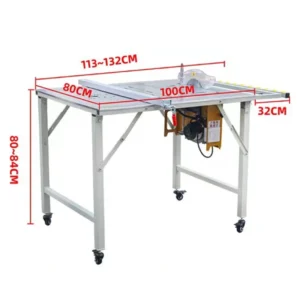
J50 LIUHE-1 Portable Small Table Saw | Entry Level
J50 LIUHE-1 Portable Small Table Saw, Manual Operation, Multi-Region Voltage — compact enough for tight...
View Details
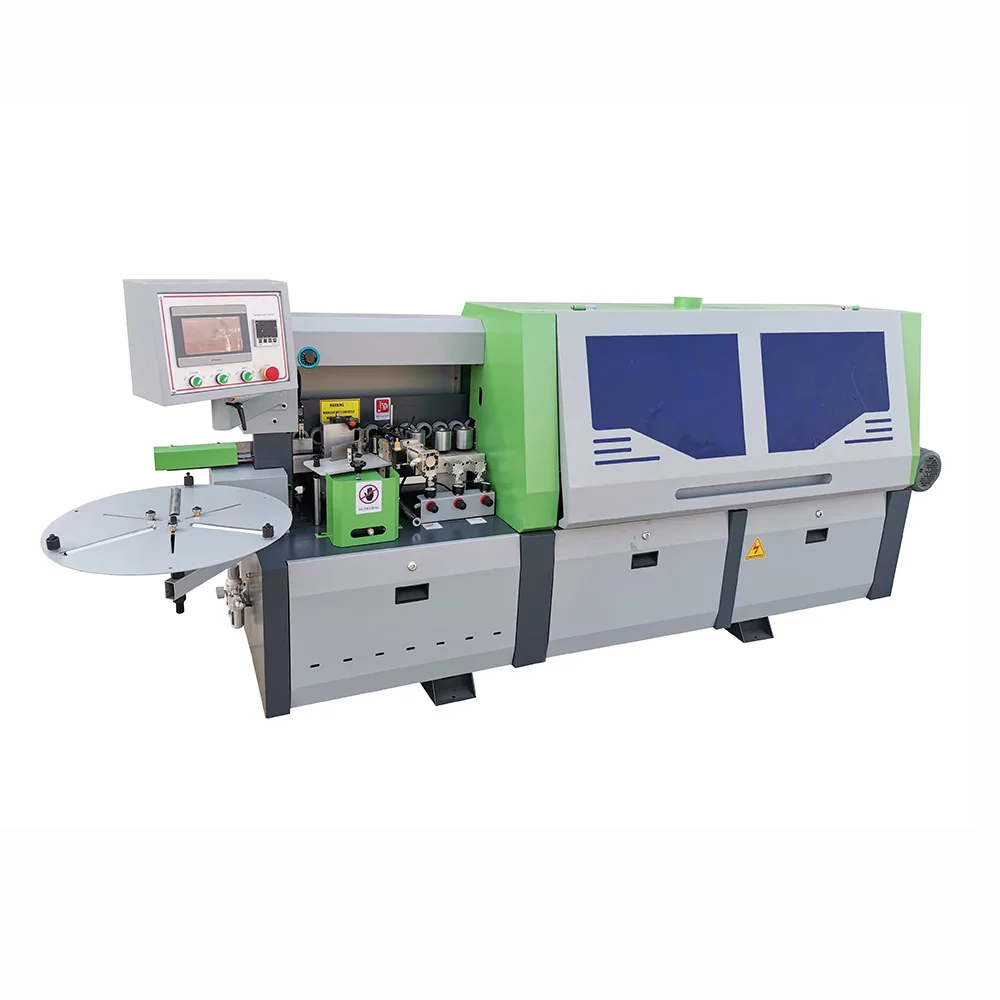
<p><strong>ZDS280D Automatic Edge Banding Machine, 380V 3-Phase, 10–60mm Panel Range, 16m/min</strong> — compact entry-level edge bander with five working stations covering gluing, end trimming, fine trimming, scraping, and buffing in one pass.</p> <ul> <li>Built for small workshops transitioning from manual edge finishing, with a 3100×700mm footprint that fits limited floor space while handling MDF, plywood, and particleboard with PVC or veneer banding.</li> <li>Frame-type 14mm steel body with HT260 guide rail ensures stable feed and consistent edge quality at 0.6 MPa working pressure.</li> </ul> <p>Backed by four-stage QC with pre-shipment test records, voltage confirmation matched to your local supply, and engineer-led configuration support within 24 hours.</p>
Straightforward Setup — the ZDS280D arrives with a confirmed voltage sheet and language-matched manual, so small workshops can power up and run panels without on-site guesswork.
| Parameter | Value |
|---|---|
| Model | ZDS280D |
| Product Type | Automatic Edge Banding Machine |
| Main Functions | Gluing, End Trimming, Fine Trimming, Scraping, Buffing |
| Panel Thickness Range | 10–60 mm |
| Edge Thickness Range | 0.4–3 mm |
| Conveyor Belt Speed | 16 m/min |
| Min. Panel Width | 60 mm |
| Min. Panel Length | 150 mm |
| Working Pressure | 0.6 MPa |
| Rated Power | 7.5 kW |
| Voltage & Frequency | 380V, 3-Phase (50Hz/60Hz to be confirmed) |
| Net Weight | 700 kg |
| Overall Dimensions (L×W×H) | 3100 × 700 × 1400 mm |
| Conveyor Guide Rail Material | HT260 |
| Machine Body | 14 mm high-strength steel plate, frame-type, high-temperature quenched |
| Pneumatic Components | Festo (Germany) or AirTAC (Taiwan) cylinders and safety valves |
| Electrical Components | Delixi/Chint air switches; Omron (Japan) travel switches |
| Conveying Motor | Taiwan brand with thermal protection |
| Key Features | Five-station edge finishing, push-button control panel, thermal motor protection |
| Application | Material or Output |
|---|---|
| Cabinet door edge banding | MDF and plywood with PVC edge band |
| Custom furniture panel finishing | Particleboard with melamine or veneer banding |
| Small workshop joinery production | Solid wood panels with thin veneer edging |
| Entry-level automated edge work | PVC, veneer, and melamine on panel substrates |
A 3.1-meter machine that fits a single-bay workshop without rearranging existing benches.
Many small shops order an automatic edge banding machine for small workshop use, then discover the feed height does not align with their existing sliding table saw, or the conveyor exit blocks the aisle to the assembly table. I have walked into workshops in Lagos and Colombo where the owner had to cut a hole in the wall just to feed panels through. Before confirming an order, measure the full 3100 mm length plus clearance on both ends, and check that the 1400 mm height clears any overhead ducting [NEED_CITE: workshop layout guidelines for panel machinery].
A 7.5 kW rated power draw means this automatic edge banding machine for small workshop setups runs on a standard three-phase industrial circuit without requiring a dedicated transformer upgrade. Many entry-level shops already have 380V three-phase supply from existing table saws or compressors. The key is confirming your local frequency — 50Hz and 60Hz regions need different motor windings, and shipping the wrong one means the conveyor runs at the wrong speed from day one.
When a joinery shop moves from hand-held trimmers to its first automatic bander, the real constraint is not the machine itself but the workflow around it. The ZDS280D handles panel widths down to 60 mm and lengths from 150 mm, which covers drawer sides, shelf brackets, and narrow frame components that most small shops process daily. As order volumes grow, the five-station configuration — gluing through buffing — means you can add upstream pre-milling or downstream stacking without replacing the core machine [NEED_CITE: production scaling patterns in custom furniture workshops].
The HT260 cast iron guide rail is not a marketing spec — it directly affects edge straightness over months of use. Softer rails wear unevenly where the heaviest panels ride, causing the feed chain to drift and producing visible glue lines on lighter substrates. Combined with the 14 mm steel frame and high-temperature quenching, the ZDS280D maintains alignment under continuous use at 16 m/min. The panel thickness range of 10–60 mm covers standard MDF, particleboard, and plywood stock without requiring guide adjustments between jobs.
I once spent two days in a Nairobi workshop rewiring a machine that arrived configured for 50Hz when the local supply ran at 60Hz. The conveyor motor overheated within the first hour, and the glue pot could not hold stable temperature. With this machine, confirming your exact three-phase voltage and frequency before shipment prevents that failure entirely. The cost is not the rewiring — it is the lost production days while panels pile up unfinished [NEED_CITE: electrical supply compatibility for imported machinery].
In-house manufacturing means the 14 mm steel frame and HT260 rail are produced and inspected under one roof, not assembled from outsourced sub-assemblies with unknown tolerances.
Voltage and control panel language are confirmed per order, so a workshop in the Philippines receives a machine wired for 220V/60Hz with English labeling, not a generic export unit.
The five-station function set covers gluing through buffing in a single pass, reducing the need for secondary hand-finishing on cabinet and furniture components.
Four-stage quality control includes a pre-shipment test run on your actual panel thickness range, documented before the crate closes.
Engineer-led configuration means the quotation addresses your specific edge banding material and substrate before production begins.
Send your typical panel substrate, thickness range, and the edge banding material you run most often — PVC thickness and veneer type both change the glue temperature and pressure settings we configure before shipping. Include your local three-phase voltage and frequency so the motor winding matches your supply. If your workshop has space constraints, share a rough floor plan so we can confirm the 3.1-meter machine length and infeed/outfeed clearance fit your layout.
Q: How does the ZDS280D fit into a small workshop's existing workflow and floor plan? A: At 3100 mm long and 700 mm wide, the machine fits a single production bay. The 16 m/min conveyor speed aligns with typical small-shop output, and the 7.5 kW power draw runs on existing three-phase circuits without electrical upgrades. You need clearance on both ends for panel infeed and outfeed.
Q: What voltage configurations are available and how is local supply confirmed before shipping? A: The machine is built for 380V three-phase supply with frequency configured to your local standard — either 50Hz or 60Hz. We request a voltage confirmation before production so the motor winding and control components match your grid exactly, preventing overheating or speed errors on arrival.
Q: Which edge banding materials and panel substrates does this machine support? A: The ZDS280D handles PVC, veneer, and melamine edge banding in 0.4–3 mm thickness on MDF, plywood, particleboard, and solid wood panels from 10–60 mm thick. Glue pot temperature and roller pressure are set during commissioning based on your specific material combination.
Q: What happens when production volume outgrows this entry-level model? A: The five-station configuration covers the full edge finishing workflow, so the machine remains useful as a secondary unit or for shorter production runs. When volume demands higher feed speeds or pre-milling, the next model in the range integrates into the same workflow without changing your edge material or operator procedures.
Q: How are spare parts and technical support handled after installation? A: Each shipment includes a spare parts list with trimmer blades, scraper inserts, and buffing pads. The maintenance manual covers replacement intervals and adjustment procedures in your language. Technical support addresses setup questions and fault diagnosis after the machine is on your floor.
Standard specifications are listed below. Custom configurations are available -- contact us for tailored solutions.
| Parameter | Value |
|---|---|
| Product Name | Entry Level Automatic Edge Banding Machine for PVC MDF Furniture Cabinets |
| Category | Wood Based Panels Machinery, Woodworking Machinery |
| Certification | CE, ISO9001 |
| Voltage | 220V/380V (Customizable) |
| Warranty | 1 Year |
| After-Sales | Remote technical support, spare parts supply |
| OEM/ODM | Available -- logo, color, voltage, language |
| Delivery | Standard export packaging, worldwide shipping |
| MOQ | 1 Unit |
| Lead Time | 15-30 days (subject to order) |
* Specifications may vary by model. Contact our team for exact technical data sheets.
Fill in your details and we'll respond within 24 hours with pricing, specifications and customization options.
J50 LIUHE-1 Portable Small Table Saw, Manual Operation, Multi-Region Voltage — compact enough for tight...
View Details
Automatic Edge Banding Machine 220V, 4200W total power, 0.5–2.5mm edge band thickness — configured for...
View Details
DW-3600GF Automatic Edge Banding Machine, 4.9 kW, 0–14 m/min Feed Speed — compact straight-edge unit...
View Details
DW802 Automatic Edge Banding Machine, 4200W, 220V/380V — compact unit for MDF, particleboard, and plywood...
View Details