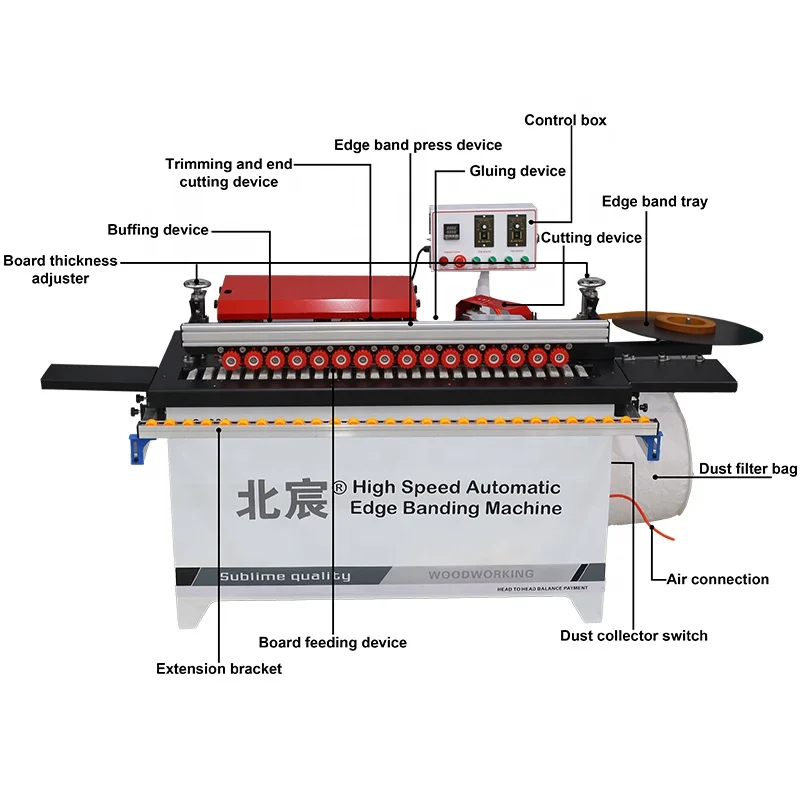
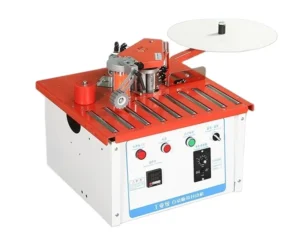
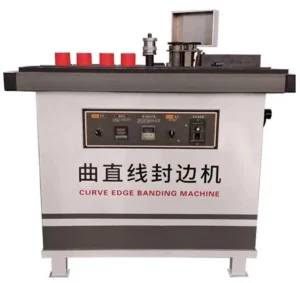
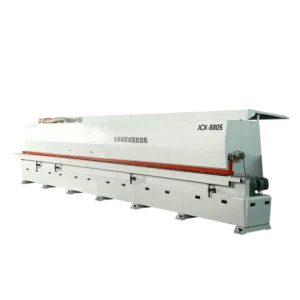
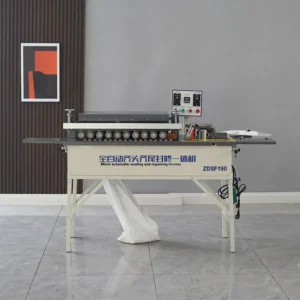
Compact Footprint, Ready to Ship — The DW802 automatic edge banding machine delivers full gluing, trimming, and polishing functions within a 1300 × 600 mm frame, dispatched with voltage and language confirmed before leaving the factory.
Technical Specifications
| Parameter |
Value |
| Model |
DW802 |
| Product Type |
Automatic Edge Banding Machine |
| Total Power |
4200W |
| Voltage Options |
220V / 380V / customization |
| Edge Banding Height Range |
0–50mm |
| Edge Banding Thickness Range |
0.3–3mm |
| Minimum Sheet Length |
250mm |
| Minimum Sheet Width |
100mm |
| Edge Feed Motor Power |
140W |
| Transmission Motor Power |
140W |
| Trimming Motor Power |
800W × 2 |
| Polishing Motor Power |
180W × 2 |
| Vacuum Motor Power |
1200W |
| Glue Pot Capacity |
4000ml |
| Air Source Pressure |
0.4–0.8 MPa |
| Conveyor Belt Material |
Silica gel |
| Pressure Beam Design |
Integrated pressure beam |
| Overall Dimensions (L×W×H) |
1300 × 600 × 950 mm |
| Net Weight |
135 kg |
| Edge Banding Type |
Straight only |
| Key Features |
Gluing, trimming, polishing, automatic head and tail cutting, vacuum extraction |
Application Suitability
| Application |
Material or Output |
| Custom cabinet door edging |
MDF and particleboard panels with PVC edge banding |
| Small workshop furniture production |
Plywood and ecological board straight edge sealing |
| Home decoration joinery |
Solid wood board edge finishing up to 50mm height |
| Startup furniture shop transitioning from manual edging |
Mixed panel materials including MDF, particleboard, and plywood |
Why the Voltage Question Must Come Before the Dispatch Date
Confirm your workshop's voltage and frequency before placing the order, not after the crate arrives.
I have watched machines sit idle on a workshop floor for weeks because the buyer assumed 380V three-phase was standard, only to find their facility ran on 220V single-phase. The DW802 is an Automatic Edge Banding Machine in stock that ships with voltage selection confirmed upfront — 220V, 380V, or custom configurations verified against your local supply. When a joinery startup orders without specifying their electrical standard, the machine may arrive with a motor wound for the wrong frequency, causing overheating or immediate failure [NEED_CITE: voltage and frequency standards by export market]. Taking two minutes to confirm this detail during inquiry prevents a costly return and weeks of lost production time.

What a Small Workshop Actually Needs from an Entry-Level Bander
Moving from a hand-held edge banding tool to an automated machine changes how a shop schedules work. The DW802 covers the core stations — gluing, trimming, polishing, and head/tail cutting — without requiring a dedicated operator to manage each step. The integrated pressure beam and silica gel conveyor belt keep panels stable through the feed path, which matters when a single operator is loading sheets and unloading finished parts simultaneously. For a joinery startup processing batches of cabinet components, this automatic edge banding machine in stock reduces the skill threshold needed to produce consistent edge quality across a full day's run.
Straight Edging Done Right Before Scaling Up
Workshops often purchase a machine that exceeds their current volume, then discover the extra stations go unused while the basic functions remain identical to a simpler model. The DW802 focuses on straight edge banding with a trimming and polishing sequence that produces clean results on MDF, particleboard, and plywood — the materials most small furniture shops process daily. The 0.3–3mm edge thickness range covers standard PVC, melamine, and veneer banding without requiring tooling changes between jobs [NEED_CITE: edge banding material compatibility with small-format machines]. When production volume eventually demands pre-milling or corner rounding, the upgrade path moves to a higher-tier model rather than retrofitting stations onto an undersized frame.
Reading the Numbers That Matter for Daily Production
The 4200W total power distributed across trimming, polishing, and vacuum motors indicates this machine is designed for intermittent production runs rather than continuous industrial shifts. The 800W × 2 trimming motors provide sufficient torque for clean cuts on particleboard and MDF without chipping the laminate surface, while the 180W × 2 polishing motors produce a smooth finish on PVC edges. The 4000ml glue pot capacity allows extended runs before refill — a practical detail when a small shop is processing a batch of cabinet sides and cannot afford to stop mid-run. The 0.4–0.8 MPa air pressure requirement means a standard workshop compressor is adequate; no dedicated high-pressure line is needed. The 250mm minimum sheet length and 100mm minimum width define the lower boundary for small drawer components and narrow shelving panels [NEED_CITE: minimum panel dimensions for edge banding machine feed systems].
What Happens When Configuration Details Get Skipped
Buying a compact edge bander without verifying the control panel language creates a bottleneck the moment the machine needs adjustment. An operator who cannot read the interface will leave settings at factory defaults, which may not suit the local board density or ambient temperature affecting glue viscosity. Similarly, specifying the wrong plug type — EU, USA, AU, or UK — means the machine cannot be powered on without sourcing an adapter or rewiring, delaying commissioning by days. These are not manufacturing defects; they are configuration oversights that turn a ready-to-ship machine into a project [NEED_CITE: common commissioning delays from configuration mismatches in exported machinery].
Why Procurement Through This Channel Works
Stock availability means the DW802 ships within days rather than entering a production queue that stretches into weeks. Voltage and plug configuration are confirmed during the order process, not discovered at unboxing. The control panel language — English standard, with Spanish or other languages available on request — is set before the machine leaves the facility. Every unit undergoes pre-shipment testing with photographs provided, so the buyer sees their machine running before it is crated. Documentation including the operation manual, electrical schematic, and spare parts list ships in the agreed language, reducing the back-and-forth that typically follows international equipment delivery.
Documentation & Verification
- CE declaration of conformity covering machinery directive requirements for this class
- Electrical schematic confirming voltage and plug type matched to your facility
- Factory test record on your specified panel material and edge banding thickness
- Operation and maintenance manual in English, Spanish, or other agreed language
- Spare parts list with part numbers for trimming blades and polishing wheels
Installation, Commissioning & Support
- Requires a level floor with 1300 × 600 mm clear footprint and 950 mm overhead clearance
- Dedicated circuit matching confirmed voltage (220V or 380V) with appropriate breaker rating for 4200W load
- Arrives fully assembled; connect power, air supply (0.4–0.8 MPa), and vacuum before first run
- Initial glue temperature and feed speed calibration on your actual board stock during commissioning
- Silica gel conveyor belt and trimming blade inspection intervals provided in maintenance schedule
Moving Forward with Your Inquiry
Share your primary panel material, edge banding type, and typical daily volume so the configuration matches your actual workflow. Confirm your workshop voltage, frequency, and plug standard to avoid any dispatch delay. Specify the control panel language your operator requires. If you have upstream saws or downstream assembly stations already in place, note their feed heights so compatibility is verified before shipment.
Frequently Asked Questions
Q: How do I confirm the correct voltage and frequency for my country before ordering?
A: Provide your workshop's electrical specification — voltage, phase, and frequency — during inquiry. The DW802 supports 220V, 380V, or custom configurations, and the correct setting is confirmed and locked before the machine ships. Ordering without this detail risks receiving a unit wound for the wrong standard, which cannot run safely on your supply.
Q: Can the control panel be set to Spanish or a language other than English?
A: English is the standard interface language, with Spanish and other languages available on request. Specify your preference during ordering so the panel is configured before dispatch. An interface your operator can read reduces setup errors and speeds up the learning curve during the first week of production.
Q: What panel sizes and materials can the DW802 handle?
A: The machine processes MDF, particleboard, plywood, solid wood board, and ecological board with a minimum sheet size of 250mm length and 100mm width. Edge banding thickness ranges from 0.3 to 3mm, covering standard PVC, melamine, and veneer. The edge height range of 0–50mm accommodates typical cabinet and furniture panel thicknesses.
Q: Is this model in stock and how long does shipping take?
A: The DW802 is maintained in ready-to-ship inventory with dispatch occurring after voltage and language configuration is confirmed. Shipping duration depends on destination port and current logistics schedules, which are quoted at the time of order based on your delivery address.
Q: When should I consider upgrading to a higher-function edge bander?
A: When your daily volume grows to require pre-milling for board edge preparation, corner rounding stations for rounded profiles, or continuous multi-shift operation, a higher-tier model becomes justified. The DW802 serves workshops running straight edge banding on moderate volumes; beyond that threshold, additional stations improve finish quality and throughput.