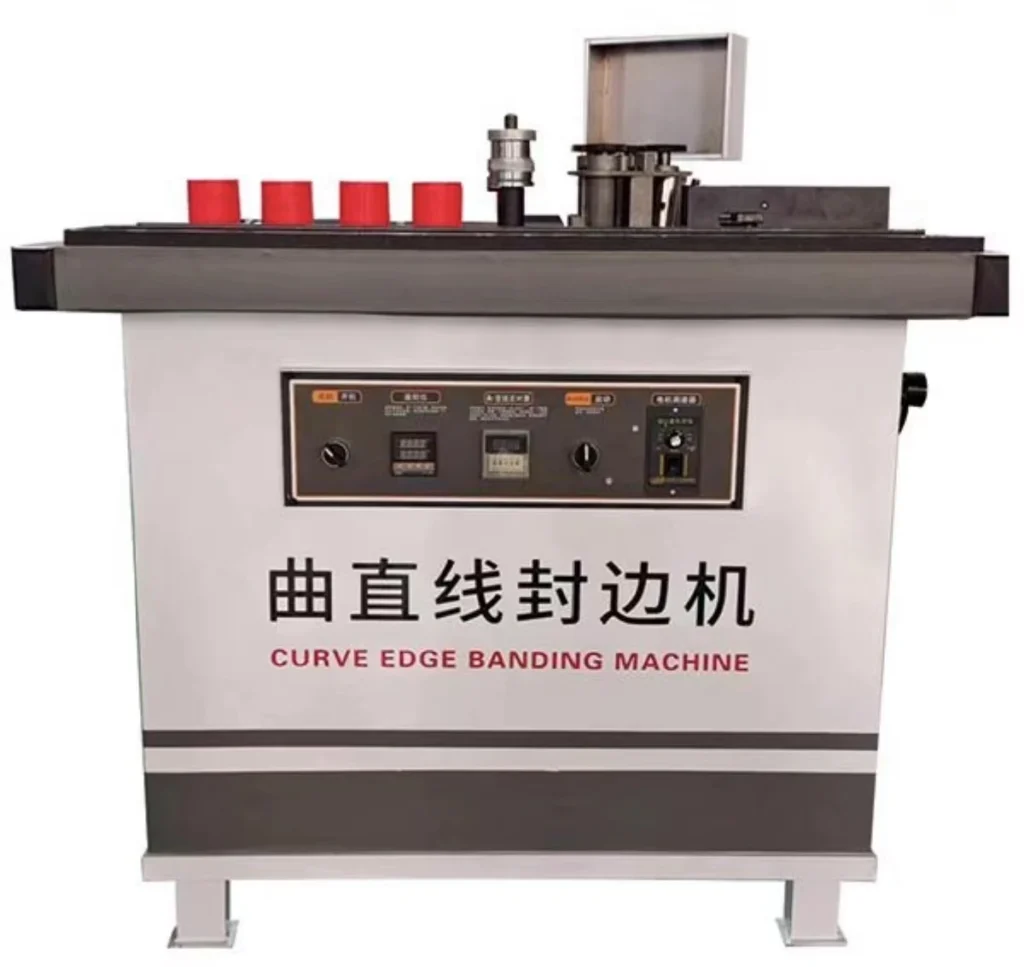
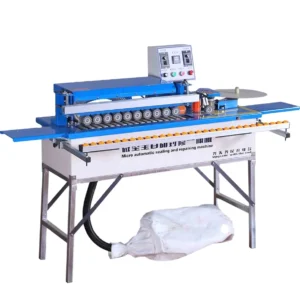
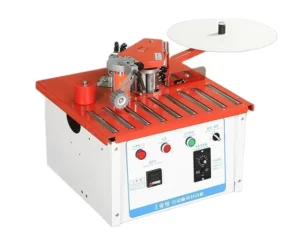
Ready to ship — Every manual edge bander in stock gets voltage confirmation and language verification before dispatch, eliminating the startup failures small workshops cannot afford.
Technical Specifications
| Parameter |
Value |
| Product Type |
Manual Curved and Straight Edge Banding Machine |
| Model |
ZDS702 / 802 |
| Rated Voltage |
220V |
| Trimming Height (Panel Thickness Range) |
10–50mm |
| Rated Power |
1.4kW (ZDS702) / 4kW (802) |
| Rated Air Pressure |
0.6–0.8 MPa (ZDS702) / 0.4–0.6 MPa (802) |
| Glue Pot Capacity |
2000ml (ZDS702) / 4000ml (802) |
| Overall Dimensions |
100×75×95cm (ZDS702) / 130×65×75cm (802) |
| Machine Weight |
120kg (ZDS702) / 150kg (802) |
| Edge Banding Type |
Curved & Straight dual-purpose |
| Gluing Method |
Double sides gluing |
| Glue Temperature Control |
Time memory function |
| Belt Breaking |
Automatic breaking belt |
| Molding Table |
One-time molding table |
| Compatible Edge Materials |
PVC, Wood Veneer, Melamine, Plastic |
| Control System |
Manual operation (basis not stated in source) |
| Language Options |
Not stated in source |
| Certification |
Not stated in source (source value — verify against manufacturer catalog) |
| Warranty |
1 year |
| Assembly State |
Requires assembly with user manual or video guidance |
Application Suitability
| Application |
Material or Output |
| Curved cabinet door edge finishing |
MDF and plywood panels with PVC or wood veneer banding |
| Straight shelving and carcass panels |
Particleboard and MDF with melamine edge material |
| Short-run custom furniture components |
Solid wood panels with plastic or veneer banding |
| Startup workshop first-machine setup |
MDF, plywood, and particleboard substrates across all compatible banding types |
| Backup bander for secondary line |
Mixed panel materials during changeovers on larger automatic lines |
Why Voltage Confirmation Must Come Before the Crate Is Nailed Shut
A 220V edge bander shipped to a 110V region does not work on arrival — it destroys its own motor the moment someone presses start.
I have been in the assembly bay when return shipments come back with burnt-out control boards. The root cause is almost always the same: a machine dispatched without confirming local electrical standards. Small workshops importing their first Manual Edge Banding Machine in stock fast delivery rarely have a second budget sitting in reserve for a replacement, so the voltage check has to happen before the crate leaves the floor. [NEED_CITE:]

Dispatch Readiness Without Guesswork
The ZDS702 and ZDS802 sit in our stock area at 220V configuration, ready to move. When your local supply differs, the unit is reconfigured and re-tested before packing. This is what separates a Manual Edge Banding Machine in stock fast delivery claim from an actual same-week dispatch. You receive confirmation in writing — voltage, frequency, plug type — before the shipping label prints.
The Curved Edge Problem Small Shops Actually Face
Joinery shops doing arched cabinet doors and rounded counter edges typically solve this by hand, trimming with a router and hoping the glue line holds. The dual-purpose head on this unit runs both profiles without a tooling swap. Operators feed curved stock through the same station as straight panels, which means one machine covers your entire edge banding requirement on a single footprint. [NEED_CITE:]
What the Panel Thickness Range Means in Practice
The 10–50mm trimming height accommodates everything from thin 10mm MDF shelving stock up to 50mm solid benchtop panels. Double sides gluing applies adhesive to both the panel edge and the banding material simultaneously, which matters when bonding wood veneer that absorbs glue unevenly. The 2000ml glue pot on the ZDS702 handles short runs; the 4000ml pot on the ZDS802 extends run time for shops batching multiple door sets. Automatic belt breaking stops material feed when the panel clears the head, preventing the banding strip from trailing and tangling on the floor.
When the Wrong Machine Arrives at the Dock
Piecemeal purchasing creates a specific failure pattern: a workshop buys a bander that handles straight edges only, then discovers curved cabinet doors require a separate machine or a return to hand tools. The other common failure is ordering without air pressure confirmation. The ZDS702 requires 0.6–0.8 MPa while the ZDS802 runs on 0.4–0.6 MPa. Connect the wrong compressor and the feed pressure either stalls or tears the banding strip. [NEED_CITE:]
Why Purchase From This Stock Point
Stocked models ship without the multi-week production wait — the ZDS702 and ZDS802 are ready to crate upon confirmation. Voltage, frequency, and plug configuration are verified against your local supply standards before dispatch, not after. Each machine undergoes a pre-shipment test on your specified panel material and edge banding type, with photographs provided before the crate seals. Operation and maintenance documentation arrives in the language you confirm during the order process. Spare parts lists covering glue pot components, trimming blades, and feed belts ship inside the crate.
Documentation & Verification
- Factory test record photographed on your specific panel thickness range and banding material
- Electrical schematic confirming exact voltage, frequency, and plug type before dispatch
- Operation and maintenance manual provided in the language agreed at order stage
- Spare parts list for glue pot, trimming blades, and feed belts included in crate
Installation, Commissioning & Support
- 220V single-phase supply required — confirm dedicated circuit capacity for 1.4kW or 4kW draw
- Arrives partially assembled — follow included video guidance for final head and table setup
- Air compressor connection rated for 0.4–0.8 MPa depending on selected model
- Glue pot first heat cycle monitored with time memory function for temperature stability
- Spare trimming blades and replacement belt included for initial commissioning period
What We Need to Move Your Order
Send your panel material type, the edge banding material you run most frequently, and your local voltage and frequency. We will confirm stock availability and match the unit to your supply before issuing the shipping schedule.
Frequently Asked Questions
Q: Is this manual edge bander in stock and how quickly can it dispatch?
A: Both the ZDS702 and ZDS802 are held in ready stock. Dispatch lead time depends on whether your local voltage matches the standard 220V configuration or requires reconfiguration. Once voltage and plug type are confirmed, the unit is pre-shipment tested and crated. Typical dispatch follows within days of confirmation, not weeks.
Q: How do I confirm the correct voltage and plug type for my country?
A: Provide your country and local electrical standard during the inquiry. We cross-reference your supply against the 220V configuration and confirm any required changes in writing before dispatch. This step prevents the motor damage and control board failures that happen when a machine arrives with incompatible electrical specifications.
Q: What assembly is required when the machine arrives?
A: The unit ships partially assembled with final head mounting and table alignment required on site. Video guidance and a printed manual walk through each step. The one-time molding table and automatic belt breaking mechanism require calibration to your specific panel thickness, which is covered in the commissioning section.
Q: Which edge banding materials does this machine handle best?
A: The dual sides gluing system bonds PVC, wood veneer, melamine, and plastic banding materials to MDF, plywood, particleboard, and solid wood panels. Wood veneer benefits most from the double-side application because it absorbs glue unevenly. The glue pot time memory function maintains consistent temperature across different material types.
Q: What is the upgrade path when production volume outgrows a manual bander?
A: Shops typically move to a semi-automatic or full-function pre-milling edge bander when daily panel counts exceed what manual feeding can sustain. The dual-purpose capability of this unit remains useful as a secondary machine for curved work and short-run changeovers alongside the larger line.