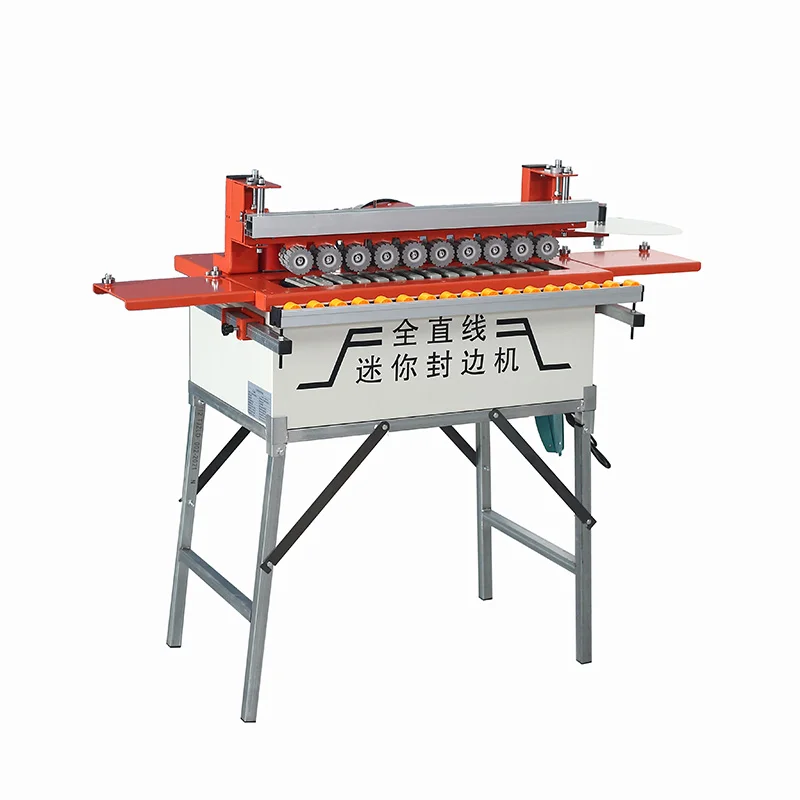
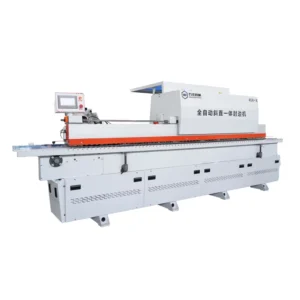
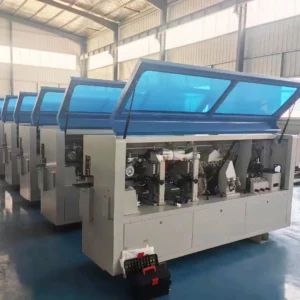
Compact footprint, standard voltage — the ZDS750 mini edge banding machine in stock fast delivery is built for workshops transitioning from hand tools to their first mechanized edge bander, arriving ready for 220V single-phase outlets without facility rewiring.
Technical Specifications
| Parameter |
Value |
| Product Type |
Mini Semi-Automatic Edge Banding Machine |
| Model |
ZDS750 |
| Function |
Automatic board feeding, automatic tape breaking, bending and straightening |
| Widening Bracket |
Stretchable to 300mm |
| Rated Voltage |
220V single-phase |
| Rated Air Pressure |
0.4–0.6 MPa |
| Strip Thickness Range |
0.5–2mm |
| Sheet Thickness Range |
7–50mm |
| Glue Pot Capacity |
1000ml |
| Heating Power |
800W (5–8 min heat-up) |
| Plate Feeding Power |
60W |
| Belt Feeding Power |
25W |
| Edge Banding Speed |
0–6m/min (variable) |
| Overall Dimensions |
120×50×50cm |
| Machine Weight |
50kg |
| Pressure Beam |
One-piece aluminum alloy, double row of pressure wheels |
| Pressing Rollers |
2 elastic pressing rollers |
| Curve Edge Banding |
Gluing device rotatable 180° |
| Control Panel |
Inner recessed design for special-shaped edge banding |
| Assembly State |
Partial assembly required (manual and video guidance provided) |
Application Suitability
| Application |
Material or Output |
| Small joinery workshop edge finishing |
MDF, particleboard, plywood panels 7–50mm thick |
| Custom cabinet door and shelving batches |
PVC and veneer strips 0.5–2mm |
| Curved and special-shape furniture components |
Solid wood panels with radius edges |
| Startup furniture maker transitioning from manual trimming |
Short-run production on benchtop footprint |
| On-site or mobile carpentry use |
Portable 50kg unit for temporary workspace setups |
Why the Voltage Question Should Come Before the Price on a Mini Edge Bander
A machine that cannot plug into your existing workshop outlet is not a bargain — it is a three-week delay and an electrician bill you did not budget for.
I learned this the hard way early in my career. We shipped a semi-automatic bander to a customer in the Middle East without verifying the local supply against the machine's motor rating. The unit sat in their shop for weeks before they rewired the circuit. Since that incident, I confirm the electrical schematic and local grid standards on every single order, no matter how small the equipment [NEED_CITE: voltage and frequency standards by export market]. When you search for a mini edge banding machine in stock fast delivery, make sure the supplier asks about your voltage before they send the proforma invoice. A 220V single-phase unit like the ZDS750 is designed to work with standard workshop outlets in many markets, but confirming the match beforehand avoids costly idle time after arrival.

A Benchtop Footprint That Does Not Demand a Workshop Renovation
The ZDS750 occupies a 120×50×50cm footprint and weighs 50kg, meaning it sits on a standard workbench without floor anchors or dedicated space. Small workshops often lack the floor area for a full-size automatic edge bander, and this unit delivers mechanized edge finishing within the footprint of a hand-tool station. The stretchable widening bracket extends to 300mm, providing lateral support when processing wider panels that would otherwise sag and produce uneven glue lines. For a joinery startup, this mini edge banding machine in stock fast delivery removes the spatial barrier to moving past manual edge trimming.
Straight and Curved Work on a Single Compact Unit
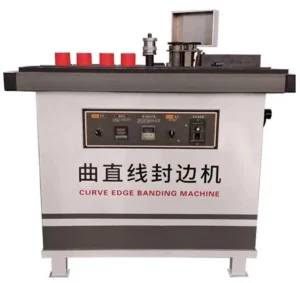
Most entry-level banders handle only straight edges, forcing workshops to either outsource curved work or invest in a second machine. The ZDS750 addresses this with a gluing device that rotates 180°, allowing operators to band both straight runs and curved profiles on MDF, plywood, and solid wood panels. The inner recessed control panel design clears the operator's path during special-shape edge banding, reducing interference when guiding contoured workpieces through the feed path [NEED_CITE: woodworking safety practices for curved edge banding operations]. This dual capability means a small custom furniture shop can accept curved-edge orders without turning to external subcontractors.
Reading the Specs That Actually Matter at This Scale
The 0–6m/min variable feed speed lets the operator slow down for curved profiles and speed up for straight runs, maintaining consistent glue contact across different geometries. The 800W heating element brings the 1000ml glue pot to working temperature in approximately 5–8 minutes, which is practical for short production batches where you do not want to leave the pot idling hot all day. The one-piece aluminum alloy pressure beam with a double row of pressure wheels distributes clamping force evenly across the panel edge, reducing the risk of strip lift on substrates like particleboard where surface adhesion can be inconsistent. Strip thickness acceptance spans 0.5–2mm, covering both thin PVC for cabinet carcasses and thicker veneer for visible furniture faces. Sheet thickness capability from 7–50mm accommodates everything from thin shelving stock to thick solid-wood worktops, though operators should verify feed pressure settings when switching between extremes.
What Happens When an Entry-Level Machine Is Mismatched to the Workload
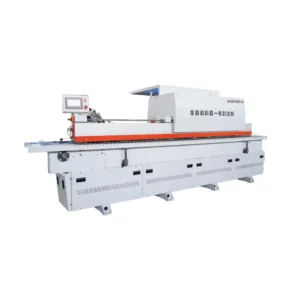
Semi-automatic banders are designed for batch work with regular pauses, not continuous shift production. When a workshop pushes a machine of this class into sustained high-volume output, the glue pot temperature fluctuates, feed consistency degrades, and edge quality becomes unpredictable panel after panel [NEED_CITE: edge banding quality degradation under sustained production load]. Operators then spend more time re-trimming and re-gluing than they would have using a full-function automatic line. The ZDS750 serves short-run and custom work well, but shops approaching steady daily volumes should evaluate whether a fully automatic edge bander with continuous feed and multi-station trimming is the more appropriate next step.
What Sets This Procurement Path Apart
Voltage confirmation happens before the machine leaves the factory, with an electrical schematic matched to your local 220V single-phase supply — not after it arrives and fails to power on. Each ZDS750 unit undergoes a pre-shipment test on your specified panel material and strip thickness, so you see actual edge banding results before the crate is sealed. The operation and maintenance manual is prepared in your agreed language, preventing commissioning delays caused by unreadable control documentation. Spare parts lists are provided with consumables clearly identified, allowing first-year maintenance planning without guesswork. Configuration guidance comes from engineers who have worked on the assembly floor, meaning recommendations account for practical workshop conditions rather than just catalog specifications.
Documentation & Verification
- CE declaration of conformity covering the ZDS750 for target market compliance
- Electrical schematic with voltage confirmation matched to your 220V supply
- Pre-shipment factory test record on your specified panel and strip material
- Operation and maintenance manual delivered in your preferred operator language
- Spare parts list with first-year consumables clearly identified and itemized
Installation, Commissioning & Support
- Benchtop placement on a stable surface supporting the 50kg machine weight without floor anchoring
- Dedicated 220V single-phase circuit for the 800W heating element and 85W combined feed motors
- Partial assembly guided by video tutorials and the printed user manual
- First heat-up cycle monitored against the 5–8 minute warm-up specification before production begins
- Glue pot cleaning and strip feed path inspection scheduled per the maintenance manual intervals
- Elastic pressing rollers and pressure wheels checked for wear at regular service intervals
What We Need to Configure Your Order
To match the ZDS750 to your workshop conditions, share your typical panel materials and thickness range, the edge strip types and thicknesses you process most often, and your local voltage and frequency specification. If you run curved components regularly, send a sample profile drawing so we can verify feed path clearance. Let us know your preferred language for the control panel labels and manual, and whether you need a sample edge banding test on your own substrate before dispatch.
Frequently Asked Questions
Q: What panel materials and strip thicknesses does the ZDS750 handle?
A: The ZDS750 processes MDF, particleboard, plywood, and solid wood panels between 7mm and 50mm thick. It accepts PVC and veneer edge strips from 0.5mm to 2mm. The 180° rotatable gluing head supports both straight and curved edge profiles across these materials, and the one-piece aluminum pressure beam maintains even contact on varied substrate densities.
Q: Is 220V the only voltage option, or can it be configured for other markets?
A: The standard ZDS750 ships at 220V single-phase for direct workshop outlet use. Voltage configuration from 110V to 440V is available to match specific regional grid requirements. We confirm your local voltage and frequency before production begins and provide a matching electrical schematic, so the machine powers on without on-site electrical modifications.
Q: How do I know when to upgrade from this mini bander to a full-function automatic model?
A: When your daily volume shifts from short custom batches to sustained shift-length production, edge consistency on a semi-automatic unit becomes harder to maintain. If operators spend increasing time re-trimming or managing glue temperature manually, a full-function automatic edge bander with continuous feed and multiple trimming stations is the logical next step.
Q: What is the dispatch lead time for a stocked ZDS750 unit?
A: Stocked units are prepared for dispatch with typical multi-week lead times depending on destination and any voltage or language customization requested. Pre-shipment testing on your specified material is completed before crating. We confirm the dispatch schedule once voltage, documentation language, and sample test requirements are finalized.
Q: Does the control panel come in my local language?
A: Yes. Multilingual control panel labels and operation manuals are available as part of the standard configuration process. We confirm your preferred language during the specification review stage, ensuring operators can read all controls and maintenance instructions from the first day of commissioning without translation delays.