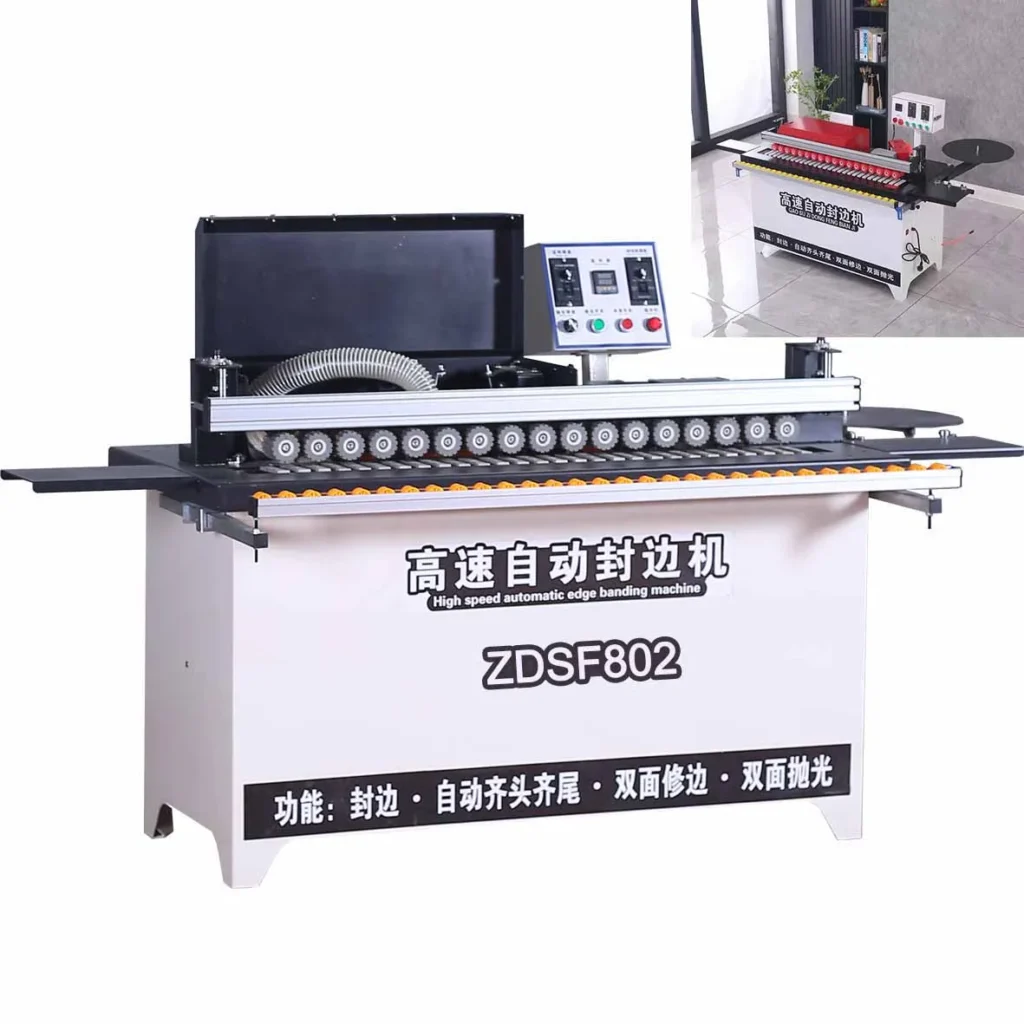
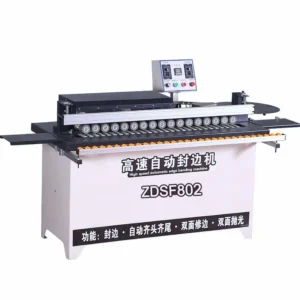
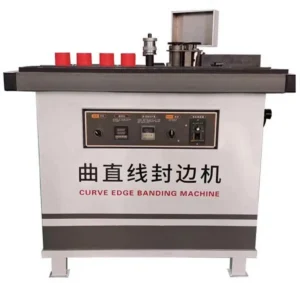
In-stock readiness — Model 802 units ship within days rather than weeks, giving small workshops a compact edge sealing solution without production delays.
Technical Specifications
| Parameter |
Value |
| Product Type |
Automatic Edge Banding Machine |
| Rated Power |
4 kW |
| Rated Voltage |
220V (frequency 50Hz/60Hz to confirm) |
| Feed Speed |
0–10 m/min (basis not stated in source) |
| Edge Type |
Straight line |
| Edge Strip Thickness Range |
0.5–2.5 mm |
| Panel Thickness Range |
10–50 mm |
| Glue Pot Capacity |
4000 ml |
| Heating Power |
1000W (heat-up 5–10 min) |
| Trimming Power |
800W × 2 (dual high-speed motors) |
| Polishing Power |
180W × 2 (upper and lower) |
| Suction Power |
1200W (integrated dust collector) |
| Air Supply Requirement |
0.4–0.6 MPa |
| Conveyor Belt |
Silicone material |
| Pressure System |
One-piece pressure beam, double rows of pressure wheels |
| Belt Breaking |
Pneumatically controlled |
| Functions |
Automatic plate feeding, end cutting, head and tail trimming, upper and lower polishing |
| Overall Dimensions |
130 × 65 × 75 cm |
| Machine Weight |
150 kg |
| Assembly State |
Partially assembled — minor assembly required |
| Control System |
Digital display with independent switches |
Application Suitability
| Application |
Material or Output |
| Small joinery workshop edge sealing |
MDF, plywood, particleboard panels 10–50 mm thick |
| Custom cabinet edge finishing |
PVC and wood veneer edge strips 0.5–2.5 mm |
| Startup furniture maker transitioning from manual to machine |
Short-batch panel processing with hot melt glue |
| Compact workshop replacing hand trimming |
Straight-line panel edges requiring clean, sealed finish |
Why Voltage Confirmation Matters More Than Feed Speed Claims
A machine that arrives with the wrong voltage and frequency is a 150 kg paperweight until an electrician rewires it.
I have watched workshops lose entire weeks because the edge bander on the dock ran on 380V three-phase while the shop only had single-phase 220V outlets. The feed speed printed on the nameplate becomes irrelevant when the machine will not power on. For small shops investing in their first Automatic Edge Banding Machine in stock, confirming local voltage and frequency before dispatch avoids a costly rewiring job that could exceed the machine's own value [NEED_CITE: voltage and frequency standards by export market].

Ready Stock Means Your First Automated Edge Sealer Arrives This Month
When a joinery workshop decides to move away from hand-glued edges and manual trimming, waiting eight to twelve weeks for a custom-built machine stalls the entire transition. This Automatic Edge Banding Machine in stock configuration ships from the warehouse with the standard 4 kW motor package, silicone conveyor, and 4000 ml glue pot already assembled and tested. The operator uncrates it, completes minor assembly per the manual, connects the 220V supply and air line, and begins sealing panels.
Compact Footprint Without Sacrificing the Core Edge Finishing Steps
Small workshops often operate in spaces where a full-format production line simply does not fit. At 130 × 65 × 75 cm, this unit occupies roughly the same floor area as a standard sliding table saw, yet it covers the complete edge sealing sequence: glue application, end cutting, head and tail trimming, and upper and lower polishing. The one-piece pressure beam and double rows of pressure wheels hold panels steady through each station, producing a clean finished edge without requiring separate trimming or sanding passes downstream [NEED_CITE: edge banding quality standards for furniture assembly].
How Glue Pot Size and Trimming Motors Shape Daily Output
The 4000 ml glue pot with its digital temperature display holds enough hot melt adhesive to run extended batches without frequent refills, which matters when a small shop is processing a kitchen's worth of cabinet panels in one session. The 1000W heating element brings the pot to working temperature in five to ten minutes, so morning startup does not consume the first productive hour. Dual 800W trimming motors handle the head and tail cuts at high speed, while the 180W upper and lower polishing wheels smooth the edge strip to a clean finish. Panel thickness between 10 and 50 mm covers the range most custom cabinet and shelving work demands, and the 0.5–2.5 mm edge strip range accepts both thin PVC and thicker wood veneer materials.
What Happens When You Skip the Material Compatibility Check
A custom cabinet shop once ordered an entry-level edge bander based solely on price and lead time, without confirming whether their standard 2 mm PVC edge strip fell within the machine's thickness range. The unit arrived, ran, but the pressure wheels could not seat the thicker strip flush against the MDF substrate, leaving visible glue lines on every panel. The owner spent days adjusting feed speed and pressure settings before realizing the machine was never configured for that material combination. Mismatched edge strip and panel thickness forces rework that erases any time savings the automated edge sealing was supposed to deliver [NEED_CITE: common edge banding defects from material mismatch].
What Sets This Stocked Configuration Apart
In-house manufacturing means the cutting mechanism and pressure beam are built and tested under one roof, not assembled from unrelated third-party sub-assemblies. The four-stage quality check covers incoming material inspection, in-process verification, finished product testing, and pre-shipment validation before any unit leaves the factory. Voltage and control panel language are configurable before dispatch, so the machine arrives ready for the operator's working environment rather than requiring after-delivery modifications. The full product family spans from this compact entry point to full-function pre-milling models, giving workshops a clear scaling path without switching suppliers. Every unit ships with a factory test record documenting performance on the buyer's specified panel thickness and edge strip material.
Documentation & Verification
- CE declaration of conformity covering the 4 kW motor and heating circuit
- Machine specification sheet confirming 0.5–2.5 mm edge strip and 10–50 mm panel range
- Electrical schematic with 220V wiring diagram and 50/60 Hz frequency confirmation
- Factory test record on your specified MDF or plywood panel thickness before dispatch
- Operation manual in the operator's agreed language with digital display setup instructions
- Spare parts list identifying replacement trimming blades and polishing wheels
Installation, Commissioning & Support
- Requires a dedicated 220V circuit rated for the 4 kW total load plus startup surge
- Air compressor must deliver 0.4–0.6 MPa to operate the pneumatic belt breaking system
- Minor assembly per manual: mount glue pot guard, connect dust collector hose, align conveyor
- First-run calibration sets glue temperature, feed speed, and trimming depth for your panel stock
- Silicone conveyor belt inspection and pressure wheel alignment included in startup checklist
- Replacement trimming motors and polishing heads available through standard spare parts channels
What We Need Before We Ship Your Machine
Send us the edge strip material type and thickness you run most often, along with the panel substrate and thickness range. Confirm your workshop's available voltage and frequency so we wire the unit correctly before it leaves the factory. Let us know the language your operator reads so the digital display labels and the operation manual match.
Frequently Asked Questions
Q: Is this automatic edge banding machine in stock and what is the dispatch lead time?
A: The stocked configuration ships within days of order confirmation rather than weeks. The unit arrives partially assembled with the 4 kW motor package, silicone conveyor, and 4000 ml glue pot pre-installed. Final assembly, power connection, and air line hookup follow the included manual, and the machine is ready for first-run calibration shortly after uncrating.
Q: What voltage and plug options are available for my country?
A: The standard configuration runs on 220V, and we confirm frequency compatibility at 50Hz or 60Hz before dispatch. Plug type is matched to the destination country's standard. Provide your local voltage and frequency details during the inquiry stage so the electrical system is configured correctly before the machine ships.
Q: What edge banding materials does this machine accept?
A: The machine handles PVC and wood veneer edge strips within the 0.5–2.5 mm thickness range, applied with hot melt glue to MDF, plywood, and particleboard panels. If you run melamine or specialty banding materials outside this range, share the specifications so we can confirm compatibility or recommend an alternative configuration.
Q: Does the machine come with an operation manual in my language?
A: The operation and maintenance manual is provided in the language you specify during the order process. The digital display uses independent switches with clear labeling. Confirm the operator's working language at the inquiry stage so all documentation and display markings are aligned before shipment.
Q: What is the upgrade path when my workshop volume outgrows this model?
A: The product family extends from this compact entry-level unit to full-function pre-milling edge banders with higher feed speeds and additional processing stations. When panel volume grows beyond what the 0–10 m/min feed rate supports, the next tier in the range handles production-level throughput while maintaining the same supplier relationship and spare parts support.