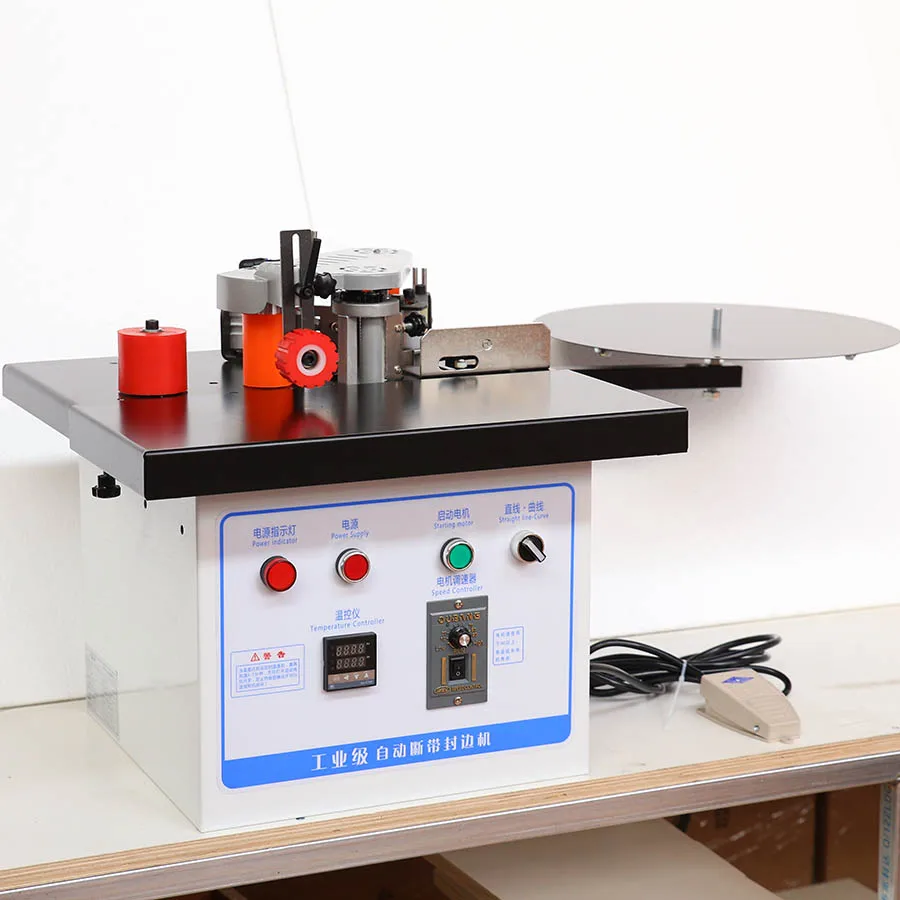
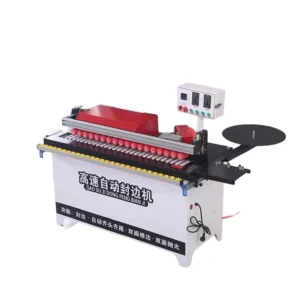
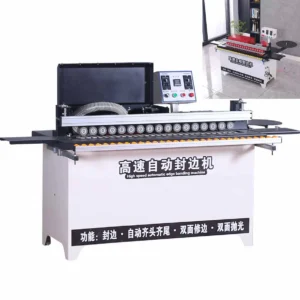
Ready Stock Dispatch — The ZDSF60 mini edge banding machine is inventoried and prepared for fast dispatch, ensuring small workshops can receive their equipment without typical multi-week lead times.
Technical Specifications
| Parameter |
Value |
| Model |
ZDSF60 |
| Product Type |
Mini Portable Edge Banding Machine |
| Rated Voltage |
220V |
| Rated Air Pressure |
0.4-0.6 MPa |
| Strip Thickness Range |
0.5-2 mm |
| Panel Thickness Range |
7-60 mm |
| Glue Pot Capacity |
1000 ml |
| Heating Power |
800W (5-8 min heat-up) |
| Feed Speed |
0-6 m/min |
| Overall Dimensions |
54×54×56 cm |
| Machine Weight |
26 kg |
| Glue System |
Double-sided gluing with coated rollers |
| Pressure Roller |
Adjustable rubber roller (board-thickness adjustable) |
| Tape Breaking |
Pneumatically controlled (foot switch for curves, travel switch for straight lines) |
Application Suitability
| Application |
Material or Output |
| Small-Scale Custom Furniture |
MDF, Particleboard, Plywood |
| On-Site Joinery Installations |
Solid Wood Panels (Curved Edges) |
| Carpentry and Repair Shops |
PVC and Veneer Edge Strips |
Why the Voltage Question Must Come Before the Price
Confirming your local power grid specifications is the only way to ensure a portable edge bander will actually work when it arrives.
Small workshops often focus on the purchase price and basic functions, but mismatched voltage and frequency remain a leading cause of commissioning failure for exported machinery. A 220V machine running on a 110V supply will not reach optimal glue pot temperatures, leading to poor adhesion and visible glue lines. This portable mini edge banding machine in stock requires verified single-phase power compatibility to function as a reliable production asset rather than an expensive liability [NEED_CITE: machinery voltage compatibility for export markets].

Compact Footprint for Joinery Startups
When a workshop transitions from manual hand tools to mechanised output, floor space is often the first constraint. The ZDSF60 is engineered with a 54×54 cm base, allowing it to sit on a standard workbench or in a tight corner of a small cabinet shop. This mini edge banding machine in stock is designed for the operator who needs to process small batches of custom panels without dedicating an entire production zone to edge finishing.
Pneumatic Precision for Curved Profiles
Handling curved edges manually often results in uneven pressure and inconsistent glue application. This unit features a pneumatically controlled tape-breaking system operated via a foot switch, allowing the operator to keep both hands on the panel for better stability. The adjustable pressure roller and edge strip bayonet ensure that whether you are running a 7 mm MDF shelf or a 60 mm solid wood countertop, the feed tension remains constant for a clean, professional finish.
The Engineering Behind the 0.5-2 mm Strip Range
The ability to handle thin veneer and thicker PVC strips depends on the relationship between the glue pot temperature and the feed speed. The 800W heating element in the ZDSF60 is designed to maintain a stable temperature within the 1000 ml glue pot, which is essential for activating the adhesive on both sides of the strip. The double-sided gluing system with coated rollers ensures that the adhesive is distributed evenly across the substrate and the tape, preventing the "starved joint" failures that often plague entry-level equipment. The 0-6 m/min variable feed speed allows operators to slow down for difficult curves or speed up for long, straight runs.
The Hidden Cost of Piecemeal Machinery
Many small furniture makers buy single machines based on a low price point, only to find the feed height or throughput is incompatible with their existing sliding table saws or drilling rigs. While this unit is self-contained, a mismatch in the 0.4-0.6 MPa air pressure supply can lead to pneumatic failures during the tape-breaking cycle. Ensuring your workshop compressor meets the rated air pressure is a non-negotiable step before commissioning [NEED_CITE: pneumatic requirements for portable woodworking machinery].
Sourcing Reliability for Ready-Stock Equipment
Our inventory model for the ZDSF60 means you are not waiting for a production run to be scheduled. Every unit undergoes a four-stage QC process that includes a pre-shipment verification of the heating tubes and pneumatic valves. We provide formal quotations within 24 hours and include an operation manual in your agreed language, ensuring your team can read the safety and setup instructions without translation delays. The in-house manufacturing process ensures that proprietary cutting and trimming mechanisms are available for long-term support.
Documentation & Verification
- CE declaration of conformity specific to portable edge banding machinery.
- Machine specification sheet with confirmed 220V electrical schematic.
- Factory test record on your specific panel thickness range before dispatch.
- Operation and maintenance manual in the operator's preferred language.
Installation, Commissioning & Support
- Place the 26 kg unit on a stable, level workbench with a dedicated 220V circuit.
- Connect to a compressor delivering a constant 0.4-0.6 MPa of clean, dry air.
- Verify the 800W heating element reaches working temperature within 5-8 minutes.
- Adjust the rubber pressure roller to match the 7-60 mm panel thickness range.
- Calibrate the travel switch for automatic straight-line tape breaking.
- Review the spare parts list for replacement glue rollers and heating tubes.
Moving Forward with Your Order
To proceed with the ZDSF60, please provide your workshop's exact voltage and frequency (Hz) to ensure the motor and heating elements are configured correctly. We also require your preferred language for the control panel labels and operation manual to facilitate immediate training upon arrival. Finally, specify your most common panel materials and edge strip thicknesses so we can recommend the appropriate glue type and perform a relevant pre-shipment test.
Frequently Asked Questions
Q: Does this mini edge bander ship immediately, or is there a production lead time?
A: The ZDSF60 is listed as ready stock, meaning the unit is physically built and available for dispatch. While the machine itself does not require a production lead time, we typically need a few days to complete the pre-shipment verification, update the language settings on the control panel, and prepare the export-grade packing to ensure it arrives in perfect working order.
Q: Is the 220V rating compatible with 50Hz and 60Hz power grids in my country?
A: Yes, the ZDSF60 is designed to handle the 220V single-phase standard, but the frequency (Hz) affects motor speed and heating cycles. We must confirm your local grid frequency before dispatch. If you are in a region with 110V, this specific model is not suitable; we can instead configure a different unit to match your local supply to prevent glue line failures.
Q: What edge banding materials work with the 0.5-2 mm strip range?
A: This range covers most standard materials used in small-scale joinery, including PVC, ABS, melamine, and natural wood veneer. The double-sided gluing system and adjustable temperature allow for strong adhesion across these substrates, provided the correct type of hot-melt adhesive is used for the specific material and ambient temperature of your workshop.
Q: How do I assemble and commission the machine?
A: The ZDSF60 arrives as a self-contained unit requiring minimal assembly—primarily connecting the pneumatic hose and power cord. We provide a detailed operation and maintenance manual in your chosen language, along with a pre-shipment test record. We also offer remote guidance to help you calibrate the pressure roller and tape-breaking switches during the first run.
Q: What spare parts should I order with the machine?
A: For a small workshop, it is wise to keep a spare set of coated glue rollers, a replacement heating tube, and an extra foot switch on hand. These are the primary wear items on a portable edge bander. We can include a recommended spare parts kit with your initial shipment to minimize downtime during your first year of operation.