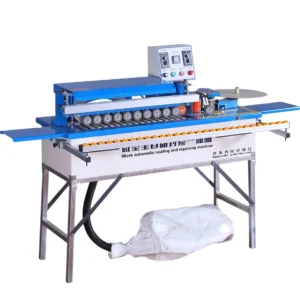
Wood Based Panels Machinery
Compact Automatic PVC Edge Banding Machine for Small Workshop
Automatic Edge Banding Machine, 220V, 0–15 m/min feed speed, 0.3–3 mm edge thickness range —...
View Details
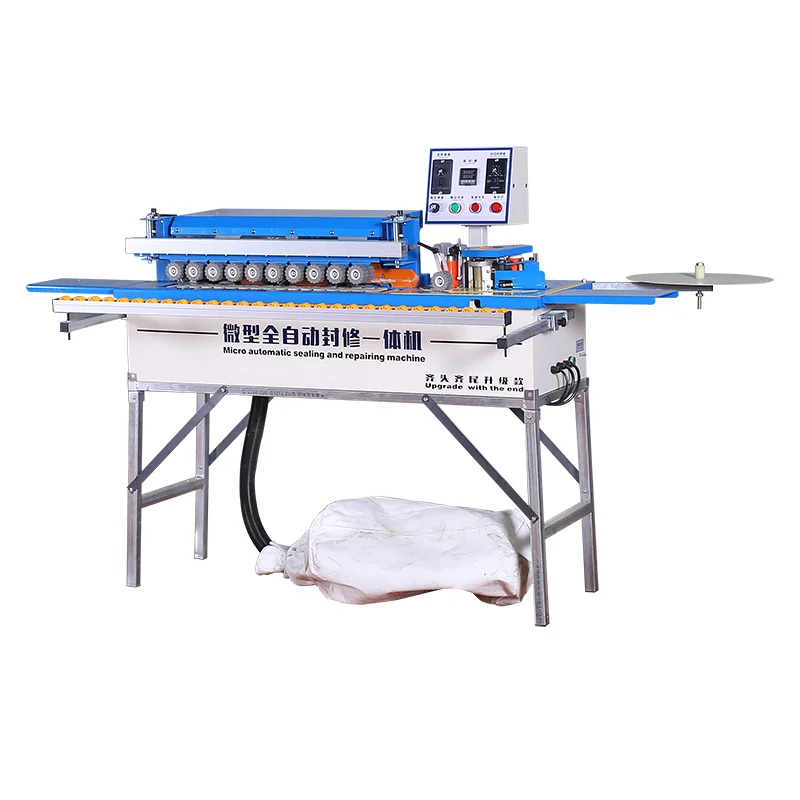
<p><strong>Automatic Edge Banding Machine, 220V, 4000W, 0-6m/min feed speed</strong> — a compact edge banding solution delivering double-sided gluing, trimming, and cross polishing in one pass for MDF, plywood, and particleboard panels up to 60mm thick. The 180-degree rotatable gluing device handles both straight and curved edges, making it practical for small workshops stepping into mechanized production. Individual function controls keep operation straightforward during daily use.</p> <ul> <li>Voltage confirmed against your local supply before dispatch</li> <li>Operation manual provided in your preferred language</li> <li>Factory test record on your substrate available upon request</li> </ul>
Verified Configuration for Compact Footprint — An 81kg automatic edge bander that processes 10–60mm panels with double-sided gluing and 180-degree rotatable unit, ready for small workshops moving off manual benches.
| Parameter | Value |
|---|---|
| Product Type | Automatic Edge Banding Machine |
| Voltage | 220V |
| Rated Power | 4000W |
| Feed Speed | 0–6m/min |
| Glue Capacity | 1000ml |
| Panel Thickness Range | 10–60mm |
| Edge Thickness Range | 0.5–3mm PVC |
| Overall Dimensions | 120×54×72cm |
| Net Weight | 81kg |
| Control System | Individual function control panel |
| Gluing Method | Double-sided gluing |
| Edge Trimming | Up and down trimming with dust suction |
| Polishing | Cross polishing up and down |
| Gluing Device | Rotatable 180 degrees for curved edges |
| Assembly State | Requires assembly with manual or video guide |
| Application | Material or Output |
|---|---|
| Small workshop cabinet door production | MDF and plywood panels with 0.5–3mm PVC edge banding |
| Custom joinery with curved profiles | Radius-cut panels requiring 180-degree gluing head |
| Starter furniture workshop scaling from manual | Particleboard shelving and carcass components |
| Low-volume batch edge finishing | Straight and curved PVC banded furniture parts |
The cheapest mistake in entry-level panel processing is running a machine rated for one material against a substrate it was never tested on.
I once configured an entry-level edge bander for a custom cabinet maker without confirming his PVC edge band thickness against the glue pot temperature range. The glue could not hold the bond on thicker*tch of boards was scrapped before the fault was traced. That experience is why the question I always ask first is not about feed speed — it is about the exact edge material, thickness, and substrate density the operator will run day to day. An automatic edge banding machine for small workshop use sits at a price point where buyers often skip the sample test, assuming any PVC will behave the same way. It does not. [NEED_CITE: PVC edge banding adhesion requirements by thickness and substrate density]
At 120×54×72cm, this unit occupies roughly the same floor space as a standard sliding table saw offcut rack. For a workshop transitioning from hand-held routers and manual iron-on banding, the ability to run a panel through gluing, trimming, and polishing in one pass removes the bottleneck that stalls small-batch output. The 220V single-phase supply means no three-phase drop is required before the machine can be commissioned — a detail that delays first production runs more often than buyers expect when ordering an automatic edge banding machine for small workshop environments.
The 180-degree rotatable gluing device lets a single operator switch between straight panel runs and curved profile edges without moving the workpiece to a separate bench setup. This matters for small shops producing rounded cabinet doors or contoured shelving where floor space rules out a dedicated curved-edge station. The double-sided gluing system applies adhesive to both the panel edge and the banding strip simultaneously, giving firmer adhesion on porous substrates like particleboard where single-sided glue often starves the bond line. [NEED_CITE: double-sided versus single-sided gluing adhesion on porous substrates]
The 10–60mm panel thickness range covers standard 18mm MDF and 16mm particleboard used in cabinet carcasses, with headroom for thicker solid-wood stock. Feed speed is variable up to 6m/min, which is adequate for short-run batch work where the operator loads and inspects each panel individually rather than running continuous infeed. The 1000ml glue pot holds enough hot-melt adhesive for a full shift of intermittent use without mid-run refills. Trimming is handled by up-and-down cutters paired with a dust suction port, so offcuts and shavings are pulled away before they can interfere with the cross-polishing stage downstream.
Machines that arrive with control panels in a language the operator cannot read sit idle until someone rewrites the labels or reconfigures the interface — and by then the return window may have closed. Voltage mismatch is a quieter problem: a 220V unit plugged into a 110V circuit will underheat the glue pot, producing weak bonds that only surface during trimming or after the furniture is assembled. Neither fault shows up in a factory photo. [NEED_CITE: CE machinery directive requirements for industrial equipment export documentation]
In-house manufacturing with patented cutting mechanisms means the trimming head is not a sourced third-party component bolted onto a generic frame. Voltage from 110V to 440V is configurable as standard, so the machine ships matched to the buyer's local supply rather than relying on a step-up transformer. A four-stage QC process with pre-shipment verification includes a test run on the buyer's specified substrate and edge material before crating. Engineer-led configuration recommendations arrive within 24 hours of an inquiry, covering panel thickness, edge band type, and workshop throughput rather than just pushing the highest-spec model. Factory visits are welcomed for buyers who want to see the precision-ground components and assembly process before committing to an order.
Send the exact PVC edge band thickness you plan to run, the panel material and thickness that makes up most of your daily output, and your workshop's local voltage and frequency. If you are replacing a manual process, let us know your current daily panel count so the feed speed setting can be matched to your operator's loading rhythm rather than the machine's maximum rating.
Q: What voltage options are available for my local power supply? A: This machine is configurable from 110V to 440V to match local grid standards. Voltage and frequency are confirmed during the specification stage before production, so the unit ships ready to connect without a separate transformer. An electrical schematic is included in the documentation package to verify compatibility with your workshop's existing circuit layout.
Q: Can this machine handle both PVC and veneer edge banding materials? A: The edge thickness range covers 0.5–3mm PVC banding. Veneer and other materials may fall outside the tested specifications for this configuration. If veneer is part of your production mix, provide the exact material and thickness so the engineer can confirm compatibility or recommend an alternative setup before you commit to an order.
Q: What is the upgrade path when my production volume increases? A: This machine sits within a product family that extends from entry-level units to full-function pre-milling models. When volume outgrows the 0–6m/min feed speed or single-operator loading rhythm, a higher-tier model in the same family can be introduced without changing supplier, spare parts logistics, or operator training foundations.
Q: How do I verify the edge quality before committing to purchase? A: A factory test record is produced on your specified substrate and edge material before dispatch. You can request sample panels processed under your production parameters, or arrange a factory visit to watch a live run. This confirms glue adhesion, trimming accuracy, and polish finish on your actual material rather than a generic demo board.
Q: What assembly and installation support is provided? A: The machine ships in a disassembled state to reduce freight dimensions. A video guide and user manual walk through reassembly of the glue pot, trimming head, and polishing unit step by step. After reassembly, a parameter-setting session covers glue temperature and feed speed calibration for your specific panel and edge band combination.
Standard specifications are listed below. Custom configurations are available -- contact us for tailored solutions.
| Parameter | Value |
|---|---|
| Product Name | Entry Level Automatic Edge Banding Machine for Small Workshop MDF |
| Category | Wood Based Panels Machinery, Woodworking Machinery |
| Certification | CE, ISO9001 |
| Voltage | 220V/380V (Customizable) |
| Warranty | 1 Year |
| After-Sales | Remote technical support, spare parts supply |
| OEM/ODM | Available -- logo, color, voltage, language |
| Delivery | Standard export packaging, worldwide shipping |
| MOQ | 1 Unit |
| Lead Time | 15-30 days (subject to order) |
* Specifications may vary by model. Contact our team for exact technical data sheets.
Fill in your details and we'll respond within 24 hours with pricing, specifications and customization options.
Automatic Edge Banding Machine, 220V, 0–15 m/min feed speed, 0.3–3 mm edge thickness range —...
View Details
ZDS280B / ZDS280C Automatic Straight Line Edge Bander, 7.5 kW, 10–55 mm Panel Thickness, 15...
View Details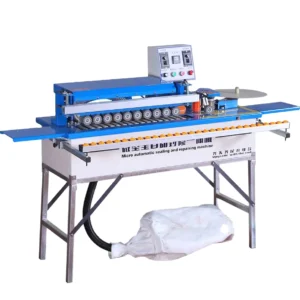
Automatic Edge Banding Machine, 220V, 0-15m/min Conveying Speed, 0.6-2mm Edge Thickness — compact unit with...
View Details
Products Disply 1. The fuselage adopts 14mm national standard high-strength steel plate table. frame-type fuselage...
View Details