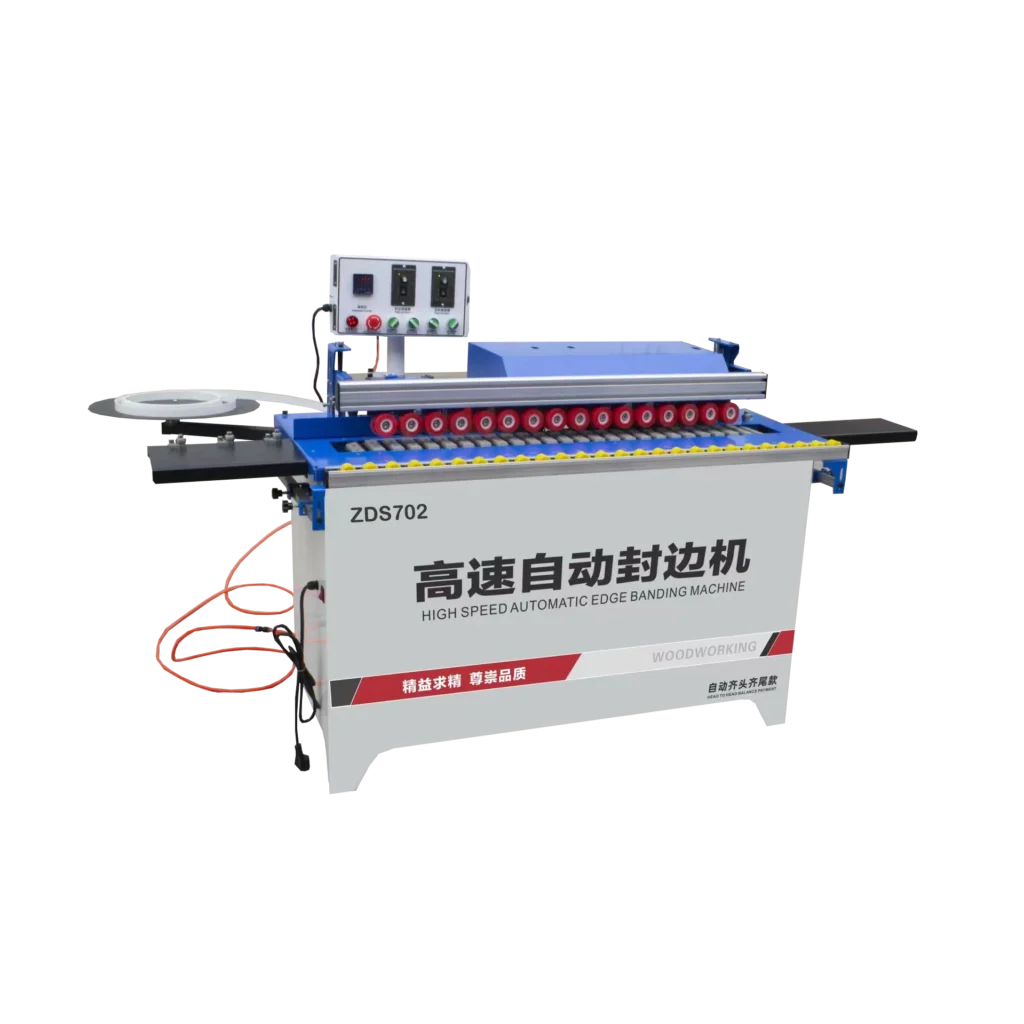
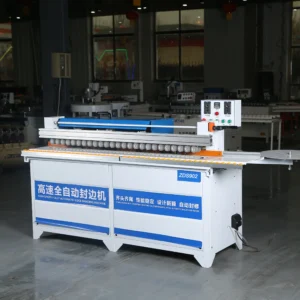
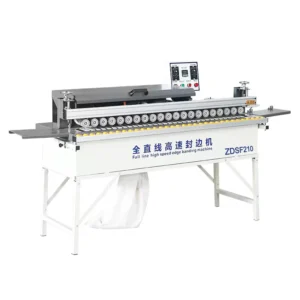
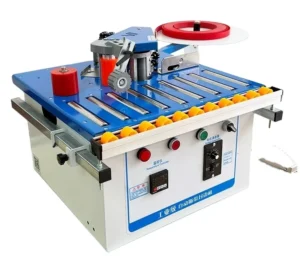
Stocked Readiness — voltage, manual language, and pre-shipment test are all confirmed before this unit leaves the Ningjin floor, not after it arrives at your dock.
Technical Specifications
| Parameter |
Value |
| Model |
ZDS702 |
| Product Type |
Semi Automatic Edge Banding Machine |
| Edge Type |
Straight line |
| Rated Voltage |
220V / 380V / customization available |
| Rated Power |
3.8 kW |
| Heating Power |
1000 W (5–10 min heat-up) |
| Feed Speed |
0–10 m/min |
| Trimming Height |
5–50 mm |
| Edge Banding Thickness |
0.3–3 mm |
| Glue Capacity |
1000 ml |
| Rated Air Pressure |
0.4–0.6 MPa |
| Overall Size |
120 × 55 × 120 cm |
| Machine Weight |
105 kg |
| Key Features |
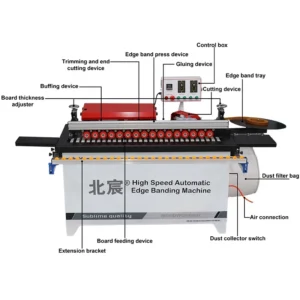
Automatic plate feeding, end cutting, head and tail trimming, upper and lower polishing, integrated dust collector |
Application Suitability
| Application |
Material or Output |
| Small-batch custom cabinet door banding |
MDF and particleboard with PVC or melamine edge tape |
| Joinery workshop first-machine upgrade |
Plywood panels with wood veneer banding |
| Secondary bander for backup or short runs |
Chipboard shelving with 0.4–1 mm PVC edges |
| Repair and rework station in a larger factory |
Mixed panel substrates requiring quick setup changeover |
Why the Voltage Question Must Come Before the Price
A machine wired for 380V three-phase is useless on a 220V single-phase shop floor, and no amount of discount fixes that after delivery.
I have seen buyers focus on the quoted cost of a semi automatic edge banding machine in stock while skipping the electrical details, only to open the crate and discover the motor does not match their panel board. Rewiring or swapping a motor on arrival means extra cost, a delayed commissioning, and sometimes a voided warranty. The conversation about your local voltage and frequency should happen at the inquiry stage, not on the day the container is unloaded [NEED_CITE: voltage and frequency standards by export market].

A Compact Footprint That Fits Where Space Is Tight
The ZDS702 measures 120 × 55 × 120 cm and weighs 105 kg, meaning it rolls through a standard workshop door and sits against a wall without demanding a dedicated bay. For a joinery startup or a small custom-furniture shop, that footprint matters because floor area is usually the first constraint. The semi automatic edge banding machine in stock configuration ships as a KD pack with user manual and video teaching, so one person with basic tools can complete assembly and run the first panel the same day it is unpacked.
Functions That Normally Require Separate Stations
Most entry-level banders force the operator to trim heads and tails by hand, then move the panel to a separate polishing wheel. This unit integrates automatic plate feeding, end cutting, head and tail trimming, and upper and lower polishing in one pass. The built-in dust collector pulls trim chips and sanding dust at the source, keeping the workbench clear without the need for a separate extraction system. For a short-run custom shop, that consolidation removes two handling steps per panel and keeps the output consistent from the first board to the last [NEED_CITE: ergonomic and dust exposure guidelines for woodworking workshops].
Reading the Numbers That Actually Matter
Feed speed runs from 0 to 10 m/min, which is appropriate for short batches where the operator needs to inspect each edge before the next panel enters. The trimming height range of 5–50 mm covers the panel thicknesses most small workshops process, from thin 5 mm MDF drawer bottoms up to 50 mm blockboard shelving. Glue capacity at 1000 ml is sized for intermittent use rather than continuous production shifts; refilling between batches prevents the glue from degrading in the pot. Heating power of 1000 W brings the glue to working temperature within five to ten minutes, so morning startup does not eat into the first hour of cutting time.
The Hidden Cost of Skipping Material Verification
I once configured a semi-automatic bander for a customer who specified PVC edge tape on the order form but actually ran melamine paper tape in production. The glue formulation for PVC does not bond well to melamine paper, and within a week the shop had a pile of panels with lifting edges that had to be reworked. That experience is why the question about your exact banding material and substrate now comes before the quotation is finalized. A machine set up for the wrong edge type does not just waste tape; it wastes the boards, the operator time, and the delivery deadline the customer is counting on [NEED_CITE: adhesive compatibility between EVA hot melt and melamine paper edge banding].
Why Order This Semi Automatic Edge Banding Machine in Stock Through ruiqishop
Voltage and frequency are confirmed in writing against your local grid before the unit is crated, so the motor matches your supply on day one. The operation and maintenance manual ships in the language you specify during the order process, not a generic English-only booklet that the operator cannot read. Every stocked unit goes through a pre-shipment functional test on the assembly floor, and the test record travels with the machine so you can verify each station before commissioning. Spare parts are listed on the packing document with part numbers, which means reordering a polishing wheel or a trimming blade later is a matter of referencing the list instead of guessing dimensions. KD packing with video-guided assembly keeps freight cost manageable for a single-unit shipment while giving the operator a clear setup path.
Documentation & Verification
- CE declaration of conformity covering the complete machine assembly
- Electrical schematic with confirmed voltage and frequency for your supply
- Factory test record on your specified panel thickness and edge material
- Operation and maintenance manual in your agreed language
- Spare parts list with part numbers for future reorders
- Packing photographs taken at crate closure for transit reference
Installation, Commissioning & Support
- 3.8 kW rated power requires a dedicated circuit with correct breaker sizing at your panel
- KD packing means one-person assembly using the included manual and video teaching guide
- 0.4–0.6 MPa air pressure demand connects to existing shop compressed air with a standard fitting
- Glue pot heat-up verification at 1000 W confirms element and thermostat function before first production run
- Feed speed calibration from 0–10 m/min validated against your actual panel stock
- Dust collector hose routing checked to ensure chips clear without manual intervention
Before You Request a Quote
Tell us the panel substrate you run most often — MDF, particleboard, or plywood — and the edge banding material and thickness, so the glue temperature and feed speed are set correctly before dispatch. Confirm your workshop voltage, phase, and frequency, and the language you need for the control labels and manual. If you have a daily panel count or batch size in mind, share it so we can advise whether this model matches your throughput or whether a higher-tier unit is a better fit for the volume.
Frequently Asked Questions
Q: What panel thickness range does this machine handle, and is it suitable for my current production volume?
A: The ZDS702 handles trimming heights from 5 mm to 50 mm, covering typical MDF, particleboard, and plywood stock used in small workshops. It is designed for short-batch custom furniture and cabinet work rather than continuous high-volume production lines. If your daily output consistently exceeds small-batch levels, we can review whether a higher-feed-speed model would match your throughput more closely.
Q: Can you confirm the exact voltage and frequency for my country before I order?
A: Yes. Voltage is configurable across 220V, 380V, or other specifications. We confirm the exact voltage, phase, and frequency in writing during the order process and include the matching electrical schematic with the shipment, so the motor and heating element are correct for your local supply when the crate arrives.
Q: What is the dispatch lead time and how is the machine shipped?
A: Stocked units are prepared for dispatch once pre-shipment testing is complete and packing photographs are taken. The machine ships in KD packing to reduce freight volume, and shipping options are quoted upfront. We provide tracking details and customs documentation support so you can follow the shipment to your door.
Q: Is assembly required on delivery, and what support is provided for setup?
A: The unit arrives in knock-down form. Assembly is guided by the included user manual and video teaching materials. Once assembled, you connect power and compressed air, verify glue heat-up, and run a test panel. We provide remote guidance during commissioning if questions arise during the initial setup.
Q: What spare parts are included, and how do I order replacements later?
A: Each order ships with a documented spare parts list that includes part numbers for wear items such as trimming blades, polishing wheels, and feed belt sections. Replacements are ordered by referencing those part numbers, and we quote lead times for spare shipments at the time of request.