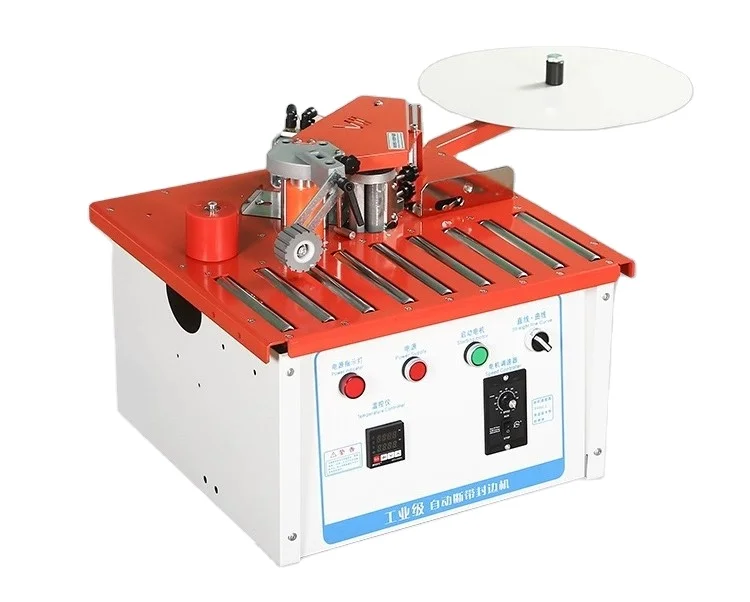
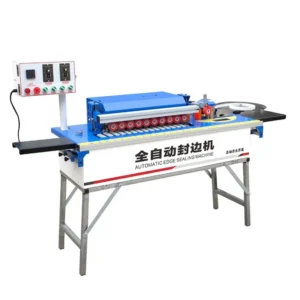
Compact Single-Phase Readiness — the ZDSF50+ ships configured for standard 220V single-phase outlets, so a small workshop can unbox and run edge banding the same day without electrical upgrades or transformer delays.
Technical Specifications
| Parameter |
Value |
| Model |
ZDSF50+ Mini Portable Edge Banding Machine |
| Product Type |
Mini Portable Edge Banding Machine |
| Rated Voltage |
220V single-phase |
| Rated Power |
1.2 kW |
| Edge Banding Speed |
0–6 m/min |
| Sheet Thickness Range |
10–60 mm |
| Edge Strip Thickness Range |
0.5–1.5 mm |
| Glue Pot Capacity |
1000 ml |
| Glue Heating System |
4 heating tubes |
| Heating Time |
5–10 min |
| Rated Air Pressure |
0.4–0.6 MPa |
| Tape Breaking |
Pneumatic with foot switch for curves; travel switch for straight lines |
| Pressure Rollers |
Adjustable, rubber material |
| Overall Size |
54 × 54 × 56 cm |
| Machine Weight |
28 kg |
Application Suitability
| Application |
Material or Output |
| Custom cabinet door edge sealing |
PVC edge banding on MDF and particleboard panels |
| Small-batch plywood shelving |
PVC and veneer strips on plywood edges, straight and curved profiles |
| On-site fit-out touch-up work |
Pre-cut solid wood panels requiring portable curve and straight-line banding |
| Joinery startup short-run production |
Mixed panel materials at low daily volume with frequent shape changes |
Why the Voltage Question Should Come Before the Price
A machine that cannot plug into your existing outlet is not a bargain — it is a twenty-day delay waiting for a transformer.
In small workshops across Latin America, single-phase 220V is the standard supply. Yet I have watched cabinet makers receive edge banders wired for three-phase 380V because nobody confirmed the plug type before shipping. The motor burns within seconds, the warranty argument begins, and the production schedule collapses while a step-down transformer crosses the ocean [NEED_CITE: voltage and frequency standards by export market]. The ZDSF50+ Mini Portable Edge Banding Machine in stock is configured for 220V single-phase from the factory, which means it matches the wall socket already in your shop. No electrician visit, no panel rewiring, no waiting.

Plug In and Start Banding Today
Small workshops do not have dedicated three-phase lines or spare breaker capacity. This mini portable edge banding machine draws 1.2 kW on a standard single-phase circuit, which is comparable to running a heavy-duty router and a dust extractor simultaneously. You wheel it to the panel, plug it into the nearest 220V outlet, and the four-tube glue pot begins heating. Within ten minutes the glue reaches working temperature and you are feeding your first board through the rollers.
Curve and Straight Edges Without Swapping Machines
Most entry-level banders handle straight edges only, forcing operators to hand-trim curved profiles afterward. The ZDSF50+ covers both. A pneumatic tape-breaking unit with a foot switch lets you follow curved contours hands-free, while a travel switch automates tape cutting on straight runs [NEED_CITE: pneumatic edge banding feed and cut mechanisms]. This dual capability matters for custom cabinet makers who cut arched door panels and rectangular shelf boards on the same afternoon, and it removes the need to buy a second dedicated curve bander.
How the Numbers Translate on the Shop Floor
The 10–60 mm sheet thickness range covers the typical MDF, plywood, and particleboard panels used in cabinetry and shelving. The 0.5–1.5 mm strip thickness range handles standard PVC edge banding as well as thin veneer. Adjustable rubber pressure rollers clamp to the exact board thickness, preventing the strip from lifting on thinner stock or crushing fragile veneer on thicker panels. Edge banding speed is variable from 0 to 6 m/min, giving the operator fine control when navigating tight curves on small drawer fronts.
The Hidden Cost of Ignoring Frequency Compatibility
Voltage is only half the electrical picture. A 220V machine built for 50 Hz will run on a 60 Hz supply, but the motor spins faster and the glue pot heating cycle shifts, which can lead to overheating on extended runs [NEED_CITE: motor speed variance under frequency mismatch]. I have seen workshops in 60 Hz regions receive machines rated only for 50 Hz and blame the manufacturer when the motor runs hot. Always confirm both voltage and frequency with the supplier before the machine ships. A frequency mismatch is not a warranty issue — it is a specification oversight that costs weeks to correct.
Why Source This Machine Here
The ZDSF50+ is built on a production line that runs a four-stage quality check covering incoming material, in-process assembly, finished product inspection, and pre-shipment verification. Each unit leaves the factory with a test record documenting actual glue heating performance and feed function on a sample panel. Voltage and control-panel language are confirmed with the buyer before production begins, so there are no surprises at unboxing. Engineer-led configuration support means you receive a formal quotation referencing your exact panel dimensions and local power supply within one working day. Factory visits are available for buyers who want to see the assembly benches and test their own material before committing.
Documentation & Verification
- Factory test record confirming glue pot heat-up time and feed function on your specified panel thickness
- Electrical schematic showing 220V single-phase wiring and breaker requirements for your electrician
- Operation and maintenance manual in your preferred language covering setup, daily cleaning, and troubleshooting
- Spare parts list identifying consumable pressure rollers, heating tubes, and glue-coated rollers by part number
- Pre-shipment photograph set showing the machine packed and crated for your shipping agent
Installation, Commissioning & Support
- Place on any level workshop bench; 54 × 54 × 56 cm footprint requires no dedicated floor space or foundation pad
- Connect to a dedicated 220V single-phase circuit rated for at least 10 A; no three-phase supply needed
- Arrives fully assembled; unbox, mount the edge strip transport bayonet, and connect the air supply at 0.4–0.6 MPa
- First heat-up cycle takes 5–10 minutes; run a scrap panel to set pressure roller gap and verify tape-breaking timing
- Order spare heating tubes and rubber pressure rollers with the initial shipment to avoid consumable downtime
Before You Send the Inquiry
To match this Mini Portable Edge Banding Machine in stock to your workshop, share the panel materials you process most often, the typical board thickness range, and whether your work is predominantly straight-line, curved, or mixed. Confirm your local voltage and frequency so the electrical configuration is locked before dispatch. If you run unusual edge strip materials beyond standard PVC, mention the strip type and thickness so the transport bayonet and pressure roller settings can be verified in advance.
Frequently Asked Questions
Q: Does this mini edge bander work on both curved and straight edges?
A: Yes. The ZDSF50+ handles both profiles without attachments. A pneumatically controlled tape-breaking device with a foot switch allows hands-free operation on curves, while a built-in travel switch automates tape cutting on straight edges. This dual-mode setup suits workshops that process mixed panel shapes in short production runs.
Q: What sheet thickness and edge strip thickness does it handle?
A: The machine accepts sheet thickness from 10 to 60 mm and edge strip thickness from 0.5 to 1.5 mm. Adjustable rubber pressure rollers clamp to the exact board thickness, and the edge strip transport bayonet adjusts to strip height. This range covers standard MDF, plywood, particleboard, and solid wood panels used in cabinet and furniture work.
Q: Is the machine ready to run on standard single-phase 220V supply?
A: The ZDSF50+ ships configured for 220V single-phase at 1.2 kW. It plugs into a standard outlet on a dedicated circuit rated for at least 10 A. Before ordering, confirm your local frequency — 50 Hz or 60 Hz — so the motor and heating system are matched to your grid.
Q: How fast can it heat up and start banding?
A: The four-tube glue heating system brings the 1000 ml glue pot to working temperature in approximately 5 to 10 minutes. After heat-up, the operator can begin feeding panels immediately. The 0–6 m/min variable feed speed allows slow, controlled passes on curved sections and faster runs on long straight edges.
Q: What spare parts and consumables should I order with the machine?
A: Recommend ordering spare heating tubes, rubber pressure rollers, and glue-coated rollers with the initial shipment. The spare parts list included with the machine identifies each consumable by part number. Having these on hand prevents unplanned downtime when a roller wears or a heating tube reaches end of life.