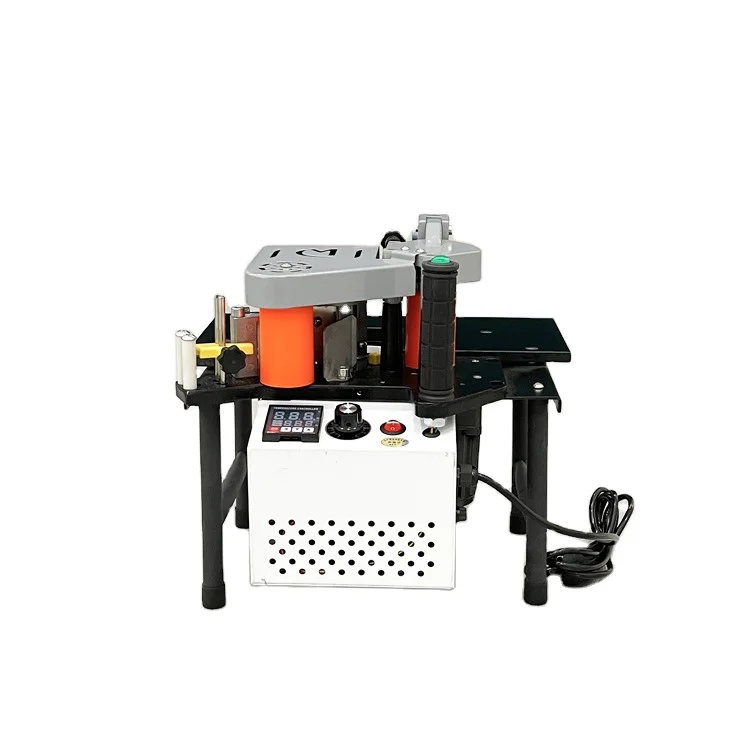
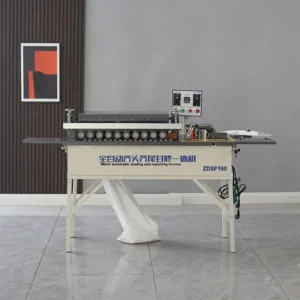
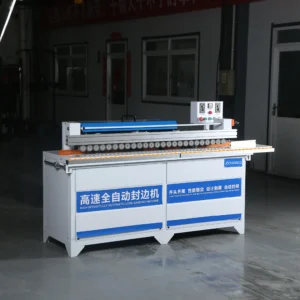
Compact Footprint, Fast Dispatch — Ready-stock portable edge bander with confirmed plug options and 220V compatibility verified before each shipment leaves the warehouse.
Technical Specifications
| Parameter |
Value |
| Product Type |
Portable Edge Banding Machine |
| Rated Power |
1000W |
| Voltage & Frequency |
220V |
| Control System |
Manual operation |
| Glue Pot Capacity |
800ml |
| Gluing Method |
Double-sided gluing |
| Board Thickness Range |
7–60mm |
| Edge Banding Thickness |
0.3–3mm |
| Plate Shape Compatibility |
Curved & Straight |
| Net Weight |
14kg |
| Feed Method |
Manual feed |
| Plug Options |
EU / AU / UK / USA / CN |
| Assembly State |
KD packing, user assembly required |
| Warranty |
1 year |
Application Suitability
| Application |
Material or Output |
| Custom office furniture components |
MDF and plywood with PVC edge banding, curved desk edges |
| Small-batch cabinetry production |
Particleboard panels with veneer or PVC banding, straight runs |
| On-site joinery and rework |
Solid wood panels requiring curved or shaped edge treatment |
| Prototype and sample fabrication |
Mixed substrates including MDF, plywood, and blockboard |
| Low-volume workshop operations |
Panel stock 7–60mm thick with 0.3–3mm banding material |
Why Plug Type Must Be Confirmed Before Dispatch
A portable edge banding machine in stock is only useful if it matches your workshop's electrical infrastructure the moment it arrives. Machines quoted without confirming local voltage and frequency regularly show up with incompatible plugs or wrong voltage ratings, sitting idle while the buyer arranges adapters or returns.
In workshops across West Africa and South Asia, I have seen brand-new edge banders gather dust for weeks because the plug was a UK three-pin in a region running EU sockets, or the frequency mismatch caused the glue pot to overheat during the first run. Confirming the plug type and verifying 220V compatibility before the crate closes is not a luxury — it prevents a dead-on-arrival machine [NEED_CITE: voltage and frequency standards by export market].

Stock Availability and Order Simplicity
This unit ships as a stocked item with a defined lead time, meaning you avoid the multi-week production wait that custom-build orders require. The order process focuses on confirming your plug type, voltage, and shipping destination — then the machine is packed and dispatched. For a small workshop buying its first edge bander, this simplicity removes the back-and-forth that often delays equipment arrival.
Each Portable Edge Banding Machine in stock is checked against the buyer's specified electrical standard before packing, so the EU, AU, UK, USA, or CN plug matches what is actually on your workshop wall.
Workshop Mobility and On-Site Flexibility
At 14kg net weight, this machine can be carried between workbenches or loaded into a vehicle for on-site installation jobs. Small joinery teams that move between client locations benefit from a unit that does not require a dedicated floor position. The compact KD-packed footprint fits standard shelving when not in use, keeping floor space clear for other equipment or material staging [NEED_CITE: small workshop layout and equipment spacing guidelines].
Glue Pot Capacity and Edge Thickness Range
The 800ml glue pot holds enough adhesive for continuous runs on small batches without frequent refills, which matters when you are edge-banding a set of cabinet doors in one session. Double-sided gluing applies adhesive to both the panel edge and the banding strip, improving bond consistency compared to single-sided methods. The 0.3–3mm edge thickness range covers thin PVC veneer wraps as well as thicker solid-wood banding stock commonly used on plywood shelving and desk tops.
Board thickness acceptance from 7–60mm means you can run everything from thin MDF drawer sides up to thick blockboard worktops on the same unit without adjustment jigs or auxiliary fences. Manual feed speed lets the operator control the pace based on glue open time and material behavior — useful when switching between straight runs and curved components where feed pressure matters.
The Cost of Skipping Voltage Verification
Buying a stocked machine without matching your local electrical setup leads to one of two outcomes: the machine trips breakers on first power-up, or it runs at reduced capacity and damages internal heating elements over time. Glue pots are especially sensitive — incorrect voltage causes temperature swings that either scorch the adhesive or leave it too cool to bond. Either scenario means wasted banding material, scrapped panels, and days lost to sourcing a step-down transformer [NEED_CITE: industrial equipment voltage mismatch failure patterns].
Why Procurement Through This Channel Works
Stocked inventory means dispatch lead times are measured in days, not production cycles. Plug and voltage confirmation happens at the order stage, not after the crate is sealed. The KD packing format keeps shipping volume low for single-unit air or sea freight. Each unit leaves with a factory test record showing it ran actual banding material before packing. Spare parts lists identify glue pot elements and feed rollers so you can reorder consumables without guessing part numbers.
Documentation & Verification
- Factory test record showing edge banding on material matching your panel thickness range
- Electrical schematic confirming 220V circuit and plug type before dispatch
- Operation manual provided in the language agreed at order confirmation
- Spare parts list with glue pot and feed component part numbers identified
- Packing photographs documenting machine condition at the time of crating
Installation, Commissioning & Support
- KD-packed unit requires bench-top assembly following the included manual or video guide
- 220V single-phase power supply with a dedicated circuit rated above 1000W draw
- 800ml glue pot requires initial heating cycle and adhesive loading before first panel run
- Manual feed operation means operator training focuses on speed control and edge alignment
- Curved edge work benefits from test runs on scrap stock to dial in feed pressure
- Spare glue pot heating elements and feed rollers recommended with initial order
Inquiry Guidance
Before requesting a quote, have your panel material type and thickness range ready, along with the edge banding material and thickness you plan to run. Confirm your workshop voltage and plug type so the correct configuration ships. If your work involves curved components, note the minimum curve radius so compatibility can be verified against the machine's feed path.
Frequently Asked Questions
Q: What voltage and plug options are available, and how is compatibility confirmed before shipping?
A: The machine operates on 220V and ships with EU, AU, UK, USA, or CN plug options. At the order stage, you confirm your local socket type and electrical standard. The plug is fitted and verified against your specification before the unit is packed for dispatch, eliminating the need for adapters or transformers upon arrival.
Q: Can this machine handle both curved and straight edges on the same material type?
A: Yes. The feed path and glue application system accommodate both curved and straight panel edges without tooling changes. Operators adjust feed speed manually to match the curve radius, maintaining consistent glue transfer and banding adhesion across shaped components and standard straight panels in the same production session.
Q: What is the delivery lead time from stock, and what shipping options are available for single-unit orders?
A: Stocked units are dispatched within a short lead time after voltage and plug confirmation. Single-unit orders ship via standard air or sea freight depending on your timeline and budget. The KD-packed format keeps dimensional weight manageable for courier or LCL sea freight to most destinations.
Q: How do I assemble and commission the machine — is video guidance included?
A: The machine arrives KD-packed with a user manual and access to video assembly instructions. Commissioning involves bench mounting, loading adhesive into the 800ml glue pot, running a heating cycle, and testing feed speed on scrap material before production panels. Most workshops complete setup within a single working session.
Q: What spare parts should I order with the machine, and how is the warranty handled?
A: Recommended spare parts include glue pot heating elements, feed rollers, and adhesive scraper blades — all identified on the included spare parts list. The one-year warranty covers manufacturing defects. Support is coordinated through the supplier with replacement parts shipped based on documented fault reports and machine serial records.