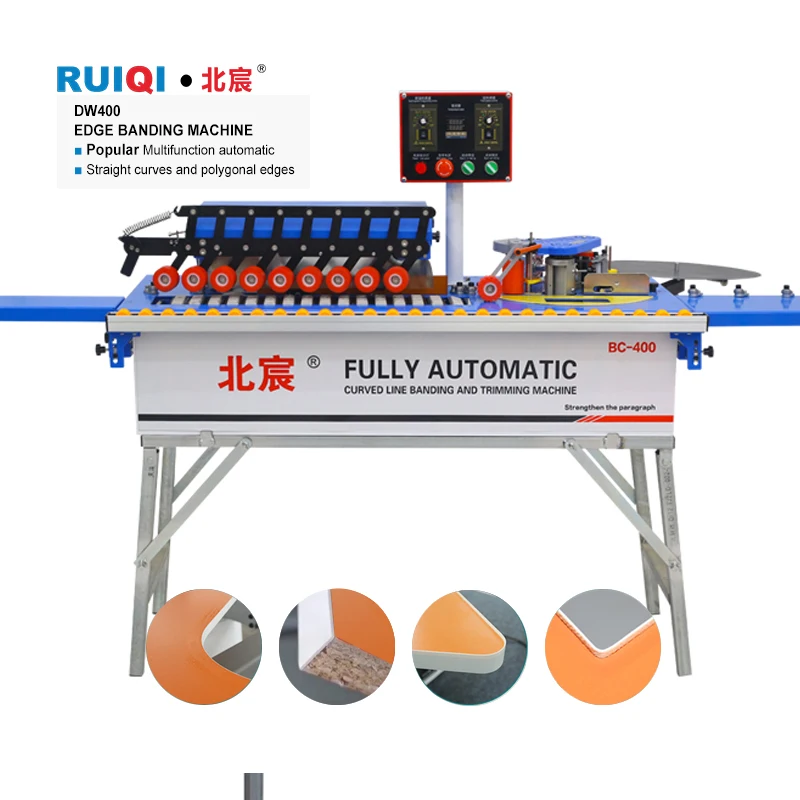
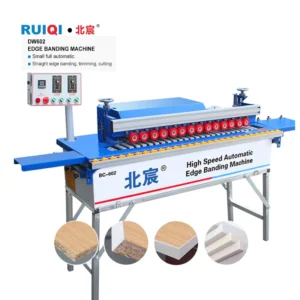
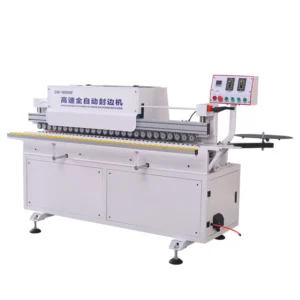
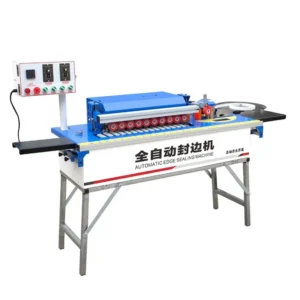
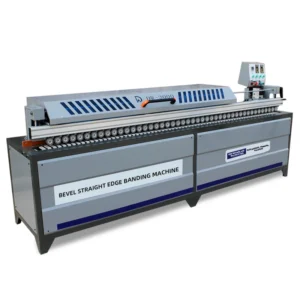
Ready-Stock Configuration — A 70 kg compact edge bander held in inventory with your local voltage and operator language pre-set before dispatch, so a small workshop can start producing finished panels the week it arrives.
Technical Specifications
| Parameter |
Value |
| Model |
DW400 |
| Product Type |
Edge Banding Machine |
| Total Power |
3800W |
| Voltage |
220V / 380V / Customization |
| Standard Features |
Straight edge banding, trimming, polishing |
| Minimum Sheet Length |
25 cm |
| Minimum Sheet Width |
10 cm |
| Edge Banding Height |
0–50 mm |
| Edge Banding Thickness |
0.3–3 mm |
| Edge Power |
20W |
| Transmission Power |
60W |
| Trimming Power |
650W × 2 |
| Polishing Power |
180W × 2 |
| Vacuum Power |
1200W |
| Glue Pot Capacity |
1000 ml |
| Air Source Pressure |
0.5–0.8 MPa |
| Product Size |
116 × 47 × 69 cm |
| Product Weight |
70 kg |
| Language Options |
Chinese, English, Spanish (customizable) |
| Plug Options |
EU, USA, AU, UK |
Application Suitability
| Application |
Material or Output |
| Custom cabinet door production |
MDF and particleboard panels with PVC edge banding |
| Small-batch furniture components |
Plywood and blockboard with veneer or melamine edges |
| Joinery workshop panel finishing |
Polymer door skins and wood composite substrates |
| Prototype and sample runs |
Solid wood panels trimmed to 0.3–3 mm band thickness |
Why the Voltage Question Should Come Before the Price for an Edge Banding Machine in Stock
A machine wired for the wrong grid is a crate of expensive scrap metal sitting on your workshop floor.
I have watched a brand-new edge bander sit idle for eleven days because it arrived configured for 380V three-phase while the shop only had a 220V single-phase drop. The buyer had compared quotes for weeks without ever asking the voltage question, and the seller had assumed a default. Once the transformer arrived, the control board had already developed a fault from the initial mismatched surge [NEED_CITE: voltage and frequency standards by export market]. A compact edge banding machine in stock is only useful if its electrical configuration matches your facility before it leaves the factory. Confirming the exact supply — including frequency and phase — takes two minutes and prevents weeks of downtime.

Dispatch Speed Without the Configuration Guesswork
Most small workshops do not have the luxury of waiting eight weeks for a custom build, nor do they have the floor space for a full-scale production unit. The DW400 edge banding machine in stock is held in a ready-to-ship state with the mechanical assembly complete; only the final electrical and language settings are applied once the buyer confirms the destination grid and operator preference. This approach keeps the lead time to the logistics window rather than the manufacturing window. For a joinery shop replacing a failed machine or adding first-time edge processing capability, that difference is measured in days rather than months.
A Footprint That Fits Where Larger Machines Cannot
At 116 × 47 × 69 cm and 70 kg, this unit can be positioned against a wall or between a sliding table saw and an assembly bench [NEED_CITE: typical workshop layout requirements for small joinery shops]. Two people can reposition it without a forklift, which matters when a small workshop is reconfiguring the floor for a new product run. The 3800W total power draw stays within the capacity of a standard 20-amp workshop circuit at 220V, eliminating the need for a dedicated high-amperage drop that many rented industrial units simply do not have.
How Trimming, Polishing, and Glue Pot Capacity Shape the Finished Edge
The dual 650W trimming motors handle both flush and radius trimming across 0.3–3 mm banding material, which covers the full range from thin PVC to thicker veneer strips used on solid-wood cabinet fronts. The two 180W polishing wheels follow immediately behind, buffing the trimmed edge to a smooth finish that does not need secondary hand-sanding. A 1000 ml glue pot is sized for intermittent small-batch runs rather than continuous high-volume shifts; it heats the adhesive quickly for a short run and reduces the waste associated with letting a large pot cool with unmelted material inside. The 0.5–0.8 MPa air source requirement is compatible with the small piston compressors already present in most woodworking shops, so no additional pneumatic investment is needed.
What Happens When a Buyer Ignores the Language Setting
A cabinet maker in the Gulf once received an automatic edge bander with a Chinese-only control screen. The operator could not read the temperature setpoints, accidentally ran the glue pot thirty degrees below the adhesive's activation threshold, and produced two hundred panels with delaminating edges before the error was caught. The machine itself was fine; the configuration was not [NEED_CITE: operator interface language impact on production errors in woodworking machinery]. The DW400 offers Chinese, English, and Spanish as standard, with additional languages available on request, so the screen the operator reads on day one is the screen they will actually understand.
Why Procurement Here Reduces the Commissioning Gap
Every unit leaves with a factory test record run on the buyer's specified panel thickness range, so the machine has already produced acceptable edges before it is crated. The electrical schematic and voltage confirmation travel with the shipping documents, allowing a local electrician to verify the connection without guessing. An operation and maintenance manual in the agreed language means the first startup is guided rather than improvised. The spare parts list is itemized down to the trimming blade and polishing wheel, so reorder decisions are based on known part numbers rather than photographs sent to a supplier who may or may not recognize them.
Documentation & Verification
- CE declaration of conformity covering the DW400 mechanical and electrical safety requirements
- Electrical schematic with confirmed voltage, phase, and plug type for the destination market
- Factory test record produced on the buyer's specified panel thickness and banding material
- Operation and maintenance manual translated into the agreed operator language
- Itemized spare parts list with part numbers for trimming blades, polishing wheels, and glue pot elements
Installation, Commissioning & Support
- Requires a level floor area of approximately 1.2 × 0.5 m with clearance for panel infeed on the left side
- Dedicated 220V or 380V circuit matched to the confirmed configuration; no shared supply with welding equipment
- Arrives fully assembled; connect power, compressed air at 0.5–0.8 MPa, and run the glue pot heat cycle before first panel
- First-run parameter setting for trimming depth and polishing pressure guided by the included multilingual manual
- Trimming blades and polishing wheels are the primary consumables; replacement intervals depend on banding material hardness
Starting the Conversation on Your Line Requirements
If this unit looks like it fits your workshop, send over the panel materials you process most often, the edge banding thickness range you use, and your local voltage and frequency. Let me know the operator language preference and the plug type your electrician expects. If you are adding this machine alongside existing equipment, share the model of your sliding table saw or panel cutter so we can confirm that the minimum 25 cm sheet length will not create a bottleneck in your current workflow.
Frequently Asked Questions
Q: What is the upgrade path when production volume increases?
A: The DW400 handles single-unit and small-batch work comfortably. When daily volume grows to continuous shifts, the next step is a full-function pre-milling model with automated feed and additional trimming stations. The transition keeps you within the same product family, so operator training carries over and spare parts overlap on consumables like polishing wheels.
Q: How do I confirm voltage and plug type before ordering?
A: Share your workshop's supply voltage, frequency in hertz, and phase configuration along with the plug standard your electrician uses. The electrical schematic is then prepared to match, and a written voltage confirmation is issued before the machine leaves the factory. This step is built into the order process for every unit.
Q: Can the control panel be configured in my local language?
A: Chinese, English, and Spanish are available as standard options. If your operators need another language, the firmware can be loaded before dispatch. Confirming the language at the order stage prevents the situation where an unreadable screen delays commissioning and requires an emergency firmware update on site.
Q: What minimum workshop space is required for installation?
A: The machine itself occupies 116 × 47 cm of floor space, but you should allow at least 1.5 meters of clearance on the infeed side for handling full-length panels. Ceiling height is not a constraint at 69 cm machine height. A standard workshop floor with adequate lighting and a nearby compressed air supply is sufficient.
Q: Is operator training included with machine delivery?
A: The operation and maintenance manual in the agreed language covers startup, parameter adjustment, consumable replacement, and daily maintenance routines. For hands-on guidance, remote video support is available during the first commissioning session, walking your operator through the first panel run and answering questions in real time.