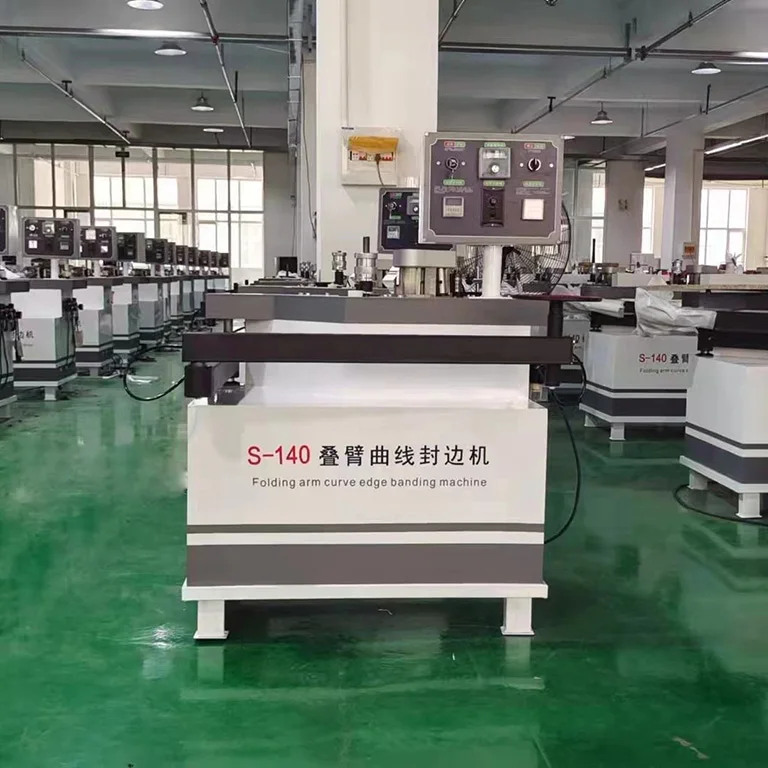
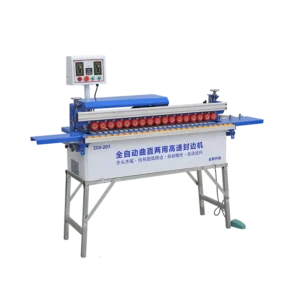
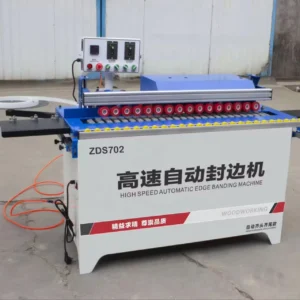
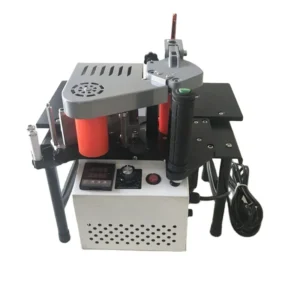
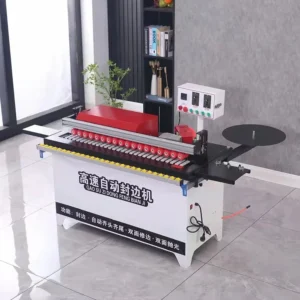
In-Stock Dispatch — S-140, W-2, and W-3 curve edge banding machines ready to ship as single units, configured to your workshop voltage before leaving our Ningjin facility.
Technical Specifications
| Parameter |
Value |
| Model |
S-140 / W-2 / W-3 |
| Product Type |
Curve Edge Banding Machine |
| Voltage & Frequency |
220V 50Hz (configurable 110V–440V pre-dispatch) |
| Total Power |
1.4 kW (S-140, W-2); 3.4 kW (W-3) |
| Edge Banding Speed |
0–180 mm/s |
| Edge Band Thickness Range |
0.4–2 mm |
| Edge Band Width Range |
8–50 mm |
| Gluing Method |
Double-sided gluing |
| Glue Pot Capacity |
1000 ml (S-140) |
| Standard Suction Cup Size |
200×26 mm (S-140); 300×26 mm (W-2, W-3) |
| Air Pressure Requirement |
0.5–0.8 MPa |
| Net Weight |
88 kg (S-140); 152 kg (W-2, W-3) |
| Overall Dimensions (L×W×H) |
960×620×880 mm (S-140); 1200×800×1220 mm (W-2); 1210×1100×970 mm (W-3) |
| Control Features |
Intelligent temperature control, speed adjustment, timer |
| Functional Design |
Straight and curved dual-purpose, folding arm device |
| Breaking Method |
Automatic tape break (S-140) |
Application Suitability
| Application |
Material or Output |
| Custom cabinet doors with radiused corners |
MDF and plywood panels with PVC or veneer edge banding |
| Curved wardrobe end panels |
Particleboard with 0.4–2 mm melamine or ABS edging |
| Rounded study desk and office table edges |
Solid wood panels and laminated board |
| Small-batch decorative furniture components |
Veneer banding on shaped timber substrates |
| Door and window profile edging |
Plywood and MDF with thin PVC strips |
Why Confirming Your Workshop Voltage Before Ordering Matters More Than You Think
A curve edge banding machine in stock is useless if your workshop cannot power it on day one.
Over the years, I have watched small furniture makers wait weeks for transformer installations because the voltage specification was never cross-checked with their local electrician before the machine shipped. A 220V unit arriving at a workshop wired only for three-phase industrial supply becomes a heavy, silent fixture on the floor. This is not a manufacturing defect; it is a communication gap that stalls your first production run entirely [NEED_CITE: voltage and frequency standards by export market]. Sending your workshop electrical panel photo before we confirm the order eliminates this downtime.

Ready for Immediate Dispatch Without the Typical Lead Time
Small workshops do not always have the luxury of waiting through a six-week production cycle. Each curve edge banding machine in stock at our facility has already passed our four-stage quality verification, meaning the pre-shipment testing phase is complete before your order is even placed. The S-140 suits a joinery startup moving away from hand-held edge banding irons, while the W-3 provides the higher motor power and larger suction cup area needed when panel sizes and daily volumes begin to climb.
Choosing the Right Footprint for a Compact Workshop Floor
Space is the first constraint when a manual workshop adds its first machine. The S-140 sits on a bench or small stand at roughly 960×620 mm, while the W-2 and W-3 require dedicated floor space closer to 1.2 m in length. Planning your material flow around the machine — where the unedged panels enter and the finished pieces exit — determines whether the operator works comfortably or constantly repositions stock. The folding arm device on all three models folds away when you are running straight edges only, reclaiming valuable bench width.
How the Specification Sheet Translates to Daily Edging Quality
The double-sided gluing system applies adhesive to both the panel edge and the banding material simultaneously, which is critical when working curved radii where single-sided glue application leaves cold spots on the inside of a bend. Intelligent temperature control maintains the glue pot within the correct viscosity window for your specific banding material — PVC requires a different thermal setting than natural wood veneer. The adjustable edge banding wheel allows a +0.5 mm offset to prevent strip drift, a detail that keeps the band centered on the panel edge throughout the run and avoids costly re-trimming. The hot air device directs warmth upward from the base, softening the adhesive bond line just before pressure is applied, which noticeably improves adhesion on colder workshop mornings [NEED_CITE: thermal adhesion principles in edge banding]. The bottom-up hot air approach is particularly effective on curved profiles where contact time between band and panel is shorter than on a straight feed machine.
The Hidden Cost of Buying a Machine That Does Not Match Your Current Stock
Purchasing a curve edge bander without verifying that your existing edge banding inventory falls within the machine's thickness and width range leads to a frustrating discovery on arrival. Banding thicker than 2 mm or narrower than 8 mm simply cannot feed through the guide mechanism cleanly, resulting in misaligned application and wasted material. Similarly, if your workshop air compressor cannot sustain the 0.5–0.8 MPa range required for the suction cups and automatic tape break, the workpiece shifts during the banding cycle. The panel drops or the band peels mid-run, and what should be a quick edging job turns into rework and scrap [NEED_CITE: pneumatic supply requirements for small woodworking machinery].
Why Ordering a Stocked Unit from Our Facility Works for a Growing Workshop
Our in-house manufacturing means the S-140, W-2, and W-3 are not third-party catalog items relabeled for export; they are built on our own production lines with our proprietary cutting and gluing mechanisms. Each stocked unit has completed four-stage quality control — incoming material inspection, in-process checks, finished product verification, and pre-shipment testing — so the machine you receive has already run test cycles on panel stock. Voltage and control panel language customization happens before the crate closes, not as an afterthought at your dock. If you later need to scale throughput, the W-2 and W-3 share the same product family architecture, letting you add capacity without learning a new control interface or switching suppliers entirely.
Documentation & Verification
- CE declaration of conformity specific to the ordered model and voltage configuration
- Electrical schematic confirming your workshop voltage before the machine is crated
- Factory test record showing the machine running on panel stock matching your thickness range
- Operation and maintenance manual in your chosen language covering glue pot setup and suction cup adjustment
- Spare parts list with part numbers for suction cups, glue pot elements, and banding guide rollers
Installation, Commissioning & Support
- Place the W-3 on a level concrete floor capable of supporting 152 kg plus operator load
- Connect to a dedicated 220V circuit with appropriate breaker rating for the 3.4 kW total power draw
- Supply clean, dry compressed air at 0.5–0.8 MPa via a regulated line with moisture trap
- Calibrate intelligent temperature control to your specific edge banding material during the first test run
- Inspect and clean the standard suction cup surface weekly to maintain firm workpiece holding force
- Keep replacement glue pot elements and suction cup pads from the included spare parts kit within reach
What We Need to Move Your Order Forward
To confirm the correct model and configuration, please share your workshop's electrical supply specification including voltage and frequency, along with a photo of your distribution panel. Tell us the edge banding materials and thickness range you currently stock, and the maximum panel dimensions you intend to edge. If you are replacing a manual process, let us know your approximate daily panel count so we can recommend whether the S-140 or W-3 is the better fit for your volume.
Frequently Asked Questions
Q: Which model among the S-140, W-2, and W-3 suits my current workshop volume?
A: The S-140 is designed for low-volume custom work and startup joinery shops running occasional curved panels. The W-2 adds a larger suction cup area for bigger workpieces, and the W-3 delivers higher motor power for sustained daily use. Share your typical daily panel count and maximum board dimensions, and we will recommend the model that matches your throughput without oversizing the footprint.
Q: Is the curve edge banding machine in stock and ready to ship as a single unit?
A: Yes, all three models are held as stocked units and can ship individually without minimum order quantities. Dispatch lead time depends on destination and any pre-ship customization such as voltage reconfiguration or language-specific control panels. Single-unit orders are a standard part of our stock fulfillment process, and we confirm the exact ship date once your configuration is locked in.
Q: What voltage does the machine ship with, and can it be reconfigured?
A: Standard configuration is 220V 50Hz for the W-2 and W-3, with the S-140 at 220V. We reconfigure voltage anywhere from 110V to 440V at our facility before crating, based on the electrical details you provide. This avoids the costly and time-consuming transformer installation that occurs when voltage mismatches are discovered only after the machine arrives at your workshop.
Q: How do I set up the suction cup and glue pot for my first curved edge run?
A: Position the suction cup centrally under the panel to distribute holding force evenly across the workpiece. Fill the glue pot to the marked level and set the intelligent temperature control to match your banding material — PVC and veneer require different thermal settings. Run a test piece with a short banding strip first, checking adhesion and alignment before committing to a full production batch.
Q: What spare parts come with the machine, and how do I reorder?
A: Each unit ships with a spare parts kit covering commonly replaced consumables such as suction cup pads and glue pot heating elements. The included parts list provides individual part numbers for each component. When you need replacements, send us the part number from your manual and we arrange dispatch directly from our Ningjin stock to keep your machine running without extended downtime.