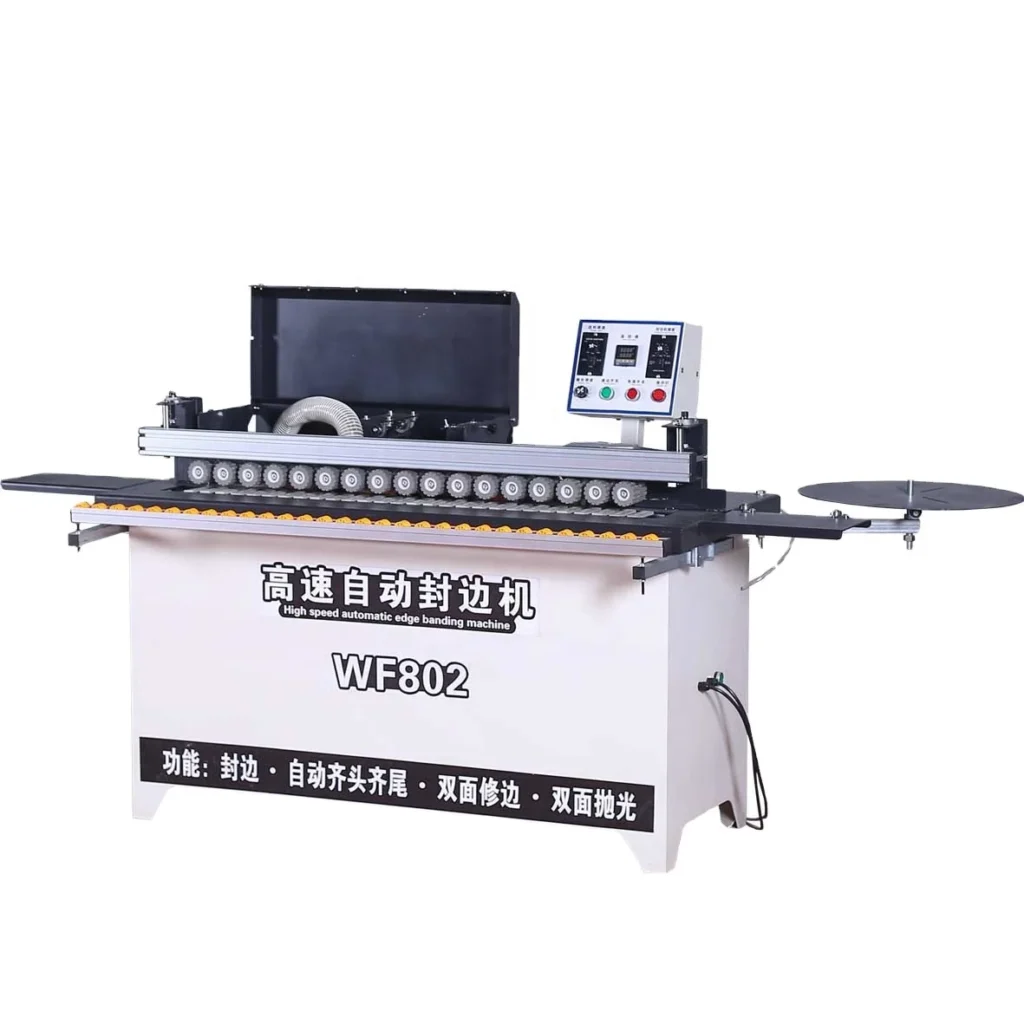
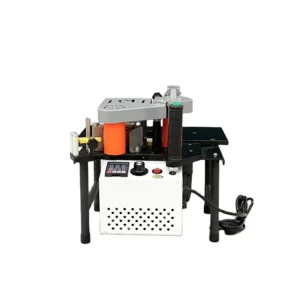
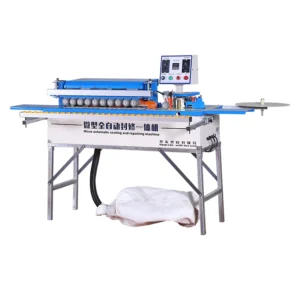
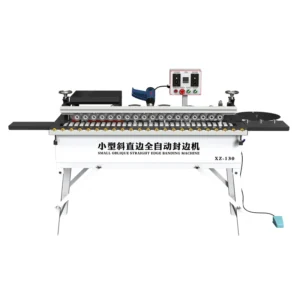
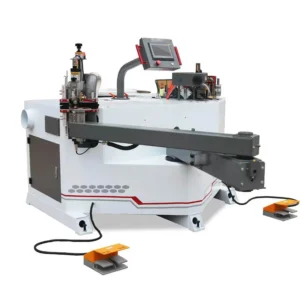
Ready-Stock Reliability — Model 802 ships from our Shandong facility with voltage confirmed on paper before the crate is sealed, eliminating the guesswork that stalls small workshops at commissioning.
Technical Specifications
| Parameter |
Value |
| Model |
802 |
| Product Type |
Automatic Edge Banding Machine |
| Rated Voltage |
220V |
| Rated Power |
4 kW |
| Feed Speed |
0-10 m/min |
| Conveyor Belt Speed |
0-10 m/min |
| Sheet Thickness Range |
10-50 mm |
| Strip Thickness Range |
0.5-2.5 mm |
| Edge Type |
Straight line |
| Glue Pot Capacity |
4000 ml |
| Heating Power |
1000 W (5-10 min heat-up) |
| Trimming Power |
800 W × 2 |
| Polishing Power |
180 W × 2 |
| Suction Power |
1200 W |
| Rated Air Pressure |
0.4-0.6 MPa |
| Pressure Beam |
One-piece integrated, double rows of pressure wheels |
| Conveyor Belt Material |
Silicone |
| Belt Breaking Method |
Pneumatically controlled |
| Trimming Motors |
Double high-speed, upper and lower |
| Polishing Motors |
Dual, upper and lower |
| Extension Support |
Extendable fluent strips for large plates |
| Dust Collection |
Built-in vacuum device |
| Control Panel |
Digital display of glue pot temperature, independent switch |
| Overall Dimensions |
130 × 65 × 75 cm |
| Machine Weight |
150 kg |
Application Suitability
| Application |
Material or Output |
| Custom cabinet door edging |
MDF and particleboard with PVC strip |
| Small-batch shelving production |
Plywood panels with melamine edge banding |
| Joinery workshop starter line |
Solid wood panels up to 50 mm with veneer strip |
| Prototype furniture runs |
Mixed substrate batches requiring quick changeover |
Why the Voltage Question Must Come Before the Crate Is Nailed Shut
An Automatic Edge Banding Machine in stock is only useful if it runs the moment you plug it in.
I spent my early years on the assembly floor in Shandong, and one mistake I still remember involved a small edge bander shipped to a Middle East workshop. The contract said 380V. The customer's shop ran on 220V single-phase. The main board burned within seconds of power-on, and the production line sat idle for nearly a month waiting for replacement parts [NEED_CITE: voltage and frequency standards by export market]. That single oversight cost the customer more in lost orders than the machine itself was worth.
Every Model 802 leaving our floor now carries a signed voltage confirmation sheet listing the exact supply standard of the destination country. If your grid is anything outside 220V/50Hz, we flag it before production starts — not after the crate reaches your port.

Single-Phase Power Meets a Compact Footprint
The 4 kW rated power draw fits inside the electrical envelope of most small joinery shops without requiring a dedicated three-phase supply or a panel upgrade. A standard 220V single-phase circuit with adequate breaker capacity is enough to bring the machine online, which matters when you are fitting an Automatic Edge Banding Machine in stock into a rented workshop with shared infrastructure.
Dispatch Timing When You Cannot Afford to Wait
Stocked units ship within days of order confirmation, not weeks. For a startup cabinet maker replacing hand-trimming with a first machine, or a small factory adding a backup line during peak season, that difference translates directly into fulfilled orders rather than delayed promises.
What the Numbers Mean at the Workbench
The 10-50 mm sheet thickness range covers everything from 10 mm MDF drawer sides to 50 mm solid-wood tabletop blanks, so one machine handles a typical small shop's full panel mix. Feed speed adjustable from 0 to 10 m/min lets the operator slow down for delicate veneer strips and speed up for bulk PVC runs. The 4000 ml glue pot holds enough hot-melt adhesive for sustained runs without frequent refills, reducing mid-shift interruptions. Pneumatically controlled belt breaking replaces manual end-cutting, giving a square, repeatable cut on every panel [NEED_CITE: CE machinery directive requirements for industrial edge banding equipment].
The one-piece integrated pressure beam with double rows of pressure wheels keeps the strip flat against the panel edge from the moment glue makes contact, preventing the lifted-end failures that force re-work downstream.
The Real Cost of Skipping Pre-Shipment Verification
When a machine arrives with no factory test record matched to your actual panel material, the first real test happens on your shop floor — with your customer's order on the line. Misaligned trimming motors leave a visible ridge on melamine-faced chipboard. An untested glue pot thermostat overshoots on thin veneer, scorching the strip and forcing a full re-edge. I have seen edge banders of this class arrive at small workshops with the conveyor belt tension set for a panel thickness the buyer never specified, causing thin MDF sheets to skew and jam inside the pressure zone [NEED_CITE: common commissioning faults in compact edge banding equipment].
Why Source This Machine Through Our Ready-Stock Channel
In-house manufacturing means the same team that assembles the Model 802 also runs it on your panel sample before it ships. Four-stage QC covers incoming material inspection, in-process checks, finished-product verification, and a pre-shipment test on your specified substrate. Custom voltage, plug type, and control panel language are confirmed in writing before production begins. Spare parts lists ship inside the crate so you know exactly which consumables to reorder and when.
Documentation & Verification
- CE declaration of conformity covering the Model 802 electrical and mechanical safety scope
- Factory test record using your panel thickness and strip material before dispatch
- Voltage and frequency confirmation sheet signed by our electrical engineer
- Operation and maintenance manual in your agreed language
- Spare parts list with consumable reorder intervals
Installation, Commissioning & Support
- Requires a flat concrete floor able to support 150 kg across the 130 × 65 cm base footprint
- Dedicated 220V single-phase circuit with breaker rated above 4 kW continuous draw
- Ships partially assembled; conveyor belt, pressure beam, and extension supports bolt on at site
- Glue pot heat-up takes 5-10 minutes; first-panel trim alignment verified during remote-guided commissioning
- Silicone conveyor belt and trimming blades listed in the included spare parts sheet for scheduled replacement
Getting the Specification Right Before You Order
Send us your most common panel material, typical sheet thickness, and the edge strip type you run most often. Include your local voltage and frequency so we can confirm electrical compatibility on paper. If your workshop space is tight, share the available floor area so we can advise on conveyor infeed clearance and dust extraction routing.
Frequently Asked Questions
Q: What voltage does this machine require, and can it be customized for my country's supply?
A: The standard Model 802 runs on 220V single-phase power. Before dispatch, our electrical engineer confirms your local voltage and frequency in writing and adjusts the motor winding, control transformer, and plug type if your supply differs. This confirmation sheet ships with the machine so there is no guesswork at commissioning.
Q: How do I confirm this model is sized correctly for my panel thickness and daily throughput?
A: Share your typical sheet thickness range and average daily panel count. The 10-50 mm thickness capacity and 0-10 m/min feed speed cover most small-workshop volumes. We will recommend whether Model 802 meets your throughput or if a higher-tier unit in our range suits your output better.
Q: What is the dispatch lead time for stocked units, and what shipping options are available?
A: Stocked Model 802 units typically ship within days of order confirmation and payment clearance. We arrange sea freight or express logistics depending on your urgency and destination port. Exact transit time depends on the shipping route and customs clearance at your end.
Q: Is installation guidance or remote commissioning support provided after delivery?
A: Yes. We provide remote guidance covering belt tension adjustment, glue pot temperature calibration for your strip material, and trimming motor alignment. Our team walks your operator through the first production run via video call to verify edge quality before full-rate work begins.
Q: What spare parts and consumables should I order with the machine to avoid downtime?
A: We include a spare parts list highlighting items with predictable wear cycles: trimming blades, polishing wheels, silicone conveyor belt sections, and glue pot heating elements. Ordering these with the machine ensures you have replacements on hand before the first scheduled changeover.