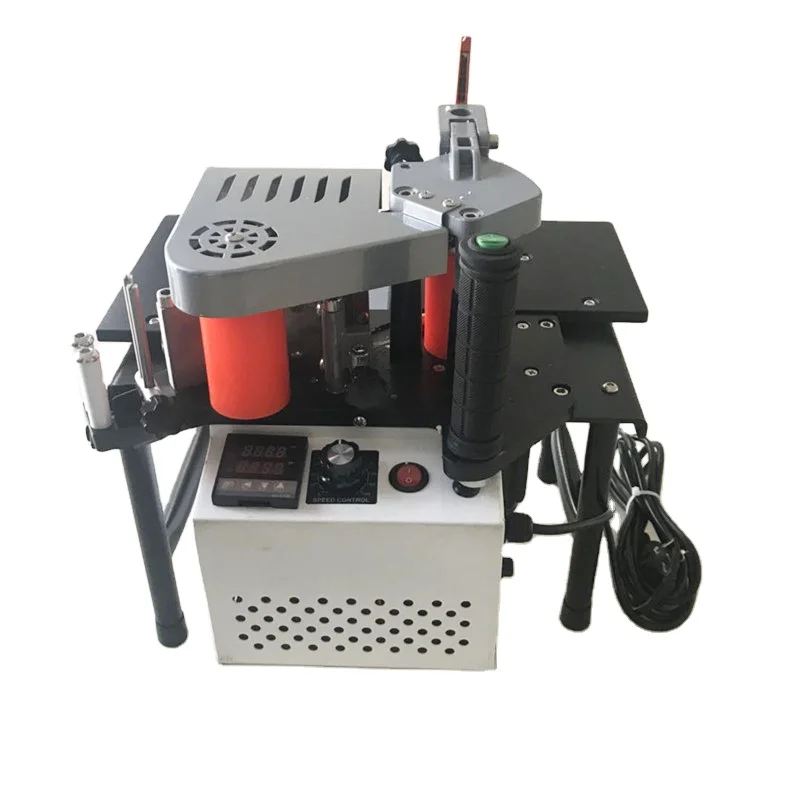
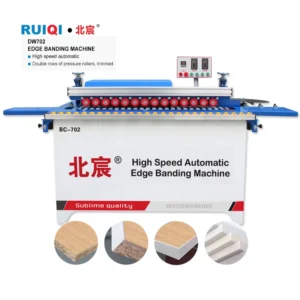
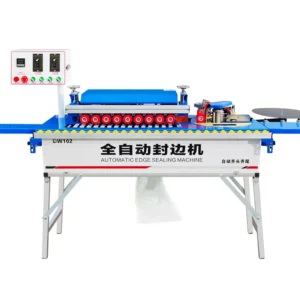
Stocked for Fast Dispatch — a compact, 220V portable edge banding machine ready to ship with plug options matched to your local grid, so small workshops can move from hand-applied edging to machine-assisted consistency without waiting weeks for production.
Technical Specifications
| Parameter |
Value |
| Product Type |
Portable Edge Banding Machine |
| Voltage |
220V |
| Rated Power |
1000W |
| Gluing Method |
Double-sided gluing |
| Glue Pot Capacity |
800ml |
| Edge Banding Thickness Range |
0.3–3mm |
| Board Thickness Range |
7–60mm |
| Plate Shape Compatibility |
Curved and straight plates |
| Net Weight |
14kg |
| Overall Dimensions (L×W×H) |
440×410×450mm |
| Plug Options |
EU / AU / UK / USA / CN |
| Control System |
Manual operation |
| Assembly State |
Portable, hand-held operation |
Application Suitability
| Application |
Material or Output |
| Small-batch custom furniture edging |
PVC and veneer edge banding on MDF and plywood panels |
| Curved cabinet door and drawer front profiles |
Veneer and PVC strips on shaped particleboard and solid wood |
| Joinery workshop prototype and sample runs |
Thin edge materials from 0.3mm to 3mm on boards up to 60mm thick |
| On-site installation finishing work |
Lightweight portable banding for fitted wardrobes and shelving |
Why the Voltage Question Should Come Before the Price on a Portable Edge Banding Machine in stock
A 220V machine plugged into a 110V circuit will not trip a breaker quietly — it will stall mid-glue and ruin the panel you are holding.
I spent years covering after-sales across Latin America, and the most frustrating calls were not about broken machines. They were about machines that arrived with a plug that did not fit the workshop outlet, or a motor wound for a frequency the local grid does not supply. The portable edge banding machine in stock you see listed may ship fast, but fast is worthless if the unit sits on a bench for two weeks waiting for a transformer or a rewound motor. Confirming voltage, frequency, and plug type in writing before dispatch is the single most important step in ordering entry-level equipment. [NEED_CITE: voltage and frequency standards by export market]

Stock Availability Meets Small-Workshop Reality
This portable unit sits in the entry-level tier for a reason. It is designed for joinery shops and custom furniture makers who are moving from hand-applied iron-on banding to a machine-assisted process but are not yet running volume that justifies a floor-standing automatic bander. The 14kg weight means one person can move it between benches or carry it to a job site, which matters when your workshop floor space is shared with assembly and finishing stations. Having a Portable Edge Banding Machine in stock means you can test edging consistency on your actual panel stock before committing to a larger line.
What Double-Sided Gluing Changes for PVC and Veneer
The 800ml glue pot applies adhesive to both the edge of the board and the back of the banding strip simultaneously. For PVC edges in the 0.4–2mm range, this reduces the cold spots and starved glue lines that plague single-sided application, especially on curved profiles where the strip pulls away from the substrate under tension. Veneer behaves differently — it absorbs moisture from the glue and expands — so the double-sided method gives a more forgiving open time before the pressure roller sets the bond. [NEED_CITE: edge banding adhesion mechanics for PVC and natural veneer substrates]
Reading the Specs That Actually Matter
The board thickness range of 7–60mm covers standard cabinet carcase stock at 18mm, thicker solid-wood panels for tabletops, and thin MDF skins used in drawer bottoms. If your typical work falls outside this window — say 80mm solid-core doors — this unit will not reach. The edge banding thickness window of 0.3–3mm handles most PVC and veneer rolls on the market but excludes thick ABS and solid wood lipping, which require dedicated feed mechanisms. The 1000W rated power is adequate for maintaining glue pot temperature through a small batch but will struggle if you run continuous shifts in a cold workshop, where thermal recovery between panels becomes the limiting factor. The manual control system means there is no PLC to fault-diagnose — the operator manages feed speed and pressure by hand, which is honest for a machine at this scale.
The Hidden Cost of Buying Below Your Actual Workload
I have seen small cabinet shops buy an entry-level portable bander for daily production volumes it was never built to sustain. The pressure roller bearings wear through within months, the glue pot element cycles too frequently and burns out, and the operator develops workarounds that compromise edge adhesion. Nobody noticed during the purchase conversation because the spec sheet did not state a duty cycle, and the buyer assumed the machine could scale with their order book. [NEED_CITE: duty cycle expectations for portable versus automatic edge banding equipment] When the machine eventually fails mid-job, the workshop has no backup and no local supplier for replacement bearings, so the whole edging station goes dark waiting for parts to ship.
Why Sourcing This Unit Here Makes Sense
Every portable edge bander ships with voltage and plug type confirmed in writing against your workshop's actual supply, so there is no guessing when the crate arrives. The operation manual is provided in the language your operator reads, not an assumed default, which cuts the time from unboxing to first good panel. Pre-shipment testing runs your specified board thickness and edge material through the machine, and you receive photographs and a test record before it leaves the factory. Spare pressure rollers and glue pot elements can be packed with the initial shipment, which is the single most effective hedge against the downtime I used to see across Latin American workshops. Engineer-led configuration guidance is available within 24 hours of your inquiry to confirm whether this portable model genuinely fits your stated workload or whether you should be looking one tier up. [NEED_CITE: pre-shipment verification standards for small woodworking machinery exports]
Documentation & Verification
- CE declaration of conformity covering portable manual edge banding equipment
- Machine specification sheet confirming 220V, 1000W, and plug type as ordered
- Factory test record on your specified board thickness and edge material before dispatch
- Operation and maintenance manual in your operator's agreed language
- Packing photographs showing the unit secured and accessories included
Installation, Commissioning & Support
- Requires a dedicated 220V circuit rated for at least 1000W with proper earthing
- No floor mounting needed — place the 14kg unit on a stable workbench at operator height
- First run should use scrap MDF to set glue pot temperature and roller pressure before production panels
- Keep two spare pressure rollers and one replacement glue pot element from day one
- Wipe the glue pot interior after each session to prevent cured adhesive buildup blocking the feed
- Schedule bearing inspection on the pressure roller after every 200 operating hours
Before You Request a Quote
Tell me the panel materials you work with most often — MDF, plywood, particleboard, or solid wood — and the edge banding type and thickness you run. Let me know your local voltage and frequency so the correct motor and plug go into the box. If you have a daily panel count in mind, share it so I can confirm this portable unit is honestly matched to your workload or point you toward a floor-standing model that will not burn out under continuous use.
Frequently Asked Questions
Q: How do I know this portable bander matches my daily panel volume?
A: Share your typical daily panel count, board thickness, and edge material type when you inquire. The engineer will assess whether the manual feed rate and 800ml glue pot capacity align with your output or whether a higher-tier model suits your workload better. This portable unit is scoped for small-batch and prototype work, not continuous production shifts.
Q: What voltage and plug options are available before I order?
A: The machine is configured at 220V with plug options covering EU, AU, UK, USA, and CN standards. You confirm your local voltage, frequency, and plug type in writing during the ordering process, and the unit is built and tested to that specification before it ships, preventing unusable-on-arrival situations.
Q: Will the operation manual be in a language my operator can read?
A: Yes. Specify your preferred language during the inquiry, and the operation and maintenance manual is prepared accordingly before dispatch. This prevents the common problem of a machine sitting idle because the commissioning instructions are unreadable to the person who will actually run it.
Q: How fast can this portable edge banding machine in stock be dispatched?
A: Stocked units ship within a short lead time once voltage, plug type, and documentation language are confirmed. Shipping options are quoted at the point of order based on your destination. For non-standard configurations, production lead time will be confirmed during the quotation stage.
Q: How do I plan an upgrade from this portable unit to a full automatic bander?
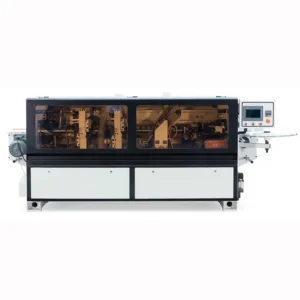
A: When your daily volume outgrows manual feed, the transition to a floor-standing automatic edge bander becomes practical. The engineer can map your growth trajectory during the initial inquiry and recommend when to move to pre-milling or multi-station models within the same product family, so your operator training and edge material supply carry over without starting fresh.