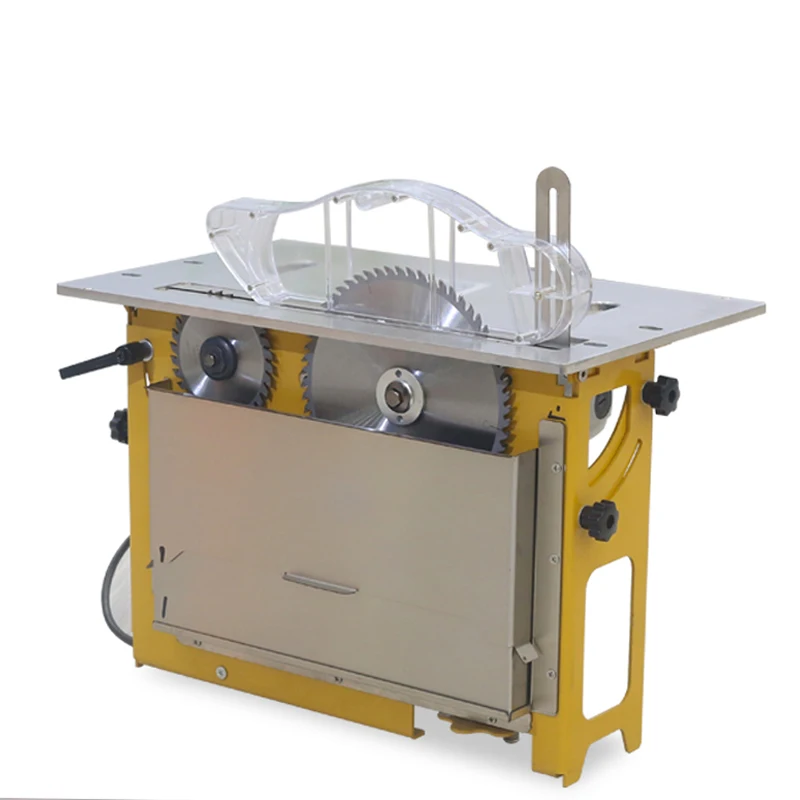
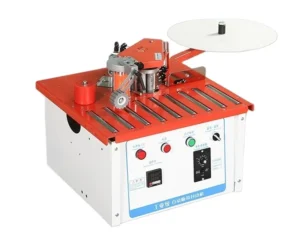
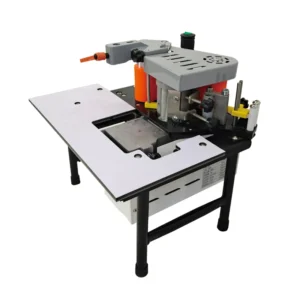
Compact and Ready — a portable sliding table saw shipped fully assembled with your plug type and language, so small workshops start cutting panels the day it arrives.
Technical Specifications
| Parameter |
Value |
| Product Type |
Portable Sliding Table Panel Saw |
| Total Power |
6200W |
| Main Saw Power |
3000W |
| Main Saw Speed |
3800 r/min |
| Main Saw Blade Diameter |
200 mm |
| Scoring Saw Power |
2000W |
| Scoring Saw Speed |
13000 r/min |
| Vacuum Cleaner Power |
1200W |
| Maximum Cutting Length |
2.44 m |
| Maximum Cutting Thickness |
40 mm |
| Product Weight |
22 kg |
| Plug Options |
EU / USA / AU / UK |
| Control Panel Language |
Chinese and English (default); other languages available on request |
| Assembly State |
Fully assembled, ready to use |
Application Suitability
| Application |
Material or Output |
| Cabinet carcass sizing for startup furniture makers |
MDF and particleboard up to 40 mm |
| Shelving and small-batch panel cutting |
Plywood and blockboard up to 40 mm |
| On-site panel fitting and interior fit-out |
Solid wood panels and laminated boards |
| Joinery workshop upgrading from hand tools |
Veneered and melamine-faced panels with scoring cut |
Why the Voltage Question Comes Before Everything Else
A portable panel saw is only portable if the power supply at the destination actually matches the motor. Confirming voltage and frequency before dispatch eliminates the most common reason small workshop machines sit idle on arrival.
Your local voltage and plug type must be confirmed before the machine leaves the factory.
I remember a shipment a few years back — a portable saw went to a Southeast Asian workshop, and the plug was correct but the motor was wound for three-phase while the shop only had 220V single-phase. The customer waited over a week for a frequency converter to arrive, and their entire cutting schedule collapsed. Since then, every unit I schedule for dispatch gets a personal voltage checklist against the buyer's confirmed supply [NEED_CITE: voltage and frequency standards by export market]. A Portable Sliding Table Panel Saw for Small Workshop use is often the first machine purchase for a growing shop, and getting the electrical spec wrong at this stage costs far more than the machine itself.

Dual-Blade Setup in a Footprint That Actually Fits
The main saw blade at 200 mm diameter handles the through-cut, while the high-speed scoring sub saw at 13000 r/min pre-scores the bottom face of laminated panels. This dual-blade arrangement is typically found on full-size sliding table saws that weigh several hundred kilograms. Packing it into a 22 kg portable unit means a solo joiner can achieve chip-free edges on melamine and veneered board without dedicating half the workshop to a stationary machine.
Ordering Is the Easy Part — Getting It Right Is the Job
On this platform, the focus is on stocked configuration and fast dispatch. When you order a Portable Sliding Table Panel Saw for Small Workshop production, you are selecting from available plug types and confirmed voltage builds rather than requesting a custom winding from scratch. That means shorter lead times, but it also means the buyer needs to state their electrical environment clearly at the point of order. The unit ships fully assembled, so there is no mechanical reassembly on arrival — just uncrate, connect power, and run a test cut.
What the Numbers Actually Mean at the Bench
The 3000W main saw motor at 3800 r/min provides adequate rim speed for clean cross-cuts and rip cuts in panels up to 40 mm thick. The 200 mm blade diameter is a practical choice for portable use — large enough to cut standard MDF and plywood stock, but small enough to keep the arbor assembly light. The scoring saw at 13000 r/min is the spec that matters most for laminated materials: that high rotational speed produces a shallow, clean score line that prevents the bottom veneer or melamine layer from chipping out during the main cut. The integrated 1200W vacuum unit handles dust extraction at the blade guard, which matters in a confined shop where airborne particle buildup [NEED_CITE: workplace dust exposure limits for woodworking environments] becomes a real concern during long cutting sessions. The 2.44 m maximum cutting length covers full 8-foot sheets along the long axis, which handles the majority of cabinet and shelving panel work.
When a Machine Arrives and Cannot Run
The most expensive portable saw is the one sitting in a corner because the workshop breaker trips every time the main motor starts. A 6200W total draw across both saws and the vacuum requires a dedicated circuit with adequate amperage. Buyers who plug into a shared household circuit in a home workshop often find the breaker cannot hold under load. The plug shape being correct does not mean the circuit is adequate — voltage drop under load causes the motor to run hot, and repeated thermal cycling shortens winding life well before the expected service period [NEED_CITE: electrical circuit requirements for industrial woodworking motors].
Why Source This Machine Through This Channel
This platform exists to get a working saw to a small workshop quickly. Units are held in configurations ready for dispatch, with standard EU, USA, AU, and UK plug options available. Voltage and frequency are confirmed against your stated supply before shipment — not after the crate is opened. Every Portable Sliding Table Panel Saw for Small Workshop use leaves the factory with a test record showing cut quality on actual panel stock. The control panel labels and operation manual ship in your agreed language, so commissioning does not stall because the operator cannot read the interface. An engineer reviews each configuration recommendation against your stated panel materials and thickness before the order is finalized.
Documentation & Verification
- CE declaration of conformity covering portable woodworking machinery
- Machine specification sheet with confirmed voltage and motor ratings
- Factory test record with sample cut photos on your panel material
- Operation and maintenance manual in your agreed language before dispatch
- Electrical schematic showing wiring and circuit requirements
Installation, Commissioning & Support
- Place on a level bench or stand; 22 kg weight allows single-person positioning
- Connect to a dedicated circuit matching the confirmed voltage and plug type
- Arrives fully assembled — no mechanical reassembly required before first cut
- Run test cuts on scrap MDF to verify scoring blade alignment before production work
- Order spare main and scoring blades with the initial shipment to avoid downtime
- Check dust extraction hose and vacuum bag at the start of each working week
What to Share Before You Order
To get the right configuration dispatched quickly, share your workshop's voltage, phase, and frequency along with the plug type you need. List the panel materials you cut most often and the typical thickness range, so the blade setup can be confirmed against your actual work. If you are replacing an existing saw or adding to a line, mention your current dust extraction arrangement so the integrated vacuum can be evaluated alongside it.
Frequently Asked Questions
Q: What panel materials and thicknesses can this portable saw handle in daily use?
A: The saw handles MDF, particleboard, plywood, and solid wood panels up to 40 mm thick. The scoring blade is designed for laminated and veneered surfaces, producing chip-free edges on melamine-faced board and thin veneer. For consistently thicker hardwood stock, a full-size stationary saw with a larger blade would be more appropriate.
Q: How do I confirm the voltage and plug will work in my country before ordering?
A: Share your workshop supply voltage, phase type, and frequency at the inquiry stage. The plug type alone does not guarantee compatibility — the motor winding must match your local grid. We confirm the electrical specification against your stated supply and provide a schematic before the unit ships.
Q: What is the realistic upgrade path if my cutting volume outgrows this saw?
A: When daily cutting volume increases and you need faster feed rates or thicker stock capacity, the next step is a full-size sliding table saw with a longer sliding carriage and higher-power motors. The portable unit can remain as a secondary saw for quick cuts or on-site work after you scale up.
Q: How does the scoring blade improve edge quality compared to a single-blade setup?
A: The scoring sub saw runs at 13000 r/min and makes a shallow cut on the bottom face of the panel before the main blade passes through. This prevents the veneer or melamine layer from tearing out, giving a clean edge on both faces without requiring a secondary trimming pass.