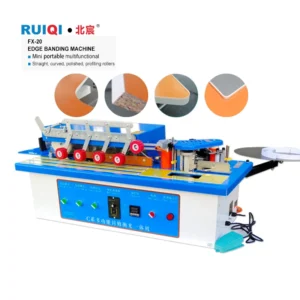
Edge banding machine
Compact Portable Edge Banding Machine for Small Workshop
Portable Edge Banding Machine, 2500W, 0.3–3mm Thickness Range, Straight & Curved Edge — the FX-20...
View Details
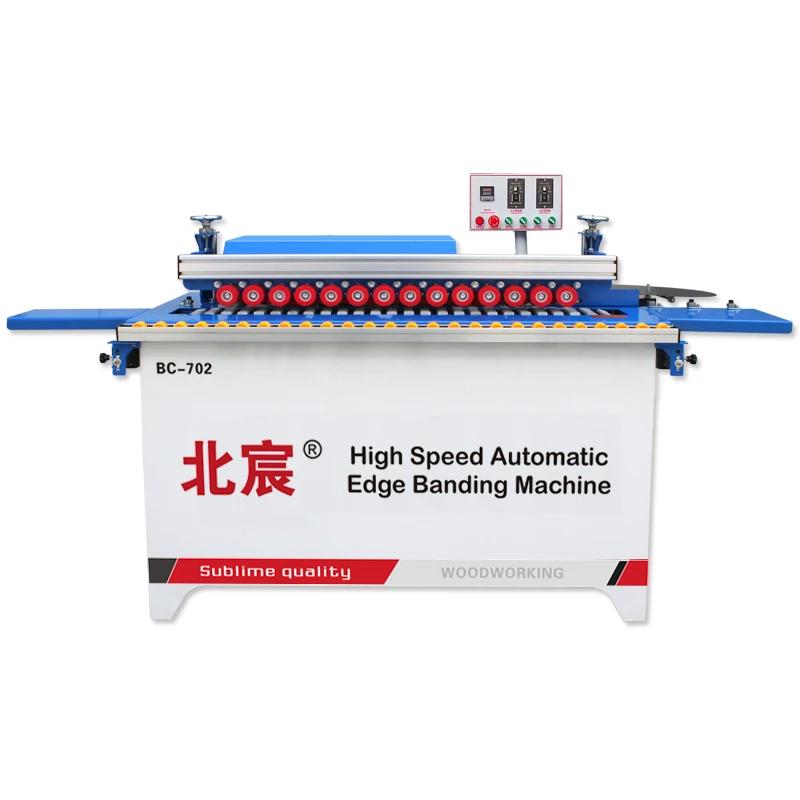
<p><strong>DW702 Compact Automatic Edge Banding Machine, 220V/380V, 0.3-3mm Banding Thickness</strong> — designed for joinery startups moving from manual to automated production.</p> <ul> <li>Panel thickness range 0–50mm with integrated trimming, polishing and automatic head/tail cutting in a 1200×550×1100mm footprint</li> <li>Voltage and plug type configurable to your workshop's electrical standard, with multilingual control panel options</li> <li>Supports MDF, plywood and particleboard with 0.4–0.8 MPa air source and 1000ml glue pot capacity</li> <li>Pre-shipment factory test record and verification photos provided before dispatch, ensuring the machine matches your confirmed specifications upon arrival</li> </ul>
Voltage-flexible workshop integration — the DW702 supports 220V and 380V configurations with matched trimming and polishing stations, reducing bottlenecks when connecting to your existing panel saw.
| Parameter | Value |
|---|---|
| Model | DW702 |
| Product Type | Automatic Edge Banding Machine |
| Total Installed Power | 3800W |
| Voltage Options | 220V / 380V / Custom |
| Standard Processing Stations | Edge banding, trimming, polishing, automatic head and tail cutting |
| Panel Thickness Range | 0–50mm |
| Banding Thickness Range | 0.3–3mm |
| Minimum Sheet Length | 250mm |
| Minimum Sheet Width | 100mm |
| Trimming Motor | 800W × 2 |
| Polishing Motor | 180W × 2 |
| Vacuum Motor | 1200W |
| Glue Pot Capacity | 1000ml |
| Air Pressure Requirement | 0.4–0.8 MPa |
| Overall Dimensions (L×W×H) | 1200 × 550 × 1100 mm |
| Net Weight | 105 kg |
| Control Language Options | Chinese, English, customizable to Spanish or others |
| Plug Configurations | EU, USA, AU, UK |
| Feed Speed | (basis not stated in source) |
| Certification | CE |
| Application | Material or Output |
|---|---|
| Custom cabinet door production | MDF and melamine-faced particleboard with PVC edge banding |
| Small-batch joinery components | Plywood panels with veneer or ABS edge banding |
| Startup furniture workshop scale-up | Blockboard and solid wood panels moving from hand tools to automated edge finishing |
| Polymer door frame finishing | Polymer substrates requiring 0.3–3mm banding thickness |
A compact edge bander must match the output height of your upstream panel saw to avoid manual transfer bottlenecks.
When a joinery workshop buys an automatic edge banding machine for small workshop use without checking the feed table height, the operator ends up lifting every panel from the saw table to the bander infeed. I have seen this specific mismatch cut effective daily output in half on sites where the owner focused only on motor power and ignored the physical handoff between stations. The DW702's 1100mm overall height and 0–50mm panel thickness range should be measured against your existing sliding table saw discharge before the order is placed [NEED_CITE: typical sliding table saw discharge heights for workshop integration]. Buying a machine in isolation always costs more in lost time than verifying the line geometry first.
This model fills the gap between manual iron-on banding and a full multi-station production line. The integrated trimming and polishing stations mean an operator can load a cut panel and receive a finished edge in one pass, which is the core requirement for a joinery startup moving away from hand tools. The 250mm minimum sheet length allows small drawer components and shelf brackets to run without manual feeding tricks.
With a total draw of 3800W, this unit fits within a standard single-phase 220V workshop circuit in many regions, though three-phase 380V remains an option for sites with dedicated industrial supply. The 1200W vacuum motor and dual 800W trimming motors represent the bulk of that consumption. Confirming whether your site operates at 50Hz or 60Hz before dispatch prevents motor overheating issues that typically surface only after the first week of continuous operation [NEED_CITE: voltage and frequency standards by export market].
The 0–50mm panel thickness range covers standard 18mm MDF and particleboard used in cabinet carcasses, as well as thicker blockboard for worktops. The 0.3–3mm banding thickness range accommodates thin PVC for cost-sensitive runs and thicker ABS for impact-resistant edges on commercial furniture. Trimming power at 800W per motor provides sufficient torque for clean cuts on 3mm ABS without the chatter marks that appear when undersized motors meet dense banding material. The 1000ml glue pot requires monitoring during longer runs to maintain consistent adhesive temperature across the batch.
I have visited workshops where a newly delivered machine sat idle for days because the operator could not read the control panel. The DW702 ships with English as standard, but confirming the required language before production starts avoids a situation where your most experienced worker is guessing at error codes. A misread parameter on trimming depth can ruin a batch of panels before anyone realizes the setting was wrong [NEED_CITE: CE machinery directive requirements for operator interface language].
The four-stage quality check covers incoming material, assembly, finished product, and pre-shipment verification. For a machine at this price point, requesting the factory test record with your specific panel thickness and banding material is the only way to confirm that the trimming motors and polishing wheels produce the edge quality your customers expect. The 105kg net weight and compact 1200mm footprint mean the machine can be repositioned within a workshop as the floor plan evolves.
To match this machine to your line, specify your most common panel material and thickness, the banding type you run, and the discharge height of your upstream saw. Confirm your site voltage, frequency, and the language your operator reads. If you are replacing a manual process, describe your current daily volume so the configuration can be validated against realistic throughput expectations.
Q: Is the DW702 sized appropriately for my current workshop volume? A: This model is configured for joinery startups and small custom cabinet shops moving from manual edge banding to an automated single-pass process. Realistic daily throughput depends on your operator loading rhythm, panel size mix, and banding changeover frequency. Confirm your typical batch size and panel dimensions so the feed speed and glue pot capacity can be evaluated against your actual production pattern rather than a theoretical maximum.
Q: How do I confirm the correct voltage and plug before the machine ships? A: Provide your site voltage, phase, and frequency during the inquiry stage. The DW702 supports 220V single-phase and 380V three-phase configurations, with EU, USA, AU, and UK plug options. An electrical schematic and voltage confirmation document is issued with the formal quotation so your electrician can verify the supply circuit before the machine arrives.
Q: Can the control panel display instructions in my operator's language? A: English and Chinese are standard, with Spanish and other languages available on request. Confirming the required language at the order stage ensures the panel labels and error messages are translated before the machine enters production, avoiding commissioning delays caused by unreadable interface text.
Q: What is the upgrade path when order volume grows beyond this model? A: The DW702 covers the transition from hand tools to a compact automated station. When throughput demands increase, the next step is typically a longer-frame model with additional pre-milling and corner-rounding stations, higher feed speed, and a larger glue pot. Staying within the same product family preserves familiarity with the control logic and maintenance routines.
Q: Which spare parts should I order alongside the first machine? A: Trimming blades, polishing wheels, and glue pot seals are the primary consumables. Ordering a starter set with the initial shipment avoids downtime waiting for international delivery when these items wear during normal use. The supplied spare parts list includes part numbers for reordering directly from the factory.
Standard specifications are listed below. Custom configurations are available -- contact us for tailored solutions.
| Parameter | Value |
|---|---|
| Product Name | Compact Automatic Edge Banding Machine for MDF Panel |
| Category | Edge banding machine |
| Certification | CE, ISO9001 |
| Voltage | 220V/380V (Customizable) |
| Warranty | 1 Year |
| After-Sales | Remote technical support, spare parts supply |
| OEM/ODM | Available -- logo, color, voltage, language |
| Delivery | Standard export packaging, worldwide shipping |
| MOQ | 1 Unit |
| Lead Time | 15-30 days (subject to order) |
* Specifications may vary by model. Contact our team for exact technical data sheets.
Fill in your details and we'll respond within 24 hours with pricing, specifications and customization options.
Portable Edge Banding Machine, 2500W, 0.3–3mm Thickness Range, Straight & Curved Edge — the FX-20...
View Details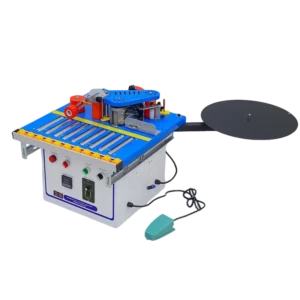
ST-70 Handheld Edge Banding Machine, 1000W, 23KG — compact unit for curved and straight edge...
View DetailsProducts Description DW802 Automatic Edge banding machine with gluing.trimming.end cutting and buffing for straight only....
View DetailsProducts Description DW802 Automatic Edge banding machine with gluing.trimming.end cutting and buffing for straight etc....
View Details