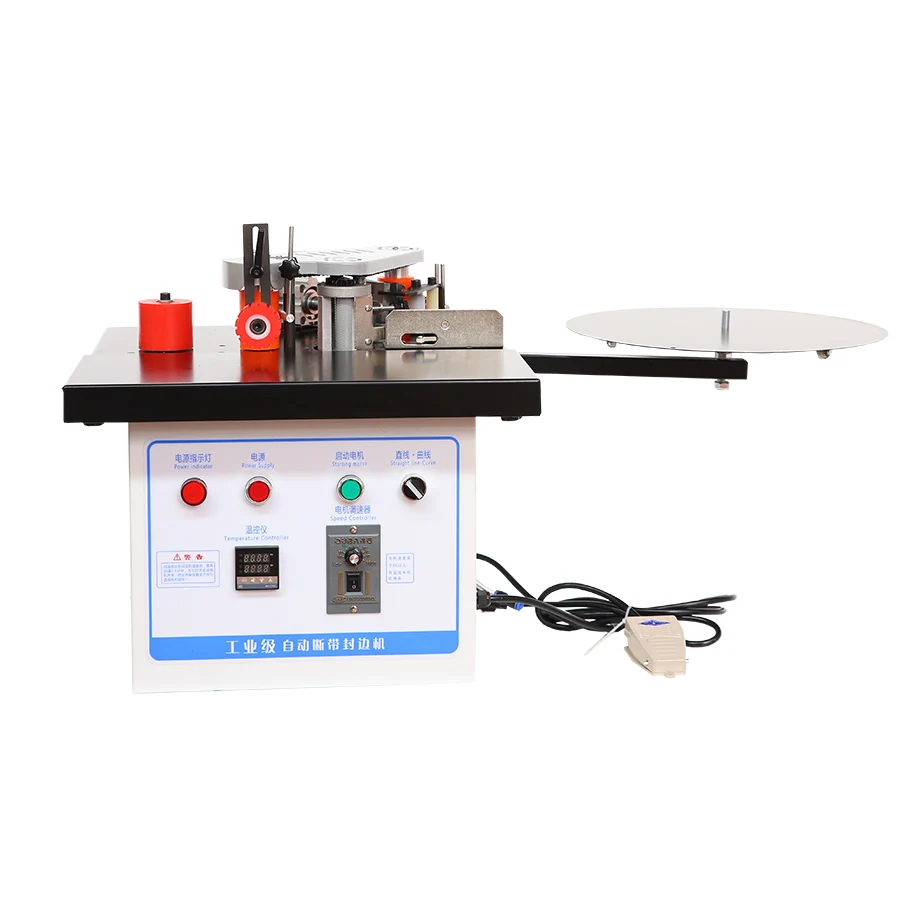
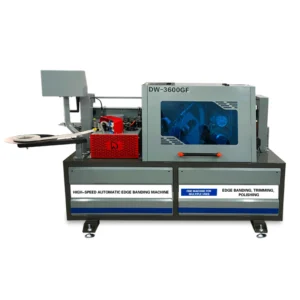
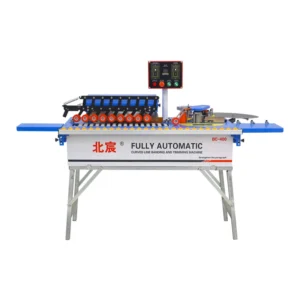
Standard Voltage Verification — every ZDSF60 unit ships only after your workshop electrical panel photo is reviewed and matched to the machine's 220V single-phase requirement.
Technical Specifications
| Parameter |
Value |
| Model |
ZDSF60 |
| Product Type |
Mini Edge Banding Machine |
| Rated Voltage |
220V |
| Heating Power |
800W |
| Glue Pot Capacity |
1000 ml |
| Glue Heating Time |
5-8 min (basis not stated in source) |
| Edge Banding Speed |
0-6 m/min |
| Strip Thickness Range |
0.5-2 mm |
| Sheet Thickness Range |
7-60 mm |
| Rated Air Pressure |
0.4-0.6 MPa |
| Gluing Method |
Double-sided via glue-coated rollers |
| Belt Breaking |
Pneumatic with foot switch and travel switch |
| Pressure Rollers |
Adjustable rubber rollers |
| Overall Dimensions |
54×54×56 cm |
| Machine Weight |
26 kg |
| Key Features |
Straight and curved edge banding, manual and pneumatic control |
Application Suitability
| Application |
Material or Output |
| Custom cabinet door edge finishing |
MDF and plywood panels 7-60 mm thick |
| Small-batch wardrobe panel banding |
Particleboard with PVC or veneer edge strips |
| Curved countertop edge treatment |
Solid wood panels and shaped MDF components |
| On-site joinery repair and touch-up |
Pre-cut boards requiring re-banding or edge repair |
| Startup workshop production runs |
Mixed sheet materials at low-to-medium daily volume |
Why the Voltage Question Must Come Before the Order
A 220V single-phase mini edge bander that arrives at a workshop wired only for 380V three-phase becomes a 26 kg paperweight until an electrician rewires the circuit.
I spent years on the assembly floor before moving into technical sales, and the most frustrating call I ever took was from a cabinet maker in Southeast Asia. He had ordered a compact edge bander from another supplier, nobody asked about his shop power supply, and the machine sat idle for three weeks while his electrician pulled new lines. That is why I now ask every buyer to send a photo of their workshop electrical panel before we confirm any order. Voltage mismatch is one of the most common — and entirely preventable — reasons small woodworking machines sit unused after delivery [NEED_CITE: common causes of post-delivery machine downtime in small workshops].
The ZDSF60 mini edge banding machine in stock runs on standard 220V single-phase power, which most small joinery shops already have at the outlet level. Still, we verify your actual supply before dispatch and document the confirmation so there are no surprises on arrival day.

Ready Stock Means Your Production Does Not Wait
When a small workshop commits to mechanised edge finishing, the gap between decision and first finished panel needs to be short. The ZDSF60 mini edge banding machine in stock is held in inventory specifically for buyers who cannot absorb multi-week production lead times. Once your voltage and specification requirements are confirmed, dispatch scheduling moves quickly because the machine is already built, tested, and packed. This matters most for joinery startups that have committed to delivery dates on their first cabinet orders and cannot afford to wait for a machine built against a new production slot.
Footprint That Fits Where Larger Machines Cannot
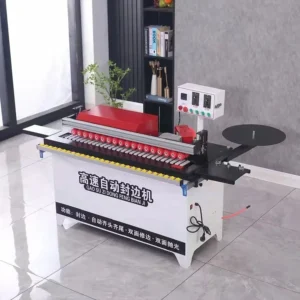
The ZDSF60 occupies a 54×54 cm floor area — smaller than a standard tool cabinet. For workshops sharing space between a sliding table saw, a workbench, and material storage, finding room for edge finishing equipment is a genuine constraint. This machine slots into a corner or against a wall without requiring dedicated floor markings or safety fencing around a large perimeter. The 26 kg weight means one person can reposition it if the workshop layout changes, which happens regularly as small shops add equipment and rearrange workflow [NEED_CITE: workshop space planning for small furniture manufacturers].
Reading the Numbers That Matter for Your Panels
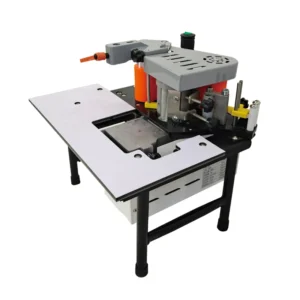
The 7-60 mm sheet thickness range covers the full spectrum of materials a custom cabinet shop handles: 9 mm MDF backs, 18 mm particleboard carcass panels, and thicker solid wood components for shelving or worktops. If your production regularly mixes these thicknesses, the adjustable pressure rollers and transport bayonet let you switch between them without tool changes — you loosen, adjust, and lock by hand. The 0.5-2 mm strip thickness range accommodates thin PVC for carcass work and thicker veneer strips for visible door faces.
The 0-6 m/min feed speed is variable rather than fixed, which matters when you are learning the machine or handling curved pieces that need slower, more controlled passes. Straight runs on standard 18 mm particleboard can proceed at the upper end of that range; curved components in solid wood typically need a slower feed for clean adhesive transfer and strip conformity.
The 1000 ml glue pot with 800W heating element brings adhesive to working temperature in roughly five to eight minutes depending on ambient conditions, meaning you are not waiting half an hour before the first panel is ready to band. For a shop running twenty or thirty panels in a session rather than continuous all-day production, short heat-up time directly affects how many finished pieces leave the bench before lunch.
What Happens When You Skip the Specification Conversation
Buying a compact edge bander on price alone, without confirming panel thickness compatibility or air pressure requirements, leads to problems that surface only after the first week of production. A workshop running 25 mm solid wood may find the pressure rollers do not make full contact, leaving inconsistent glue lines that show up during assembly when panels separate under clamp pressure. Another common issue: the shop compressor cannot sustain the 0.4-0.6 MPa the pneumatic belt-breaking system requires, so the foot switch triggers but the strip does not snap cleanly. These are not machine defects — they are configuration mismatches that a proper pre-order conversation prevents [NEED_CITE: pneumatic supply requirements for small woodworking machinery].
Why Buyers Source This Machine Through Our Stock Channel
Every ZDSF60 dispatched goes through pre-shipment testing on actual panel stock, and the test record ships with your documentation — you can see how the machine performed on material similar to yours before you open the crate.
Voltage confirmation is not a checkbox exercise; we request your workshop electrical panel photo and match it against the machine's 220V single-phase requirement, then include the electrical schematic in your paperwork.
Operation manuals are supplied in your operator's language, not a generic English-only booklet that slows down commissioning on the shop floor.
The spare parts list included with packing covers first-year consumables so you know exactly what to reorder and when, rather than discovering a worn roller has no local source.
Our engineering team configures the machine settings to your stated panel range before dispatch, reducing the trial-and-error period once the machine is powered on in your workshop.
Documentation & Verification
- CE declaration of conformity included with each ZDSF60 unit for customs and regulatory compliance
- Factory test record showing edge banding results on panel thicknesses matching your specification
- Electrical schematic and voltage confirmation sheet matched to your workshop supply before dispatch
- Operation and maintenance manual printed in the language your operators read on the floor
- Spare parts list with part numbers for first-year consumables included inside the packing crate
Installation, Commissioning & Support
- Requires a dedicated 220V single-phase outlet on a circuit rated for the 800W heating load plus motor draw
- Connect to shop compressed air supply set between 0.4 and 0.6 MPa for reliable pneumatic belt breaking
- Arrives fully assembled — position on a stable bench, plug in power and air, and begin heat-up
- First run should use scrap MDF at your most common thickness to verify roller pressure and glue transfer
- Glue pot requires cleaning after each session to prevent adhesive buildup affecting the next day's warm-up time
- Replacement pressure rollers and glue-coated roller sleeves are available through the spare parts list supplied at delivery
Before You Request a Quote, Prepare These Details
Tell us the panel materials you run most often — MDF, particleboard, plywood, or solid wood — along with the typical thickness range so we can verify the ZDSF60 pressure roller adjustment covers your production. Share a photo of your workshop electrical panel so we can confirm 220V single-phase compatibility before any order is placed. If you also need curved edge banding capability, mention the radius range you typically encounter so we can advise on feed speed settings and strip material selection.
Frequently Asked Questions
Q: What voltage options are available and is my local supply compatible?
A: The ZDSF60 is configured for 220V single-phase operation, which covers most small workshop environments. Before we confirm your order, we ask for a photo of your electrical panel so our engineers can verify compatibility with your local supply. If your workshop runs a different voltage standard, we discuss available configuration options and document the final specification before dispatch.
Q: How do I verify the edge banding speed suits my daily panel volume?
A: The 0-6 m/min variable feed speed is designed for low-to-medium volume production typical of small joinery shops rather than continuous high-throughput lines. Share your average daily panel count and typical panel dimensions with our team, and we will confirm whether this speed range matches your output requirement or whether a higher-capacity model from our range would serve you better.
Q: Can I switch between straight and curved edge banding on the same setup?
A: Yes. The ZDSF60 handles both straight and curved edge banding without mechanical conversion. For straight runs, the travel switch enables automatic belt breaking. For curved work, you use the foot switch for hands-free pneumatic control while guiding the panel by hand. Adjustable pressure rollers maintain contact on curved profiles within the machine's rated strip and sheet thickness ranges.
Q: What spare parts ship with the machine and how do I reorder consumables?
A: A spare parts list covering first-year consumables is included with every ZDSF60 shipment, listing part numbers for items like pressure rollers and glue-coated sleeves. When you need to reorder, reference those part numbers and our team arranges supply. We recommend reviewing the list at delivery so you know which items to monitor as production accumulates.
Q: What is the dispatch lead time from order confirmation?
A: Because this model is held as ready stock, lead time is primarily driven by voltage verification and pre-shipment testing rather than manufacturing. Once your electrical panel photo is reviewed and the machine is tested against your panel specifications, dispatch scheduling proceeds promptly. Contact our team for a current availability estimate based on your delivery destination.