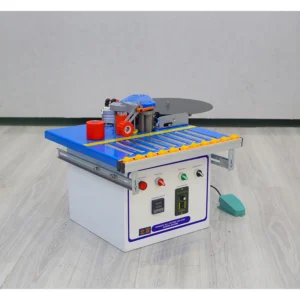
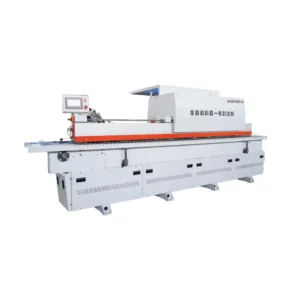
Voltage-Confirmed Dispatch — every portable edge bander leaves our Ningjin facility only after your local voltage, frequency, and plug type are verified on the bench.
Technical Specifications
| Parameter |
Value |
| Product Type |
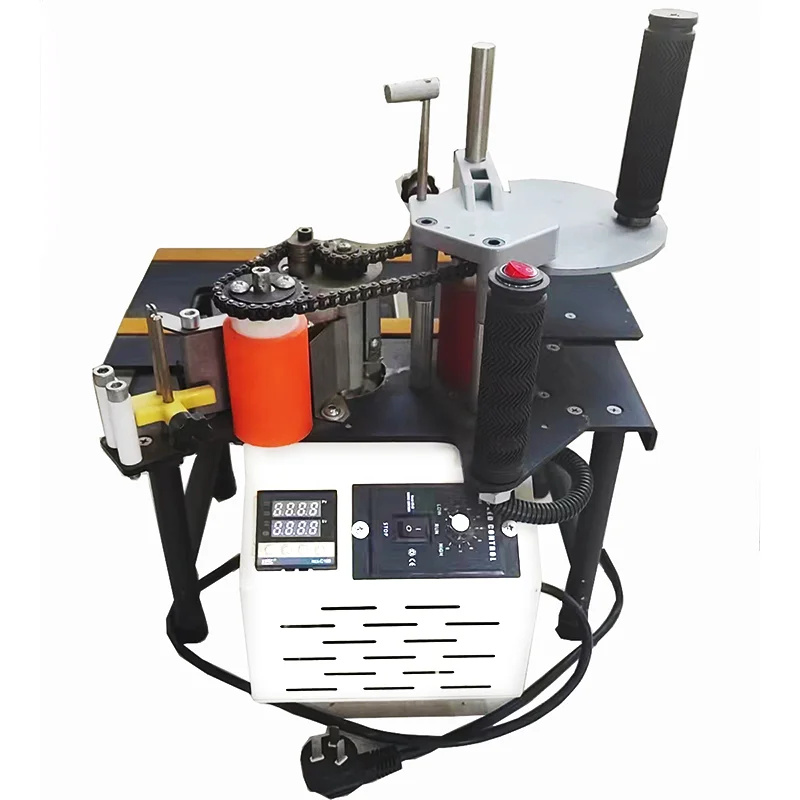
Portable Edge Banding Machine |
| Shape of Edge-banding Plates |
Curved, Straight and Special-shaped Sheet |
| Edge Thickness Range |
0.3–3 mm |
| Edge Sealing Speed |
0–6 m/min |
| Edge Sealing Height |
7–60 mm |
| Gluing Method |
Double-sided gluing |
| Glue Pot Volume |
1000 ml |
| Machine Weight |
14 kg |
| Assembly State |
Portable / Handheld |
| Voltage & Frequency |
Configurable to local supply (basis to be confirmed before order) |
| Plug Options |
EU / AU / UK / USA / CN |
| Language Options |
Control panel and manual language confirmed at order |
| Logo Customization |
Available |
Application Suitability
| Application |
Material or Output |
| Curved cabinet door edge banding |
MDF and plywood with PVC or veneer strips |
| Small-batch straight panel trimming |
Particleboard shelves and carcass parts |
| On-site custom fitting and repair |
Solid wood and laminate edge banding on installed furniture |
| Joinery workshop backup for irregular profiles |
Special-shaped panels that cannot pass through an automatic line |
Why the Voltage Question Should Come Before the Price
A portable edge banding machine in stock is only useful if it actually runs when you plug it in. We confirm your local voltage, frequency, and plug standard before any unit is crated and dispatched.
I have watched small workshop owners unpack a machine, wire it up, and hear nothing but a hum from a motor wound for a different grid. The machine sits idle while a replacement is sourced weeks later. Matching electrical supply at the quotation stage costs nothing; fixing it after arrival costs time, freight, and goodwill [NEED_CITE: voltage and frequency standards by export market]. That is why every inquiry we handle starts with a simple question about the buyer's workshop supply before a single specification is discussed.

From Inquiry to Dispatch Without Guesswork
Ordering a portable edge banding machine in stock should not feel like an engineering project. You tell us your panel material, edge strip thickness, and workshop voltage; we respond within one working day with a confirmed configuration and a ship date. Single-unit orders carry the same pre-dispatch bench test as a full container load, so the machine that arrives at your door has already sealed a sample edge under factory conditions.
Stock Availability That Actually Means Ready
Inventory on this page reflects units that have passed incoming-material inspection and are sitting in our Ningjin warehouse, not a theoretical build slot. When you place an order for a portable edge banding machine in stock today, crating and handover to the forwarder typically happen within a few working days [NEED_CITE: typical lead times for small woodworking equipment exports]. We provide packing photographs before the crate leaves the floor, giving you a visual record of the exact unit shipped.
What the Numbers Mean on the Shop Floor
The 0.3–3 mm edge thickness range covers most PVC, ABS, and real-wood veneer strips used in custom cabinet and furniture work, meaning one machine handles the majority of a small shop's edging needs. Double-sided gluing applies adhesive to both the panel edge and the strip simultaneously, improving bond consistency compared with single-sided methods where glue transfer relies entirely on pressure. The 7–60 mm sealing height accommodates standard 16 mm, 18 mm, and 25 mm panel stock as well as thicker solid-wood components. A 1000 ml glue pot allows extended runs without frequent refills, which matters when you are edging a batch of curved wardrobe doors and cannot afford the glue to cool mid-job. At 14 kg, the unit is light enough to carry to a workbench or reposition around a small workshop without a forklift.
When a Quick Purchase Becomes a Slow Problem
Choosing a portable edge bander purely on listed speed without checking glue compatibility is a common route to rework. If the adhesive does not suit the substrate or the ambient temperature in your workshop, bond strength drops and panels can delaminate after delivery to the end customer [NEED_CITE: common causes of edge banding adhesive failure in small workshops]. The return freight, replacement material, and damaged reputation dwarf the few dollars saved by skipping a specification conversation. Matching glue type to both the edge strip and the panel core is the single most important step before the machine is switched on.
Why Buyers Source This Machine Here
In-house manufacturing in Ningjin means the same team that assembles the portable edge bander also runs the pre-shipment test, so there is no handoff between a trading desk and an unknown factory floor. Four-stage quality control — incoming material, in-process assembly, finished-product bench run, and final dispatch verification — catches tolerance drift before the crate is sealed. Voltage, plug type, and control-panel language are configured per order rather than left to chance. Engineer-led recommendations replace generic catalogue picks, ensuring the machine matches your actual panel thickness and edge profile. Single-unit orders receive the same documentation and test record as volume shipments, because a workshop buying its first edge bander deserves the same traceability as a distributor filling a container.
Documentation & Verification
- CE declaration of conformity covering machinery and low-voltage directives
- Factory test record run on your specified panel thickness before dispatch
- Electrical schematic showing confirmed voltage, frequency, and plug wiring
- Operation and maintenance manual in your agreed language
- Spare parts list with consumable glue pot and feed roller references
- Packing photographs of your exact unit before crating
Installation, Commissioning & Support
- Place the 14 kg unit on a stable workbench; no floor anchoring required
- Connect to a dedicated circuit matching the confirmed voltage and frequency
- Load the specified glue pellets into the 1000 ml pot and allow full heat-up
- Run a test strip on scrap MDF to verify feed speed and glue spread
- Adjust feed pressure for edge heights between 7 mm and 60 mm
- Keep spare glue pellets and replacement feed rollers from the included parts list
Before You Request a Quote
Tell us the panel material you work with most often — MDF, plywood, particleboard, or solid wood — and the edge strip type and thickness you plan to bond. Share your workshop voltage, frequency, and plug standard so we can configure the motor and cord set before building your order. If you run curved profiles regularly, let us know the typical radius so we can confirm the feed path suits your geometry.
Frequently Asked Questions
Q: What plug and voltage options are available, and how fast can you ship?
A: We offer EU, AU, UK, USA, and CN plug configurations with voltage wound to match your local supply. Once we confirm your electrical specification and the unit passes its bench test, crating and handover to the freight forwarder typically take a few working days. Packing photos are sent before the crate leaves our facility.
Q: Can this portable machine handle both curved and straight edges reliably?
A: Yes. The feed mechanism is designed for curved, straight, and special-shaped profiles. Edge thickness from 0.3 mm to 3 mm covers PVC, ABS, and veneer strips. We recommend running a test piece on your actual panel material to confirm glue temperature and feed speed before starting a production batch.
Q: What is the dispatch lead time for a single-unit order?
A: Single-unit orders follow the same workflow as larger shipments. After voltage confirmation and a successful pre-shipment bench test, the machine is crated and ready for forwarder collection within a short window. Exact timing depends on stock position at the moment of order and any custom language or logo requirements.
Q: Do you provide door-to-door shipping and customs clearance support?
A: We supply full customs documentation including commercial invoice, packing list, and certificate of origin where required. For door-to-door delivery, we coordinate with your chosen freight forwarder or recommend one experienced in small woodworking equipment. Shipping options and transit routes are quoted transparently before you commit.
Q: Is the glue pot easy to clean and maintain for occasional use?
A: The 1000 ml glue pot is designed for straightforward cleaning between adhesive changes. We recommend purging residual glue after each session to prevent hardening. The included maintenance manual covers pot cleaning intervals, and replacement pots are listed on the spare parts sheet supplied with every machine.