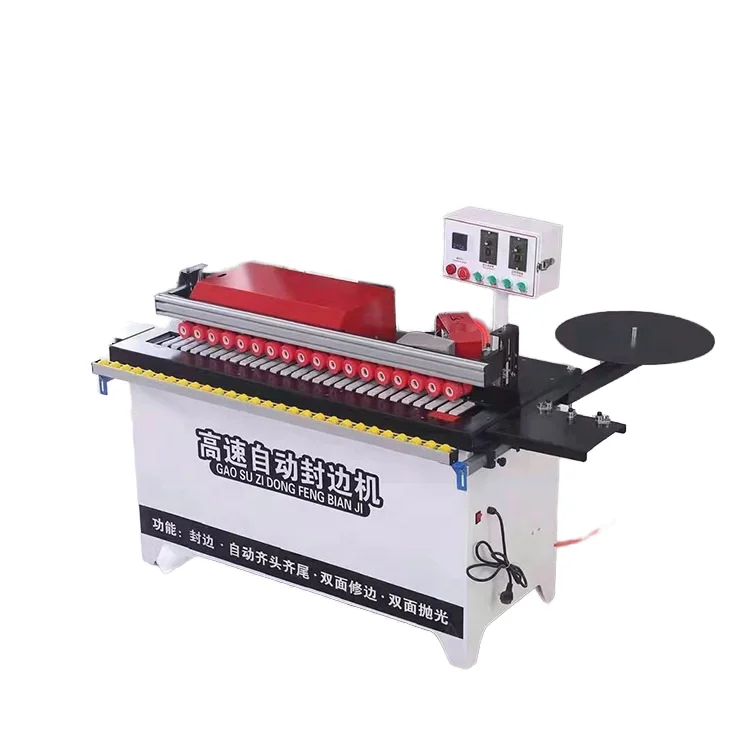
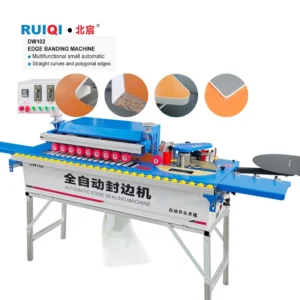
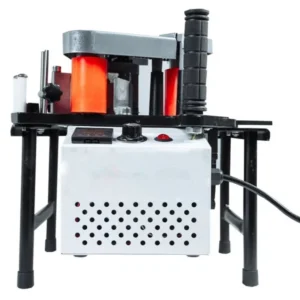
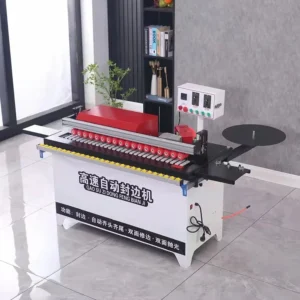
In-Stock Availability — Ready-to-dispatch 802 edge banders configured for 220V single-phase workshops, with voltage confirmation completed before the machine leaves the factory floor.
Technical Specifications
| Parameter |
Value |
| Product Type |
Semi-Automatic Edge Banding Machine |
| Model |
802 |
| Function |
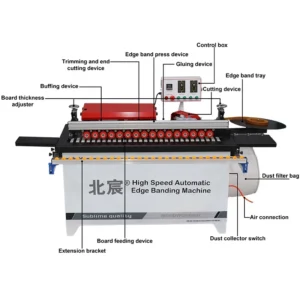
Automatic plate feeding, end cutting, upper/lower trimming, upper/lower polishing, built-in dust collector |
| Edge Type |
Straight line |
| Rated Voltage |
220V |
| Strip Thickness |
0.5–2.5 mm |
| Sheet Thickness |
10–50 mm |
| Trimming Power |
800W × 2 |
| Polishing Power |
180W × 2 |
| Suction Power |
1200W |
| Rated Power |
4 kW |
| Rated Air Pressure |
0.4–0.6 MPa |
| Feed Speed |
0–10 m/min |
| Conveyor Belt Speed |
0–10 m/min |
| Glue Pot Capacity |
4000 ml |
| Heating Power |
1000W (5–10 min heat-up) |
| Overall Dimensions (L×W×H) |
130 × 65 × 75 cm |
| Machine Weight |
150 kg |
| Control Panel |
Digital display of glue pot temperature, independent switches |
| Pressure Beam |
One-piece integrated, double rows of pressure wheels |
| Conveyor Belt Material |
Silicone |
| Belt Breaking Method |
Pneumatically controlled |
| Extendable Support |
Fluent strips for large plates |
| Trimming Configuration |
Double high-speed motors, up and down trimming |
| Polishing Configuration |
Up and down, two units |
| Dust Collection |
Built-in vacuum device |
| Warranty |
1 year |
Application Suitability
| Application |
Material or Output |
| Custom cabinet door edge finishing |
MDF and melamine-faced board with PVC edge banding |
| Small-batch wardrobe panel processing |
Particleboard and plywood with 0.5–2.5 mm strip thickness |
| Joinery workshop straight-edge banding |
Solid wood panels and veneer strips on boards 10–50 mm thick |
| Startup furniture production lines |
Laminate and acrylic edge banding on standard sheet stock |
Why Voltage Must Be Confirmed Before You Order a Semi Automatic Edge Banding Machine in Stock
A 220V machine shipped to a 380V-only workshop is dead weight until an electrician rewires the panel or a transformer arrives.
I once watched a custom cabinet shop lose an entire batch delivery window because the semi automatic edge banding machine in stock they ordered arrived with a voltage mismatch. The factory had quoted the unit without asking about the workshop's electrical supply. Three weeks passed before a step-down transformer was sourced and installed. That customer's reputation with their own client took a hit that no discount could repair [NEED_CITE: voltage and frequency standards by export market]. This is not an isolated incident — electrical incompatibility is among the most common preventable failures in cross-border machinery procurement. The 802 runs on a standard 220V single-phase supply, which aligns with many residential and light-commercial workshop grids, but local frequency and plug configuration still need verification before dispatch.

Fast Dispatch for Workshops Ready to Move Beyond Hand Banding
The 802 is positioned as an entry point for joinery shops that have outgrown manual edge application but are not yet running production volumes that demand a fully automatic line. This semi automatic edge banding machine in stock is built for straight-line work on panels between 10 mm and 50 mm thick, covering the majority of cabinet and shelving stock. The compact 130 × 65 × 75 cm footprint fits into tight workshop layouts without requiring a dedicated machine bay.
Pneumatic Belt Cutting and Stable Feeding for Consistent Results
The pneumatically controlled belt breaking system removes the manual guesswork from end trimming — the operator feeds the panel, and the pneumatic cylinder handles strip cutoff with repeatable timing. The silicone conveyor belt paired with double-row pressure wheels holds sheets flat without marring melamine or veneer surfaces. This matters because even a slight feed wobble shows up as a visible glue line on light-colored PVC banding [NEED_CITE: common edge banding defects and their root causes]. The built-in 1200W dust collector captures trimming debris at the source, eliminating the need for a separate shop-wide extraction system during short production runs.
How Glue Pot Size, Feed Rate, and Trimming Power Shape Daily Output
The 4000 ml glue pot is larger than many machines in this class, meaning fewer mid-run refills when you are banding a batch of cabinet sides back to back. The 1000W heating element brings the pot to working temperature in five to ten minutes, so the first panel of the day does not wait long for stable glue viscosity. Trimming is handled by two 800W high-speed motors working top and bottom simultaneously, which keeps edge flush on both faces in a single pass. Feed speed is adjustable from 0 to 10 m/min, letting operators slow down for delicate veneer strips or speed up for standard PVC runs. The digital temperature display on the control panel gives real-time glue pot monitoring — no guessing whether the adhesive has reached the correct flow point before feeding the first sheet.
What Happens When You Skip the Configuration Check
Buying an edge bander without confirming that the feed height, air pressure requirement, and electrical supply match your workshop leads to delays that compound through your entire production schedule. A machine that needs 0.4–0.6 MPa of clean, dry air will underperform on belt cutting and pressure beam clamping if the shop compressor cannot maintain that range consistently. Panels that shift during trimming produce rework, and rework at the edge banding stage means the cutting and boring stations upstream have already consumed their time budget. I have seen small shops lose days chasing compressor upgrades that a ten-minute pre-order conversation would have avoided [NEED_CITE: compressed air quality standards for pneumatic woodworking tools].
Why Procurement Through This Channel Works for Single-Unit Orders
The 802 is stocked and available for single-unit orders, so you do not need to commit to a container load to get one machine shipped. Voltage and plug configuration are confirmed during the quotation stage — the unit is wired and tested against your local supply specification before it leaves the factory. Documentation arrives in the language your operator reads, including the operation manual and spare parts list. The four-stage quality process covers incoming material inspection, in-process assembly checks, finished product testing, and a pre-shipment run on actual panel stock. Engineer-led configuration support means the quotation you receive accounts for your panel thickness range, edge strip material, and workshop air supply.
Documentation & Verification
- CE declaration of conformity covering machinery safety requirements for this model class
- Factory test record run on your specified panel thickness and edge strip material before dispatch
- Electrical schematic with confirmed voltage and frequency matching your workshop supply
- Operation and maintenance manual provided in your operator's working language
- Spare parts list with part numbers matching the as-built configuration of your unit
- Packing photographs taken at the factory for condition verification on arrival
Installation, Commissioning & Support
- Requires a dedicated 220V circuit rated for at least 4 kW continuous draw with proper grounding
- Compressed air supply must deliver 0.4–0.6 MPa clean dry air to the machine inlet
- 130 × 65 cm footprint needs level floor with clearance on three sides for panel feed and exit
- First-run commissioning includes glue pot temperature calibration and feed speed adjustment for your material
- Silicone conveyor belt and trimming blades ship as wearing parts with replacement intervals documented
- Digital control panel walkthrough covers temperature setpoints and independent switch operation
What to Share When You Request a Quotation
Send your standard panel material and thickness range, the edge strip type and thickness you run most often, and your workshop's confirmed voltage and frequency. If you have an existing compressor, share its rated pressure and flow output so the air supply can be matched to the 802's pneumatic requirements. Let us know the primary language for the control panel labels and documentation so the machine arrives ready for your operator on day one.
Frequently Asked Questions
Q: What panel thickness and edge strip thickness does this model handle?
A: The 802 processes sheet stock from 10 mm to 50 mm thick and applies edge banding strips between 0.5 mm and 2.5 mm. This range covers standard MDF, particleboard, and plywood used in cabinet and furniture production, along with common PVC, melamine, and veneer edge materials for straight-line applications.
Q: Is this machine in stock and what is the dispatch lead time for a single unit?
A: The 802 semi automatic edge banding machine in stock is available for single-unit orders without minimum quantity requirements. Dispatch timing depends on the voltage configuration and documentation language confirmed at order placement, with standard builds typically ready for shipment within a short lead window once specifications are finalized.
Q: What voltage options are available and can I confirm compatibility before shipping?
A: The standard rated voltage is 220V, and the unit can be configured for other voltages from 110V to 440V based on your workshop supply. Voltage and frequency are confirmed during the quotation stage, and the machine is tested against your specified electrical parameters before dispatch to ensure it powers on correctly at your facility.
Q: How does the 802 compare to smaller models in glue pot capacity and throughput?
A: The 802 carries a 4000 ml glue pot, which reduces refill interruptions during continuous batch runs compared to smaller-capacity units. The adjustable feed speed up to 10 m/min and dual 800W trimming motors support steady single-shift output for workshop-scale cabinet and furniture production without the bottleneck of frequent glue top-ups or double-pass trimming.
Q: What is the upgrade path when my workshop outgrows a semi-automatic edge bander?
A: When production volume moves beyond straight-line batch work into continuous multi-function processing with pre-milling, corner rounding, and scraping, the next step is a fully automatic edge banding line with programmable feed rates and multiple processing stations. The transition keeps the same supplier relationship and documentation standards you already have in place.