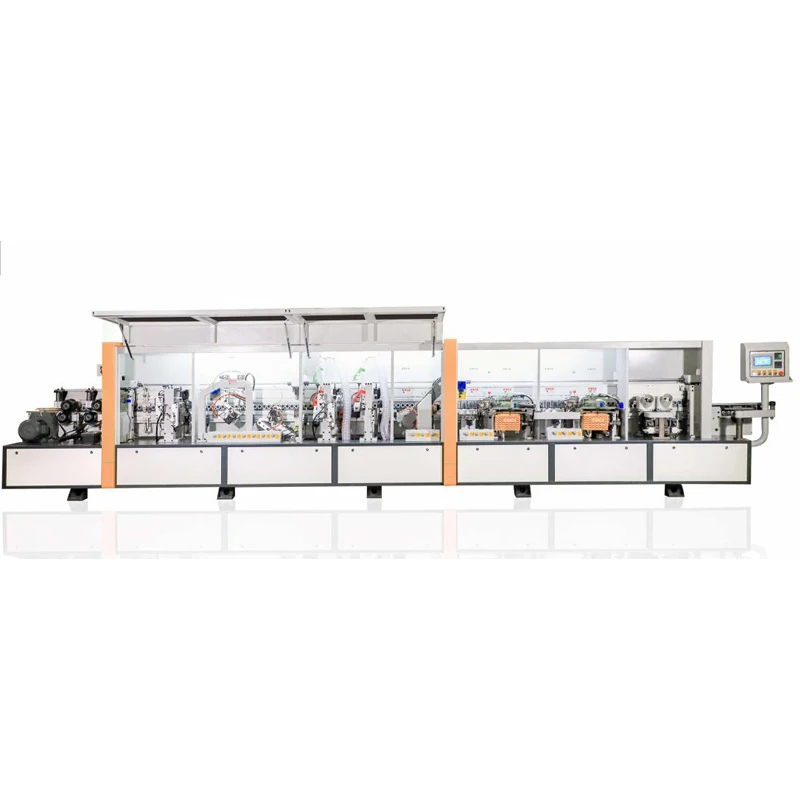
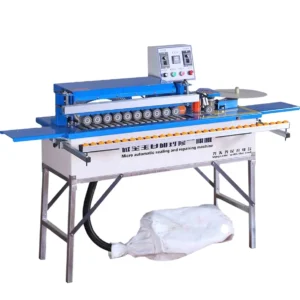
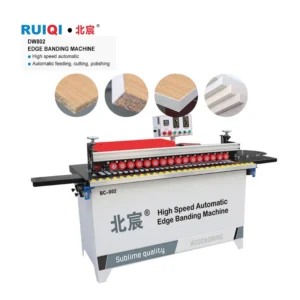
Voltage-ready configurations — Every ZDS-series unit is verified against your local supply before dispatch, eliminating the three-week retrofit wait I once watched a small cabinet shop endure.
Technical Specifications
| Parameter |
Value |
| Model |
ZDS365 / ZDS-368 / ZDS-468 / ZDS-468J / ZDS-468JJ |
| Product Type |
Automatic Edge Banding Machine |
| Pre-milling |
Available on ZDS-468J and ZDS-468JJ (diamond cutters, 2×2.2 kW, 12000 rpm, max cut depth 2 mm) |
| Gluing Stations |
1 standard; 2 on ZDS-468JJ |
| End Trimming |
Dual high-frequency motors, 0.37 kW × 2, 12000 rpm (all models) |
| Rough Trimming |
Available on ZDS-368 and above; 2 motors, 0.75 kW each, 12000 rpm, 6-teeth flat cutters |
| Fine Trimming |
2 high-frequency motors, 0.75 kW each, 12000 rpm, 6-teeth R2 cutters (all models) |
| Corner Rounding |
Available on ZDS-468 and above; four-motor profiling |
| Scraping |
Electro-pneumatically controlled blowing (all models) |
| Buffing Stations |
1 standard; 2 on ZDS-468JJ |
| Panel Thickness Range |
10–60 mm |
| Edge Thickness Range |
0.4–3 mm |
| Min. Panel Size |
300×60 mm (ZDS365, ZDS-368, ZDS-468); 150×150 mm also supported (ZDS-468J, ZDS-468JJ) |
| Total Power |
8.15 kW (ZDS365) / 9.65 kW (ZDS-368) / 13 kW (ZDS-468) / 16 kW (ZDS-468J) / 18.5 kW (ZDS-468JJ) |
| Overall Dimensions (L×W×H) |
4070×900×1600 mm to 8000×900×1600 mm depending on model |
| Net Weight |
1200 kg (ZDS365) to 2300 kg (ZDS-468JJ) |
| Working Pressure |
0.6 MPa |
| Voltage & Frequency |
3-Phase 380V (configurable from 110V to 440V) |
| Control System |
PLC control system |
| Glue Pot |
Teflon-sprayed, scientific glue-back design; upgradeable to upper glue pot and PUR glue pot |
| Pressing Roller |
4 sets standard; 6 sets optional |
| Key Features |
Optional Quick Sol Unit, narrow plate auxiliary device, slotting device, flexible edge scraping, double buffing unit |
| Assembly State |
Requires assembly; user manual and video guidance provided |
| Warranty |
1 year |
Application Suitability
| Application |
Material or Output |
| Custom furniture panel edge banding |
MDF, particleboard, plywood with PVC and ABS edge banding |
| Small cabinet shop production |
Melamine-faced boards and veneer-edged components |
| Joinery workshop first automation |
Solid wood panels transitioning from manual edge application |
| Starter production line integration |
Panel sizing and edge finishing for batch furniture runs |
Why the Voltage Question Must Come Before the Quote
Every Automatic Edge Banding Machine in stock is confirmed against your facility's supply before it leaves the factory floor.
I once watched a startup cabinet maker receive an entry-level edge bander that sat idle for three weeks. The local supply was 220V three-phase, but the machine was wired for 380V. Nobody asked. Nobody checked. The transformer retrofit alone cost more than the shipping. That kind of oversight hits small workshops hardest because there is no backup machine to fall back on [NEED_CITE: voltage and frequency standards by export market]. When a shop is running one Automatic Edge Banding Machine and it cannot power on, production stops entirely.

Stocked Configurations That Ship Without Delay
Small workshops and startups need equipment on the floor fast. The ZDS series covers every stage of that growth. The ZDS365 handles straightforward edge banding at 8.15 kW total power, suitable for shops that are moving off manual application for the first time. When order volume grows and corner rounding becomes necessary, the ZDS-468 and above step in with four-motor profiling already built into the frame. Each configuration is a stocked Automatic Edge Banding Machine ready for dispatch, not a custom build waiting on a production slot.
Growing Without Changing Suppliers
The real advantage of keeping every model within one product family is the upgrade path. A joinery shop can start with a ZDS365 for basic PVC edging on particleboard, then move to a ZDS-468J when pre-milling becomes necessary for chipped edges on melamine-faced MDF. The PLC interface, glue pot architecture, and pressing roller layout stay familiar across the range. Operators trained on the entry model transition to higher-spec units without relearning the control logic [NEED_CITE: PLC control system standards in woodworking machinery]. That continuity matters when a shop is scaling and cannot afford weeks of retraining downtime.
What the Spec Sheet Means on the Workshop Floor
Panel thickness range of 10–60 mm across the full ZDS lineup means a single machine handles everything from thin cabinet dividers to thick workbench tops. The fine trimming station runs 6-teeth R2 cutters at 12000 rpm on every model, which produces a clean radius on PVC and ABS edges that scraping alone cannot achieve. The Teflon-sprayed glue pot with scientific glue-back design prevents adhesive carbonization during idle periods — a frequent problem in small shops where the machine cycles on and off throughout the day rather than running continuously. When pre-milling is specified on the ZDS-468J and ZDS-468JJ, the diamond cutters remove up to 2 mm of material, ensuring the workpiece edge is square and chip-free before the banding meets the glue.
The Hidden Cost of Choosing the Wrong Configuration
Buying an entry-level machine into production volumes it was never designed for is a pattern I have seen repeat across small workshops. The ZDS365 is built for straightforward edging work, but pushing it through heavy daily volume with thick ABS banding stresses the trimming motors and pressing rollers beyond their intended duty cycle. Edge quality drifts, glue lines become visible on certain substrates, and the operator starts compensating with manual touch-up that defeats the purpose of automation [NEED_CITE: edge banding quality consistency across panel materials]. The fix is not a better operator — it is matching the machine configuration to the actual daily throughput and material mix from day one.
Why Procurement Starts Here
Every stocked model ships with voltage and frequency configured for your local supply, confirmed before production. The four-stage QC process covers incoming material, in-process checks, finished product inspection, and pre-shipment verification with photographs. Engineer-led configuration recommendations arrive within 24 hours of inquiry, matching the ZDS model to your panel types and daily volume rather than defaulting to the highest-spec option. Single-unit orders are standard — there is no minimum order quantity forcing a small workshop to buy more than it needs. The full range from ZDS365 to ZDS-468JJ sits within one product family, so future upgrades stay on the same support and parts platform.
Documentation & Verification
- CE declaration of conformity covering the full ZDS automatic edge banding range
- Electrical schematic confirming your voltage and frequency before dispatch
- Factory test record run on your specified panel thickness and edge material
- Operation and maintenance manual provided in your agreed language
- Pre-shipment verification photographs of your specific machine serial number
- Spare parts list matching your exact model configuration
Installation, Commissioning & Support
- Requires dedicated 3-phase circuit matching confirmed voltage, from 8.15 kW to 18.5 kW depending on ZDS model selected
- Floor space planning from 4070 mm to 8000 mm length with 900 mm width clearance plus operator access
- Machine arrives requiring assembly with manual and video guidance for each station
- Compressed air supply at 0.6 MPa working pressure must be connected before first run
- PLC control system language configured to operator preference before shipment
- One-year warranty with spare parts list covering trimming cutters, pressing rollers, and glue pot components
Before You Send an Inquiry
Share your typical panel materials and dimensions, the edge banding type you run most often, and your current daily output target. Include your facility voltage and frequency so the electrical configuration can be locked in before the quote is finalized. If you are planning a phased expansion, mention the future volume you expect so the model recommendation accounts for growth without oversizing the first purchase.
Frequently Asked Questions
Q: Which ZDS model fits my current workshop volume and panel types?
A: Model selection depends on your daily panel count, edge material, and whether you need pre-milling or corner rounding. The ZDS365 suits light-duty PVC edging on MDF and particleboard. The ZDS-468J adds pre-milling for chip-free results on melamine boards, while the ZDS-468JJ supports dual glue pots and double buffing for higher volume. Share your panel specs and we match the configuration.
Q: Can voltage and control panel language be configured before shipping?
A: Yes. Voltage is configurable from 110V to 440V, and frequency is confirmed for your local grid before the machine is wired. The PLC control panel language is set to your operator's preference during assembly. We request your electrical supply details at the quotation stage so the machine arrives ready to power on without transformer retrofitting.
Q: What is the dispatch lead time, and are single-unit orders accepted?
A: Stocked models are available for fast dispatch, and single-unit orders are standard across the full ZDS range. Lead time depends on the specific model and any voltage or language customization required. We confirm the exact dispatch date at the quotation stage based on current stock availability and your configuration requirements.
Q: What spare parts are included, and how are replacements supplied?
A: Each machine ships with a spare parts list specific to your model, covering high-wear items such as trimming cutters, pressing roller sleeves, and glue pot seals. Replacement parts are available through direct order and shipped separately. The operation manual includes maintenance schedules so you can plan part replacements before they affect edge quality.
Q: Is installation guidance available, and what does the warranty cover?
A: Installation guidance with video support is provided for the assembly process. The PLC system configuration and first-run parameter setup are covered in the commissioning documentation. The one-year warranty covers manufacturing defects on all mechanical and electrical components. Support continues after installation for troubleshooting and spare part coordination.