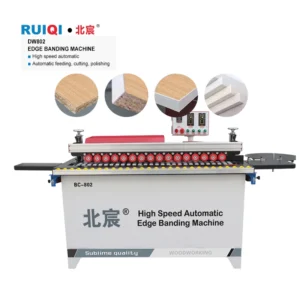
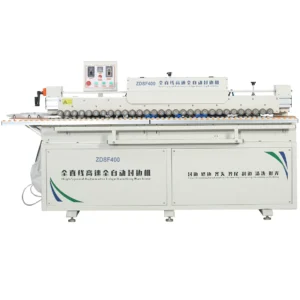
Engineer-led configuration — Every ZDS280D ships with a voltage confirmation sheet matched to your workshop supply before production begins, so a small joinery shop won't repeat the three-week electrical refit I once endured at my own facility.
Technical Specifications
| Parameter |
Value |
| Model |
ZDS280D |
| Product Type |
Automatic Edge Banding Machine |
| Main Functions |
Gluing, End Trimming, Fine Trimming, Scraping, Buffing |
| Working Pressure |
0.6 MPa |
| Panel Thickness Range |
10–60 mm |
| Edge Thickness Range |
0.4–3 mm |
| Feed Speed |
16 m/min |
| Min. Panel Width |
60 mm |
| Min. Panel Length |
150 mm |
| Voltage & Frequency |
380V, 3-Phase |
| Rated Power |
7.5 kW |
| Overall Dimensions (L×W×H) |
3100 × 700 × 1400 mm |
| Net Weight |
700 kg |
| Machine Frame |
14 mm high-strength steel plate, frame-type structure with high-temperature quenching |
| Conveyor Guide Rail |
HT260 material |
| Conveying Motor |
Taiwan brand, thermal protection system |
| Pneumatic System |
German Festo or Taiwan AirTAC cylinders and safety valves |
| Electrical Components |
Delixi/Chint air switches and contactors; Japanese Omron travel switches |
| Warranty |
1 year |
Application Suitability
| Application |
Material or Output |
| Custom cabinet door edge finishing |
MDF and particleboard panels with PVC edge banding |
| Small-batch furniture production |
Plywood panels with veneer edge banding 0.4–3 mm |
| Joinery workshop upgrade from manual banding |
Standard substrate panels 10–60 mm thick |
| Startup furniture workshop panel processing |
Melamine-faced board and laminated panels |
Why the Voltage Question Should Come Before the Price Tag on Any Automatic Edge Banding Machine Compact Workshop Buyers Consider
A machine that cannot plug into your existing supply is a 700 kg paperweight until an electrician rewires your shop.
I learned this the hard way early in my career when an 8-function edge bander arrived at my first workshop and sat idle for three weeks because the voltage rating did not match our local grid. Small workshops rarely have the luxury of a dedicated transformer or a separate industrial feed, so the electrical question is not a detail — it is the first gate. When a compact automatic edge banding machine compact workshop operators invest in is quoted without that confirmation, the real cost only appears on installation day. The ZDS280D is specified here at 380V 3-phase, but the supply range is configurable from 110V to 440V before production, which matters enormously for export markets where voltage standards vary widely [NEED_CITE: voltage and frequency standards by export market].

Footprint and Power Draw That Fit an Existing Workshop
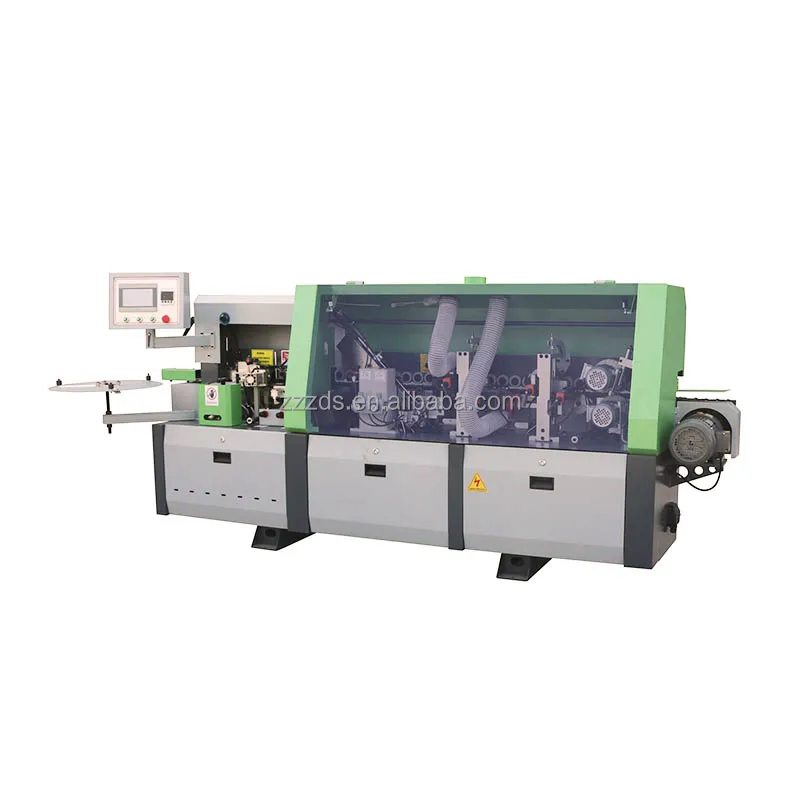
The ZDS280D measures 3100 × 700 × 1400 mm and weighs 700 kg, which means it can typically be positioned against a wall in a single-operator joinery shop without restructuring the floor layout. The 7.5 kW rated power draw stays within the capacity of many small workshop electrical panels, avoiding the need for a costly dedicated high-capacity circuit that larger automatic edge banding machines demand.
Five Functions Without Five Separate Stations
Gluing, end trimming, fine trimming, scraping, and buffing happen in a single pass at 16 m/min. For a workshop stepping away from hand-held trimmers and manual scraping, this consolidation eliminates the intermediate handling that causes chipping and misalignment on freshly glued edges.
The Frame Question at Workshop Scale
The 14 mm high-strength steel plate frame with high-temperature quenching treatment gives the machine a stable base that resists vibration during continuous trimming operations. At the feed speeds and panel sizes a small workshop processes, frame rigidity directly influences edge consistency from the first panel in the morning to the last [NEED_CITE: vibration damping and edge quality correlation in panel processing machinery].
How Panel Range and Feed Speed Shape Your Daily Output
The 10–60 mm panel thickness range covers the standard MDF, particleboard, and plywood stock a custom cabinet maker encounters. Pairing this with a 16 m/min feed speed means a typical batch of cabinet panels moves through at a pace the operator can manage alone, without the machine idling between pieces or the operator struggling to keep up. The HT260 conveyor guide rail maintains feed stability across that full thickness range, which matters when you switch from 18 mm MDF to 40 mm solid-core panels mid-shift.
The Hidden Cost of Ordering a Single Machine Without Checking the Line
One pain point I hear constantly at trade shows is workshops buying edge banders piecemeal, only to discover the feed height or throughput is incompatible with the panel saw or drilling machine already on the floor. A mismatched line forces operators to lift panels between stations, introducing edge damage that the bander then has to cover rather than finish cleanly. With the ZDS280D, the conveyor height and panel handling geometry are worth confirming against your existing saw table or CNC router before the order goes to production [NEED_CITE: conveyor height alignment across woodworking production stations].
What This Purchase Includes Beyond the Machine Itself
The configuration process starts with an engineer reviewing your workshop's panel types, daily volume, and electrical supply — not just a catalogue price. The frame and component selection reflect in-house manufacturing with patented cutting mechanisms, and every unit goes through a four-stage quality check that ends with a pre-shipment test on your specified panel material. Voltage, control panel language, and documentation are all confirmed before the machine enters production.
Documentation & Verification
- Factory test record on your panel thickness and edge material before dispatch
- Electrical schematic confirming voltage and frequency for your workshop supply
- Operation and maintenance manual in your operator's language
- Spare parts list covering consumable scraping blades and buffing wheels
- Packing photographs documenting machine condition before crating
Installation, Commissioning & Support
- 3100 × 700 mm footprint requires a level concrete floor with 1400 mm clearance above
- 7.5 kW draw needs a dedicated 3-phase circuit breaker sized to local code
- 0.6 MPa working pressure requires a clean compressed air supply with moisture separator
- First-run calibration covers feed speed and trimming depth across your panel range
- Control panel language confirmed at order stage to prevent operator confusion on day one
What to Share Before Requesting a Quotation
Provide the panel materials and thicknesses you process most often, the edge banding type and thickness range, and your workshop's confirmed voltage and frequency. Note the languages your operators read and whether you have existing upstream saws or downstream drilling stations whose conveyor heights need to align with this edge bander.
Frequently Asked Questions
Q: How do I confirm this machine's voltage and frequency match my workshop's electrical supply?
A: Share your workshop's supply voltage, phase configuration, and frequency with the engineering team before the order is finalized. The machine is configurable from 110V to 440V, and an electrical schematic confirming the matched configuration is provided before production begins so you can prepare the correct circuit and breaker in advance.
Q: Can the control panel and operation manual be provided in my operator's language?
A: Yes. The control panel language and manual language are confirmed during the specification stage before production. This prevents commissioning delays that happen when operators cannot read error codes or setup prompts, and it is included as a standard step in the ordering process.
Q: What panel materials and edge banding types are compatible with this model?
A: The machine handles MDF, particleboard, and plywood panels from 10–60 mm thick, with PVC and veneer edge banding from 0.4–3 mm. If you process melamine-faced board or specialty laminates, share the exact material specification so the gluing temperature and trimming tool setup can be adjusted during the pre-shipment test.
Q: Is this entry-level machine sufficient for my current and near-future production volume?
A: The 16 m/min feed speed and five-function workflow suit small-to-medium batch processing typical of joinery workshops and custom cabinet makers. If you anticipate moving to high-volume continuous production, discuss the upgrade path within the same product family so your first machine remains compatible with future line additions.
Q: What installation conditions does my workshop need before the machine arrives?
A: You need a level concrete floor accommodating 3100 × 700 × 1400 mm, a dedicated 3-phase electrical circuit matched to the confirmed voltage, and a compressed air supply delivering 0.6 MPa with a moisture separator. Dust extraction should be routed to the machine's extraction ports to maintain trimming visibility and edge quality.