Other Woodworking Machinery
Edge Banding Machine for MDF with PVC – Entry Level
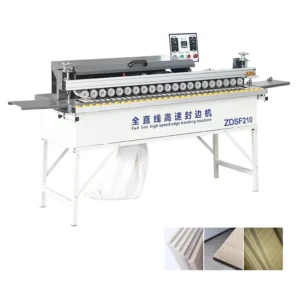
ZDSF210 Full Line High Speed Edge Banding Machine, 6m/min, 1500×570×630mm — compact footprint for joinery...
View Details
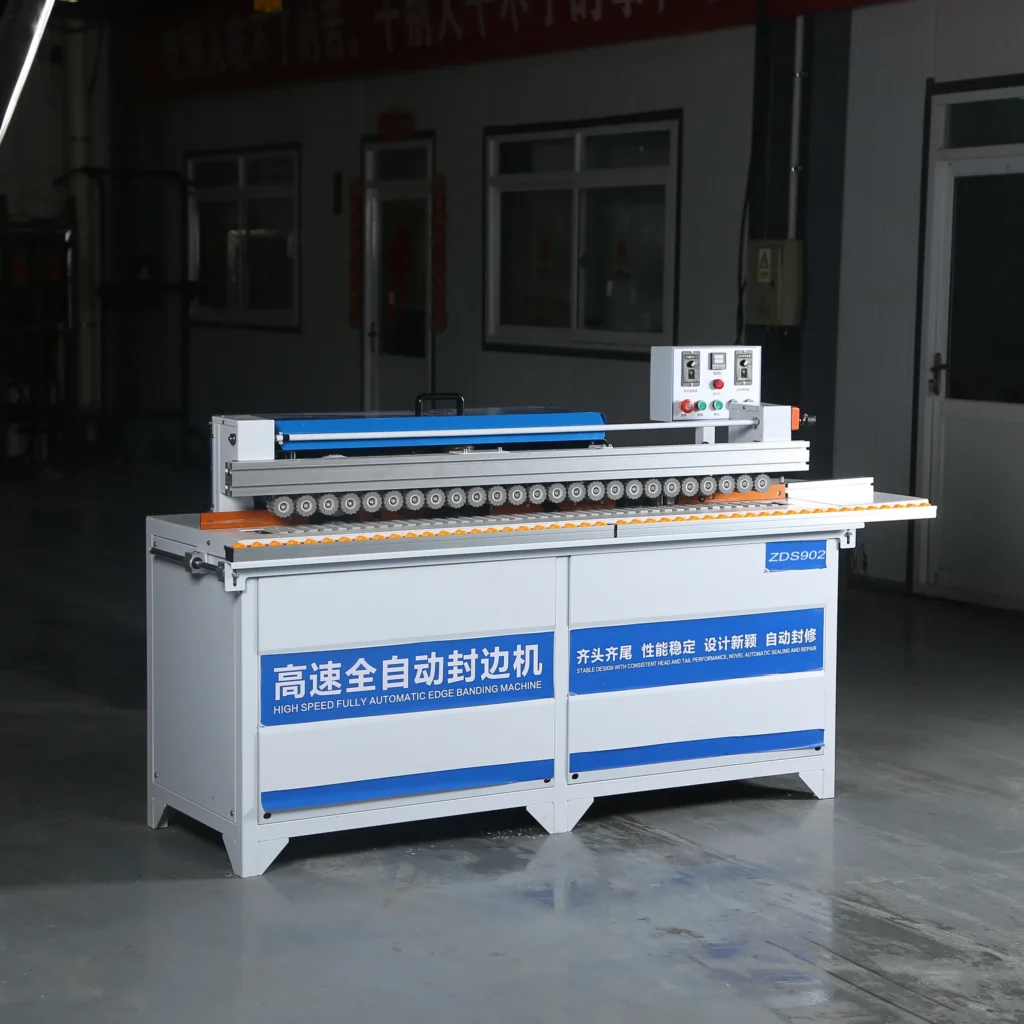
<p><strong>Linear Edge Banding Machine</strong>, 220V, 4200W, 0.5–2.5mm Edge Band Thickness — designed for small workshops transitioning from manual edge banding to consistent, mechanized output.</p> <ul> <li>Compact 207×60×122 cm footprint fits limited floor space; 4000 ml glue pot reduces refill interruptions during production runs.</li> <li>Pneumatically controlled cutting and dual upper/lower polishing motors deliver clean, repeatable edge finishes on MDF, particleboard, and plywood.</li> <li>Integrated pressure beam with adjustable handle accommodates varying board heights up to 35 mm.</li> </ul> <p>Backed by four-stage QC with pre-shipment test records, voltage confirmation before dispatch, and operation manuals in your agreed language.</p>
Ready stock verification — every stocked unit is voltage-confirmed and run on the buyer's actual panel sample before dispatch, eliminating commissioning stalls on arrival.
| Parameter | Value |
|---|---|
| Product Type | Automatic Edge Banding Machine |
| Voltage | 220V (configurable from 110V to 440V upon request) |
| Total Power | 4200W |
| Equipment Size | 207 × 60 × 122 cm |
| Weight | 245 kg |
| Edge Band Height Range | 0–35 mm |
| Edge Band Thickness Range | 0.5–2.5 mm |
| Glue Pot Capacity | 4000 ml |
| Conveyor Belt | Silicone material with double rows of pressure wheels |
| Pressure Beam | Integrated pressure beam with adjustable handle |
| Edge Strip Cutting Device | Pneumatically controlled |
| Trimming Motors | Double high-speed trimming motors, trimming up and down |
| Polishing Motors | Up and down two polishing motors |
| Key Features | High-speed sealing and repair, double-sided gluing, independent operating platform, intelligent temperature control |
| Application | Material or Output |
|---|---|
| Custom furniture panel edge finishing | MDF, particleboard, plywood with PVC edge banding |
| Small cabinet shop production runs | Melamine-faced boards with 0.5–2.5 mm PVC or veneer strips |
| Joinery workshop mechanization upgrade | Solid wood panels and veneer edge banding on flat stock |
| Startup panel processing operations | Standard rectangular panels requiring linear edge banding |
A machine wired for the wrong frequency will trip breakers on day one, no matter how well it was built.
I have watched small workshop owners spend weeks waiting for an electrician to rewire a newly delivered edge bander, or worse, burn out a motor because the local grid runs 60 Hz while the machine was configured for 50 Hz. With this Automatic Edge Banding Machine in stock, voltage and frequency are confirmed in writing before any unit leaves the floor. That single checkpoint prevents the most common commissioning failure I see in cross-border equipment sales. [NEED_CITE: voltage and frequency standards by export market]
When a joinery workshop decides to move from hand-held edge trimming to their first Automatic Edge Banding Machine in stock configuration, downtime between decision and production is the real cost. This unit ships from ready inventory, but "ready" does not mean untested. Each machine goes through a pre-dispatch run using the buyer's own panel offcut and chosen edge banding material. If the glue line shows voids or the trimming leaves a visible lip, adjustments happen on our floor — not yours.
The transition from manual to mechanized edge banding introduces variables that hand tools never had: feed speed, glue temperature, pressure wheel tension, and trimming alignment all interact. This entry-level model keeps the learning curve manageable by consolidating core functions — gluing, end cutting, rough trimming, fine trimming, and polishing — into a single pass with an independent operating platform. For a two-person cabinet shop producing custom units, the machine handles daily volume without demanding a dedicated operator just to manage settings. [NEED_CITE: CE machinery directive requirements for industrial equipment]
The 4000 ml glue pot capacity directly affects production continuity. Smaller pots require mid-run refills that cool the adhesive and create inconsistent bonding at the refill point. With this volume, a typical run of cabinet sides and shelves completes without interruption. The silicone conveyor belt with double pressure wheels maintains steady feed without marring melamine or pre-finished surfaces. Pneumatically controlled end cutting ensures the strip is severed cleanly at panel length, reducing the manual touch-up that slows downstream assembly.
The double high-speed trimming motors working up and down simultaneously remove excess banding from both faces in one pass, which matters when processing thin particleboard where a single-direction trim can cause edge tear-out. The integrated pressure beam with adjustable handle lets operators switch between 16 mm shelf stock and 25 mm countertop panels without tool changes, keeping changeover time minimal across mixed-material production days.
A machine that performs perfectly on MDF may struggle with moisture-resistant particleboard. The resin density differs, the surface porosity changes glue absorption, and the trimming behavior shifts. When a buyer orders without sending a sample panel, they discover these differences during their first production run — with a technician on a video call at midnight. Sending the actual board material and edge banding strip before dispatch lets us set glue temperature, feed rate, and trimming depth to match, so the first panel you run is the standard you build from. [NEED_CITE: substrate density variation in moisture-resistant particleboard]
Every stocked unit undergoes a four-stage quality check covering incoming components, assembly, finished operation, and pre-shipment verification — not just a power-on test. The configuration recommendation comes from an engineer who reviews your panel types, daily volume, and workshop layout before confirming the right setup. Customization of voltage, control panel language, and documentation happens as a standard step in the order process, not as an expensive add-on. Factory test records with your specific material are included in the shipment documentation.
To confirm the right configuration, provide your primary panel materials with thickness range, the edge banding type and width you plan to run, and your local voltage and frequency. If you have an existing sliding table saw or boring machine upstream, mention the feed height so we can verify compatibility. Sending a sample panel and edge strip allows a pre-shipment test that matches your actual production conditions.
Q: How is the correct voltage confirmed before the machine ships? A: After order placement, we request written confirmation of your local voltage and frequency. The motor, transformer, and control components are verified against that specification. An electrical schematic reflecting the confirmed configuration ships with the machine for your local electrician's reference.
Q: Can the operation manual and control panel be provided in my local language? A: Yes. The independent operating platform labels and the full operation and maintenance manual are produced in your agreed language before dispatch. This prevents the common situation where operators cannot read critical settings during commissioning.
Q: What panel materials and edge banding types does this machine handle? A: This Automatic Edge Banding Machine processes MDF, particleboard, and plywood with PVC or veneer edge banding from 0.5 to 2.5 mm thick. The edge band height range covers 0 to 35 mm. We recommend sending your actual material for a pre-shipment test to confirm glue and trim settings.
Q: What is the typical dispatch lead time for stocked models? A: Stocked units are prepared for dispatch after the pre-shipment test and voltage confirmation are completed. The typical window spans several business days for testing, documentation preparation, and crating, depending on sample material availability and customization scope.
Q: Is there an upgrade path when my workshop volume outgrows this entry-level machine? A: The product family includes higher-throughput models with additional trimming stations and pre-milling functions that maintain compatibility with your existing workflow. Your production data from this machine helps us recommend the next configuration when volume growth justifies the step.
Standard specifications are listed below. Custom configurations are available -- contact us for tailored solutions.
| Parameter | Value |
|---|---|
| Product Name | Automatic Edge Banding Machine with PVC Bander Trimmer – Entry Level |
| Category | Wood Based Panels Machinery, Woodworking Machinery |
| Certification | CE, ISO9001 |
| Voltage | 220V/380V (Customizable) |
| Warranty | 1 Year |
| After-Sales | Remote technical support, spare parts supply |
| OEM/ODM | Available -- logo, color, voltage, language |
| Delivery | Standard export packaging, worldwide shipping |
| MOQ | 1 Unit |
| Lead Time | 15-30 days (subject to order) |
* Specifications may vary by model. Contact our team for exact technical data sheets.
Fill in your details and we'll respond within 24 hours with pricing, specifications and customization options.
ZDSF210 Full Line High Speed Edge Banding Machine, 6m/min, 1500×570×630mm — compact footprint for joinery...
View Details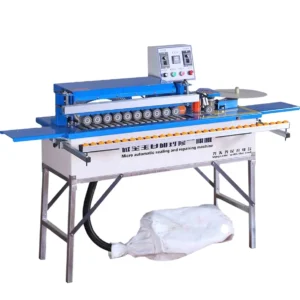
Compact Automatic Edge Bander, 220V, 0.3–3mm Edge Thickness, Straight and Curve — fits small workshops...
View Details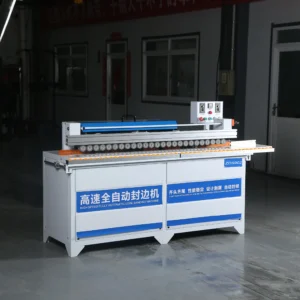
Automatic Edge Banding Machine, 220V, 4200W, 4000ML Glue Pot — stocked for fast dispatch to...
View Details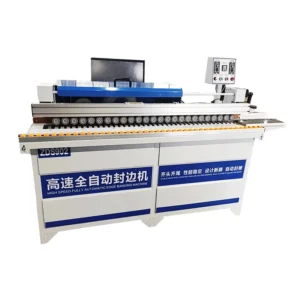
Compact Automatic Edge Banding Machine, 220V, Double-Sided Gluing, 207 cm Footprint — ready for small...
View Details