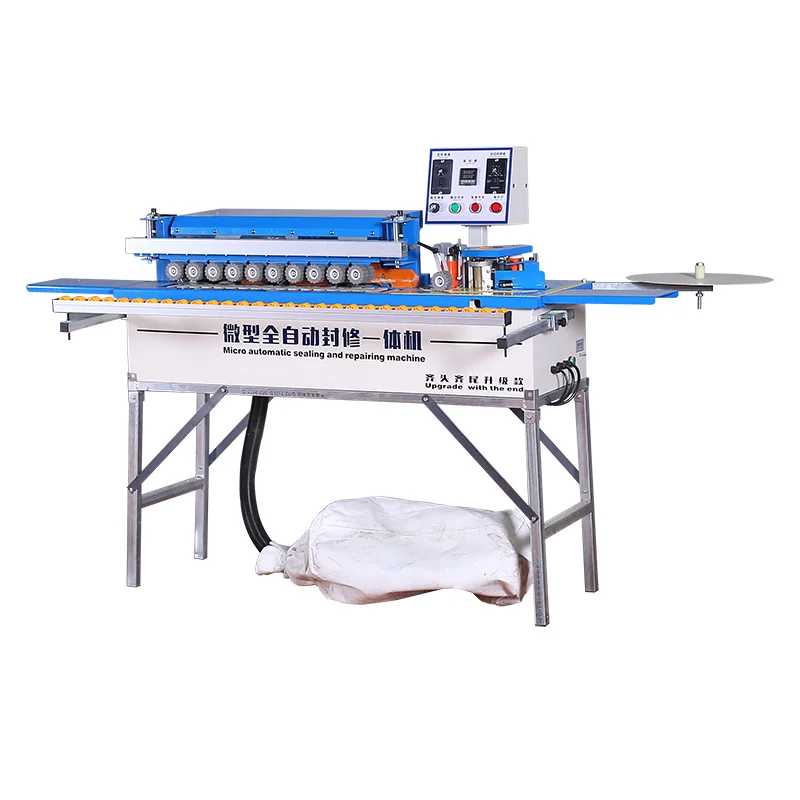
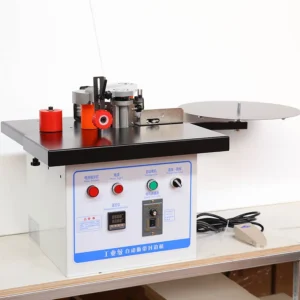
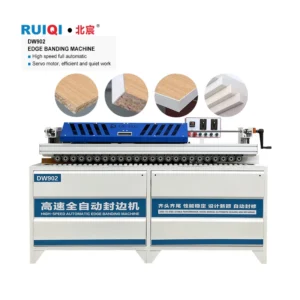
In-house patented mechanisms — verified ±0.02mm tolerance on this portable unit, tested on MDF and plywood before dispatch from our Shandong workshop.
Technical Specifications
| Parameter |
Value |
| Model |
ZDS160 |
| Product Type |
Portable Edge Banding Machine |
| Voltage |
220V (other voltages configurable) |
| Suction Power |
1200W |
| Belt Power |
25W |
| Transmission Power |
60W |
| Polishing Power |
180W×2 |
| Trimming Power |
800W×2 |
| Conveying Speed |
0–15 m/min |
| Edging Speed |
0–6 m/min |
| Edge Height Range |
10–60 mm |
| Edge Thickness Range |
0.3–3 mm |
| Overall Dimensions |
120×54×72 cm |
| Control System |
Individual manual function controls |
| Glue Application |
Double-sided adhesive |
| Edge Banding Type |
Straight and curved (dual purpose) |
| Trimming Stations |
Up and down trimming with dust suction |
| Polishing Stations |
Cross polishing up and down (2 motors) |
| Dust Extraction |
Integrated dust suction device |
| Assembly State |
Partial assembly required |
| Warranty |
1 year |
Application Suitability
| Application |
Material or Output |
| Custom cabinet door edging |
MDF and plywood panels with 0.3–3mm PVC banding |
| Small-batch curved furniture components |
Particleboard and solid wood panels with veneer or PVC |
| Joinery workshop upgrade from manual banding |
Straight and shaped panel edges, 10–60mm height |
| Startup furniture production |
Compact runs of shelving, drawer fronts, and carcass panels |
Why Voltage Confirmation Matters Before You Commit
A portable edge banding machine in stock is only useful if it actually runs on your local supply.
I have watched a small cabinet shop in Southeast Asia take delivery of a 220V machine wired for 50Hz, plug it into a 60Hz grid, and burn out the trimming motors within the first week. The fault was not in the machine; it was in the conversation that never happened before shipping. When a workshop orders a single unit piecemeal without confirming the electrical standard, the result is downtime, not production. [NEED_CITE: voltage and frequency standards by export market]
The ZDS160 ships configured for 220V as standard, but reconfiguring for other voltages requires lead time and a confirmed specification sheet. This is the first question an engineer-led supplier should ask, not the last item on a packing list. A ready-to-ship portable edge banding machine in stock loses its advantage the moment it arrives unusable.

Stocked Units That Actually Match Your Workshop Scale
Small joinery shops rarely need a full automatic line on day one. The ZDS160 sits in the gap between a hand-held trimmer and a floor-standing automatic bander, offering a compact 120×54×72cm footprint that fits against a wall in most workshops. Conveying speed runs up to 15 m/min for straight runs, while the edging speed holds at 0–6 m/min for controlled curved work. This portable edge banding machine in stock gives a single operator the ability to handle both profiles without reconfiguring the shop floor.
The Curved Edge Problem Solved Without a Second Machine
Many entry-level banders handle straight edges only, forcing a workshop to buy a separate curved unit or revert to hand trimming for shaped panels. The ZDS160 gluing device rotates 180° to follow curved contours, applying double-sided adhesive across the banding and panel edge simultaneously. For a custom cabinet maker producing radius doors or rounded shelving, this means one portable edge banding machine in stock covers the full order book without a second capital outlay. [NEED_CITE: typical edge banding defects on curved MDF profiles]
Reading the Specs That Actually Affect Output
The trimming station pairs two 800W motors for up-and-down cutting, which is necessary when working PVC banding at 3mm thickness — underpowered trimming leaves chatter marks that show up after polishing. The integrated dust suction at 1200W pulls trim waste directly from the cutting zone, keeping the work surface clear for the next panel. Edge height range of 10–60mm covers standard cabinet carcass panels at 18mm as well as thicker solid wood stock at 40mm, meaning a workshop does not outgrow this unit when it moves from particleboard to hardwood. The manual control panel gives individual function switches rather than a programmable interface, which keeps operator training short but requires the user to set feed speed by observation rather than digital readout.
The Cost of Skipping the Voltage and Feed-Speed Conversation
When a buyer selects a machine based on price alone and ignores the local electrical standard, the first week of operation reveals the gap. Motors designed for 50Hz overheat on 60Hz supply; control transformers rated for one voltage range fail on another. Beyond electrical issues, running curved PVC banding at straight-edge feed speeds causes adhesive failure before the glue cures, which I have seen waste an entire batch of panels on a first-time buyer's floor. These are not manufacturing defects; they are configuration oversights that a pre-shipment checklist prevents. [NEED_CITE: common commissioning failures on imported woodworking machinery]
What the Factory Verifies Before the Crate Closes
Every ZDS160 passes through four-stage QC covering incoming material inspection, in-process assembly checks, finished-product testing, and pre-shipment verification. The pre-shipment test runs actual MDF and plywood panels through the full cycle — gluing, trimming, polishing — and photographs are taken of the output before packing. Patented cutting mechanisms maintain verified tolerance on the trimming station. Voltage and control language are confirmed against the buyer's specification sheet, not assumed. A formal quotation with engineer-led configuration arrives within 24 hours of inquiry, so the buyer knows exactly what is being built or pulled from stock.
Documentation & Verification
- CE declaration of conformity for machinery directive compliance
- ISO 9001 certificate covering manufacturing quality management
- Electrical schematic with confirmed voltage and frequency for your supply
- Factory test record showing edge quality on your specified panel thickness
- Operation and maintenance manual in your operator's language
- Packing photographs and spare parts list included with shipment
Installation, Commissioning & Support
- Partial assembly required on arrival — manual and video guidance provided
- Dedicated 220V circuit required to support combined motor and suction load
- Dust extraction port connects to workshop central system or standalone collector
- First-run parameter setting for glue temperature and feed speed guided by video
- Double-sided adhesive roller inspected and cleaned during initial commissioning
- Spare trimming blades and polishing pads listed for first reorder cycle
What to Include in Your Inquiry
Tell us your primary panel material, the edge banding thickness and type you run most often, and your local voltage and frequency. If curved edging makes up a significant share of your work, note the typical radius so we can confirm the gluing head suits your profile range. We will return an engineer-reviewed configuration within 24 hours.
Frequently Asked Questions
Q: What panel materials and edge banding types does this portable unit handle?
A: The ZDS160 works with MDF, plywood, particleboard, and solid wood panels. It accepts PVC and veneer edge banding from 0.3 to 3mm thickness and 10 to 60mm height, using double-sided adhesive for consistent bonding across all listed substrates.
Q: Is 220V the only voltage, or can it be configured for my local supply?
A: The standard configuration is 220V. Other voltages are available on request and must be confirmed before production or dispatch. We verify your local voltage and frequency in writing to prevent commissioning failures on arrival.
Q: How do I assemble and commission the machine on arrival?
A: The ZDS160 requires partial assembly. An operation manual and video teaching materials are provided. First-run parameter setting for feed speed and glue application is guided step by step to avoid adhesive failure on initial panels.
Q: What is the lead time from order to dispatch for stocked units?
A: Stocked units dispatch after pre-shipment testing and verification. Lead time depends on current inventory and any voltage or language customization requested. Confirm your specification early to avoid delays.
Q: How does curved edge banding work — do I need additional tooling?
A: The gluing device rotates 180° to follow curved panel contours. No additional tooling is required for standard curved profiles within the 10–60mm edge height range. Feed speed should be reduced on curves to allow proper adhesive curing.