Other Woodworking Machinery
Edge Banding Machine for MDF with PVC – Entry Level
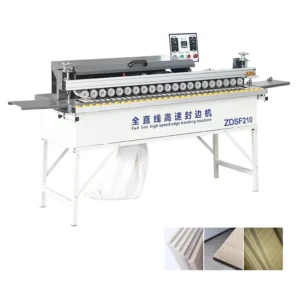
ZDSF210 Full Line High Speed Edge Banding Machine, 6m/min, 1500×570×630mm — compact footprint for joinery...
View Details
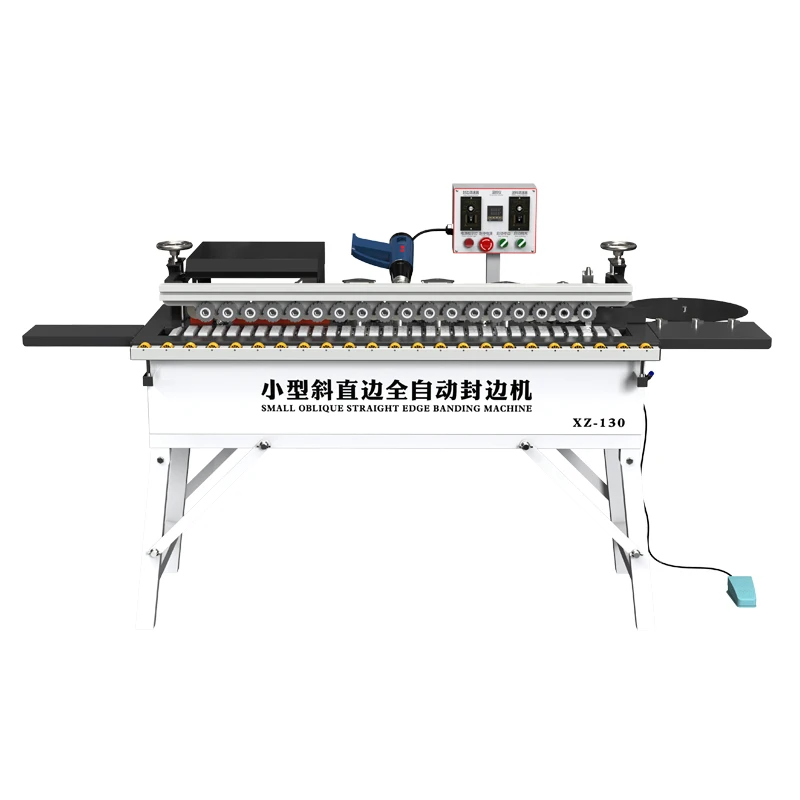
<p><strong>DW130 Multifunctional Edge Banding Machine, 220V, 2000ml Glue Pot</strong> — compact footprint at 139×52×61cm, 5–10 minute heating time, handles both oblique and straight edge profiles.</p> <ul> <li>Designed for joinery workshops moving from hand-applied banding to consistent machine output</li> <li>Single-phase 220V supply eliminates the need for industrial electrical upgrades</li> <li>Control panel in English standard; Spanish and other languages available on request</li> <li>Plug options include EU, USA, AU, and UK for direct workshop connection</li> </ul> <p>Engineer-led configuration ensures the machine matches your actual panel range and throughput — backed by four-stage QC with pre-shipment verification before dispatch.</p>
Compact Footprint — 139×52×61 cm chassis fits a one-person joinery shop without rearranging your existing workbenches.
| Parameter | Value |
|---|---|
| Model | DW130 |
| Product Type | Multifunctional Edge Banding Machine |
| Overall Dimensions (L×W×H) | 139 × 52 × 61 cm |
| Voltage | 220V |
| Glue Pot Capacity | 2000 ml |
| Heating Time | 5–10 min |
| Edge Type | Oblique / Straight |
| Language Options | Chinese and English standard; Spanish and others on request |
| Plug Options | EU, USA, AU, UK |
| Control System | To be confirmed (manual or digital panel) |
| Feed Speed | Basis to be confirmed |
| Panel Thickness Range | Basis to be confirmed |
| Panel Width Range | Basis to be confirmed |
| Trimming Stations | Basis to be confirmed |
| Rated Power | Basis to be confirmed |
| Net Weight | Basis to be confirmed |
| Air Supply Requirement | Basis to be confirmed |
| Dust Extraction Port | Basis to be confirmed |
| Certification | CE |
| Application | Material or Output |
|---|---|
| Small-batch custom cabinet edge banding | MDF, particleboard, and plywood panels |
| Joinery workshop straight and bevel edge finishing | PVC and melamine edge banding tape |
| Startup furniture maker panel preparation | Wood-based panel substrates in limited floor space |
| Repair and rework edge banding on returned units | Pre-cut panels requiring fresh glue application |
An edge banding machine for small workshop use only pays off when it matches your actual substrate and daily volume.
I have watched joinery shops buy entry-level edge banders based on footprint and price alone, then spend the first month fighting glue adhesion failures on denser substrates. The machine runs fine on low-density particleboard, but the moment you feed it 18 mm MDF the glue temperature drops mid-pass, the banding lifts on the trailing edge, and every panel needs a second pass or a hand-scrape. That is not a machine defect — it is a mismatch between the heater capacity and the thermal mass of the board you actually cut [NEED_CITE: thermal mass and glue pot recovery rate in small edge banders].
The DW130 runs on standard 220V single-phase power, which means most small workshops can plug it into an existing dedicated circuit without hiring an electrician to pull three-phase lines. For a joinery operation moving from hand-applied iron-on banding to machine-assisted output, eliminating the electrical upgrade removes one of the longest delays between order and first cut. You uncrate, fill the glue pot, and start edging panels the same week the crate arrives.
Straight and oblique edge profiles are both handled by this unit, so a cabinet maker producing a mix of square-edge shelving and beveled decorative panels does not need two separate machines. The changeover between straight and oblique feed paths is mechanical rather than software-driven, keeping setup time short when you switch jobs mid-morning. This dual capability is what makes the DW130 a practical edge banding machine for small workshop environments where floor space is already tight.
The 2000 ml glue pot paired with a 5–10 minute heating window shapes how you plan the first hour of a production day. A smaller pot recovers heat faster after each panel passes through, but it also means the operator needs to monitor glue level during longer runs to avoid a cold pass partway through a batch [NEED_CITE: glue viscosity and bond strength at varying pot temperatures]. For shops running fewer than fifty panels per session, the pot capacity covers the full job without a mid-run refill. The 5–10 minute warm-up is short enough that you can turn the machine on while you finish cutting the first stack, and still have hot glue ready when the panels reach the feed table.
The 139 cm overall length defines your minimum infeed and outfeed clearance — plan roughly one meter on each side so a full-size 2440 mm panel can be supported during the pass. The oblique edge setting adds a slight feed-angle offset, so your outfeed table should be adjustable rather than fixed.
Every small workshop owner has a stack of failed panels behind the machine — banding that peeled off after trimming, glue lines that telegraphed through thin melamine, or end-trim marks that require hand sanding before the panel can go to assembly. Most of these failures trace back to a single mismatch: the operator loaded a glue cartridge rated for low-temperature PVC onto a run of thick MDF, and the pot never recovered its set point between panels [NEED_CITE: common edge banding adhesion failure modes in small-scale production]. The machine itself was not broken. The configuration was wrong for the material, and nobody checked before the first panel went through.
In-house manufactured edge banding units with verified tolerance data leave the factory with a test record matched to your panel thickness range, not a generic certificate. Voltage and plug type are confirmed before the machine is wired at the factory, so a 220V unit ships with the correct plug for your market rather than an adapter in the toolbox. Multilingual control panels are configured before dispatch, eliminating the scenario where your operator stares at Chinese-only menus on day one. Single-unit orders are standard — no minimum order quantity pressure pushing you to buy a second machine before you have validated the first. A factory visit or sample processing test can be arranged before you commit, letting you see the machine run your own substrate.
Send your primary panel substrate type and the thickness range you run most often, along with the edge banding material you stock. Confirm your workshop voltage and plug type so the machine ships wired correctly. If you want to validate output quality before committing, request a sample processing test on your own panel offcuts.
Q: Can I order a single DW130 unit to test before committing to a larger purchase? A: Single-unit orders are accepted as standard. Many buyers start with one machine, run it on their actual panel stock for a few weeks, and then decide whether to add more units or move to a higher-tier model. A formal quotation including shipping to your destination is provided within 24 hours of your inquiry.
Q: What plug type and voltage will my machine actually ship with? A: The DW130 is built for 220V single-phase supply, and plug options include EU, USA, AU, and UK types. Your plug preference is confirmed during the quotation stage so the machine ships with the correct plug fitted — not an adapter packed separately in the crate.
Q: Is the control panel available in languages other than English? A: Chinese and English are standard. Spanish and other languages can be configured before the machine leaves the factory. Specify your operator's preferred language during the order process so the interface is ready on day one rather than requiring a post-delivery software change.
Q: What panel thickness and edge banding materials does the DW130 handle? A: The machine processes wood-based panels including MDF, particleboard, and plywood with PVC and melamine edge banding. Exact panel thickness and width ranges depend on the specific configuration — request the specification sheet to confirm the DW130 covers your most common panel sizes before ordering.
Q: How is the DW130 packed and shipped for safe arrival? A: The machine ships fully assembled or semi-knocked down depending on your destination and freight method. Packing photographs are taken before the crate is sealed, and customs documentation support is provided to smooth clearance at your port of entry.
Standard specifications are listed below. Custom configurations are available -- contact us for tailored solutions.
| Parameter | Value |
|---|---|
| Product Name | DW130 Multifunctional Edge Banding Machine | Entry Level |
| Category | Wood Based Panels Machinery, Woodworking Machinery |
| Certification | CE, ISO9001 |
| Voltage | 220V/380V (Customizable) |
| Warranty | 1 Year |
| After-Sales | Remote technical support, spare parts supply |
| OEM/ODM | Available -- logo, color, voltage, language |
| Delivery | Standard export packaging, worldwide shipping |
| MOQ | 1 Unit |
| Lead Time | 15-30 days (subject to order) |
* Specifications may vary by model. Contact our team for exact technical data sheets.
Fill in your details and we'll respond within 24 hours with pricing, specifications and customization options.
ZDSF210 Full Line High Speed Edge Banding Machine, 6m/min, 1500×570×630mm — compact footprint for joinery...
View Details
DW985 Soft Forming Edge Banding Machine, 380V, 16-Function Stations, 8–12 m/min — compact footprint with...
View Details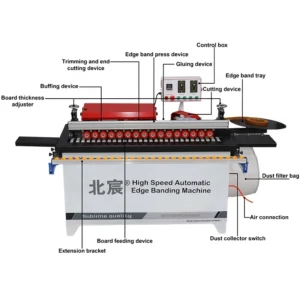
Products Description Portable Sealing Bander Made In China High Quality Automatic Edge Banding MachineDW802 Automatic...
View Details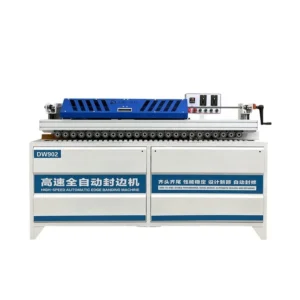
DW902 Automatic Edge Banding Machine, 220V, 3300W, 0–50mm Panel Thickness — gluing, trimming, end cutting,...
View Details