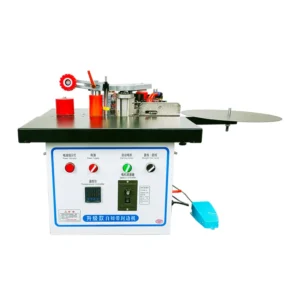
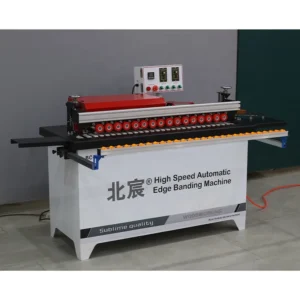
Ready-stock dispatch — Voltage and language confirmed in writing before the ST-70 leaves the factory, so a single-unit order arrives usable on day one.
Technical Specifications
| Parameter |
Value |
| Model |
ST-70 |
| Product Type |
Handheld Edge Bander |
| Total Power |
1000W |
| Edge Power |
20W |
| Voltage |
220V / 380V / customization |
| Air Source Pressure |
0.5–0.8 MPa |
| Glue Pot Capacity |
1000 ml |
| Edge Banding Height |
0–50 mm |
| Edge Banding Thickness |
0.3–3 mm |
| Minimum Sheet Length |
25 cm |
| Minimum Sheet Width |
3 cm |
| Assembly State |
Portable / Handheld |
| Product Size |
50 × 50 × 47 cm |
| Product Weight |
23 kg |
| Standard Features |
Curved and straight edge banding |
| Language Options |
Chinese and English (customizable to Spanish or other languages) |
Application Suitability
| Application |
Material or Output |
| Small cabinet workshop edge sealing |
MDF and particleboard panels up to 50 mm height |
| DIY furniture repair and home decoration |
Ecological board and plywood with PVC or veneer banding 0.3–3 mm thick |
| On-site curved panel finishing |
Solid wood board and shaped MDF components |
| Startup joinery workshop |
Small-batch production of custom shelves and cabinet doors |
Why the Voltage Question Must Come Before the Order
Confirming local voltage and frequency in writing eliminates the single most common reason portable edge banders sit idle after delivery.
Small workshops and one-person operations frequently source a Handheld Edge Bander in stock from overseas suppliers without verifying electrical compatibility. The machine arrives, the operator plugs it in, and the motor hums but the glue pot never reaches temperature. By then the seller has already shipped, and the cost of rewinding a motor or replacing a control board falls on the buyer. I have seen this exact scenario unfold at trade shows where buyers focused on the price tag and treated voltage as an afterthought [NEED_CITE: voltage and frequency standards by export market]. A quick exchange of your local supply details before payment prevents weeks of downtime.

A Workbench-Footprint Unit That Replaces Guesswork
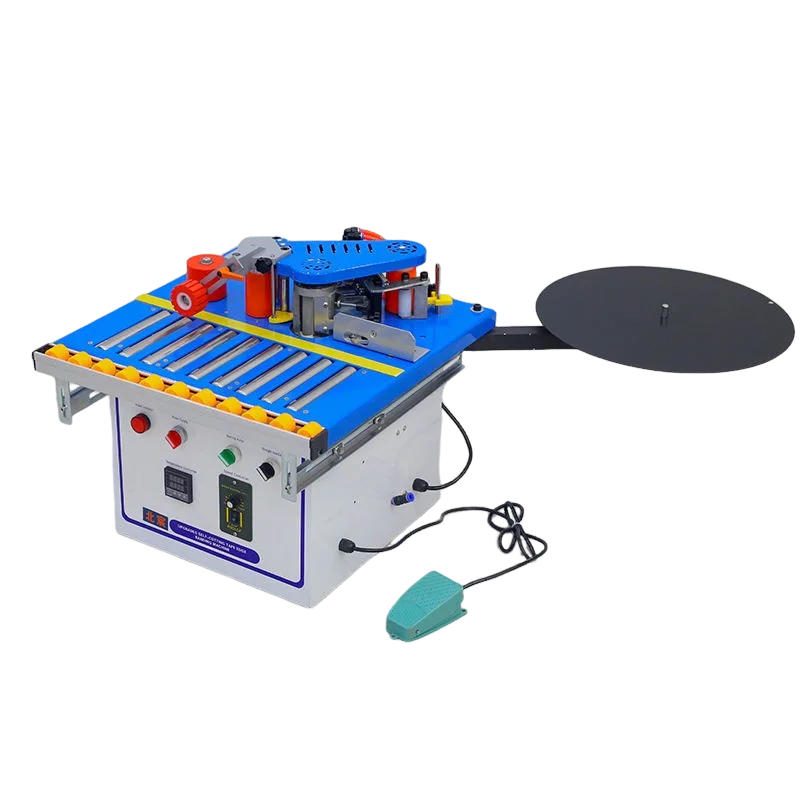
The ST-70 weighs 23 kg and measures 50 × 50 × 47 cm, meaning it occupies roughly the same bench space as a standard mitre saw. For a joinery startup moving from manual edge banding to machine-assisted sealing, this Handheld Edge Bander in stock removes the need to allocate floor space or pour a dedicated foundation. You unbox it, connect your air supply at 0.5–0.8 MPa, and begin sealing edges the same afternoon.
Curved and Straight Edges Without a Second Machine
Full-size automatic banders handle straight panels well but cannot follow a radius. The ST-70 covers both curved and straight profiles in one handheld pass, with an edge banding height range of 0–50 mm and thickness range of 0.3–3 mm. This flexibility matters for custom furniture repair shops that encounter arched cabinet doors, rounded shelving, and shaped solid-wood components throughout a typical workday.
Reading the Spec Sheet Against Your Actual Panels
The 1000W total power rating splits between the feed mechanism and a 20W edge trimming unit, which is adequate for intermittent small-batch work but not for continuous eight-hour shifts. The 1000 ml glue pot holds enough hot melt adhesive for a morning of panel work before requiring a refill, reducing interruptions during short production runs. The minimum sheet dimensions — 25 cm length and 3 cm width — define the smallest offcut this unit can handle, which is useful to know if your workshop produces narrow drawer fronts or small decorative strips. Selecting the correct hot melt glue type for your specific PVC or veneer thickness directly affects bond strength, and I always recommend running a test piece before committing to a full batch [NEED_CITE: hot melt adhesive compatibility with PVC and veneer substrates].
The Hidden Cost of Skipping Material Verification
I once set up a compact bander for a small workshop that had purchased PVC banding from a local hardware supplier without checking thickness tolerance. The material measured closer to 3.5 mm against a machine rated for 0.3–3 mm, causing uneven glue penetration and immediate delamination on curved sections. Two hours of adjusting the temperature curve and sourcing compliant banding later, the machine performed correctly — but the workshop had already lost a day of production. Asking your banding supplier for a caliper measurement before you order the machine avoids this entirely [NEED_CITE: edge banding material thickness tolerance standards].
Why Sourcing This Unit Here Makes Sense
Voltage and frequency are confirmed in writing against your local supply before dispatch, so the ST-70 arrives ready to run rather than requiring a transformer. The operation manual ships in your agreed language, whether that is English, Spanish, or another option, which removes the commissioning delay caused by an unreadable control panel. Pre-shipment testing covers your specific panel thickness and banding material, with photographs of the packed unit included in the documentation set. Single-unit orders ship without minimum quantity barriers, letting you trial the machine in your workshop before committing to additional units. A formal quotation with confirmed specifications reaches you within one working day of your inquiry.
Documentation & Verification
- Factory test record on your specific panel thickness and banding material before dispatch
- Electrical schematic with confirmed voltage and frequency matching your local supply
- Operation and maintenance manual in your agreed language with safety procedures
- CE declaration of conformity covering machinery directive requirements
- Packing photographs showing crate condition and accessory placement before shipment
Installation, Commissioning & Support
- Place the 23 kg unit on a stable workbench with at least 50 cm clearance on all sides for operator movement
- Connect to a dedicated circuit matching your confirmed 220V or 380V supply with appropriate breaker rating
- Supply clean, dry compressed air at 0.5–0.8 MPa through a filtered regulator to protect the glue feed system
- Run a test panel at your working thickness to set the 1000 ml glue pot temperature before full production
- Clean the glue pot and roller after each session to prevent hot melt residue hardening inside the chamber
What to Include in Your Inquiry
Send your typical panel material, edge banding type and measured thickness, and the voltage and frequency at your workshop so we can confirm electrical compatibility before quoting. If your production involves curved profiles, share the smallest radius you need to seal and we will advise whether the ST-70 covers your geometry. For language preferences on the control panel and manual, state your requirement at inquiry stage so the correct version ships with the machine.
Frequently Asked Questions
Q: What voltage options are available and how is compatibility confirmed before shipping?
A: The ST-70 supports 220V, 380V, and custom voltage configurations. Before we dispatch your order, we collect your local supply voltage and frequency in writing and confirm them on the electrical schematic. This step ensures the glue pot heater and drive motor operate correctly on arrival without requiring an external transformer or motor rewind.
Q: Can this handheld bander handle both curved and straight panel edges?
A: Yes, the ST-70 is designed for both curved and straight edge profiles in a single handheld pass. The operator guides the unit along the panel contour, and the roller-feed mechanism maintains consistent banding pressure. This dual capability suits workshops that handle arched cabinet doors and shaped shelving alongside standard rectangular panels.
Q: What edge banding thickness and height range does the ST-70 support?
A: The unit accommodates banding thickness from 0.3 mm to 3 mm and edge heights from 0 to 50 mm. These ranges cover standard PVC, ABS, and veneer banding materials used in furniture repair and small-batch cabinet work. Always verify your banding supplier's actual thickness tolerance before ordering to ensure compatibility.
Q: How do I order a single unit and what is the dispatch process?
A: Single-unit orders are accepted without minimum quantity requirements. After you confirm voltage, language preference, and panel specifications, we issue a formal quotation. Once the order is placed, the unit undergoes pre-shipment testing with your material parameters, is photographed during packing, and is dispatched through your chosen shipping method.