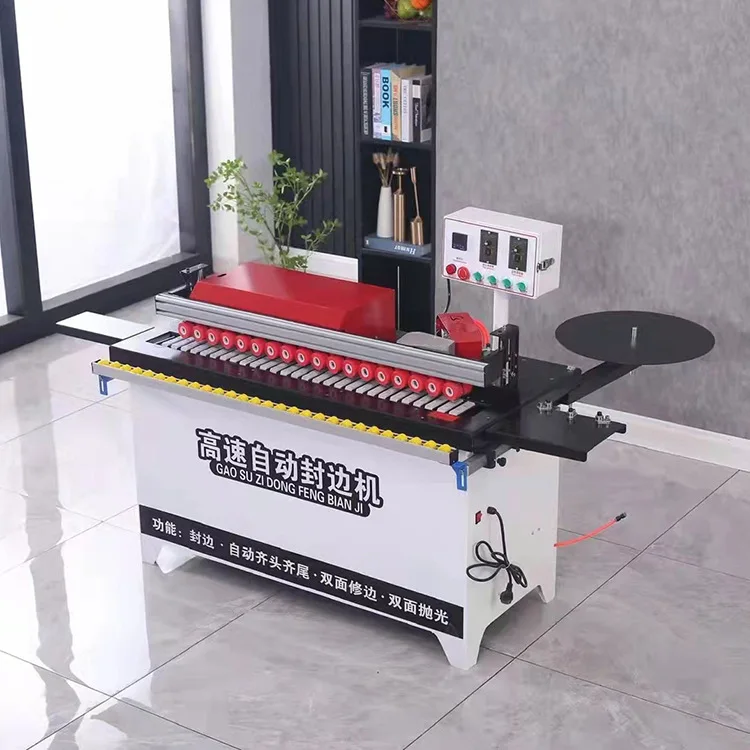
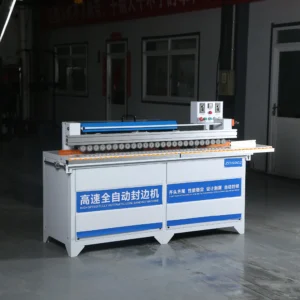
Voltage-Verified Dispatch — Every 802 automatic edge banding machine leaves the floor with electrical parameters matched to your local grid, not a generic factory setting.
Technical Specifications
| Parameter |
Value |
| Model |
802 |
| Product Type |
Automatic Edge Banding Machine |
| Function Sequence |
Automatic plate feeding, end cutting, trimming, polishing |
| Edge Profile |
Straight line |
| Rated Voltage |
220V (configurable from 110V to 440V on request) |
| Rated Power |
4 kW |
| Feed Speed |
0–10 m/min |
| Sheet Thickness Range |
10–50 mm |
| Strip Thickness Range |
0.5–2.5 mm |
| Trimming Power |
800 W × 2 |
| Polishing Power |
180 W × 2 |
| Glue Pot Capacity |
4000 ml |
| Heating Power |
1000 W (5–10 min heat-up) |
| Suction Power |
1200 W |
| Rated Air Pressure |
0.4–0.6 MPa |
| Pressure Beam |
One-piece integrated, double rows of pressure wheels |
| Conveyor Belt Material |
Silicone |
| Belt Breaking Method |
Pneumatically controlled |
| Overall Dimensions (L×W×H) |
130 × 65 × 75 cm |
| Machine Weight |
150 kg |
| Control Panel |
Digital display of glue pot temperature, independent switches |
| Assembly State |
Partially assembled (some on-site assembly required) |
| Dust Extraction |
Integrated 1200 W suction unit |
Application Suitability
| Application |
Material or Output |
| Small custom cabinet shops |
MDF and particleboard panels with PVC edge banding |
| Joinery workshops upgrading from manual methods |
Plywood and melamine-faced boards, straight-line edges |
| On-site fitting and installation crews |
Compact panels requiring portable, 220V-compatible edge finishing |
| Startup furniture makers |
Low to medium daily volumes of straight-edged cabinet doors and shelving |
Why the Voltage Question Must Come Before the Order
Confirming your local voltage and frequency before production prevents a machine that arrives as dead weight on the workshop floor.
I have watched small workshops wait weeks for an automatic edge banding machine in stock, only to discover the motor was wound for a grid that does not exist in their region. The 802 runs on a 220V supply as standard, but shops in parts of Southeast Asia, South America, and Africa operate on entirely different configurations. A 4 kW motor rewound after delivery costs more than getting it right at the factory [NEED_CITE: voltage and frequency standards by export market]. We confirm your exact electrical specifications during the quotation stage, not after the crate is sealed.

What Ready Stock Actually Means for Your Schedule
A fast delivery edge banding machine only saves time if it ships configured for your facility. The 802 sits in the warehouse with its core mechanical assemblies completed, meaning the feed chain, trimming stations, and polishing heads are already aligned and tested. When your order specifies a non-standard voltage or a particular control panel language, those adjustments happen before the machine is crated — not after it arrives and your electrician starts pulling wires apart.
The Compact Footprint Advantage for Tight Workshops
At 130 × 65 × 75 cm and 150 kg, the 802 fits through standard doorways and onto existing workbenches without requiring a dedicated foundation or floor anchors. Small joinery shops running automatic edge banding machine in stock configurations often share floor space with table saws and drilling stations. The integrated 1200 W dust collector eliminates the need for a separate extraction unit, keeping the surrounding area clear for material staging and offcut handling.
How Glue Pot Size and Feed Speed Shape Your Daily Output
The 4000 ml glue pot on the 802 holds enough adhesive for extended runs before requiring a refill, reducing interruptions during a batch of cabinet doors. With a 1000 W heating element reaching operating temperature in roughly 5 to 10 minutes, the morning start-up delay stays short. The 0–10 m/min variable feed speed lets operators slow down for thick PVC strips on MDF and speed up for thinner veneer on particleboard, matching the pace to the material rather than forcing every panel through at one fixed rate. The double-row pressure wheels on the one-piece integrated beam hold panels flat against the silicone conveyor, which matters when sealing thin 10 mm sheets that tend to lift at the trailing edge [NEED_CITE: panel feed stability on compact edge banders].
The Cost of Skipping Material Verification
A workshop that buys an entry-level edge bander without specifying the actual strip material often discovers the problem mid-production. Recycled PVC melts at different temperatures than virgin stock, and a glue pot set for one type will either starve the joint or push excess adhesive onto the panel face. The 802's digital temperature display gives operators direct feedback, but only if the correct baseline temperature was established during the first test run. When this step gets skipped, entire batches of cabinet doors return with bubbling or delaminated edges [NEED_CITE: common edge banding adhesion failures on recycled PVC].
Why Source This Model Through a Stock-Focused Channel
Every 802 is dispatched with a factory test record specific to the panel thickness and strip material you nominated, not a generic pass stamp. Voltage and frequency are confirmed in writing before production begins, so the motor and heating elements match your grid. The four-stage quality check covers incoming components, in-process assembly, finished function, and a pre-shipment run that you can witness via video call. Control panel language is set to your operator's preference before crating. Spare parts lists ship with the machine, and the integrated dust collector means fewer auxiliary components to source locally.
Documentation & Verification
- CE declaration of conformity covering the 802's electrical and mechanical safety systems
- Factory test record using your specified panel thickness and PVC strip material
- Electrical schematic with confirmed voltage and frequency for your local grid
- Operation and maintenance manual written in your operator's preferred language
- Spare parts list identifying trim blades, polishing wheels, and silicone belt sections
Installation, Commissioning & Support
- Requires a dedicated 220V circuit rated for at least 4 kW continuous draw with proper grounding
- Arrives partially assembled; pressure beam alignment and conveyor tensioning completed on-site
- Digital glue pot display calibrated during first heat cycle to match your specific adhesive type
- Pneumatic belt breaker tested against your shop's compressed air supply at 0.4–0.6 MPa
- Integrated 1200 W dust collector wired internally, no external ductwork needed
- First production run supervised remotely with video guidance on feed speed and trimming depth
What to Include in Your Inquiry
Send the exact panel materials and thicknesses you work with daily, along with the PVC or veneer strip specifications your suppliers provide. Confirm your workshop's available voltage, phase configuration, and whether your compressed air system can sustain the required 0.4–0.6 MPa. If you have existing upstream saws or downstream boring stations, note their feed heights so we can verify compatibility with the 802's conveyor line.
Frequently Asked Questions
Q: Does the 802 support the voltage standard in my country?
A: The standard configuration is 220V, but the motor and heating elements can be wound for voltages from 110V to 440V. We confirm your exact local voltage and frequency during the quotation process and document the specification before production. This prevents the common problem of machines arriving with incompatible electrical systems that require costly on-site rewinding.
Q: How many panels can I edge before refilling the 4000 ml glue pot?
A: The exact count depends on your strip width, panel perimeter, and adhesive type. For standard 18 mm MDF cabinet doors with 0.8 mm PVC banding, operators typically complete a substantial batch before needing a refill. The digital temperature display lets you monitor adhesive level indirectly through thermal stability during continuous operation.
Q: What assembly is required when the machine arrives?
A: The 802 ships partially assembled with core mechanical stations pre-aligned. On-site work includes mounting the pressure beam, tensioning the silicone conveyor belt, and connecting your compressed air supply to the pneumatic belt breaker. We provide video-guided commissioning so your technician can complete setup without a specialist visit.
Q: Which strip and panel materials can this machine handle?
A: The 802 processes straight-line edges on panels from 10 to 50 mm thick, including MDF, particleboard, and plywood. Strip thickness ranges from 0.5 to 2.5 mm, covering standard PVC, ABS, and melamine edging. If you use recycled PVC or specialty veneers, tell us during the inquiry so we can set the correct glue temperature baseline.
Q: How quickly does the machine dispatch after I place an order?
A: Stock units with standard 220V configuration and default language panels can ship within a short lead time. Orders requiring voltage changes, custom control panel language, or specific test runs with your material add a brief preparation period. We confirm the exact dispatch date in your formal quotation within 24 hours of receiving your specifications.