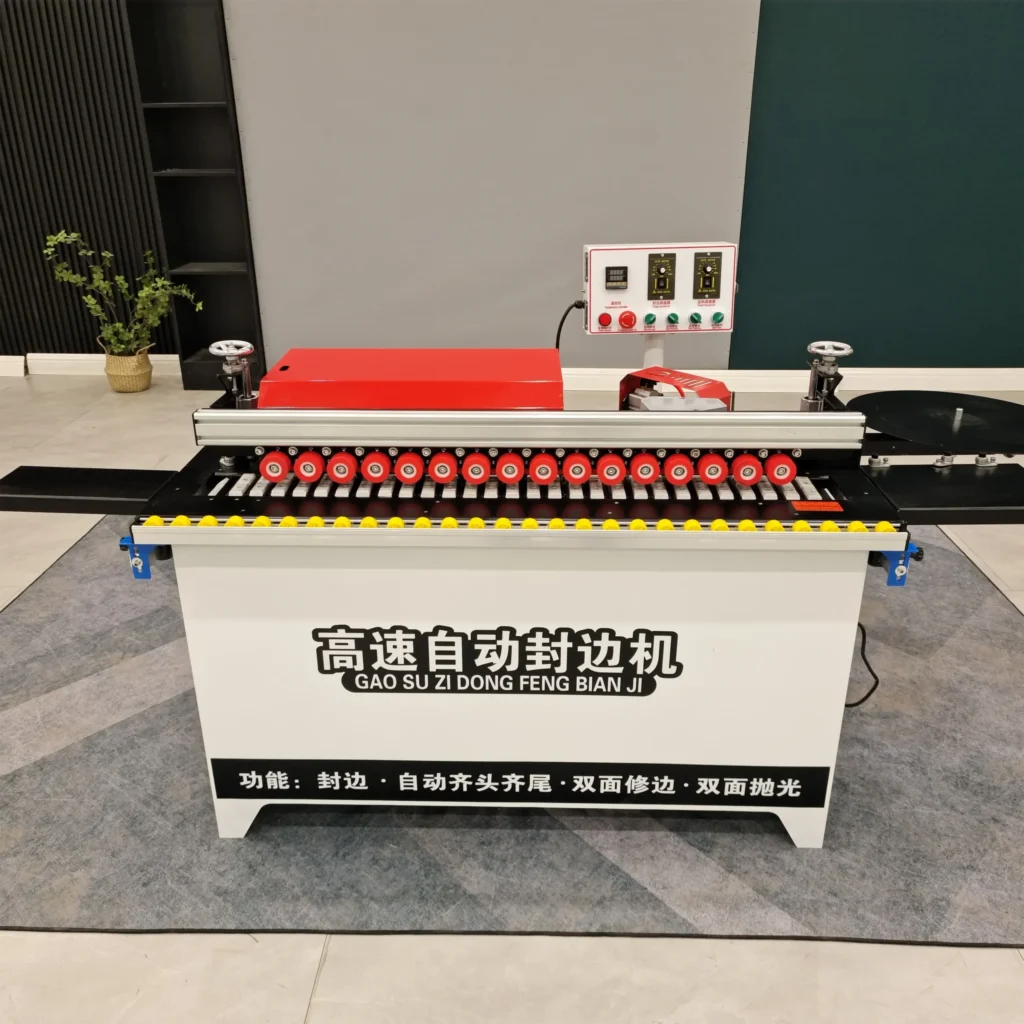
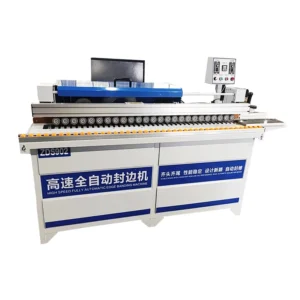
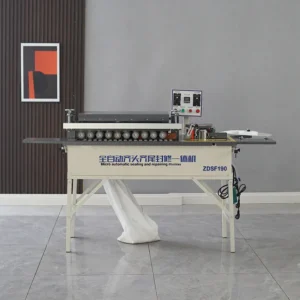
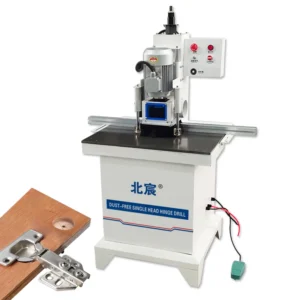
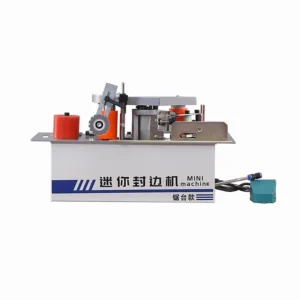
Compact Footprint, Full Function — the ZDSF802 packs gluing, trimming, and buffing into a 190×60×130cm frame, letting a small workshop floor handle complete edge finishing without a production-line footprint.
Technical Specifications
| Parameter |
Value |
| Model |
ZDSF802 |
| Product Type |
Automatic Edge Banding Machine |
| Function Sequence |
Gluing, End cutting, Trimming, Vacuuming, Buffing |
| Rated Voltage |
220V |
| Rated Power |
4 kW |
| Feed Speed |
0–7 m/min (basis to be confirmed) |
| Strip Thickness Range |
0.5–2.5 mm |
| Panel Thickness Range |
10–50 mm |
| Glue Pot Capacity |
4000 ml |
| Trimming Configuration |
Double high-speed motors, up-and-down trimming |
| Buffing Configuration |
Up-and-down two polishing motors |
| Pressure Beam |
Integrated, double rows of pressure wheels |
| Conveyor Belt Material |
Silicone |
| Belt Breaking Method |
Pneumatically controlled |
| Extension Support |
Extendable fluent strips for large plates |
| Machine Weight |
150 kg |
| Overall Dimensions |
190×60×130 cm |
Application Suitability
| Application |
Material or Output |
| Custom cabinet door edging |
MDF and melamine board with 0.5–2.0 mm PVC strips |
| Small-batch shelving production |
Particleboard panels 16–25 mm thick |
| Joinery workshop panel finishing |
Plywood and blockboard up to 50 mm |
| Furniture startup prototyping |
Solid wood panels with thin veneer banding |
Why Voltage Should Be the First Question You Ask
Confirming local electrical standards before ordering avoids a three-week production standstill.
I learned this the hard way when a cabinet factory in Vietnam received an edge bander configured for 380V, only to find their 220V/60Hz supply couldn't drive the motor. Production sat idle for weeks while they sourced a transformer. [NEED_CITE: voltage and frequency standards by export market] When a small workshop invests in its first automatic edge banding machine for small workshop use, the electrical mismatch is often the last thing on the buyer's mind — yet it is the single most common cause of delayed commissioning. The ZDSF802 lists a rated voltage of 220V, but frequency and phase must also match your local grid before the crate leaves the factory.

What a Joinery Startup Actually Needs on Day One
Moving from hand-held edge trimming to a powered machine is a big step. The ZDSF802 covers the full sequence — gluing, end cutting, rough and fine trimming, vacuuming, and buffing — in one pass. For a workshop that has been applying edge banding manually, this means the operator loads a panel at one end and receives a finished piece at the other, without switching stations or tools.
Stocked for Fast Dispatch, Not Built-to-Order Delays
Small workshops rarely have the luxury of waiting months for a machine. The emphasis here is on availability: models in this class are kept ready for dispatch so that once your electrical specs and language requirements are confirmed, the unit can ship without a lengthy production queue. You get a compact automatic edge banding machine for small workshop floors that arrives when your operator is ready to learn it, not when the factory schedule finally opens up.
Reading the Numbers That Matter
The 0.5–2.5 mm strip thickness range covers most PVC and veneer materials a joinery shop encounters daily. Panel thickness from 10 to 50 mm means you can run thin drawer sides and thick shelving on the same machine without reconfiguration. [NEED_CITE: panel thickness range and feed speed relationship in edge banding] The double high-speed trimming motors work in an up-and-down action, removing excess material from both edges simultaneously — this is what separates a clean, assembly-ready edge from one that still needs hand sanding. Glue pot capacity at 4000 ml reduces refill interruptions during longer runs, while the silicone conveyor belt grips panels without marking melamine surfaces. Pneumatically controlled belt breaking gives a clean strip cutoff without operator intervention, and the extendable fluent strips support large panels that would otherwise sag past the working zone.
The Cost of Skipping Configuration Checks
A machine that arrives with the wrong voltage sits idle. A control panel in a language the operator cannot read stalls commissioning entirely. Panels processed at a feed speed too high for the glue temperature result in visible glue lines and edge lifting during assembly. [NEED_CITE: CE machinery directive requirements for industrial equipment] These are not theoretical problems — they are the routine consequences of ordering an automatic edge banding machine for small workshop environments without confirming specs against actual shop conditions first.
Why Source This Machine Here
In-house manufacturing with patented cutting mechanisms means tolerance claims are verifiable, not just stated on a brochure. Voltage, control panel language, and specification customization are handled as standard steps in the quotation, not as expensive afterthoughts. The full range from entry-level to full-function within one product family lets a workshop scale throughput later without changing suppliers. A four-stage quality control process with pre-shipment verification catches electrical and mechanical issues before the crate is sealed. Engineer-led configuration recommendations arrive within 24 hours of your inquiry, so you are never guessing whether the machine fits your panel sizes.
Documentation & Verification
- CE declaration of conformity tied to this edge bander model
- Electrical schematic confirming 220V and frequency match your supply
- Factory test record on your specific panel thickness and strip material
- Operation manual in the language your operator reads
- Spare parts list with part numbers for trimming and polishing motors
Installation, Commissioning & Support
- Requires a dedicated circuit matching 4 kW at 220V with correct frequency
- Arrives KD-packed; user manual and video guide cover assembly steps
- Pneumatic belt breaking needs a 0.6–0.8 MPa compressed air supply
- Digital glue pot display calibrated during first startup with your strip material
- Extendable fluent strips adjusted to your largest panel dimensions on site
Before You Send an Inquiry
Tell us your typical panel material, thickness range, and the edge strip type you run most often. Confirm your workshop's voltage, phase, and frequency so we match the motor before building. Let us know the language your operator needs on the control panel, and whether you want a sample processing test on your own substrate before shipment.
Frequently Asked Questions
Q: How do I know the ZDSF802 can handle my daily panel volume?
A: Share your average daily panel count and dimensions with our engineering team. We will map your throughput against the machine's feed speed range and confirm whether this model covers your requirement or if a higher-tier unit is more appropriate. The goal is to match capacity to actual workload, not to guess.
Q: What voltage options exist and how do you confirm compatibility?
A: Voltage from 110V to 440V is configurable. Before any order is finalized, we request your local supply details including frequency and phase, then issue a formal voltage confirmation document. This ensures the motor and control system match your grid exactly when the machine arrives.
Q: Can the control panel language match my operator's needs?
A: Yes. Multilingual control panels are available as part of the standard customization process. Specify the language during the inquiry stage so the digital display, switch labels, and error messages are set before the machine ships to your workshop.
Q: How much assembly is needed when the machine arrives?
A: The ZDSF802 ships KD-packed or partially assembled depending on configuration. A user manual and instructional video cover every assembly step. The 150 kg weight and 190×60×130 cm dimensions mean two people can position and set up the unit on a standard workshop floor.
Q: What spare parts come with the machine and how are replacements sourced?
A: A spare parts list is included in the documentation package, covering wear items for trimming motors, polishing wheels, and the conveyor belt. Replacements can be ordered directly using the part numbers provided, and we support ongoing supply beyond the warranty period.