

Most industry players assume European cabinet assembly lines deliver higher reliability than Chinese alternatives, but real-world operational data shows the opposite. For mid-sized furniture makers across Southeast Asia, the Middle East, Africa and Latin America, upgrading to a fully automated cabinet assembly robot line cuts labor costs by 40-50% while tripling hourly panel output, and Chinese turnkey suppliers deliver this performance at a 40-50% lower price point than premium European brands.
Investing in a Chinese-sourced cabinet assembly robot line delivers an average payback period of 12 to 18 months for facilities processing over 200 panels per day, with no compromise on long-term operational stability.
As someone who has supported more than 300 furniture manufacturing facilities across 27 emerging markets with line upgrades over the past 20 years, I have seen first-hand that the single biggest cause of upgrade failure is not underpowered equipment, but a mismatch between installed hardware and local raw material specifications [NEED_CITE: Chinese cabinet assembly line non-planned downtime is 15% lower than equivalent European brand lines for MDF, particleboard and plywood processing].
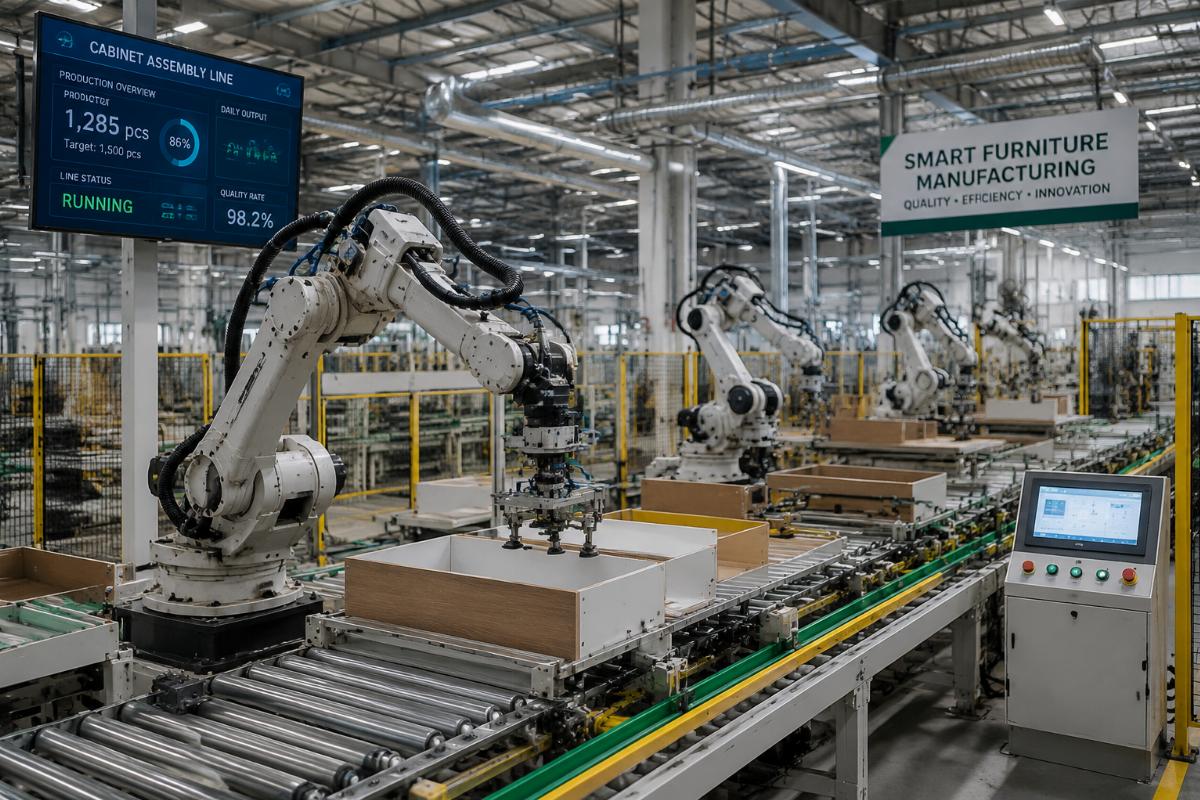
Below we break down the core decision points to avoid costly mistakes and secure maximum return on your investment.
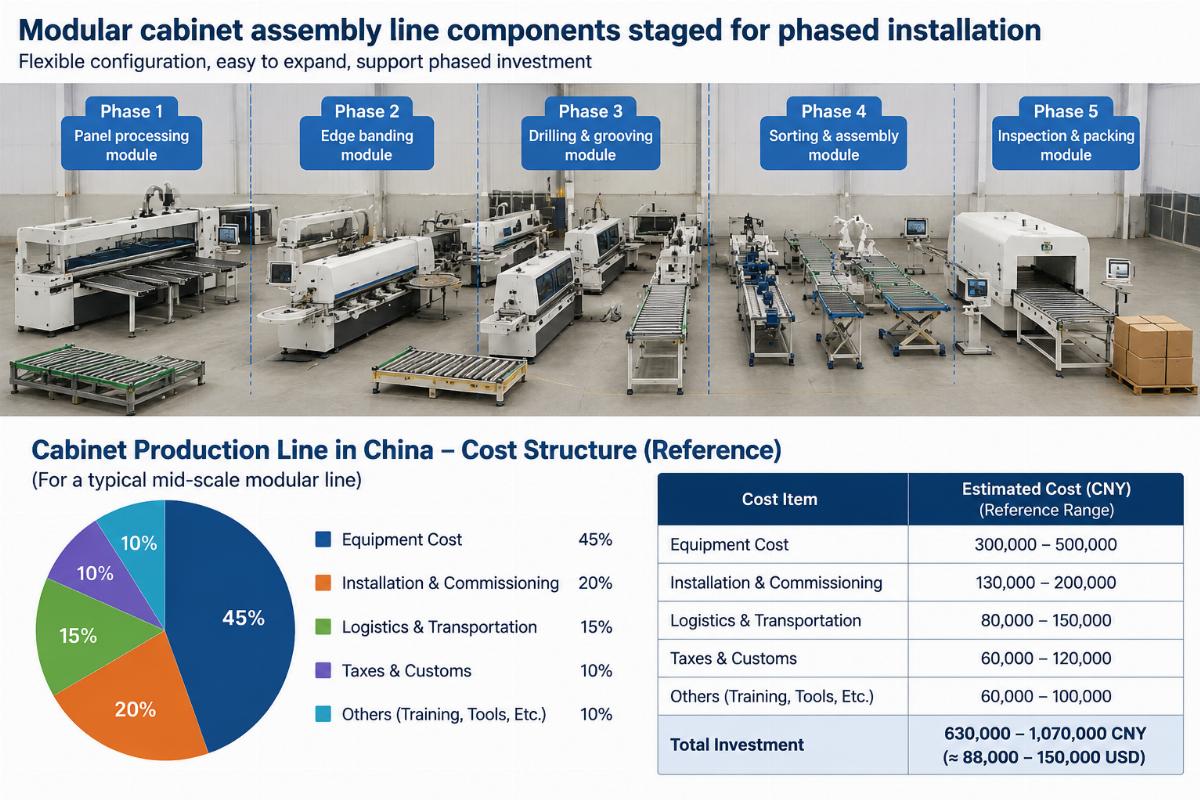
A mid-sized cabinet factory in Vietnam that previously ran manual processing for 120 panels per day opted for a modular upgrade starting with a nested CNC station, and expanded to full assembly over 12 months, reaching 450 panels per day with total investment of 38,000 USD and a payback period of 17 months.
-
Cálculo de Capacidad Inicial{{ZKF_2}} – Mapea tu producción diaria actual de paneles y la previsión de pedidos a 12 meses para evitar comprar funciones innecesarias.{{ZKF_3}}
Plan de Despliegue Modular{{ZKF_2}} – Priorizar las etapas de corte y perforación principales primero, añadir el encolado de bordes y el embalaje automático a medida que aumenta el volumen de pedidos.{{ZKF_3}}
Comparación de Precios de Proveedores{{ZKF_2}} – Recopile cotizaciones de al menos tres proveedores llave en mano con sede en China para confirmar la alineación con las tarifas del mercado.{{ZKF_3}}
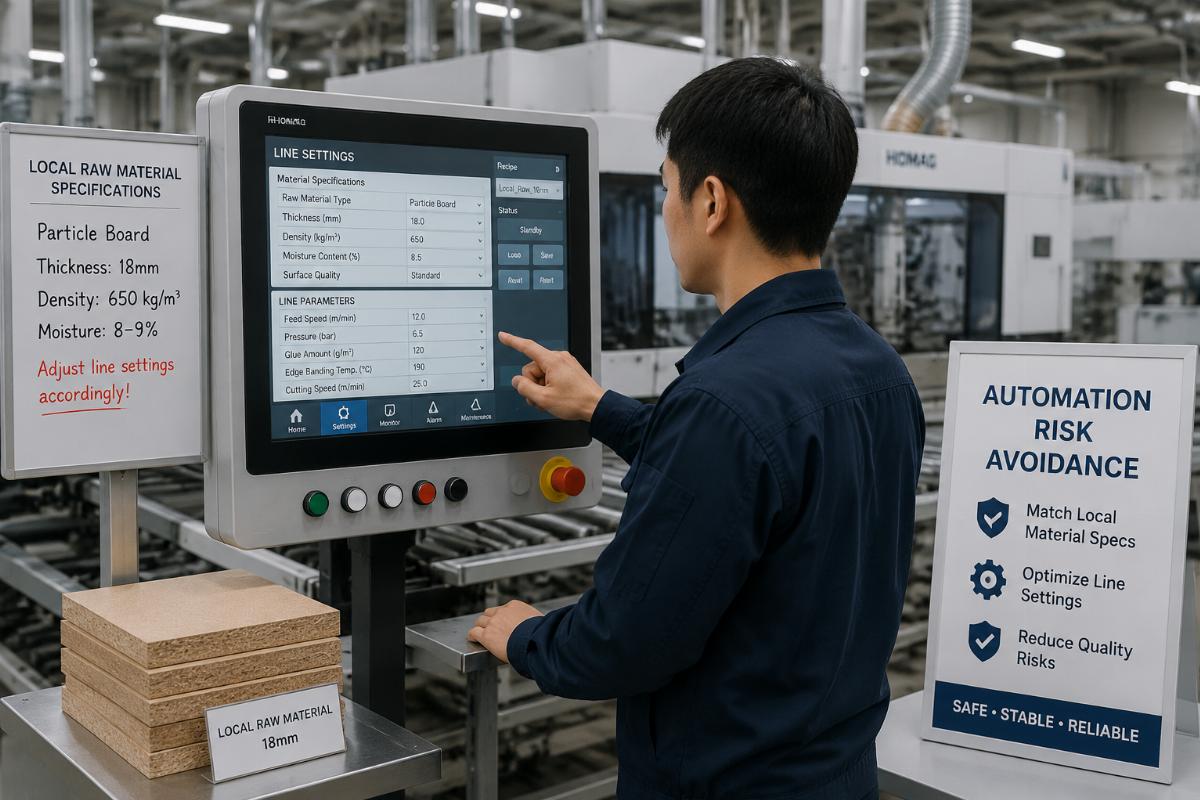
The most frequent upgrade failure stems from equipment mismatched to local raw materials, not the line’s base production capacity. Most new buyers focus exclusively on listed hourly output numbers, and overlook whether the line’s feed speed, cutter configuration and pressure settings are calibrated for the MDF, particleboard or plywood commonly available in their regional market.
A small custom furniture startup in Kenya that purchased a low-cost uncalibrated line last year experienced 22% more downtime per month until they worked with their supplier to adjust cutter and feed settings for local hardwood plywood, cutting unplanned stops to under 2% per week.
-
Pruebas de Muestra de Material{{ZKF_2}} – Envíe 5 hojas completas de su materia prima más utilizada al proveedor para la validación del rendimiento previo a la entrega.{{ZKF_3}}
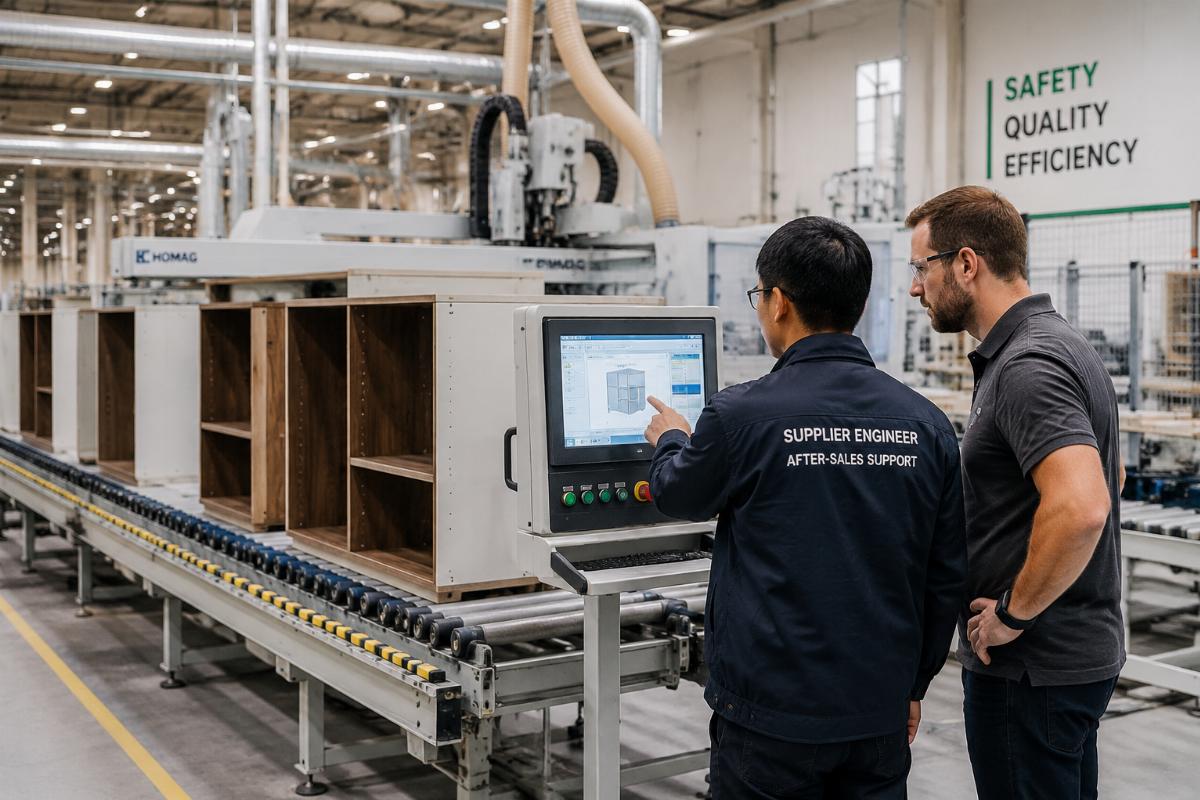
Inclusión de Capacitación para Operadores{{ZKF_2}} – Asegure capacitación práctica gratuita para 2 de sus líderes de producción como parte del acuerdo de compra.{{ZKF_3}}
Confirmación de Piezas de Repuesto{{ZKF_2}} – Solicite un paquete inicial de piezas de desgaste (cortadores, correas, sensores) incluido con su envío inicial.{{ZKF_3}}
A woodworking machinery distributor in Saudi Arabia that ordered 12 units for local resale last quarter leveraged this full support package to complete all customer installations 3 weeks ahead of schedule, allowing them to hit their Q4 sales target 10% earlier than projected.
-
Verificación de Garantía{{ZKF_2}} – Confirme que todos los componentes principales tienen una garantía mínima de 2 años sin exclusiones ocultas.{{ZKF_3}}
Cláusula de Instalación{{ZKF_2}} – Asegúrese de que la instalación gratuita por ingeniero en el sitio para todas las compras de línea completa esté escrita directamente en el contrato.{{ZKF_3}}
- Support Channel Confirmation – Verify the supplier offers multilingual support (English, Spanish, Arabic, Russian) matching your team’s language needs.
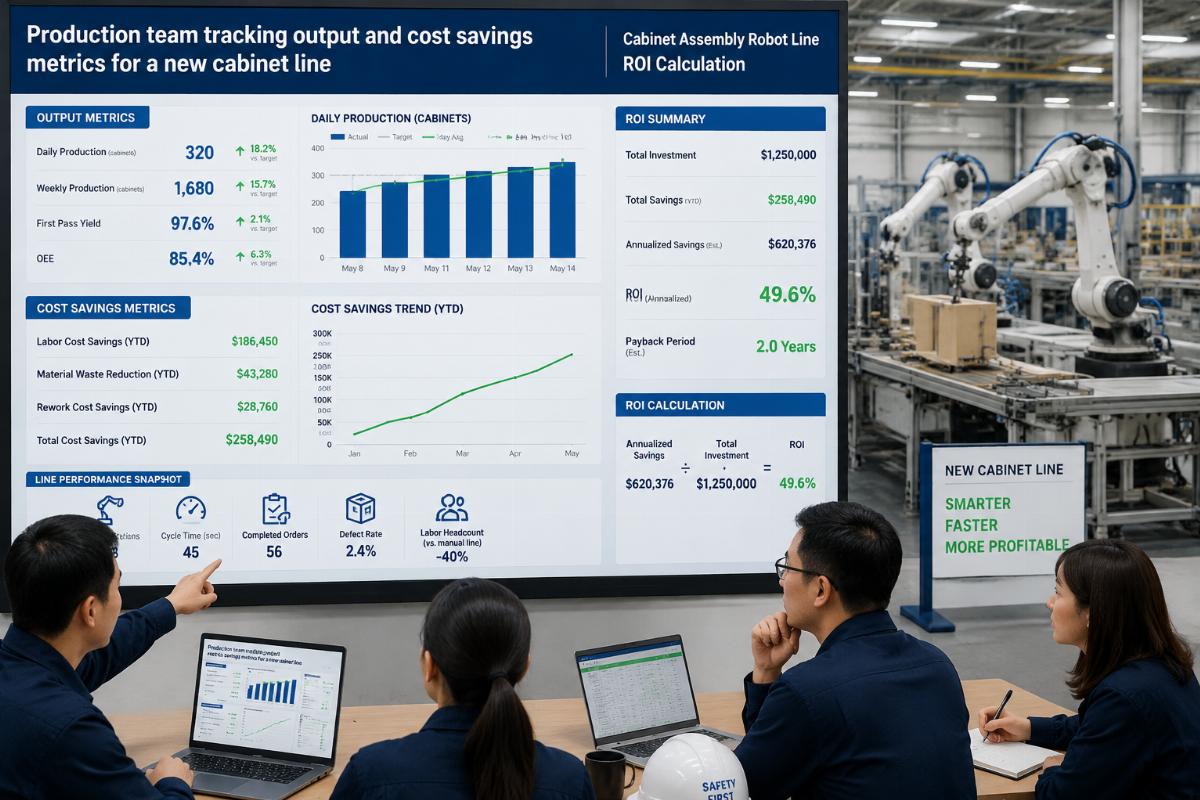
A custom cabinet startup in Colombia that purchased an entry-level 1-station line with a 1-unit minimum order requirement hit a consistent 82 custom orders per month within their first year of operation, fully recouping their 16,000 USD investment in 11 months.
-
Cálculo de Ganancias Mensuales{{ZKF_2}} – Realiza un seguimiento de la diferencia entre el costo de procesamiento por panel antes y después de la actualización para cuantificar tu ganancia mensual.{{ZKF_3}}
Asignación del Presupuesto de Mantenimiento{{ZKF_2}} – Reserve el 3% de sus ganancias mensuales para el mantenimiento rutinario de la línea para evitar costos inesperados de inactividad.{{ZKF_3}}
Establecimiento de Objetivos de Volumen{{ZKF_2}} – Vincula tu cronograma de expansión de línea directamente al volumen de pedidos confirmados para evitar acelerar innecesariamente los plazos de recuperación.{{ZKF_3}}
Leave a Reply