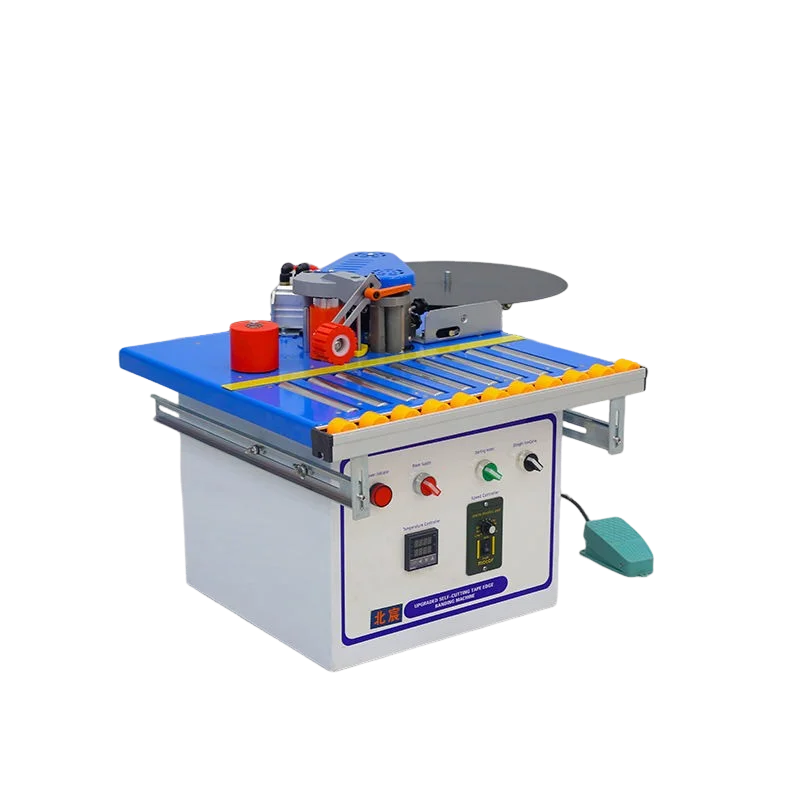
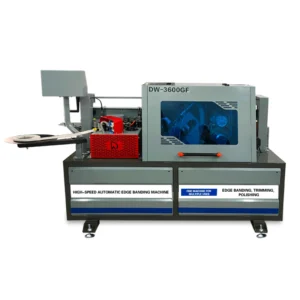
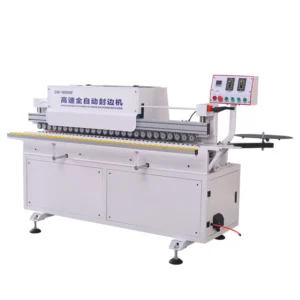
Benchtop-ready dispatch — every ST-70 is configured for your local voltage, frequency, and plug standard before it leaves the factory, so it runs the day it arrives.
Technical Specifications
| Parameter |
Value |
| Model |
ST-70 |
| Product Type |
Portable Edge Bander |
| Total Power |
1000 W |
| Voltage & Frequency |
220 V / 380 V / customization (frequency to be confirmed at order) |
| Edge Banding Capability |
Curved and straight edges |
| Minimum Sheet Length |
25 cm |
| Minimum Sheet Width |
3 cm |
| Edge Banding Height |
0–50 mm |
| Edge Banding Thickness |
0.3–3 mm |
| Feed Speed |
0–8 m/min |
| Edge Power |
20 W |
| Air Source Pressure |
0.5–0.8 MPa |
| Machine Size (L×W×H) |
50 × 50 × 47 cm |
| Net Weight |
23 kg |
| Glue Pot Capacity |
1000 ml |
| Assembly State |
Portable / benchtop |
| Language Options |
Chinese and English standard; Spanish or other languages on request |
| Plug Options |
EU / USA / AU / UK |
| Standards |
CE, ISO 9001 |
Application Suitability
| Application |
Material or Output |
| Small cabinet shop edge sealing |
MDF and particleboard panels with PVC edge banding |
| Custom furniture workshop |
Plywood and ecological board with wood veneer banding |
| On-site furniture installation and repair |
Solid wood board with PVC or veneer strips on curved and straight edges |
| Joinery startup transitioning from manual work |
Mixed panel stock in low-to-medium batch runs |
| Home decoration production |
Compact panel components requiring benchtop edge finishing |
Why Voltage Confirmation Matters More Than the Quoted Price
Machines shipped without matching local power standards sit idle on the workshop floor until a transformer or rewiring job sorts it out.
I have watched small workshops lose entire commissioning weeks because a portable edge bander arrived with a 380 V motor in a shop that only had single-phase 220 V available. The fix is never as simple as swapping a plug — it involves motor rewinding, contactor changes, or returning the unit entirely [NEED_CITE: voltage and frequency standards by export market]. For a compact unit like this, the electrical mismatch is entirely avoidable when the configuration conversation happens at the inquiry stage rather than after the crate is opened. That is the reason we treat the portable edge bander in stock fast delivery process as incomplete until your exact supply voltage, frequency, and socket type are written into the build sheet.

Stocked Configuration, Configured Before Dispatch
Most workshops ordering a small benchtop unit expect to plug it in and start running panels within the same week. The ST-70 ships from stock in its base configuration, and the voltage, plug type, and control language are all confirmed and set before the crate closes. This keeps the portable edge bander in stock fast delivery promise realistic — the machine is physically available, and the customization window is measured in days rather than weeks [NEED_CITE: typical dispatch lead times for stocked woodworking machinery].
What a 23 kg Footprint Buys a Small Workshop
At 50 × 50 × 47 cm and 23 kg, this unit sits on a standard workbench and can be moved between job sites in a vehicle boot. For a joinery workshop running both curved cabinet fronts and straight shelving panels, having curved and straight edge banding in one portable unit eliminates the need for two separate machines or the compromise of hand-applied tape on curved sections. The 0.3–3 mm banding thickness range covers the PVC and wood veneer stocks that small cabinet makers order most frequently.
Reading the Specs That Actually Matter
The 0–50 mm edge banding height range covers the common panel thicknesses found in furniture and cabinet work — from thin 3 mm MDF backing panels up to 50 mm solid wood benchtops. Feed speed runs from 0 to 8 m/min, which gives the operator enough control to slow down on tight curves without burning the glue or stretching the banding. The 1000 ml glue pot holds enough adhesive for a full shift of intermittent work without constant refilling, and the 0.5–0.8 MPa air pressure requirement means any standard workshop compressor can supply the unit [NEED_CITE: compressed air requirements for portable edge banding equipment]. The 1000 W total power keeps the machine within standard single-phase circuit limits, so no dedicated three-phase supply is needed for a benchtop setup.
The Cost of Skipping the Material Test
One order I supervised went to a Southeast Asian cabinet workshop that ran both MDF and solid wood strips through the same glue pot temperature setting. The MDF edges sealed cleanly, but the solid wood strips bonded only on the surface — the adhesive had cooled too fast against the denser, cooler timber. The entire batch of door panels came back for rework. Since that job, I ask every buyer to send actual panel and banding samples before the machine ships, so the glue temperature, feed speed, and pressure can be dialed in on their exact material combination [NEED_CITE: edge banding adhesion failure causes on mixed substrates]. Skipping this step on a portable unit is especially costly because the operator has fewer adjustment stations than on a full automatic line, making the initial parameter setup the single most important variable.
Why Buyers Source This Unit Here
The ST-70 is built on the same production line as the full-size automatic edge banders, which means the glue pot, feed mechanism, and trimming components share the same supply chain and quality checkpoints. Voltage customization from 220 V to 380 V is standard, not a special-order request, and the correct plug is fitted at the factory. The four-stage quality check includes a pre-shipment test run on the buyer's specified panel material, with a written record included in the crate. Control panels ship in the agreed language so the operator can read the interface on day one. Engineer-led configuration happens within 24 hours of the initial inquiry, so the portable edge bander in stock fast delivery timeline stays intact from first message to dispatch.
Documentation & Verification
- CE declaration of conformity matching the ST-70 portable unit classification
- Voltage and frequency confirmation sheet signed against your local supply standard
- Factory test record on your specific panel thickness and banding material before dispatch
- Operation and maintenance manual in English, Spanish, or your requested language
- Spare parts list with part numbers for glue pot elements, feed rollers, and trimming blades
- Packing photographs taken at crating stage for customs and receiving inspection
Installation, Commissioning & Support
- Benchtop placement requires a flat, stable surface rated for 23 kg plus operational vibration
- Dedicated 1000 W circuit with correct amperage for your confirmed 220 V or 380 V supply
- Portable assembly means no foundation work — unbox, plug in, and connect air supply at 0.5–0.8 MPa
- First-run parameter setup covers glue pot temperature, feed speed, and pressure for your panel stock
- Operator training references the multilingual manual matched to your control panel language
- Spare parts kit covers high-wear items including glue pot heating elements and feed rollers
What to Share with Your Inquiry
Send your typical panel materials with thickness range, the edge banding type and width you run most often, and your workshop voltage and frequency so the unit is configured correctly before dispatch. If you are replacing a manual process, describe your current daily edge volume so the feed speed range can be matched to your throughput. Samples of your actual board and banding stock allow a pre-shipment test run that confirms glue adhesion before the machine ships.
Frequently Asked Questions
Q: Is this portable edge bander in stock and how fast can it ship to my country?
A: The ST-70 is held in stock as a base unit. Once your voltage, frequency, plug type, and control language are confirmed, the final configuration and pre-shipment test are completed before dispatch. Lead time from order to ship is measured in working days, not weeks, and shipping options are quoted at the order stage based on your destination port or address.
Q: How do I confirm the right voltage, frequency, and plug type before ordering?
A: Share your workshop supply voltage and frequency — typically found on your main distribution board or a recent utility bill — along with your country. The correct plug type (EU, USA, AU, or UK) is then matched and fitted at the factory. A written voltage and frequency confirmation document is included with every shipment so you can verify the match before connecting power.
Q: Can the control panel be supplied in English or my local language?
A: Chinese and English are standard on the ST-70 control interface. Spanish and other languages are available on request and confirmed at the order stage so the operator can read all settings, temperature displays, and feed speed indicators without translation delays during commissioning.
Q: What panel materials and edge banding types does the ST-70 handle?
A: The unit seals MDF, particleboard, solid wood board, ecological board, and plywood using PVC or wood veneer edge banding from 0.3 mm to 3 mm thick. The curved and straight capability covers both shaped cabinet components and standard rectangular panels within the 0–50 mm height range.
Q: What spare parts and support are available after I receive the machine?
A: A spare parts list with numbered entries for glue pot elements, feed rollers, and trimming blades ships with every unit. The multilingual operation manual covers daily maintenance intervals, and technical support is available after delivery for parameter adjustment questions or fault diagnosis on your specific panel material.