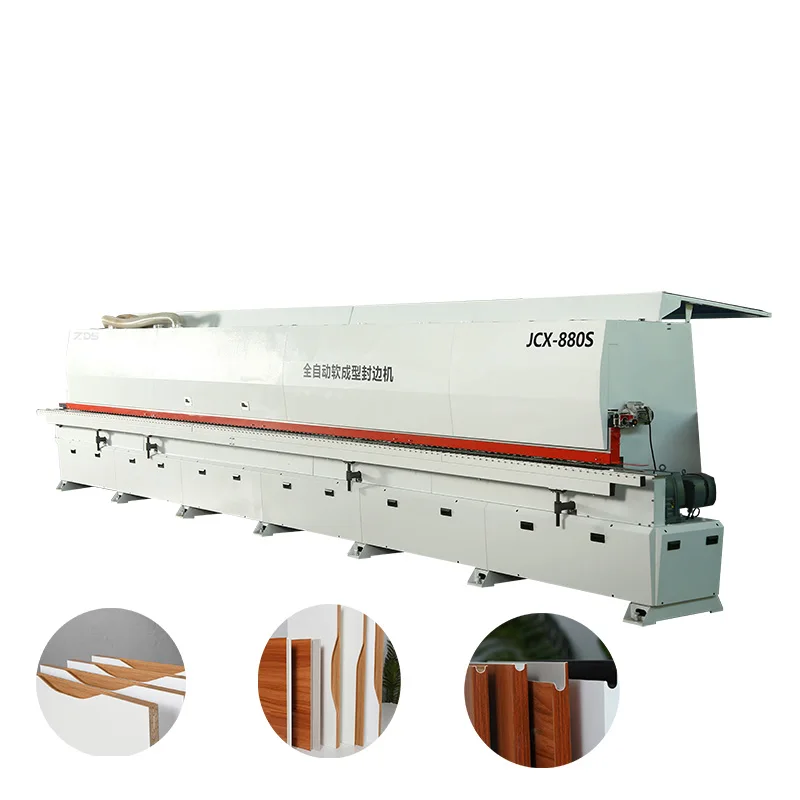
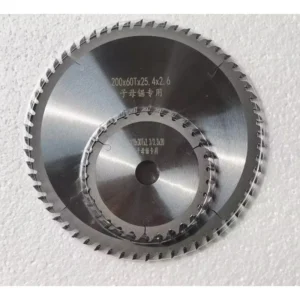
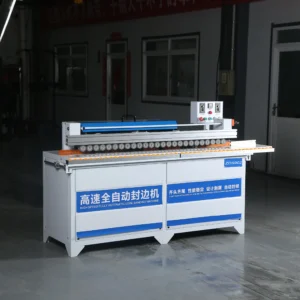
Verified Tolerance Capability — every ZDSJCX-880S unit ships with a factory test record cut on your actual panel stock, not a generic sample.
Technical Specifications
| Parameter |
Value |
| Model |
ZDSJCX-880S |
| Product Type |
J/C Shape Automatic Edge Banding Machine with Pre-Milling and Curve Trimming |
| Overall Dimensions (L×W×H) |
8.82 × 1.07 × 1.85 m |
| Total Weight |
3200 kg |
| Total Power |
47.1 kW |
| Voltage |
380V (configurable from 110V to 440V) |
| Air Supply Requirement |
0.6–0.8 MPa |
| Vacuum Opening Size |
Ф100 × 6 |
| Panel Thickness Range |
18–22 mm (source value — verify against full catalog) |
| Edge Banding Thickness |
0.5–0.8 mm (source value — verify against full catalog) |
| Edge Banding Width |
58 mm |
| Minimum Sheet Width |
150 mm |
| Minimum Sheet Length |
300 mm |
| Conveying Speed |
6–8 m/min |
| Machining Shape Capability |
J type, C type, oblique straight, semi-pass, water drop, rhombus, triangle — 15+ profiles |
| Control System |
To be confirmed at quotation |
| Warranty |
1 year |
Application Suitability
| Application |
Material or Output |
| Custom cabinet door fronts with curved profiles |
MDF and particleboard with PVC or veneer edge banding |
| Shaped furniture panels for retail and hospitality fit-outs |
Plywood and MDF with 0.5–0.8 mm banding |
| Small-batch contoured shelving and display units |
Particleboard and MDF requiring J or C edge treatment |
| Joinery workshop upgrading from hand-trimmed edges |
Solid wood panels and composite boards with pre-milled edges |
What Happens When the Edge Profile Does Not Match the Machine
A curve-capable bander bought on paper specs often fails the first real production run because the profile library and the feed mechanism were never tested against the buyer's actual substrate.
I have seen this pattern repeat in small workshops across Shandong. A cabinet maker orders a machine based on the brochure shape count, but when the first batch of J-profile MDF doors comes off the line, the glue line is visible and the trimming station leaves chatter marks. The problem is rarely the machine itself — it is the gap between the profiles shown in a catalog and the combination of panel density, banding material, and feed speed that the buyer actually runs [NEED_CITE: edge banding adhesion factors on MDF substrates]. That is why configuration must start with the material, not the model number.

Compact Footprint for Workshops with Limited Floor Space
The ZDSJCX-880S measures 8.82 meters in length, which fits into a standard single-bay workshop layout without requiring structural changes to the building. For a joinery shop moving from manual edge work to automated contour banding, this J C shape edge banding machine for small workshop environments leaves room for a sliding table saw and a workbench on the same floor. The 1.07-meter width keeps the aisle clear for panel staging and forklift movement.
Fifteen Profiles Without a Tool Change Over
The machining head handles J, C, oblique straight, semi-pass, water drop, rhombus, and triangle profiles along with additional contour types. Rather than swapping cutters between jobs, the operator selects the profile from the control interface and the machine adjusts the trimming stations. For a small shop running mixed batches of cabinet doors and shelving panels, this reduces the changeover time between profiles and keeps the daily schedule moving [NEED_CITE: CNC profile selection in edge banding automation].
Reading the Specs That Matter for Contour Work
The conveying speed of 6–8 m/min is deliberately moderate. Contour edge banding requires the trimming unit to track curves precisely, and higher feed rates cause the cutter to skip or leave witness marks on softer substrates like particleboard. The pre-milling station removes saw marks from the panel edge before the glue is applied, which directly affects how well the banding adheres on curved sections. Panel thickness is listed at 18–22 mm, which suits standard cabinet door stock but means you must confirm the range covers any thinner drawer fronts or thicker worktop panels in your order book. The six vacuum openings at Ф100 ensure dust extraction at each trimming station, keeping the edge clean for visual inspection. Total power draw of 47.1 kW means the machine needs a dedicated circuit — sharing a breaker with a compressor or dust collector will cause voltage dips that affect glue pot temperature stability.
The Cost of Ignoring Voltage and Language Before Shipping
A 380V machine arriving in a region with 220V three-phase supply becomes a heavy metal box sitting on the workshop floor. I have dealt with situations where the buyer discovered the mismatch only after the container was opened and the electrician was called. Rewinding motors or sourcing a step-up transformer on short notice adds weeks to commissioning and costs that were never in the project budget [NEED_CITE: industrial voltage standards by export market]. The same applies to the control panel language — if the operator cannot read the interface, every profile change and speed adjustment becomes a trial-and-error exercise that wastes material and time.
Why Source This Machine Through This Channel
The ZDSJCX-880S is built in the same facility that produces the full edge banding range, meaning the curve-capable model shares components and service procedures with the straight-edge machines a workshop may already operate. Voltage is configurable from 110V to 440V at the order stage, so the machine leaves the factory matched to your local supply rather than relying on field conversion. A four-stage quality check covers incoming material, in-process assembly, finished product, and pre-shipment verification with a test record run on your specified panel and banding material. Control panel language is set before dispatch based on your operator's requirement. An engineer reviews your production scope and issues a formal quotation within one working day, so the configuration conversation happens before the purchase order, not after.
Documentation & Verification
- Factory test record showing edge profile quality on your specified panel thickness and banding material
- Electrical schematic confirming voltage and frequency matched to your local supply standard
- Operation and maintenance manual written in your operator's agreed language
- Packing photographs documenting machine condition and crate integrity before container loading
- CE declaration of conformity for market entry in regions requiring machinery directive compliance
Installation, Commissioning & Support
- Dedicated 47.1 kW circuit required with breaker sized to the ZDSJCX-880S total power draw
- 0.6–0.8 MPa compressed air line with regulator and moisture trap installed before first start
- Machine arrives assembled; position on level concrete floor using the 8.82 m footprint guide
- Six Ф100 vacuum ducts connected to the workshop dust collection system before running panels
- First-run parameter setting covers glue temperature, feed speed, and trimming pressure for your material
- Spare parts list supplied at delivery covering trimming blades, glue rollers, and pressure wheels
What to Include in Your Inquiry
Tell us the panel materials and thicknesses you run most often, along with the edge banding material — PVC, ABS, or veneer — and the profiles you need in regular production. Confirm your workshop supply voltage and frequency, and whether the control panel needs to display in a specific language. If you have upstream saws or downstream boring machines, share their feed heights so we can confirm the ZDSJCX-880S conveying line aligns with your existing equipment.
Frequently Asked Questions
Q: Will this machine handle my current volume, or will production outgrow it?
A: The ZDSJCX-880S conveys at 6–8 m/min, which suits small-batch and mixed-profile work typical of joinery shops and custom cabinet makers. When order volume shifts toward long runs of a single profile, a higher-speed straight-line bander may complement this machine rather than replace it. We recommend discussing your projected monthly panel count so the configuration matches your current stage.
Q: What voltage and frequency options can be specified?
A: The standard listing shows 380V, but the motor and control system are configurable from 110V to 440V. Frequency must also be confirmed — 50 Hz and 60 Hz regions require different motor windings. State your local supply details at inquiry stage so the machine ships ready to connect without a field transformer.
Q: Can the control interface display in my operator's language?
A: Yes. The control panel language is set during production based on your requirement. Specify the language at the quotation stage so the interface, error messages, and the printed operation manual all match what your team reads on the shop floor.
Q: How do I verify edge profile quality before the machine ships?
A: A pre-shipment factory test runs your specified panel material and banding stock through the machine, producing sample pieces for each profile you plan to use. We provide a test record and packing photographs. If possible, a factory visit lets you inspect the samples in person and discuss any adjustments before dispatch.
Q: What is the upgrade path when production volume increases?
A: This machine covers 15+ contour profiles in a compact footprint. As volume grows, most workshops add a dedicated straight-line bander for high-speed flat-panel runs while keeping the ZDSJCX-880S for shaped and curved work. The product family includes higher-throughput models that share service procedures, so your maintenance team does not start from zero on a new platform.