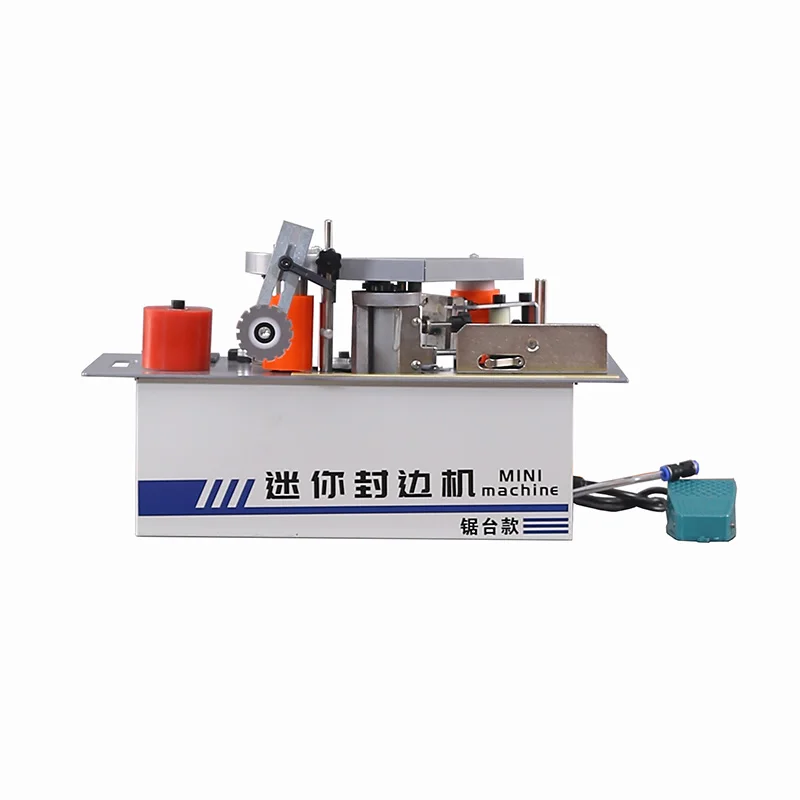
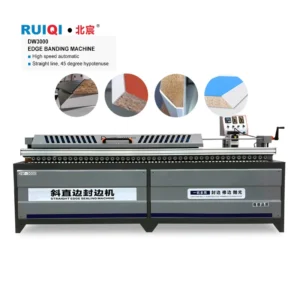
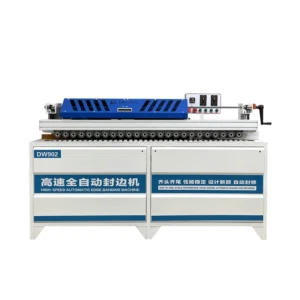
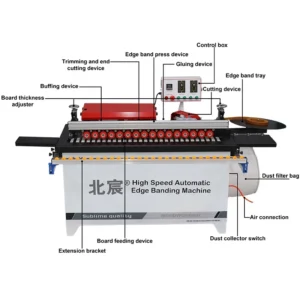
Rapid Dispatch Stock — Standard 220V units held in inventory for immediate preparation, eliminating typical multi-week lead times for small workshop edge banding requirements.
Technical Specifications
| Parameter |
Value |
| Product Type |
Portable Edge Banding Machine |
| Voltage |
220V (custom voltage available on request) |
| Rated Power |
825W |
| Heating Time |
5-10 min |
| Glue Pot Capacity |
1000ml |
| Edge Banding Speed |
0-10 m/min (variable) |
| Air Pressure Requirement |
0.4-0.6 MPa |
| Edge Pattern Capability |
Curves, straight lines, special shaped lines |
| Overall Dimensions |
50×30×27 cm |
| Net Weight |
13.5 kg |
| Control System |
Manual operation |
| Assembly State |
Portable, bench-top unit |
Application Suitability
| Application |
Material or Output |
| Custom cabinet edge finishing |
MDF and plywood panels with PVC edge banding |
| On-site joinery adjustments |
Particleboard and blockboard with veneer strips |
| Small batch curved furniture |
Solid wood panels and shaped MDF components |
| Prototype and sample production |
Various substrate and banding material combinations |
The Voltage Mismatch That Stops Production Before It Starts
Confirming local electrical supply compatibility is the essential first step before any portable edge banding machine in stock is dispatched.
Workshop owners often focus on feed speed and glue capacity while overlooking the fundamental requirement of matching voltage and frequency to their facility supply. Units arrive, are unpacked, and then sit idle because the local three-phase or single-phase supply does not align with the machine configuration ordered. [NEED_CITE: voltage and frequency standards by export market] This small portable auto curve edge banding machine is configured for standard 220V single-phase operation, which suits many markets but requires verification before purchase. Requesting custom voltage configuration adds lead time but prevents the costly delay of receiving unusable equipment.

Compact Footprint for Bench-Top or Mobile Deployment
This portable edge banding machine in stock weighs 13.5 kg with overall dimensions of 50×30×27 cm, allowing placement on a standard workbench without dedicated floor space allocation. Small joinery shops and startup furniture makers often operate in constrained environments where a full-size automatic edge bander is physically impractical. The bench-top format means the unit can be stored when not in use and deployed only when edge finishing is required. On-site cabinet installers benefit from the ability to transport the unit between job locations for custom-fit adjustments that require edge banding on shaped or curved panels.
Versatile Edge Profiles Without Multiple Machine Changes
The unit handles curves, straight lines, and special shaped lines through manual operator control with variable banding speed from 0-10 m/min. This flexibility addresses a common workshop frustration where separate machines are needed for straight edge work versus curved components. [NEED_CITE: woodworking machinery safety standards for portable equipment] A carpentry shop producing both flat-panel cabinet doors and curved reception desk fronts can complete all edge banding tasks on a single unit. The variable speed control allows operators to slow the feed rate when navigating tight radii on curved panels, reducing the risk of banding lift or misalignment at critical points.
Interpreting the Specifications for Your Production Needs
The 825W rated power and 1000ml glue pot capacity define the operational envelope of this machine for small-volume production environments. The 5-10 minute heating time means the unit reaches working temperature quickly for intermittent use patterns typical of small workshops and job-site operations. However, continuous high-volume production would require frequent glue replenishment and could exceed the thermal recovery capacity of the pot. The 0.4-0.6 MPa air pressure requirement indicates that a compressed air supply must be available at the work location, which some small shops may need to arrange separately. Edge banding thickness range and panel thickness capacity are not stated in the source specifications, requiring direct verification against your intended materials before order confirmation.
The Hidden Cost of Incompatible Material Specifications
Edge banding adhesion failures often surface only after panels enter assembly, when mechanical stress reveals insufficient glue bonding to the substrate. A carpentry shop producing cabinets with 2mm PVC edge banding may discover that the standard glue curing time assumes thinner material, resulting in edges that peel during hinge installation or transport. [NEED_CITE: PVC edge banding adhesion requirements for woodworking] The portable edge banding machine in stock does not automatically adjust glue application rate or curing parameters based on banding thickness, placing the responsibility on the operator to verify material compatibility before production runs. Requesting sample processing tests with your specific substrate and banding combination prevents this category of failure from reaching your customers.
Why Source This Unit Through Ready-Stock Channels
Standard 220V configuration held in inventory means dispatch preparation begins immediately upon order confirmation rather than waiting for production scheduling. Voltage customization from 110V to 440V remains available for markets requiring non-standard electrical supply, though this adds lead time for configuration and testing. Operation and maintenance manuals are provided in the agreed language, preventing commissioning delays caused by control panels and documentation in an unfamiliar script. The four-stage quality control process covers incoming material verification through pre-shipment testing, ensuring the unit performs to specification before leaving the factory. Engineer-led configuration recommendations address specific workshop requirements rather than pushing a standard package regardless of application fit.
Documentation & Verification
- CE declaration of conformity for portable woodworking machinery
- Machine specification sheet with confirmed voltage and frequency
- Operation manual translated to your preferred working language
- Factory test record demonstrating edge banding on your sample material
- Electrical schematic matching the dispatched unit configuration
- Spare parts list with consumable ordering information
Installation, Commissioning & Support
- Bench-top placement requires stable work surface supporting 13.5 kg plus operator pressure during use
- Standard 220V single-phase supply with dedicated circuit breaker rated for 825W continuous load
- Compressed air connection at 0.4-0.6 MPa required for pneumatic system operation
- Glue pot initial heating and temperature verification before first production run
- Operator training on variable speed control for straight versus curved edge profiles
- Consumable glue and replacement parts inventory planning for ongoing operation
Moving Forward With Your Workshop Requirements
Provide details on your typical panel materials, edge banding thickness, and production volume to receive configuration guidance specific to your operation. Confirm your local voltage and frequency specifications to ensure the dispatched unit matches your facility supply without modification. Specify your preferred language for operation documentation and control panel labeling to support smooth commissioning.
Frequently Asked Questions
Q: What voltage options are available beyond the standard 220V configuration?
A: The unit supports custom voltage configuration from 110V to 440V to match regional electrical supply standards. Standard 220V units ship from ready stock with immediate dispatch preparation, while custom voltage orders require additional lead time for configuration, testing, and verification before shipment. Confirm your local supply specifications before ordering.
Q: How do I verify the machine handles my specific edge banding material and thickness?
A: Request sample processing using your actual substrate and banding material combination before confirming your order. Edge banding thickness range and panel thickness capacity require verification against the manufacturer specifications for your particular application. This prevents adhesion failures that only surface during assembly or transport.
Q: What is the typical dispatch timeline for stocked versus custom-configured units?
A: Standard 220V portable edge banding machine in stock units undergo immediate pre-shipment verification and dispatch preparation. Custom voltage configurations or specification modifications require production scheduling, adding typical multi-week lead times. Confirm your requirements early to align delivery timing with your workshop project schedule.
Q: Will the operation manual and documentation arrive in my preferred language?
A: Operation and maintenance manuals are provided in the agreed language specified during the order confirmation process. This includes control panel labeling translation where applicable, ensuring your operators can complete commissioning and daily operation without language barriers stalling production startup.
Q: Which spare parts and consumables should accompany the initial purchase?
A: The spare parts list identifies wear components and consumable items specific to this portable unit. Ordering replacement glue pot elements, feed mechanism wear parts, and pneumatic seals with your initial purchase prevents operational downtime while waiting for parts shipment to your region.