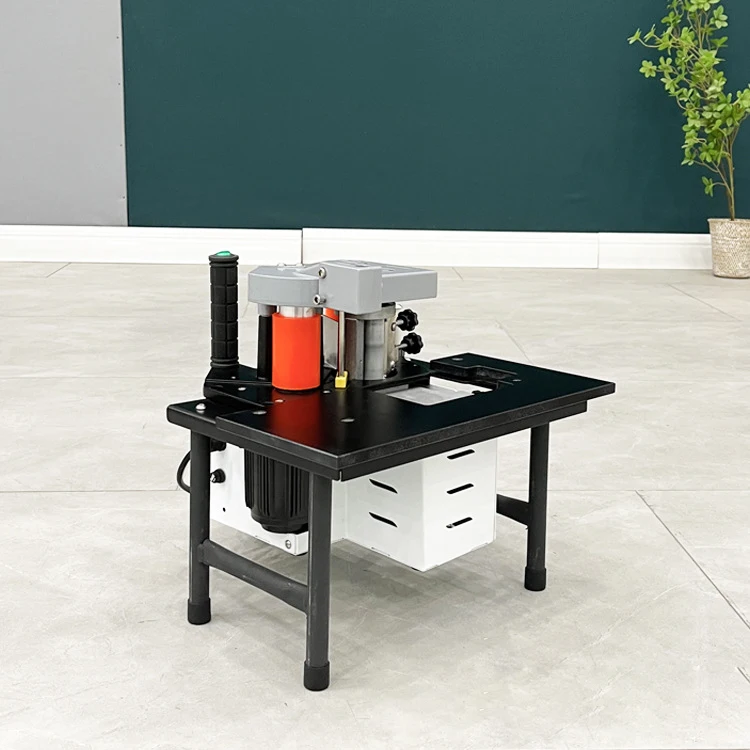
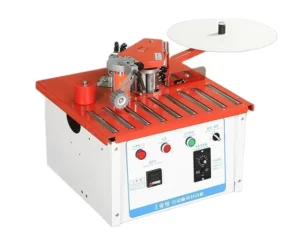
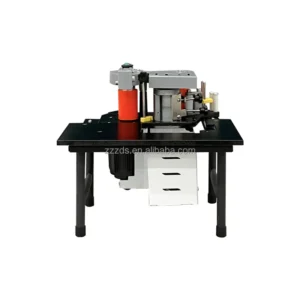
Ready Stock & Fast Dispatch — Portable Edge Banding Machine units are held in inventory with plug configurations pre-confirmed before shipping, so your workshop can start running panels the day the crate arrives.
Technical Specifications
| Parameter |
Value |
| Product Type |
Portable Edge Banding Machine |
| Edge Banding Shape Capability |
Curved, Straight and Special-shaped Sheet |
| Edge Thickness Range |
0.3–3mm |
| Edge Sealing Speed |
0–6 m/min |
| Edge Sealing Height |
7–60mm |
| Gluing Method |
Double-sided gluing |
| Glue Pot Volume |
1000ml |
| Machine Weight |
14kg |
| Panel Thickness Range |
7–60mm |
| Plug Options |
EU / AU / UK / USA / CN |
| Assembly State |
Requires assembly; manual and video provided |
| Warranty |
1 year |
Application Suitability
| Application |
Material or Output |
| Custom cabinet door edging |
MDF and plywood panels with PVC or veneer banding |
| Small joinery workshop production |
Particleboard shelving with 0.4mm melamine edges |
| On-site repair and fieldwork |
Solid wood furniture components requiring curved edge finishing |
| Prototype and sample fabrication |
Special-shaped panels for client presentation units |
Why Confirming Voltage Before Ordering Saves Your First Week on the Floor
A Portable Edge Banding Machine in stock that cannot plug into your workshop outlet is not a solution — it is a 14kg paperweight. I have seen this exact scenario unfold with a custom cabinet shop in Jiangsu. They took delivery of a portable unit without confirming local supply, and the single-phase frequency mismatch caused the heating element to overshoot the glue pot temperature within minutes. The PVC edge strip curled and delaminated before the operator could react. That entire first batch was scrapped, and the owner spent two days sourcing a step-down transformer just to get the machine running again. Electrical incompatibility is rarely the fault of the machine itself; it is the fault of an order placed without asking the right question first [NEED_CITE: voltage and frequency standards by export market].
Dispatch Timing When Your Workshop Cannot Afford a Gap
When a small joinery shop transitions from hand-applied edge banding to machine-assisted production, downtime between the old method and the new setup directly affects delivery commitments. The Portable Edge Banding Machine in stock program addresses this by holding configured units with common plug types already assigned. Single-unit orders ship without waiting for a full production batch to complete.
Plug Options Aligned to Your Workshop Mains
Stocking multiple plug standards — EU, AU, UK, USA, and CN — means the correct plug is fitted before the crate is sealed. There is no field modification required, no adapter stacked on an extension lead creating a thermal risk near a hot glue pot. You specify your region when placing the order, and the Portable Edge Banding Machine in stock is dispatched with the matching configuration.
What the Specification Sheet Tells You About Actual Output
Edge sealing height of 7–60mm covers the majority of panel thicknesses a small workshop encounters, from thin 9mm MDF backing boards up to 60mm solid wood benchtop sections. The double-sided gluing method applies adhesive to both the panel edge and the banding strip simultaneously, which is necessary when working with curved profiles where single-sided contact cannot be guaranteed under hand guidance. The glue pot volume of 1000ml supports continuous small-batch runs — roughly enough for a full day of intermittent use in a joinery shop — without stopping to refill mid-job. Edge thickness handling from 0.3mm to 3mm means the same machine covers thin melamine edging for cabinet interiors and thicker PVC strips for exposed furniture edges. Operating speed peaks at 6 m/min, which suits low-volume production and one-off pieces rather than continuous line output [NEED_CITE: feed speed expectations for manual-assisted edge banding equipment].

The Cost of Skipping Material Verification Before Purchase
One of the most common failures in small workshop edge banding is not a mechanical fault — it is a mismatch between the machine and the actual banding material being used. A portable unit tested with thin melamine strip in a showroom will struggle with thick PVC if the operator does not adjust feed speed and glue temperature accordingly. The glue cools too quickly on a slower feed rate, and the bond becomes brittle at the trimming stage. Buyers who skip this verification discover the problem only after their first production run produces visible glue lines and hollow-sounding tap tests across every panel [NEED_CITE: common edge banding adhesion failures on PVC substrates].
Why Purchase Through This Channel
The stocked inventory model means a single unit ships without waiting for a container consolidation, reducing the gap between order and first production run. Voltage and plug configuration are confirmed at the point of order, not assumed based on destination country. Each Portable Edge Banding Machine in stock undergoes a pre-dispatch test run on the panel thickness range specified by the buyer. Operation and maintenance manuals are provided in the language agreed during the order process. The engineering team remains available after delivery for setup guidance, addressing the gap that typically appears once a machine leaves the factory floor.
Documentation & Verification
- Pre-dispatch factory test record run on your specified panel thickness and edge material
- Electrical schematic with confirmed voltage, frequency, and plug type for your region
- Operation and maintenance manual in your agreed language with setup sequence illustrations
- Spare parts list with part numbers for glue pot elements, feed rollers, and trimming blades
Installation, Commissioning & Support
- Assembly required on arrival with video walkthrough covering the 14kg unit setup sequence
- Dedicated 16A circuit recommended to prevent voltage drop during glue pot heating cycles
- First-run parameter guidance covering glue temperature for PVC versus melamine banding materials
- Minimum bend radius verification on your curved panel samples before committing to production speed
- Replacement glue pot elements and feed rollers available through direct reorder with part numbers
What to Share Before Placing Your Order
To match the right configuration to your workshop, provide the primary panel material you will be edging — MDF, plywood, or particleboard — along with the edge banding type and thickness you run most frequently. Confirm your workshop voltage and frequency so the correct plug and heating element are fitted before dispatch. If you are handling curved profiles, share the minimum bend radius so the feed guide can be verified against your actual workpiece geometry.
Frequently Asked Questions
Q: What plug and voltage options are available, and how is compatibility confirmed before shipping?
A: The machine ships with EU, AU, UK, USA, or CN plugs. You confirm your local voltage and frequency at the time of order, and the unit is configured and tested against that supply before dispatch. This prevents the common failure where a machine arrives and cannot power on or overheats due to a frequency mismatch.
Q: Can this machine handle both curved and straight panels, and what limits the bend radius?
A: The unit is designed for curved, straight, and special-shaped edges. The practical minimum bend radius depends on your edge banding thickness and the feed pressure you can maintain by hand. Thinner veneer strips handle tighter curves, while 3mm PVC requires a larger radius to maintain consistent glue contact.
Q: What is the dispatch lead time for a single-unit order?
A: Stocked units ship within a short dispatch window once plug configuration and voltage are confirmed. Single-unit orders do not wait for batch consolidation. Exact timing is quoted at the point of order based on current inventory and your destination.
Q: Is assembly required on arrival, and what support is provided for first-time setup?
A: The machine ships partially assembled to protect components during transit. A user manual and video guide cover the remaining assembly steps. Engineering support is available to walk through first-run parameter settings, particularly glue temperature adjustment for your specific banding material.
Q: What spare parts and consumables are included, and how are replacements ordered?
A: The package includes consumables needed for initial operation. A spare parts list with specific part numbers for glue pot heating elements, feed rollers, and trimming blades is provided so replacements can be reordered directly without cross-referencing generic catalogs.