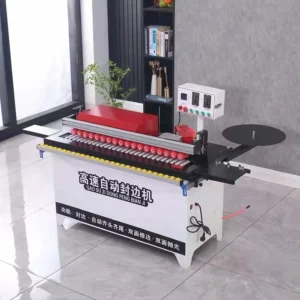
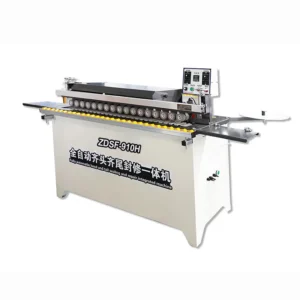
Ready-to-deploy edge finishing — Ships with voltage, plug type, and control language confirmed before dispatch, matching your workshop's actual utility infrastructure from day one.
Technical Specifications
| Parameter |
Value |
| Model |
ST-30 |
| Product Type |
Portable Edge Banding Machine |
| Total Power |
1000W |
| Voltage & Frequency |
220V/380V/customization |
| Edge Banding Height |
0-50mm |
| Edge Banding Thickness |
0.3-3mm |
| Minimum Sheet Length |
250mm |
| Minimum Sheet Width |
30mm |
| Glue Pot Capacity |
1000ml |
| Air Source Pressure |
0.5-0.8MPa |
| Edge Power |
20W |
| Overall Dimensions (L×W×H) |
380×350×350mm |
| Net Weight |
12kg |
| Key Features |
Curved and straight edge banding, multiple plug options |
Application Suitability
| Application |
Material or Output |
| Custom cabinet edge banding |
MDF, plywood, and particleboard panels |
| Interior decoration workshops |
Solid wood panels and melamine boards |
| Small-scale furniture manufacturing |
ABS, PVC, melamine, and veneer tape |
| On-site joinery installations |
Compact components requiring mobile edge finishing |
Why the Voltage Question Should Come Before the Price
Confirming local utility specs prevents a three-week delay when the machine arrives at your site.
A portable edge banding machine for small workshop deployment is useless if it cannot be plugged in. I have seen units shipped to job sites where the local three-phase supply did not match the motor configuration, forcing the contractor to source step-down transformers while the installation schedule slipped. The cost of the transformer was minor, but the penalty for missing the handover date was substantial [NEED_CITE: industrial voltage compatibility standards by region].

Footprint and Utility Requirements for Small Workshops
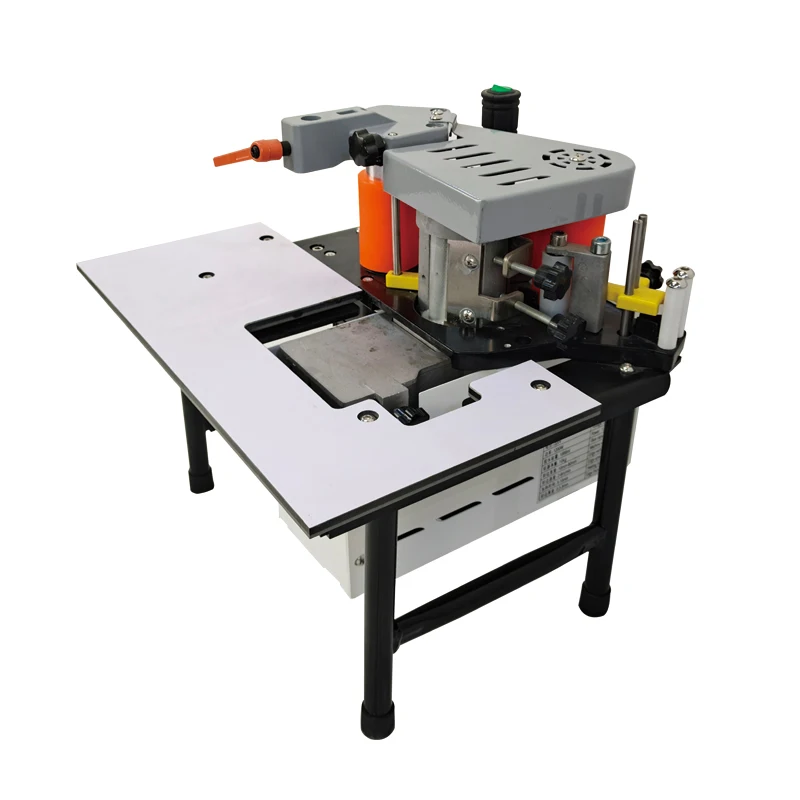
A portable edge banding machine for small workshop environments must fit into tight spaces and run on standard utility circuits. The ST-30 draws 1000W total power, meaning it operates on typical single-phase or three-phase workshop circuits without requiring a dedicated high-amperage line. The 380×350×350mm overall dimensions allow it to sit on a standard workbench alongside existing hand tools, leaving floor space free for material handling and assembly stations.
Material Handling Across Straight and Curved Profiles
This unit handles both straight and curved edge banding within one setup, removing the need for separate dedicated tooling for each profile type. The 0-50mm edge banding height range and 0.3-3mm thickness capacity cover standard PVC, ABS, melamine, and veneer tapes used in custom cabinet and furniture production. For joinery startups moving from hand-applied banding to machine-assisted processes, this dual capability represents the smallest viable step up in production consistency [NEED_CITE: edge banding material compatibility with wood-based panels].
Reading the Specs Against Your Actual Substrate
The 0.5-0.8MPa air source pressure requirement means the machine needs a compressor capable of sustaining this range during continuous operation; undersized compressors cause pressure drops that affect glue application consistency. The 1000ml glue pot capacity supports sustained batch work on small to medium orders without frequent refill interruptions, but shops running high-volume straight-edge production will need to plan for periodic top-ups. The 250mm minimum sheet length and 30mm minimum sheet width define the smallest offcut this unit can process, which matters when edge banding narrow drawer components or small shelving brackets.
The Hidden Cost of Unconfirmed Plug and Language Configs
Ordering a machine without specifying plug type and control panel language creates friction at commissioning. An operator facing a control interface in a language they cannot read will make errors during setup, producing scrap panels while they figure out the parameter settings. Similarly, arriving with the wrong plug type means the machine sits idle until an electrician sources and fits the correct connector, which can take days in remote project locations [NEED_CITE: equipment commissioning delays due to localization mismatches].
Why Source This Configuration Here
Voltage customization from 110V to 440V is confirmed in the electrical schematic before production begins, so the unit matches your workshop supply exactly. Operation and maintenance manuals are provided in the agreed language, preventing commissioning stalls caused by unreadable documentation. Pre-shipment factory test records verify banding adhesion and edge finish quality on your specified substrate before the machine leaves the facility. Spare parts lists identify glue pot components and trimming consumables for local reorder planning, reducing downtime when wear parts need replacement.
Documentation & Verification
- CE declaration of conformity covering portable edge banding equipment
- Electrical schematic confirming your specified voltage and frequency before production
- Factory test record showing banding adhesion on your panel thickness range
- Operation manual in agreed language with parameter setting guidance
- Spare parts list identifying consumables for reorder planning
Installation, Commissioning & Support
- Place on a stable workbench; the 12kg net weight requires no special floor anchoring or foundation work
- Connect to a circuit matching the confirmed voltage configuration with appropriate breaker protection
- Supply compressed air from a compressor sustaining 0.5-0.8MPa through a standard pneumatic fitting
- Verify glue pot temperature settings against the specific edge banding tape material before production runs
- Review the operation manual for parameter adjustment procedures covering different substrate thicknesses
- Stock replacement trimming blades and glue pot seals based on the supplied spare parts list
What to Include in Your Inquiry
Send your typical panel material types and thicknesses, the edge banding tape materials you plan to use, and your workshop's confirmed voltage and frequency supply. Specify the control panel language required for your operators and the plug type standard in your region. If you have specific curved profiles or narrow components in your production mix, provide the minimum dimensions so we can confirm the ST-30 covers your range.
Frequently Asked Questions
Q: How do I confirm the correct voltage and plug type before ordering?
A: Provide your workshop's supply voltage, frequency, and phase configuration. We document the confirmed specifications in the electrical schematic before production, and the machine ships with the matching plug type for your region. This prevents the situation where equipment arrives and cannot be powered on due to utility mismatches.
Q: Which edge banding materials work best on MDF versus plywood?
A: PVC and ABS tapes adhere well to MDF edges due to the smooth, dense substrate surface. Plywood edges are more porous and may require thicker melamine or veneer tapes with adequate glue coverage. The 0.3-3mm thickness range and 1000ml glue pot accommodate both material families within a single setup.
Q: What bench space and air supply does this unit need?
A: The 380×350×350mm footprint fits on a standard workbench. You need a compressor delivering sustained 0.5-0.8MPa pressure through a standard pneumatic line. Undersized compressors cause pressure fluctuations that affect glue application consistency during continuous operation.
Q: Which spare parts should I stock locally?
A: Trimming blades, glue pot seals, and heating elements are the primary wear items. The spare parts list supplied with the machine identifies exact part numbers for reorder planning, allowing you to maintain local stock and minimize downtime when consumables need replacement.