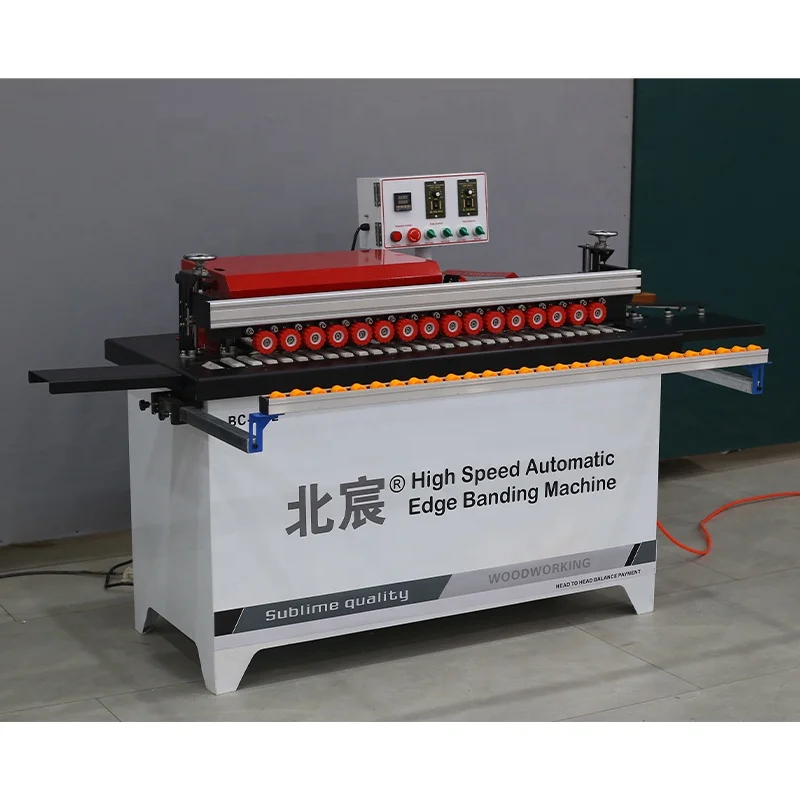
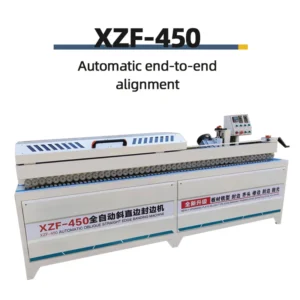
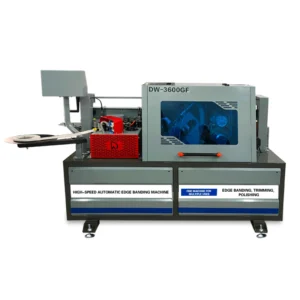
Fast stock dispatch — the DW802 automatic edge banding machine ships as a fully assembled unit with your region's voltage, frequency, and plug type verified before it leaves the factory.
Technical Specifications
| Parameter |
Value |
| Model |
DW802 |
| Product Type |
Automatic Edge Banding Machine |
| Total Power |
4200W |
| Voltage & Frequency |
220V/380V/customization (frequency to be confirmed: 50Hz/60Hz) |
| Control System |
PLC |
| Overall Dimensions (L×W×H) |
130×60×95 cm |
| Net Weight |
135 kg |
| Minimum Sheet Length |
25 cm |
| Minimum Sheet Width |
10 cm |
| Edge Banding Height Range |
0–50 mm |
| Edge Banding Thickness Range |
0.3–3 mm |
| Edge Power |
140W |
| Transmission Power |
140W |
| Trimming Power |
800W×2 |
| Polishing Power |
180W×2 |
| Vacuum Power |
1200W |
| Air Source Pressure |
0.4–0.8 MPa |
| Glue Pot Capacity |
4000 ml |
| Feed Speed |
(basis to be confirmed) |
| Panel Thickness Range |
(basis to be confirmed) |
| Standard Features |
Edge banding, trimming, polishing, automatic head and tail cutting, integrated vacuum |
| Language Options |
Chinese/English standard; Spanish and other languages customizable |
| Plug Options |
EU / USA / AU / UK |
| Assembly State |
Fully assembled |
| Certification |
CE, ISO 9001 |
Application Suitability
| Application |
Material or Output |
| Custom cabinet door edge sealing |
MDF and plywood panels with PVC edge banding |
| Home decoration joinery |
Particleboard and ecological board with melamine edging |
| Small-batch furniture production |
Solid wood panels with veneer edge banding |
| Workshop transition from manual to machine edging |
Mixed sheet materials in short production runs |
Why Voltage Confirmation Must Happen Before Dispatch
Every DW802 leaves the factory configured to the buyer's exact electrical standard — not a generic setting that fails on first power-up.
I have watched workshops lose entire commissioning days because the edge bander they ordered ran on a voltage and frequency combination their local supply could not support. The machine would hum, the glue pot would struggle to reach temperature, and the feed motor would stall under load. This is not a defect — it is a specification mismatch that happens when the seller never asks what standard the buyer's workshop actually runs on. The DW802 automatic edge banding machine in stock is built to avoid that scenario entirely. Voltage, frequency, and plug type are confirmed at the order stage and verified during the pre-shipment test [NEED_CITE: voltage and frequency standards by export market]. A 220V unit headed to a workshop in Southeast Asia is wired and tested differently from a 380V unit destined for a European cabinet maker, even though both carry the same model designation.

Stock Configuration Ready for Single-Unit Orders
Workshops moving away from hand-applied edge banding rarely need a full production line on day one. The DW802 automatic edge banding machine in stock is built for that exact transition point: a single machine that handles gluing, trimming, head and tail cutting, and polishing in one continuous pass. At 130×60×95 cm, it fits into workshop bays where floor space is already committed to panel saws and assembly benches. The unit arrives fully assembled, meaning the operator can begin running test panels within hours of unpacking rather than spending days on mechanical alignment.
Matching the Machine to Your Actual Panel Stock
I once worked with a custom cabinet shop that ordered an edge bander based on throughput figures alone, only to discover that their high-density particleboard absorbed glue at roughly half the rate of the MDF they had tested on. The edging lifted at the corners after a few hours of running, and the owner spent entire nights adjusting parameters by trial and error. With the DW802, I always ask for the specific board substrate and edge banding material before the order goes into dispatch [NEED_CITE: adhesive penetration rates across wood-based panel types]. The 4000 ml glue pot and adjustable air pressure range of 0.4–0.8 MPa give operators a working envelope to tune glue application for different substrate densities, but that envelope only helps if you start from the correct baseline.
Reading the Specification Sheet Against Your Workshop Reality
The dual trimming motors at 800W each are sized to handle PVC and melamine edging up to 3 mm thick without chatter marks on the cut face. If your typical work involves solid wood veneer banding in the 0.3–0.8 mm range, the same trimming station will still produce a clean edge, but the feed speed should be adjusted downward to prevent tear-out on thin veneer faces. The 1200W vacuum system pulls trim waste and dust away from the glue line during operation, which matters in small workshops where a separate dust extraction duct may not yet be installed. Edge banding height from 0 to 50 mm covers standard panel thicknesses used in cabinet and furniture carcass construction, but if you regularly run panels outside that range, that constraint should be discussed before dispatch. The PLC control system manages all stations from one panel, and the language on that panel can be set to English or Spanish before shipping so the operator is not reading instructions in a language they do not understand.
The Hidden Cost of Skipping Pre-Dispatch Verification
When an edge bander arrives with the wrong plug type or an unconfigured control language, the delays cascade. The electrician spends a day rewiring the plug. The operator fumbles through menus in an unfamiliar language, mis-setting the glue temperature and wasting material on failed test panels. The workshop owner calls technical support across time zones for a problem that could have been prevented by a checklist before the crate was sealed [NEED_CITE: common commissioning delays in imported woodworking machinery]. These are not warranty issues — they are specification gaps that shift the burden onto the buyer.
What Sets This Purchase Path Apart
In-house manufacturing means the DW802 is not a relabeled unit sourced from a trading company — the same factory that builds it also holds the stock, so specification changes are handled on the production floor rather than passed through intermediaries. Voltage customization from 220V to 380V with region-specific plug options is configured as standard, not treated as a special request. The four-stage quality control process covers incoming material inspection, in-process checks, finished product testing, and pre-shipment verification on every unit. Engineers review the buyer's panel material and edge banding specification before dispatch and can arrange a sample processing test to confirm the setup matches the buyer's actual production conditions. The same product family covers entry-level through full-function models, so a workshop that starts with the DW802 today can scale to higher-throughput units later without switching suppliers or retraining operators on an entirely different control platform.
Documentation & Verification
- CE declaration of conformity covering the DW802 automatic edge banding machine
- Factory test record showing the unit running your specified edge banding material
- Electrical schematic confirming voltage and frequency match your workshop supply
- Operation and maintenance manual supplied in your operator's agreed language
- Spare parts list covering consumables and wear components for the first service cycle
- Packing photographs documenting condition before the crate is sealed
Installation, Commissioning & Support
- Allocate floor space of at least 150×80 cm to allow operator access around the 130×60×95 cm machine footprint
- Connect to a dedicated circuit matching the confirmed 220V or 380V supply with appropriate overcurrent protection
- Machine ships fully assembled — position, level, and connect air supply at 0.4–0.8 MPa before first run
- Initial glue pot temperature and feed parameters set based on your confirmed panel and edge banding material
- Operator training covers PLC menu navigation in the agreed control panel language
- Spare parts list included for trimming cutters, polishing wheels, and vacuum filters
Before You Place the Order
Send your panel substrate type, edge banding material, and the thickest panel you plan to run. Confirm your workshop's voltage, frequency, and plug type so the unit is wired correctly before dispatch. If you have specific production targets or existing upstream equipment such as a panel saw, share those details so the feed speed and glue application settings can be aligned to your workflow before the machine ships.
Frequently Asked Questions
Q: Is this model in stock and what is the dispatch lead time for a single unit?
A: The DW802 is maintained in stock for single-unit orders. Dispatch timing depends on the level of voltage and language customization required — a standard 220V unit with English controls typically leaves the factory sooner than a unit requiring non-standard voltage or multilingual panel configuration. Confirming your specifications early shortens the lead time.
Q: How do I confirm the correct voltage, frequency, and plug for my country before ordering?
A: Provide your workshop's supply voltage, frequency, and plug standard at the inquiry stage. The order confirmation records these values, and the pre-shipment test is conducted on a power supply matching your specification. Plug options include EU, USA, AU, and UK types.
Q: Can the control panel language be set to English or another language before the machine ships?
A: English and Chinese are standard on the PLC control panel. Spanish and other languages are configurable before dispatch. Specify your operator's preferred language during the order process so the machine arrives ready for immediate use without manual translation.
Q: What edge banding materials and board types does the DW802 handle?
A: The machine processes MDF, particleboard, solid wood board, ecological board, and plywood with PVC or veneer edge banding from 0.3 to 3 mm thick and up to 50 mm in height. Share your specific material combination before ordering to confirm optimal glue and feed settings.
Q: What is included in the shipment besides the machine itself?
A: Each shipment includes the operation and maintenance manual in the agreed language, a spare parts list for consumables, the electrical schematic, the factory test record, and packing photographs. Installation guidance is provided to help with initial setup and commissioning.