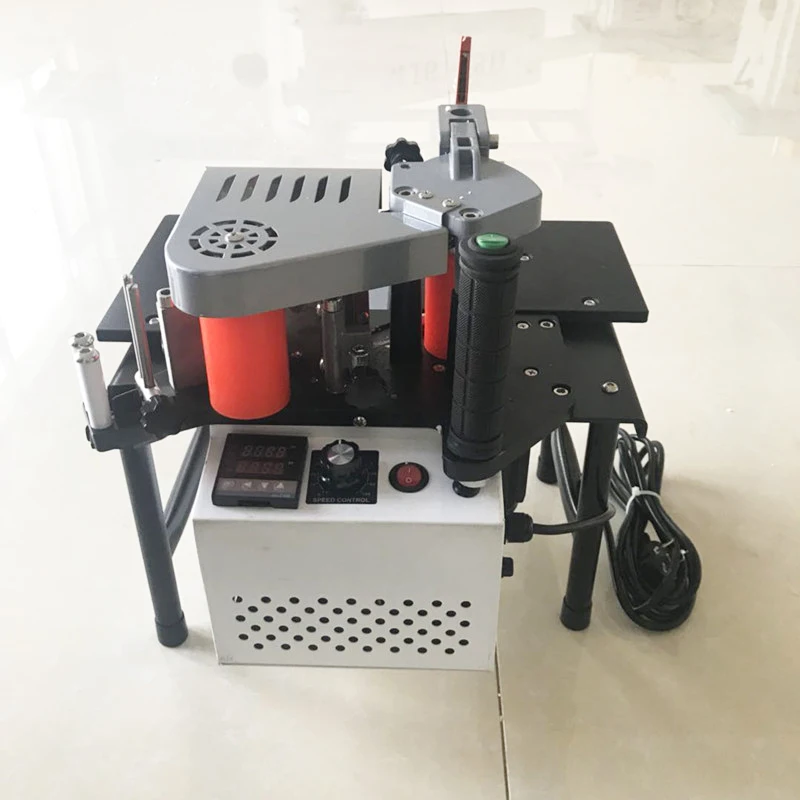
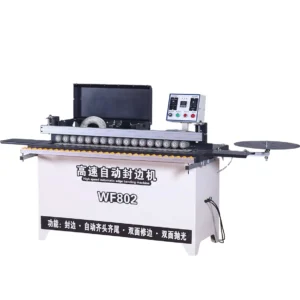
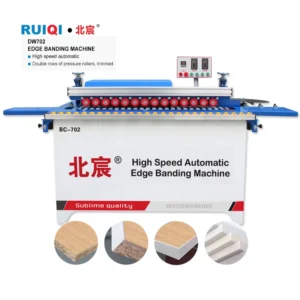
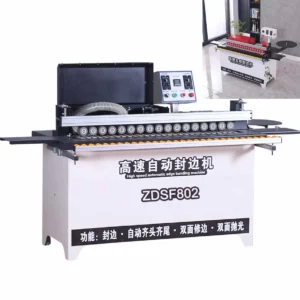
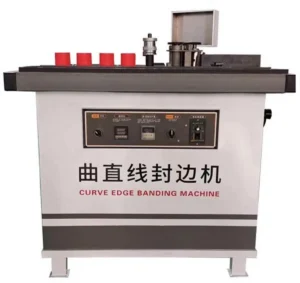
Ready From Stock — this Portable Edge Banding Machine ships with confirmed voltage and plug configuration, avoiding the common delay of unusable equipment arriving at small workshops without local power compatibility.
Technical Specifications
| Parameter |
Value |
| Product Type |
Portable Edge Banding Machine |
| Voltage |
220V |
| Rated Power |
1000W |
| Shape of Plates |
Curved & Straight plates |
| Edge Thickness Range |
0.3–3mm |
| Board Thickness Range |
7–60mm |
| Gluing Method |
Double-sided gluing |
| Glue Pot Capacity |
800ml |
| Net Weight |
14kg |
| Plug Options |
EU / AU / UK / USA / CN |
| Assembly State |
Portable / Handheld |
Application Suitability
| Application |
Material or Output |
| Custom cabinet edge finishing |
MDF and plywood panels with PVC banding |
| Small-batch furniture production |
Particleboard substrates with veneer strips |
| On-site carpentry and fit-out work |
Solid wood panels on curved profiles |
| Joinery workshop starter operations |
Mixed straight and curved edge profiles |
Why Voltage Confirmation Must Precede Your Portable Edge Banding Machine in stock Order
A machine that cannot plug into your local socket is not a bargain—it is dead weight sitting on your workshop floor.
I once watched a small furniture maker receive a single-phase edge bander wired for a different regional standard, forcing them to source a step-up transformer just to run a test panel. That transformer cost nearly as much as the machine itself, and the added bulk meant the unit was no longer portable. For a Portable Edge Banding Machine in stock, confirming your local voltage, frequency, and plug type before dispatch eliminates this entire failure mode [NEED_CITE: voltage and frequency standards by export market]. The available EU, AU, UK, USA, and CN plug configurations exist precisely because small workshops operate across vastly different electrical environments.

Stocked Configuration Eliminates Commissioning Guesswork
When a joinery startup moves from hand-applied edge banding to machine-assisted finishing, the operator is already learning new feed rates and glue temperature habits. Having a Portable Edge Banding Machine in stock with the correct plug and voltage removes one entire layer of setup friction. The operator unboxes, plugs in, loads the glue pot, and runs a test strip—commissioning becomes a matter of technique rather than electrical troubleshooting.
Mixed-Profile Capability in a Single Footprint
Small custom furniture shops rarely have the floor space or budget to maintain separate machines for straight and curved edge work. The double-sided gluing method applies adhesive to both the panel edge and the banding strip simultaneously, which matters especially on curved profiles where single-sided glue tends to leave starved zones at the radius. The 0.3–3mm edge thickness range covers the PVC and veneer strips that dominate small-batch cabinet and shelving production, so a single portable unit handles the typical material mix without switching equipment [NEED_CITE: edge banding adhesion requirements on curved panel profiles].
What the Board Thickness and Power Ratings Actually Mean
The 7–60mm board thickness range determines which substrates you can feed through without shimming or manual pressure adjustment. At the thin end, 7mm captures standard MDF backing panels and lightweight shelving stock. At the thick end, 60mm accommodates solid wood worktops and multi-layer plywood assemblies common in bespoke joinery. The 1000W rated power is sized for intermittent use—a portable unit is not designed for continuous production shifts, and running it at duty cycles beyond its thermal design will degrade the motor and glue pot heater prematurely. The 800ml glue pot capacity is sufficient for a typical batch of edge work before requiring a refill, and the double-sided gluing method demands that the pot maintains stable temperature across both application surfaces. Net weight at 14kg keeps the unit liftable by a single operator for on-site work, while the 440×410×450mm overall dimensions allow benchtop placement in tight workshop corners.
The Hidden Cost of Ignoring Duty Cycle Limits
The most common complaint I hear about portable edge banders is not that they fail outright—it is that they are pushed into daily production volumes the motor and glue system were never engineered to sustain. A unit like this performs well when asked to edge a batch of cabinet doors in the morning and a set of curved shelf brackets in the afternoon. It performs poorly when a workshop tries to run it as a substitute for a full-size automatic line across a six-day production week. The result is thermal cutoff interruptions, inconsistent glue flow on later panels, and premature wear on the feed mechanism. Buyers who match the machine to its realistic workload avoid these frustrations entirely [NEED_CITE: thermal duty cycle specifications for portable woodworking machinery].
Why Procurement Through a Stocked Channel Matters
Stock availability means the specific plug and voltage combination you confirmed is what ships, rather than a generic unit that arrives requiring electrical adaptation. The configuration is verified against your local standards before dispatch, supported by a factory test record run on material within your board thickness range. Documentation includes the operation and maintenance manual in your agreed language, which for a portable unit typically means clear diagrams of glue pot refilling, banding strip threading, and trimming knife replacement. Spare parts lists identify the consumable items—the trimming blade, glue roller, and feed belt section—that a small workshop should keep on hand to avoid production halts.
Documentation & Verification
- Factory test record on your specified panel thickness and edge material before dispatch
- Electrical schematic confirming 220V wiring and plug type for your local standard
- Operation manual in agreed language with glue pot maintenance and blade change procedures
- Spare parts list identifying consumables for the portable double-sided gluing mechanism
- CE declaration of conformity for machinery safety compliance in applicable markets
Installation, Commissioning & Support
- Benchtop placement on a stable surface capable of supporting the 14kg unit plus operator feed pressure
- Dedicated 220V circuit with appropriate amperage to handle the 1000W rated draw without voltage drop
- First-run glue pot heating cycle and temperature verification before loading PVC or veneer banding
- Operator guidance on feed speed and pressure technique for curved versus straight panel profiles
- Consumable spare parts package including trimming blades and replacement glue rollers shipped with the unit
- Maintenance schedule for glue pot cleaning intervals based on adhesive type and usage frequency
What to Prepare Before Requesting a Quote
To configure the correct stock unit for your workshop, provide your local voltage and frequency alongside the plug standard in use. Specify the primary board materials you work with and their typical thickness range, along with the edge banding material type—PVC, veneer, or ABS—and strip thickness. If your work includes curved profiles, note the typical radius range so the supplier can confirm suitability.
Frequently Asked Questions
Q: What voltage and plug type do I need for my country?
A: This portable edge bander runs on 220V and ships with EU, AU, UK, USA, or CN plug options. Confirm your local mains frequency alongside voltage, as 50Hz and 60Hz markets both exist at 220V. Selecting the correct plug at order stage means the unit is ready to use on arrival without adapters or transformers.
Q: What is the realistic daily workload this portable unit can handle?
A: This machine is designed for intermittent small-batch edge work, not continuous production-line duty. A realistic workload involves several hours of mixed straight and curved edge banding with breaks to allow the motor and glue pot to cool. Workshops running high-volume daily output should consider a full-size automatic edge bander instead.
Q: Which edge banding materials work with this double-sided gluing method?
A: The 0.3–3mm edge thickness range accommodates standard PVC and veneer banding strips used in small custom furniture production. Confirm adhesive compatibility with your specific banding material before first use, as different glue formulations bond differently to PVC, veneer, and melamine-backed strips.
Q: How do I confirm this unit fits my panel thickness and edge strip size?
A: The machine handles board thickness from 7–60mm and edge strips from 0.3–3mm. Measure your typical panel stock and banding material before ordering. If your panels fall outside this range at either end, a different machine class will be necessary to achieve consistent edge adhesion and trim quality.
Q: What spare parts should I keep on hand for this portable edge bander?
A: The trimming blade is the primary consumable and will dull with use, especially on abrasive PVC and melamine edges. A spare glue roller and replacement feed belt section are also recommended. Request the full spare parts list with your order so you can source replacements before your first blade change is needed.