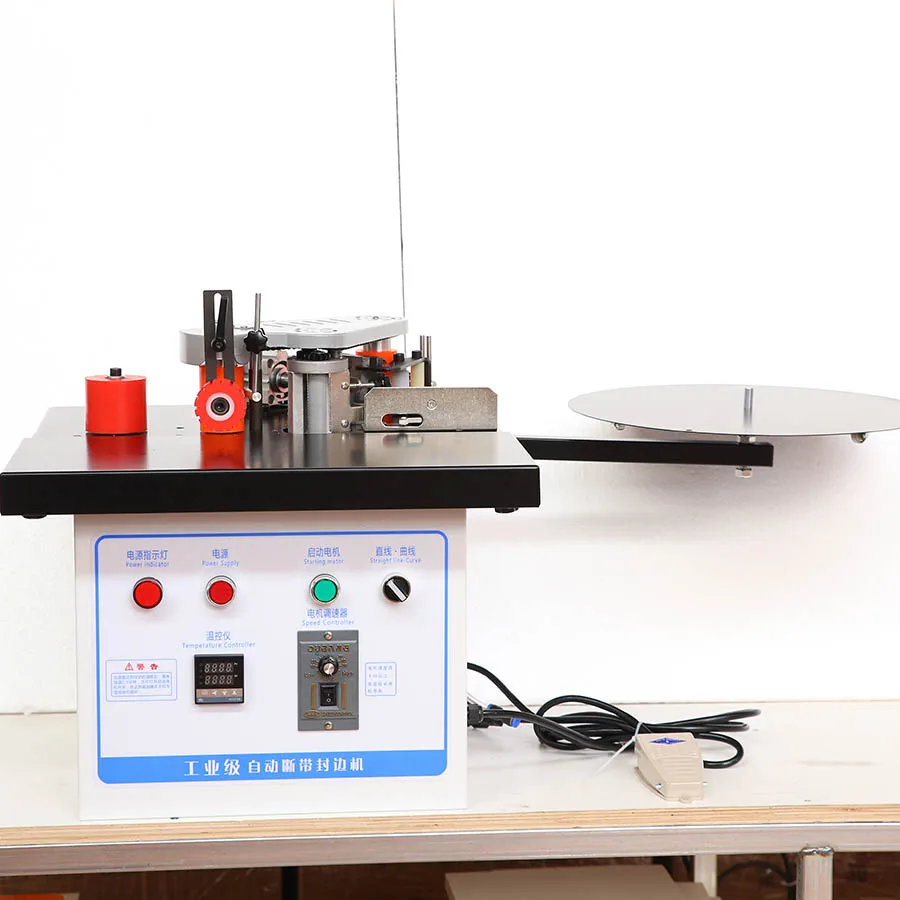
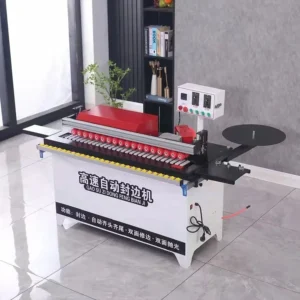
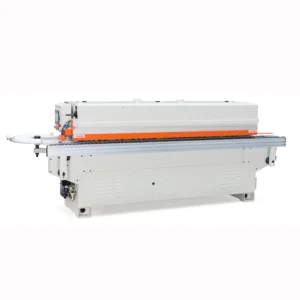
Fast dispatch readiness — ZDSF-60 mini PVC edge banding machines are built from stock configurations with confirmed voltage and language settings before they leave the factory floor.
Technical Specifications
| Parameter |
Value |
| Model |
ZDSF-60 |
| Product Type |
Mini PVC Edge Banding Machine |
| Edge Shape Capability |
Straight, curved and shaped edge banding |
| Rated Voltage |
220V |
| Rated Air Pressure |
0.4–0.6 MPa |
| Strip Thickness Range |
0.5–2 mm |
| Maximum Sheet Thickness |
50 mm |
| Glue Pot Capacity |
1000 ml |
| Heating Power |
800 W |
| Heat-up Time |
5–8 minutes |
| Edge Banding Speed |
0–6 m/min |
| Gluing Method |
Double-sided gluing via glue-coated rollers |
| Tape Breaking |
Pneumatic with foot switch and travel switch |
| Pressure Rollers |
Adjustable, rubber material |
| Overall Dimensions |
54 × 54 × 56 cm |
| Machine Weight |
26 kg |
Application Suitability
| Application |
Material or Output |
| Small batch custom cabinet production |
Particleboard and MDF panels with PVC edge strips |
| Curved panel edge finishing in joinery workshops |
Plywood and shaped solid wood components |
| Startup furniture shop first machine deployment |
Melamine-faced boards with 0.5–2 mm veneer or PVC banding |
| Repair and rework of damaged panel edges |
Mixed substrate offcuts requiring on-demand edge treatment |
Why the Voltage Question Must Come Before the Price
A 220V mini edge banding machine is only useful if your workshop supply actually delivers 220V at the correct frequency.
I once watched a joinery shop owner unpack a machine that was quoted and shipped without anyone asking about his single-phase supply. The motor hummed, the glue pot never reached temperature, and two weeks of production vanished before we traced it back to a frequency mismatch. With this ZDSF-60, the voltage confirmation sheet is part of the quotation, not an afterthought. A mini edge banding machine in stock means nothing if it cannot run on the power you have [NEED_CITE: voltage and frequency standards by export market]. The cost of returning or rewinding a motor dwarfs the five minutes it takes to verify supply specs up front.

What Ready Stock Actually Means for a Small Workshop
When you run a two-person joinery shop, waiting eight weeks for a built-to-order edge bander is not an abstract inconvenience — it is revenue you cannot collect. This Mini Edge Banding Machine in stock configuration ships from the warehouse with the glue pot, pressure rollers, and pneumatic fittings already assembled and tested. You uncrate it, connect your 220V supply and air line, and run your first panel the same afternoon.
How Portability Changes the Workshop Floor Plan
A 26 kg machine on a 54 × 54 cm footprint does not demand a dedicated station. You can move it beside the panel saw when cutting and banding happen in sequence, then roll it back against the wall when the floor space is needed for assembly. For a startup cabinet shop, that flexibility matters more than feed speed [NEED_CITE: small workshop layout and material flow considerations]. The ZDSF-60 fits the reality of a growing workshop where every square metre earns its keep.
Reading the Specs That Actually Affect Edge Quality
The 800 W heating element and 1000 ml glue pot work together to hold a stable glue temperature across a full day of intermittent use. In a small shop, you are not running continuous panels — you band a shelf, walk away to cut the next component, then come back. A smaller glue pot would cool between cycles and produce uneven adhesion. The double-sided gluing via glue-coated rollers applies adhesive to both the strip and the panel edge simultaneously, which is the reason the bond holds on porous particleboard where single-sided gluing often fails. The adjustable pressure rollers and transport bayonet let you move from 18 mm MDF shelving to 50 mm solid wood worktops without swapping hardware, just a hand adjustment. Edge banding speed at 0–6 m/min is controlled by the operator feeding the panel, which suits the variable pace of custom work better than a fixed-speed conveyor.
The Hidden Cost of Skipping the Material Conversation
I recommended a portable mini bander to a custom cabinet startup once, and they ran it on particleboard using settings calibrated for MDF. The glue temperature was too high for the porous substrate, the strip absorbed excess adhesive, and every panel came off the machine with visible squeeze-out along the edge line. Two weeks of rework followed before we matched the temperature and feed rate to their actual material. That mistake is avoidable when the buyer states the substrate up front and the supplier runs a pre-shipment test on the same board [NEED_CITE: adhesive behaviour on particleboard versus MDF substrates]. Skipping that step turns a fast dispatch advantage into a slow commissioning problem.
Why Procurement Through This Channel Works
Every ZDSF-60 leaving the floor carries a factory test record showing actual edge banding output on a specified panel thickness, so you see the glue line before the crate closes. Voltage and control panel language are confirmed in writing during the quotation stage, eliminating the most common arrival-day failures. The four-stage inspection process covers incoming components through to pre-shipment verification, which means the pneumatic fittings and glue pot seals are checked under working pressure, not just visual inspection. Spare parts lists ship with the machine and identify the specific roller, bayonet, and pneumatic components you may need in the first year. Engineer-led configuration recommendations arrive within 24 hours of your inquiry, which is how a small shop avoids ordering a machine that is either over-specified or under-powered for its actual workload.
Documentation & Verification
- Voltage confirmation sheet matching your local single-phase supply before dispatch
- Factory test record on your specified panel thickness and edge strip material
- Operation and maintenance manual written in your agreed language
- Electrical schematic with component labels for local electrician reference
- Spare parts list identifying glue pot seals, rollers, and pneumatic fittings
Installation, Commissioning & Support
- Connect to a dedicated 220V single-phase circuit rated for the 800 W heating load plus motor draw
- Supply clean dry air at 0.4–0.6 MPa through a standard quick-connect fitting on the machine frame
- Machine ships fully assembled at 26 kg, requiring only placement on a stable bench at working height
- First run includes glue pot heat-up over 5–8 minutes and test banding on your actual panel stock
- Pressure roller and bayonet adjustment demonstrated for your full range of board thicknesses up to 50 mm
- Consumable glue and replacement roller identification covered during the initial operator walkthrough
What to Include With Your Inquiry
Tell us the panel materials you work with most often — MDF, particleboard, plywood, or solid wood — and the thickness range you need to cover. Specify your local voltage and frequency so the machine is wired and tested accordingly before it ships. If you handle curved or shaped panels regularly, mention the typical radii so we can confirm the pneumatic tape-breaking setup suits your work [NEED_CITE: minimum bend radius for PVC edge banding on curved substrates].
Frequently Asked Questions
Q: Is the 220V rating compatible with my local single-phase supply and frequency?
A: The ZDSF-60 is configured for 220V single-phase operation. Before dispatch, we issue a voltage confirmation sheet that cross-references your local supply voltage and frequency. If your grid runs at a different standard, the machine is adjusted and tested at the correct specification before it leaves the factory, so you can commission it on arrival without a transformer.
Q: What is the realistic daily throughput for a small workshop using this machine?
A: The operator-controlled feed speed runs up to 6 m/min, and throughput depends on panel size, edge complexity, and how often you switch between straight and curved work. In a small joinery shop handling custom batches, this machine comfortably keeps pace with a single panel saw operator. It is designed for intermittent custom work rather than high-volume continuous production lines.
Q: Which edge banding materials work best with the 0.5–2 mm strip range?
A: PVC, melamine, and wood veneer strips within the 0.5–2 mm thickness range all bond well through the double-sided glue-coated roller system. Porous substrates like particleboard benefit from the consistent adhesive coverage on both surfaces. Veneer strips at the thinner end of the range require lower glue temperatures, which the 800 W element can be adjusted to accommodate during setup.
Q: How do I move from this mini bander to a full automatic line as my volume grows?
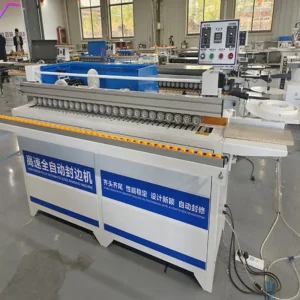
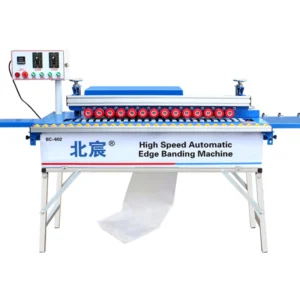
A: The ZDSF-60 covers the entry point where a workshop transitions from manual edge banding to machine-assisted output. When your daily panel count outgrows operator-fed banding, the next step is a through-feed automatic edge bander with conveyor feed and trimming stations. We configure the upgrade path based on your actual throughput data so the transition happens at the right time.
Q: What spare parts and consumables should I order with the machine to avoid downtime?
A: The spare parts list included with your machine identifies glue pot seals, replacement rubber pressure rollers, pneumatic fittings, and edge strip transport bayonet components. For a small workshop, ordering a set of spare seals and one replacement roller at the time of purchase covers typical first-year wear. Consumable hot-melt glue is sourced locally to match your substrate and ambient workshop conditions.