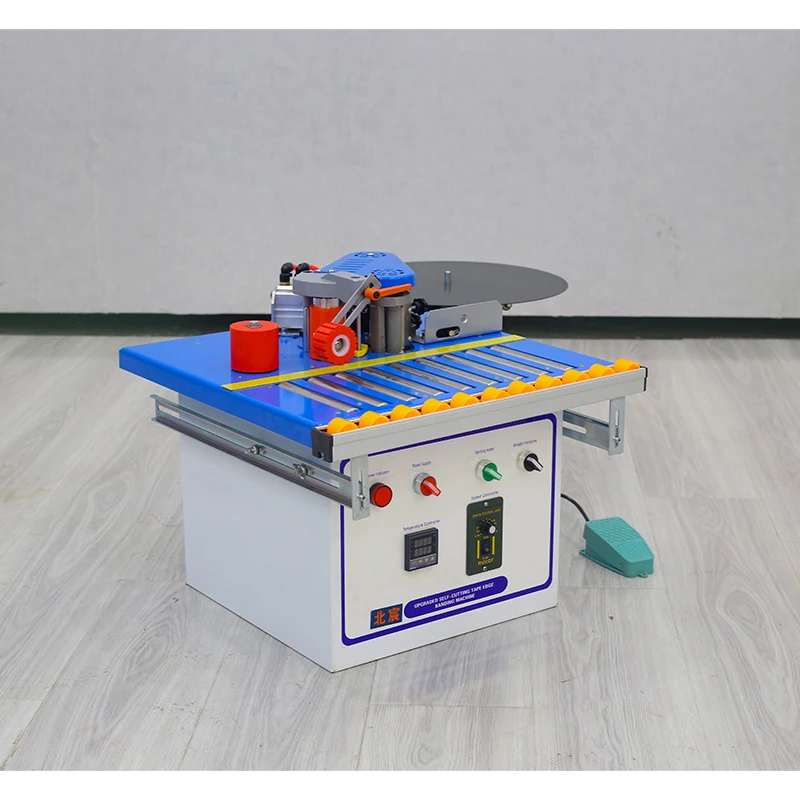
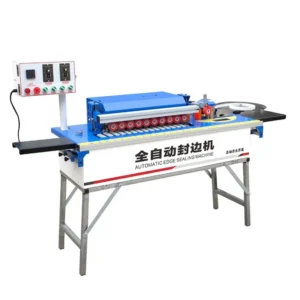
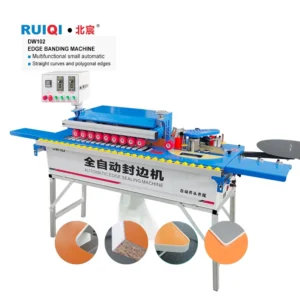
Ready Stock Dispatch — ST-70 benchtop units held in inventory for fast release, with voltage and plug pre-confirmed against your local grid before any crate leaves the dock.
Technical Specifications
| Parameter |
Value |
| Product Type |
Portable Edge Banding Machine |
| Total Power |
1000W |
| Voltage & Frequency |
220V/380V/customization (50Hz default) |
| Glue Pot Capacity |
1000ml |
| Edge Banding Height |
0–50mm |
| Edge Banding Thickness |
0.3–3mm |
| Minimum Sheet Length |
25cm |
| Minimum Sheet Width |
3cm |
| Edge Type |
Straight and curved |
| Air Source Pressure |
0.5–0.8 MPa |
| Product Size |
50 × 50 × 47cm |
| Product Weight |
23kg |
| Control Panel Language |
Chinese and English (other languages customizable) |
Application Suitability
| Application |
Material or Output |
| Small workshop cabinet door edging |
MDF and particleboard panels with PVC banding |
| Custom furniture repair and on-site trimming |
Ecological board and plywood with melamine or veneer strips |
| Home decoration joinery and built-in shelving |
Solid wood panels up to 50mm height, straight and curved profiles |
| Low-volume bespoke tabletops |
Plywood and blockboard with 0.3–3mm edge banding |
Why the Voltage Question Comes Before the Price Quote
A Portable Edge Banding Machine in stock is only useful if it actually powers on and heats correctly in your workshop. Ordering a compact bander without confirming your local supply frequency can turn a fast-dispatch purchase into a dead-weight crate sitting on your floor.
I once watched a small joinery shop in North America unbox a 50Hz unit and plug it straight into a 60Hz outlet. The glue pot heating curve shifted just enough that the hot melt never reached the right viscosity at the application roller. The first dozen MDF panels came off with bubbled, delaminated edges, and the operator spent the rest of the day scraping residue off the feed track. [NEED_CITE: voltage and frequency standards by export market] That experience stays with me every time I review an order sheet for a single-phase bander heading overseas.

Single-Phase Power for Real Workshop Outlets
The ST-70 runs on 220V single-phase supply, which means you can plug it into a standard workshop wall socket without arranging a dedicated three-phase drop. For small shops sharing premises with residential wiring or operating out of converted garages, this removes the electrical contractor visit that often delays commissioning of larger edge banders. The 1000W total draw stays within typical 16A circuit limits, so the Portable Edge Banding Machine in stock can run alongside your table saw and dust extractor without tripping a breaker.
Benchtop Footprint and Portability
At 50 × 50 × 47cm and 23kg, this unit sits on a workbench and can be moved by one person when floor space needs rearranging. That matters for workshops where the same bench serves as assembly station, sanding table, and banding station across a single shift. [NEED_CITE: typical small joinery workshop space planning] You wheel the bander into position when an edging job comes in, then push it aside for the rest of the panel work.
Glue Pot Capacity and Straight-and-Curved Versatility
The 1000ml hot melt pot holds enough adhesive for extended sessions on small-to-medium panels without constant refills. More importantly, the feed mechanism handles both straight and curved edges in the same pass, so a cabinet door with a radiused corner does not require swapping to a different machine or finishing the curve by hand. Edge banding thickness from 0.3mm thin PVC up to 3mm solid profiles covers the range most small workshops encounter on MDF, plywood, and particleboard projects.
Reading the Numbers That Matter
The 0–50mm banding height range sets the upper limit on panel thickness you can edge in one pass; boards thicker than 50mm need a different class of machine. The 0.5–0.8 MPa air source pressure requirement means you will need a small compressor on site, but the demand is low enough that a basic 50-litre tank unit keeps up without cycling constantly. Control panel language defaults to Chinese and English, with other languages configurable before dispatch, so operators who read neither will still see labels they can follow during first-day commissioning.
What Happens When You Skip the Frequency Check
Buyers who focus on getting a compact edge bander shipped fast sometimes treat voltage and frequency as a footnote on the proforma invoice. The consequence shows up on day one: the glue pot runs hotter or cooler than the display indicates, the feed motor runs at the wrong speed, and the pressure roller cannot maintain consistent contact. [NEED_CITE: electrical frequency impact on motor-driven industrial equipment] Panels come off with uneven glue lines, and the operator blames the banding material before anyone thinks to check the nameplate against the wall outlet.
Why Sourcing Here Reduces Your Dispatch Risk
Voltage and frequency are confirmed against your local grid before the machine is packed, not after it arrives and fails to heat. Pre-shipment testing covers glue pot heating curve, feed motor rotation, and roller pressure on your specified panel thickness range. The Portable Edge Banding Machine in stock ships with an operation manual in the language you agreed on during order confirmation. Spare parts lists are included so you know which wear items to reorder before they fail mid-job. Engineer configuration recommendations come with a formal quotation within one business day, even for single-unit orders.
Documentation & Verification
- CE declaration of conformity matched to the machine serial number on your unit
- Factory test record confirming glue pot temperature stability on your panel material
- Electrical schematic showing confirmed voltage, frequency, and plug type for your market
- Operation and maintenance manual translated into the language your operators read
- Spare parts list with part numbers for rollers, scraper blades, and glue pot seals
Installation, Commissioning & Support
- Place on a level bench capable of supporting 23kg plus downward operator pressure during feeding
- Connect to a dedicated 220V single-phase circuit rated at minimum 16A with proper grounding
- Supply compressed air at 0.5–0.8 MPa from a compressor with moisture trap inline
- First run includes glue pot temperature calibration and feed speed adjustment on your actual panel stock
- Operator walkthrough covers banding loading, glue temperature setting, and curved-edge feed technique
- Wear items including scraper blades and pressure rollers identified in the included spare parts list
What We Need to Ship Your Unit Correctly
Send us your panel material type and typical thickness range so we can set the glue pot and roller pressure before dispatch. Confirm your local supply voltage, frequency, and plug type from an actual utility bill or workshop electrical panel label, not a general country assumption. Let us know which language your operators need on the control panel and in the manual. If you plan to run both straight and curved edges, tell us your minimum curve radius so we can verify feed clearance on the test panel before packing.
Frequently Asked Questions
Q: What voltage and plug options are available for my country?
A: The ST-70 ships with voltage and plug configured to your confirmed local supply. We need your actual workshop voltage, frequency (50Hz or 60Hz), and plug type before dispatch. Sending a photo of your electrical panel label or utility bill eliminates guesswork and prevents glue pot or motor issues on first run.
Q: Can this bander handle curved edges as well as straight edges?
A: Yes, the feed mechanism is designed to follow both straight and curved panel profiles without changing tooling. Curved edge work requires steady manual guidance at a consistent feed rate. Tell us your typical curve radius during ordering so we can verify clearance during the pre-shipment test on sample panels.
Q: What is the upgrade path if my workshop volume grows?
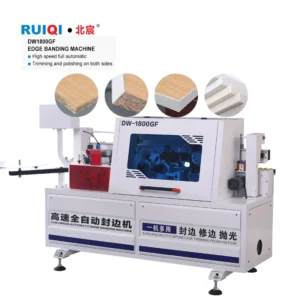
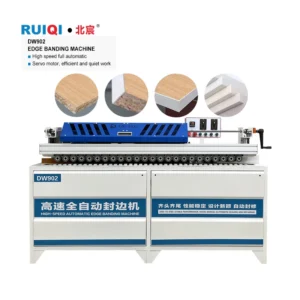
A: When daily panel counts move beyond what a manual-feed benchtop unit can sustain, the next step is a through-feed automatic edge bander with conveyor and multiple trimming stations. The ST-70 remains useful as a secondary machine for repairs, curved pieces, and small one-off jobs even after the main line is upgraded.
Q: How do I match glue type and banding material to my panel substrate?
A: MDF and particleboard generally use standard EVA hot melt with PVC or melamine banding. Veneer strips on plywood may need lower application temperatures. The 1000ml pot on the ST-70 accepts most common EVA formulations. Share your panel and banding combination during ordering and we will set the temperature range before shipping.
Q: Is the control panel available in languages other than Chinese and English?
A: Yes, the control panel labels and the operation manual can be produced in your preferred language before dispatch. Specify the language during order confirmation so the translated materials are ready when the machine ships. This avoids commissioning delays caused by operators misreading temperature or speed settings.