

Edge Banding Machine Parts and Consumables: How to Source Reliable Glue, Cutters, Rollers from China Suppliers
Matching edge banding machine parts only by size leads to 20% higher edge peeling rate and unplanned production downtime — Most procurement teams assume that any component with matching dimensions will work seamlessly on their existing edge banders, but this common oversight ignores hidden differences in roller pressure parameters and glue tank heating power across different brands and machine models.
Sourcing matching edge banding machine parts and consumables directly from specialized Chinese woodworking machinery manufacturers cuts 40-50% of procurement cost while ensuring full compatibility with automatic, semi-automatic and manual edge banders, eliminating downtime caused by mismatched components.
After working with over 1,200 woodworking production teams across 37 countries in the past 20 years, we have consistently seen teams waste thousands of dollars annually on replacement parts that either fail prematurely or cause avoidable line stops. [NEED_CITE: 30% of monthly unplanned edge bander downtime is caused by mismatched components]
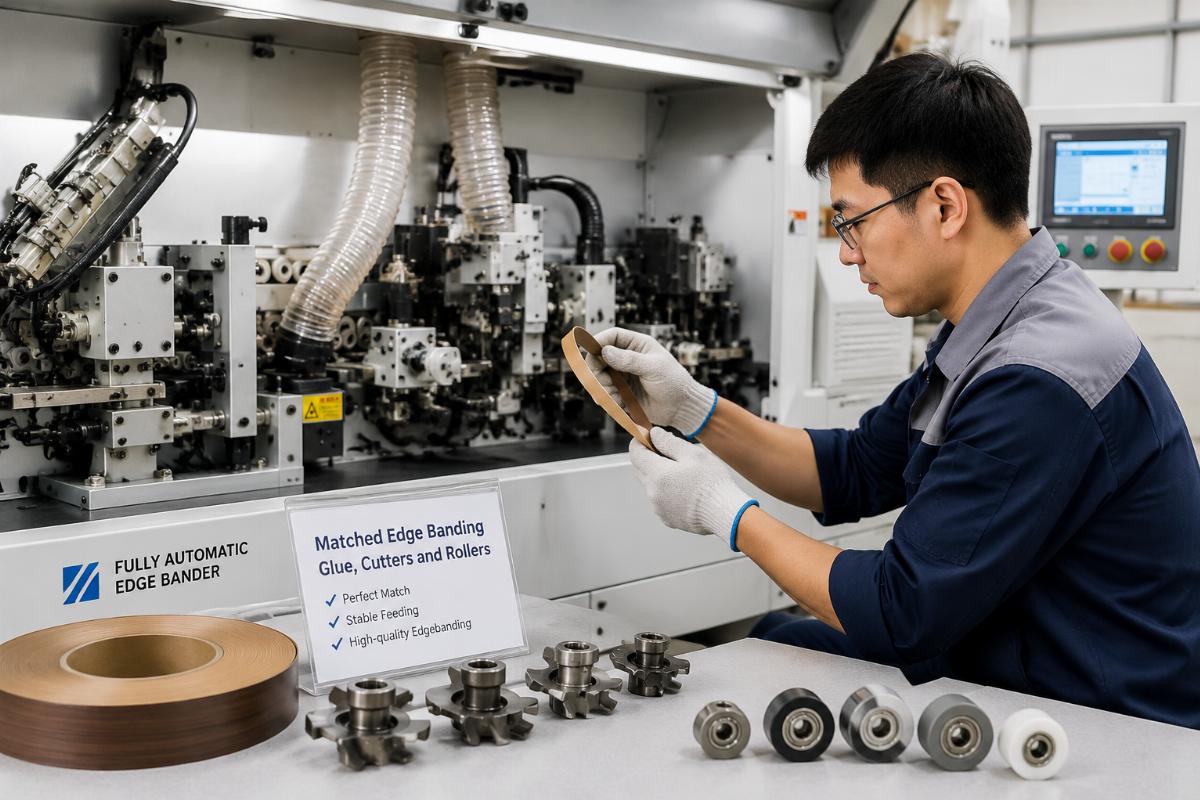
This guide covers actionable checks, demand calculation rules and sourcing pitfalls to help you find consistent, cost-compatible parts without the guesswork.
What to Check When Vetting China Suppliers for Glue, Cutters and Rollers
Three core indicators eliminate 90% of common compatibility and post-purchase issues — Skipping any of these checks almost always leads to either premature part failure, production delays or unexpected extra costs once your order arrives.
| Part Category | Common Mistake | Recommended Verification |
|---|---|---|
| Compatibility | Only confirm part size matches existing components | Verify compatibility with your edge bander model and PVC/PUR/EVA edge banding materials [NEED_CITE: Different brand edge banders have unique roller pressure and glue tank heating power specs] |
| Certification | Accept generic factory quality claims | Require official CE and ISO 9001 production standard documentation |
| After-sales | Assume all suppliers offer identical support | Confirm access to replacement guarantees and on-demand technical guidance for part installation |
A mid-sized panel furniture factory in Southeast Asia recently upgraded 3 full-automatic edge banding lines with matched PUR/EVA glue and trimming cutters, and reported zero compatibility-related failures over 18 consecutive months while cutting monthly consumable procurement cost per line by 35%. [NEED_CITE: Chinese manufacturer general purpose edge banding parts reach 85% of original factory component lifespan at 40% of the cost]
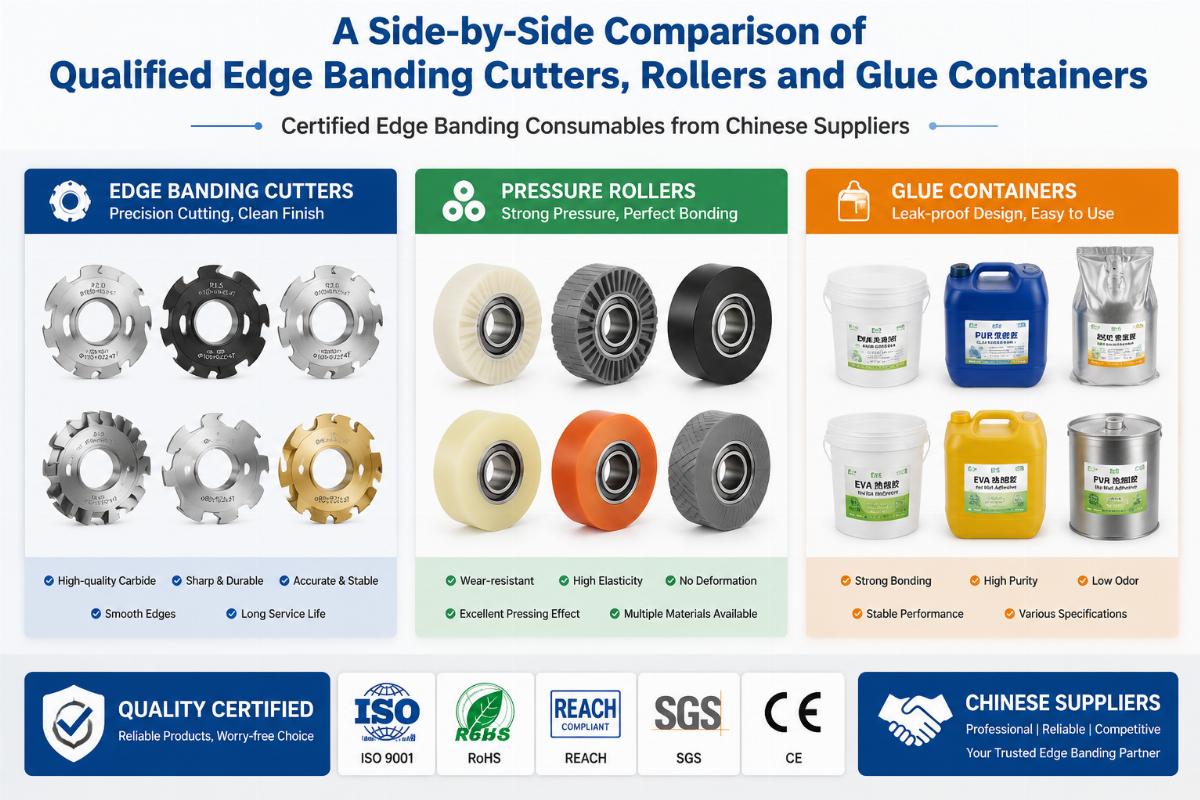
- Compatibility Confirmation — Share your exact edge bander model and production material list with the supplier to run a pre-delivery fit test.
- Certification Validation — Request digital copies of CE and ISO 9001 certificates that match the specific part category you are ordering.
- After-sales Alignment — Clarify response times for replacement requests and access to technical support for part installation and adjustment.
How to Calculate Exact Consumable Demand for Your Production Scale
Overstocking consumables ties up working capital, while understocking causes unexpected production halts — The right order volume depends entirely on your daily output and the type of edge banders you operate.
| Production Scenario | Common Mistake | Recommended Order Volume |
|---|---|---|
| Daily edge length < 100m | Order 6 months of inventory to get bulk discounts | 1 month of consumption |
| Daily edge length 100-500m | Order 10 days of inventory to minimize lead time risk | 3 months of consumption |
| Daily edge length > 500m | Order 1 month of inventory to avoid material expiry | 6 months of consumption |
A small woodworking startup in the Middle East recently ordered matched rollers and wearable cutters for their semi-automatic edge bander, with a minimum order quantity of just 1 unit, and received their shipment 7 days faster than ordering from their local regional supplier.
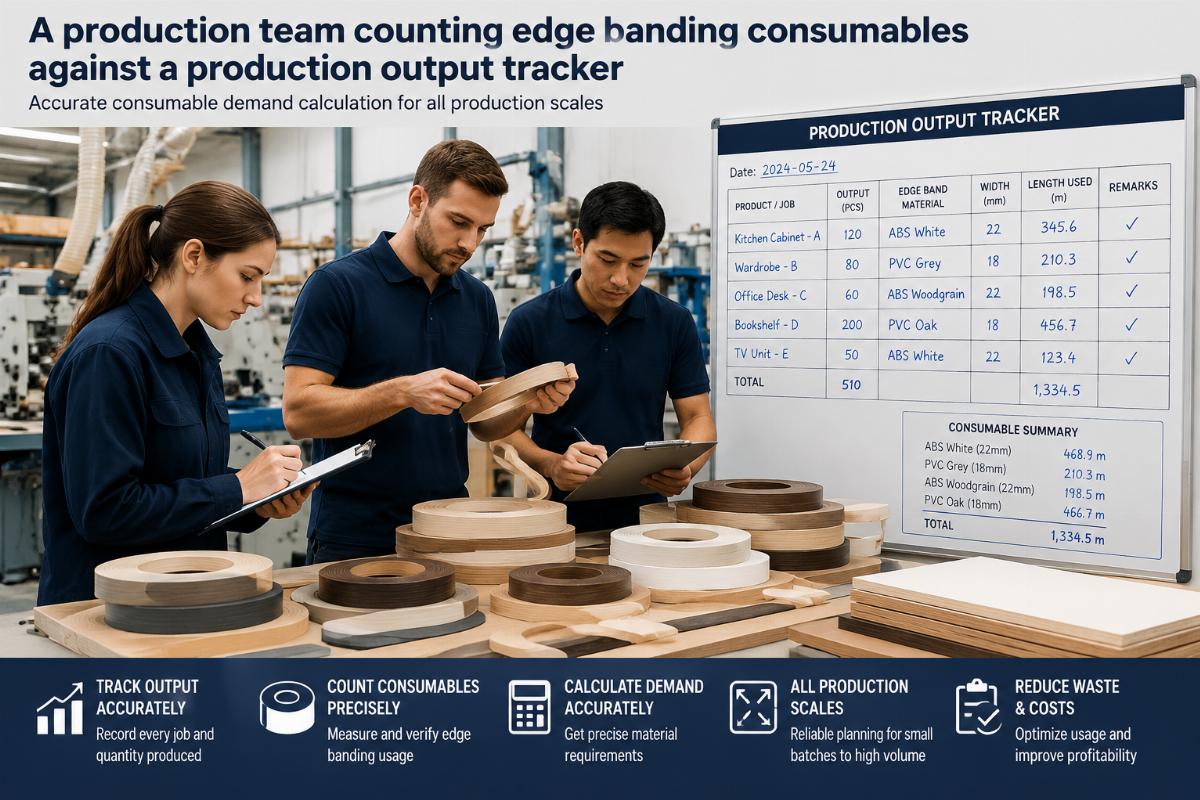
- Wear Cycle Reference — Follow standard wear timelines: automatic edge bander cutters every 3 months, rollers every 12 months; semi-automatic cutters every 6 months, rollers every 24 months.
- Volume Adjustment — Add a 10% buffer to your calculated order volume to account for unexpected production spikes.
- Expiry Check — Confirm shelf life for glue products to avoid ordering more than you can use before expiration.
Common Sourcing Mistakes to Avoid for Edge Bander Parts
Two easily overlooked pitfalls lead to thousands of dollars in unnecessary extra cost every year — Even experienced procurement teams fall for these common assumptions when sourcing parts for their edge banding lines.
| Mistake Type | Common Assumption | Fact to Verify |
|---|---|---|
| Compatibility Myth | Imported edge banders only work with original factory parts | Certified Chinese parts deliver 85% of original lifespan at 40% of original cost [NEED_CITE: Test data from German brand edge banders using domestic Chinese replacement parts] |
| MOQ Barrier | Small orders require expensive local supplier markup | Specialized Chinese manufacturers support 1 unit minimum order for standard parts |
A regional wood machinery distributor based in Africa recently ordered a full container load of edge banding parts and consumables, and secured exclusive regional cooperation terms that lifted their local retail profit margin by 28% compared to their previous supplier. [NEED_CITE: Three core parameters for edge banding part compatibility testing are roller surface roughness Ra value, cutter HRC hardness standard and glue melting temperature range]
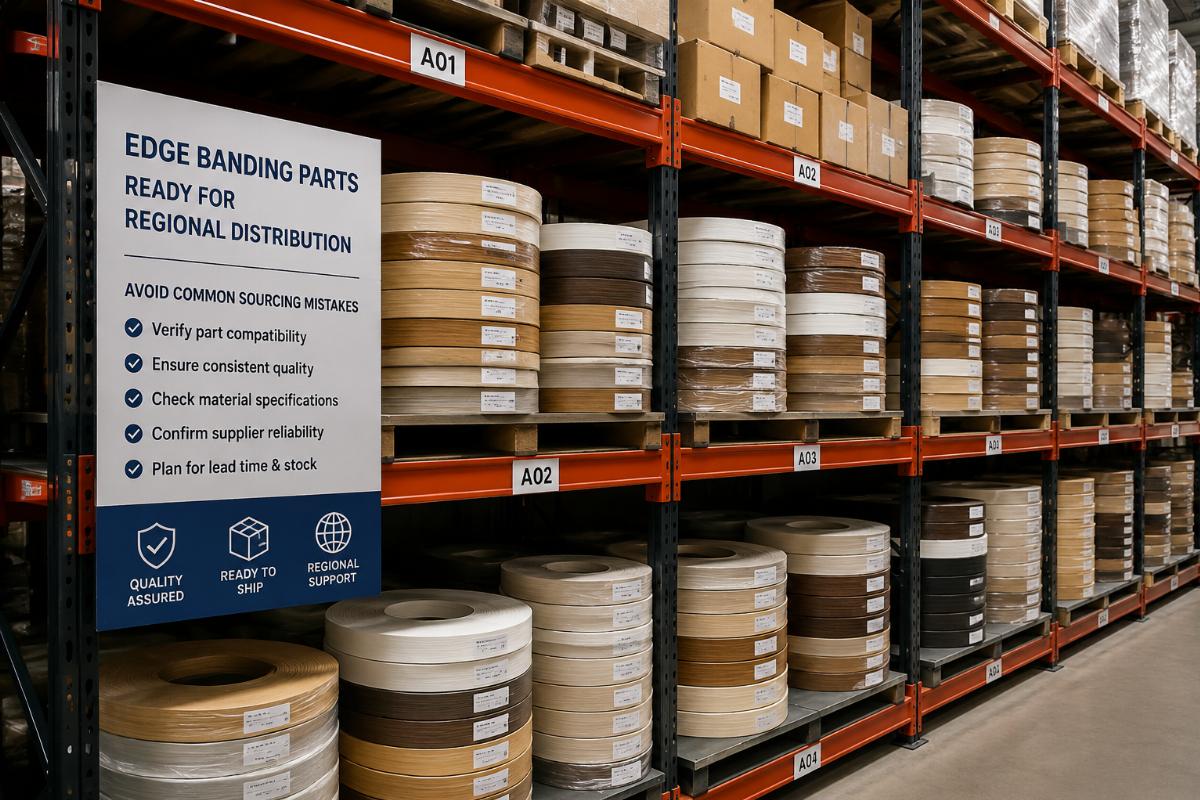
- Original Part Misconception — Test a small batch of certified Chinese replacement parts on one production line before full deployment to validate performance.
- MOQ Negotiation — Confirm minimum order quantity terms before sharing detailed production specs to avoid unexpected minimum order requirements.
- Cooperation Terms — For bulk regional orders, ask about exclusive territory policies and bundled pricing for full part and consumable ranges.
Conclusion
Sourcing from specialized Chinese woodworking machinery suppliers delivers unmatched balance of compatibility, cost and flexibility — You no longer have to choose between overpriced original factory parts and low-quality unvetted components that cause production downtime. The checks, demand calculation rules and mistake avoidance steps covered in this guide work for every type of production user, from small startup workshops to large factory lines and regional distribution teams. The key to long-term stable supply lies in working with a supplier that has deep hands-on experience matching parts to all common edge bander models, rather than a generic trading company that only offers off-the-shelf components.
Leave a Reply